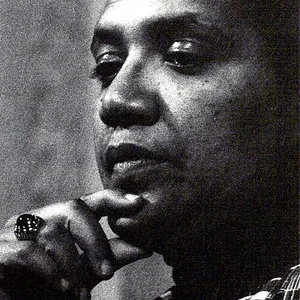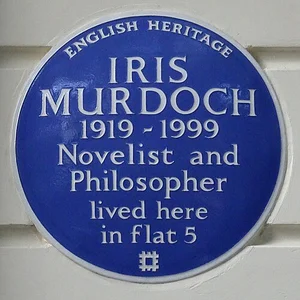

Iris Murdoch (1919-1999) was an Irish-British philosopher and novelist, professor at Oxford, known for novels that combine moral reflection with psychological intrigue. The author of more than twenty-six novels and major philosophical works, she explores themes of love, freedom, and the Good.
Iris Murdoch(1919 — 1999)
Iris Murdoch
Irlande, Royaume-Uni
8 min read
Frequently asked questions
Famous Quotes
« Love is the extremely difficult realization that something other than oneself is real.»
« A good novel tells us the truth about its hero; but a bad novel tells us the truth about its author.»
Key Facts
- Born in Dublin in 1919, she studied at Oxford and became a professor of philosophy at the university.
- In 1954, she published her first novel, “Under the Net”, to immediate success.
- Her essay “The Sovereignty of Good” (1970) is a foundational philosophical work on ethics.
- She received the Booker Prize in 1978 for her novel “The Sea, the Sea”.
- She died in 1999 from Alzheimer's disease, which her husband John Bayley would chronicle in his memoirs.
Works & Achievements
First major philosophical essay in English on Jean-Paul Sartre. Murdoch introduces French existentialism to the British public while formulating her earliest criticisms of the Sartrean conception of the self.
Iris Murdoch's debut novel, immediately ranked among the finest British first novels of the post-war era. The work explores themes of language, identity, and freedom through a drifting protagonist wandering between Paris and London.
A novel about a lay community living near an abbey, exploring the tensions between faith, sexuality, morality, and hypocrisy. Considered one of her masterpieces, it exemplifies her method of placing major philosophical questions within concrete human situations.
Her most celebrated and widely read philosophical work, comprising three essays. Murdoch critiques modern moral subjectivism and proposes an ethics grounded in disinterested attention to reality and the Platonic notion of the Good.
Novel awarded the Booker Prize. Narrated by a retired theatre director haunted by a first love, it explores obsession, illusion, and the inability to see others as they truly are — a central theme throughout Murdoch's entire body of work.
A philosophical essay arising from her inaugural lecture at Oxford, in which Murdoch examines the paradox of Plato's relationship to art. She argues that great literature is an irreplaceable form of moral knowledge.
Her major philosophical synthesis, the fruit of decades of reflection. Murdoch defends a humanist metaphysics against postmodern relativism, asserting the reality of moral goodness and the possibility of a virtuous life.
Anecdotes
Iris Murdoch crossed a devastated Europe after the Second World War, working for UNRRA (the United Nations Relief and Rehabilitation Administration) in Austria and Belgium. There she encountered thousands of refugees and displaced persons, an experience that profoundly shaped her vision of the human condition and fed into her novels.
A great lover of languages, Iris Murdoch was fluent in French, German, and Russian. She was one of the first British philosophers to read Sartre and Simone de Beauvoir in the original, and as early as 1953 published one of the first books in English devoted to Sartre, at a time when existentialism was still virtually unknown in the United Kingdom.
Iris Murdoch had a passionate relationship with writing: she composed her novels by hand, in notebooks, never using a typewriter or a computer. She could produce an entire novel in a matter of months, immersing herself so completely in her characters that she would weep at their deaths.
Diagnosed with Alzheimer's disease in the final years of her life, Iris Murdoch gradually lost command of the very language that had defined her greatness. Her husband, literary critic John Bayley, recounted this period in a deeply moving memoir, 'Iris', adapted for the screen in 2001 with Judi Dench in the lead role — a performance that earned her an Academy Award.
In 1978, her novel 'The Sea, the Sea' won the Booker Prize, the most prestigious literary award in Britain. Yet Murdoch always refused to be confined to a single label: she considered herself both philosopher and novelist, two callings she saw as inseparable for exploring the great moral questions of her time.
Primary Sources
Sartre's novels and plays are philosophical in a fairly obvious sense — they are written to illustrate a philosophy. But Sartre is also a novelist in a deeper sense: his philosophical writings themselves have a novelistic quality.
The foundation of morality is the same as the foundation of realism, namely the ability to perceive what is truly before one instead of what is a consoling fiction.
I think that philosophy and literature are not two separate paths to truth, but two ways of seeing the same thing — the irreducible complexity of the human being.
Art is the most educational thing we have, not because it teaches us facts or rules, but because it teaches us how to see. A good novel extends our knowledge of what it is to be human.
Plato feared art because art can touch the soul at its most vulnerable point, at the point where it is most deeply itself. He understood art's power better than most of its defenders.
Key Places
Iris Murdoch's birthplace, born on 15 July 1919. Although she grew up in England, her Irish identity was always a source of questions about belonging that runs through some of her novels.
Murdoch taught philosophy there from 1948 to 1963. This elite academic setting was the heart of her intellectual life, where she shaped generations of students in moral philosophy.
After the war, Murdoch worked for the UNRRA in occupied Austria, witnessing the plight of refugees and the ruins of Europe. This formative experience deepened her sensitivity to questions of evil, suffering, and moral responsibility.
It was in Cambridge that Iris Murdoch had the opportunity to attend Wittgenstein's seminars in 1947, a decisive intellectual encounter for her philosophy of language and consciousness.
An English country village where Iris Murdoch and her husband John Bayley lived for many years in a house surrounded by a garden. This quiet rural setting was where most of her major novels were written.
Typical Objects

Iris Murdoch wrote all her novels by hand in notebooks. She always refused typewriters and computers, believing that handwriting maintained an essential connection between thought and the page.

A convinced Platonic philosopher, Murdoch always kept annotated editions of Plato's dialogues close at hand. Her ethical thought draws directly on the Platonic notion of the Good.

An indispensable instrument in her daily life as a writer, the fountain pen was for Murdoch the only tool worthy of literary creation — a natural extension of hand and thought.

Iris Murdoch cycled through the streets of Oxford throughout her teaching career. This image of her pedalling between the colleges became iconic in Oxonian memory.

An avid reader of British philosophical journals, Murdoch published several important articles in them and followed the debates on ethics, metaphysics, and language that animated Oxford in the 1950s–1970s.

Iris Murdoch held Ludwig Wittgenstein in great admiration, having briefly encountered him at Cambridge. His philosophy of language influenced her thinking on the limits of what words can convey about moral experience.
School Curriculum
Vocabulary & Tags
Key Vocabulary
Tags
Daily Life
Morning
Iris Murdoch rose early and began her day with a long walk, often cycling through the streets of Oxford or the surrounding countryside. She would then spend the first hours of the morning writing in her notebook, before university duties began.
Afternoon
Afternoons were devoted to teaching and philosophical tutorials with her students at St Anne's College. She received pupils in her book-cluttered office, questioning them with benevolent rigour on Plato, Kant, or the analytic philosophers of the day.
Evening
Evenings were often spent in the company of her husband John Bayley and intellectual friends — philosophers, writers, artists — over a simple dinner and long conversations. She read late into the night, in a leather armchair, before returning to her notebook to jot down an idea or a fragment of dialogue.
Food
Iris Murdoch had a fairly indifferent relationship with food, preferring simple, unpretentious meals. She enjoyed tea, of course, as any Briton of her era would, and appreciated convivial dinners without seeking gastronomy — conversation being what mattered most.
Clothing
Murdoch dressed simply, with little concern for fashion. She favoured practical clothing — woollen jumpers, straight skirts, plain coats — reflecting her studious personality and relative indifference to social appearances.
Housing
She lived for many years in a house in Steeple Aston, a village in Oxfordshire, with her husband John Bayley. The house, described by him as cheerfully chaotic — books and manuscripts everywhere, an overgrown garden — was the perfect setting for a life entirely devoted to thought and writing.
Historical Timeline
Period Vocabulary
Visual Style
Une esthétique britannique intellectuelle et austère : pierres dorées d'Oxford sous des ciels gris, intérieurs studieux chargés de livres, jardins anglais envahis de roses — un monde à la fois savant et profondément humain.
Sound Ambience
Les sons feutrés d'Oxford — bibliothèques, cloches, vélos sur les pavés — mêlés au silence habité d'une maison de campagne anglaise où s'écrit, à la plume, une œuvre philosophique et romanesque.
Liens externes & ressources
Références
Œuvres
Sartre, Romantic Rationalist
1953
Under the Net (Sous le filet)
1954
The Bell (La Cloche)
1958
The Sovereignty of Good (La Souveraineté du Bien)
1970
The Sea, the Sea (La Mer, la Mer)
1978
The Fire and the Sun: Why Plato Banished the Artists
1977
Metaphysics as a Guide to Morals
1992