Imaginary interview with Elizabeth Cady Stanton
by Charactorium · Elizabeth Cady Stanton (1815 — 1902) · Politics · Society · 5 min read
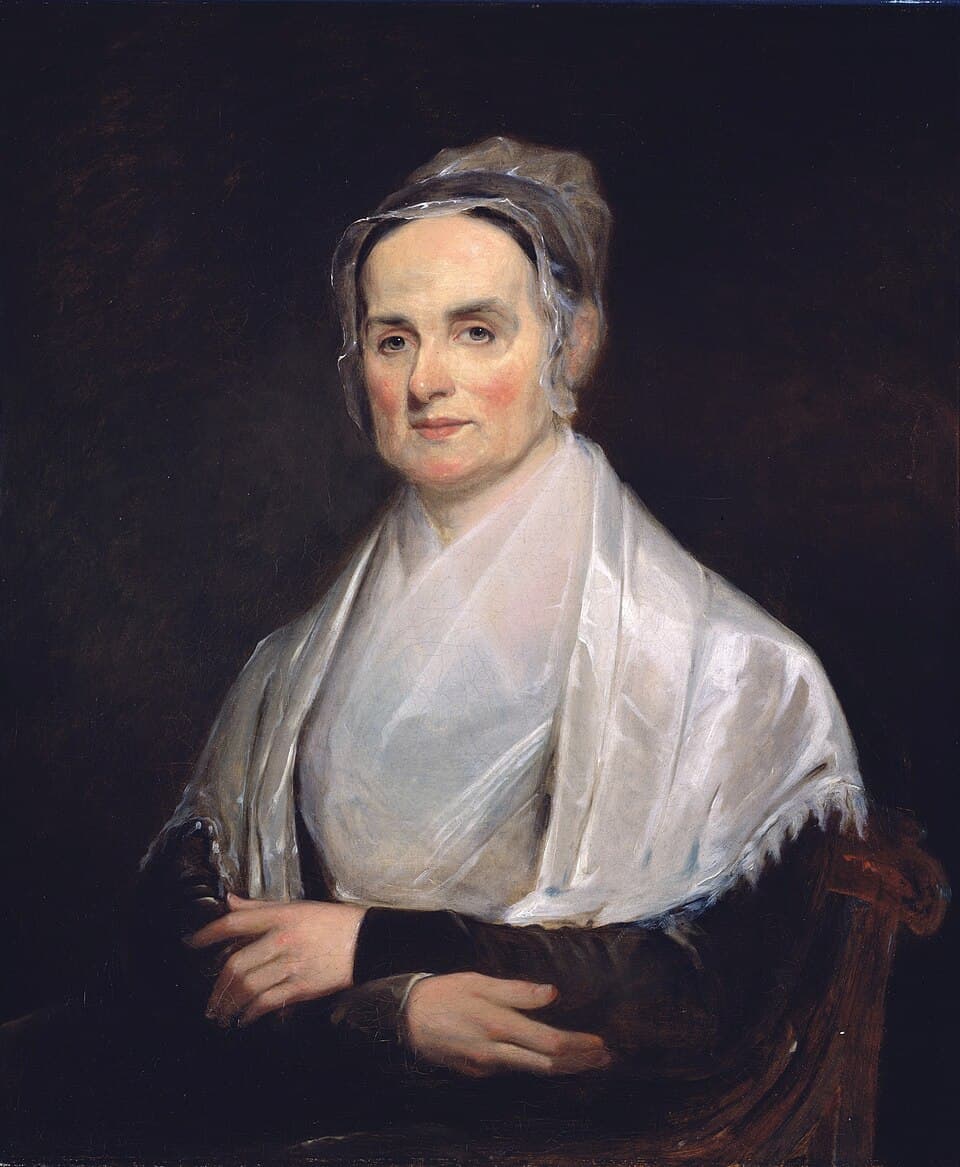
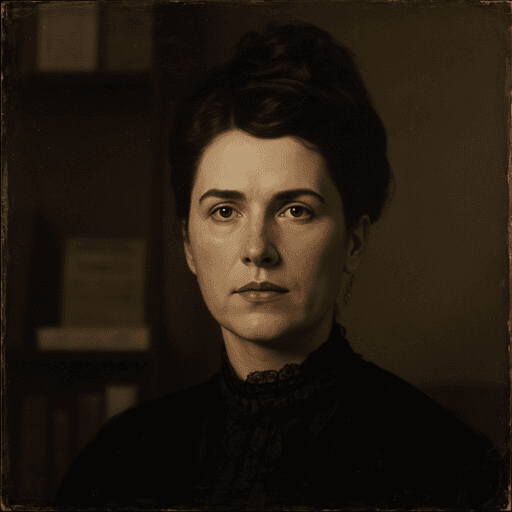
New York, an autumn morning in 1901. In an apartment cluttered with law books and theology, an old lady of eighty-six, nearly blind but with a sharp eye, receives us sitting by the window. Elizabeth Cady Stanton has never voted — and she knows it. She speaks quickly, with the aplomb of a woman who has spent fifty years convincing America to take her seriously.
—Where do you place the beginning of your commitment to women's rights?
In London, in 1840, in a hall where they were debating the freedom of slaves. I had crossed the Atlantic as a young bride for the World Anti-Slavery Convention, and they sat me behind a screened gallery, with Lucretia Mott, like two children hidden from guests. We were delegates, but women first — so muzzled. I watched those gentlemen discourse on the emancipation of others while keeping us under coverture, and I understood that a man can claim freedom with one hand and deny it with the other. On the sidewalk that day, Lucretia and I swore to one day organize an assembly that would speak only of us.
A man can claim freedom with one hand and deny it with the other.
—What did you feel, exactly, behind that screen?
Shame, first, then a cold anger that never left me. You see, I had grown up in Johnstown, in my father's office — he was a lawyer and judge — reading those case files where a widow lost her house, where a battered wife had no recourse. As a child, I thought I could fix the laws by cutting out the bad articles from his books with scissors. In London, the screen reminded me of those useless scissors: the evil was not in a paragraph, it was in the very idea that a woman is not quite a person. It was no longer about mending, but about rewriting everything.
—Do you remember the moment you dared demand the right to vote at Seneca Falls?
July 1848, in the Wesleyan Chapel in Seneca Falls. We had drafted a Declaration of Sentiments on the exact model of the Declaration of Independence — eighteen grievances, as if holding a mirror to a nation that believed itself free. But when I proposed the ninth resolution, the one about the ballot, the room shuddered. Too radical, they said; we would lose everything else. My own husband, Henry, had left town to avoid being involved. It was Frederick Douglass, who knew what a denied voice is worth, who stood up to defend it. The resolution passed by a narrow margin. That day I knew I was right to start with the hardest.
We were holding a mirror to a nation that believed itself free.
—How do you explain that a simple demand for the vote seemed so scandalous?
Because the ballot is not a piece of paper, sir: it is the key to everything else. A woman without suffrage is a perpetual minor, dispossessed of her wages, her children, sometimes her body. I spent years covering petitions that Susan and I carried to Congress, sheets covered with thousands of signatures that were received with a polite smile before being buried in a drawer. Demanding the vote was to stop begging for reforms one by one and to demand the tool that would make them all possible. That is why it terrified: we were no longer asking for alms, we were claiming the lever.
—How did you wage this struggle while raising seven children?
By learning to think standing up, with my hands in the dough. I had seven children and a house that never fell silent; so I composed my speeches while kneading bread, I sharpened my arguments while watching over a fever. The little ones ran in the garden while I dictated a letter to the older ones, who served as my secretaries. Susan B. Anthony, she had no ties — it was nicely said that she forged the thunderbolts and I launched them. But my thunderbolts, I forged them between nursing and laundry. Nothing I ever wrote seriously was written in the silence of a study; everything was born in the din of a kitchen.
I composed my speeches while kneading bread.
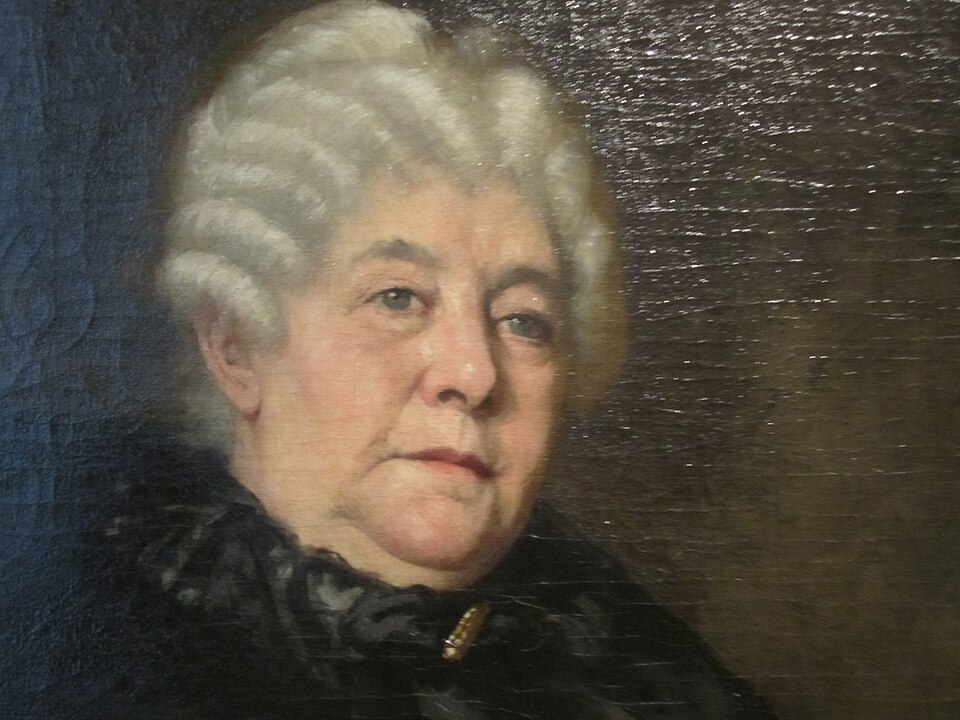
—Many thought a mother had no place in politics. What did you tell them?
That they confused the cage with virtue. They praised the home as woman's natural kingdom, and I kept that kingdom, believe me — the house in Seneca Falls, then Tenafly, full of children and disorder. But I also wore the Bloomer costume for a time, that short skirt over trousers, so I could climb a staircase with a child on my hip without dragging three kilos of crinoline. They ridiculed those trousers so much that I gave them up, not out of shame, but so they would stop looking at my legs and start listening to my ideas. A woman can manage a household and a conviction; it was the laws, not nature, that claimed otherwise.
—At over seventy, why did you take on the Bible itself?
Because it was the last fortress. They had thrown the Scriptures at me at every step: woman made from a rib, woman must be silent in the assembly. I had an annotated copy for decades, margins blackened, and I finally published in 1895 The Woman's Bible, to show that these texts had served not to sanctify women, but to keep them in tutelage. I say it without mincing words: the Bible and the Church have been the greatest stumbling blocks in the way of women's emancipation. You do not free a prisoner as long as you repeat that her chains are sacred.
You do not free a prisoner as long as you repeat that her chains are sacred.
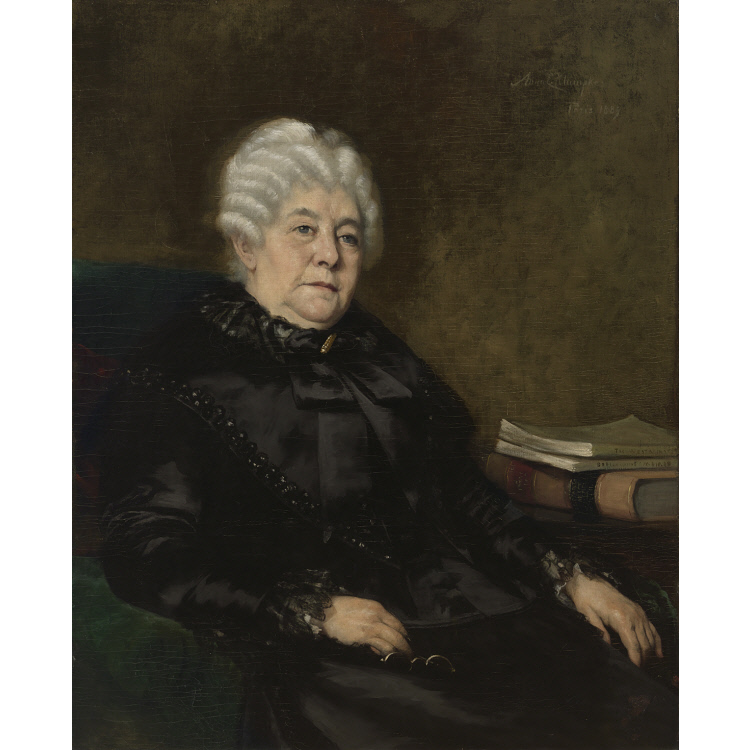
—Your own suffragist allies voted a motion to disassociate from that book. How did you take it?
With a pang, then a shrug. The NAWSA — which I had presided over! — solemnly voted to wash its hands of my Woman's Bible, for fear of frightening the churches whose support it was courting. Susan defended me on the convention floor, but they had chosen caution. I understood them: you do not win a battle by insulting half your recruits. But I had not spent fifty years demanding freedom of thought to trade it, at eighty, for a motion of convenience. I owned my book without cutting a single line. You can sacrifice many things to strategy; never your conscience.
—In 1866, you were offered a constitutional compromise. Why did you refuse it so firmly?
Because they wanted to inscribe the word male in the Constitution, and a word slipped in there lasts generations. After the war, they pressured us to accept suffrage for black men only and to wait our turn, as if justice were served in slices. I wrote then that I would rather fight another ten years than swallow such a deal — I would rather fight another ten years than accept such a compromise. They reproached me for my intransigence, and God knows that my break with certain abolitionists cost me friendships. But I knew that an exclusion written in black and white in the sacred text of a republic would block our path for half a century. I was right: we had to wait until 1920.
Justice is not served in slices.
—You know you will probably never vote. What sustains you nonetheless?
The idea that I work for women whose faces I will never see. I will die before the law changes, I have the quiet certainty of it; the struggle I began at Seneca Falls will have taken seventy-two years to succeed. In my speech The Solitude of Self, in 1892, before Congress, I said the essential: every human being, man or woman, faces alone the great trials of life, and must therefore be equipped, sovereign of his or her own destiny. If one must cross death and adversity alone, by what right am I forbidden to govern myself while alive? It is not a ballot I demand. It is the right to be a whole person before being a grave.
It is not a ballot I demand, it is the right to be a whole person.
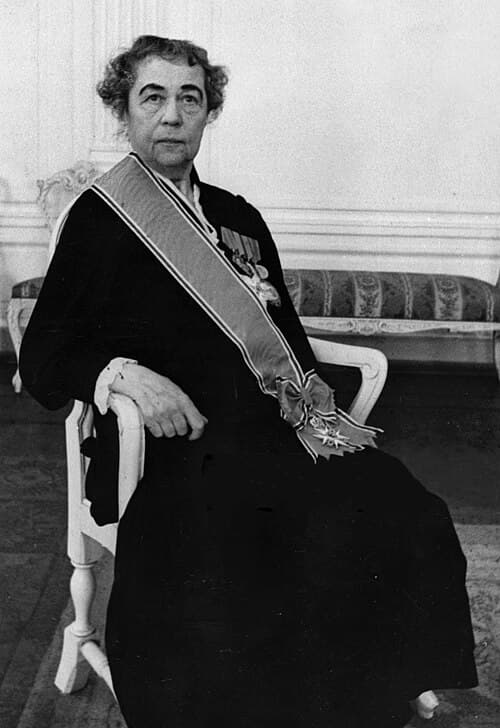
This imaginary interview was generated by artificial intelligence from sources documented in Elizabeth Cady Stanton's profile. It dramatises what the figure might have said based on what we know about them, but does not constitute attested historical testimony. For primary sources and factual documentation, refer to the full profile.