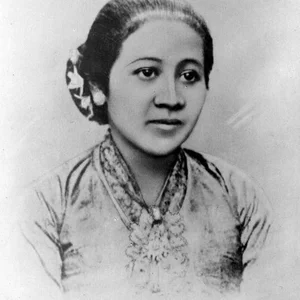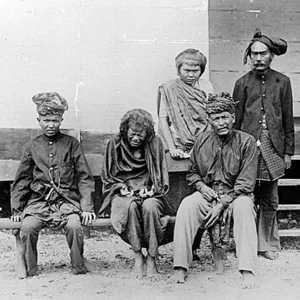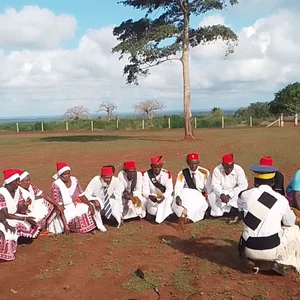

A Giriama woman from Kenya, Mekatilili wa Menza led the resistance against British colonial rule during the 1913–1914 revolt. Arrested and deported, she escaped and continued fighting for her people's freedom.
Mekatilili wa Menza(1840 — 1925)
Mekatilili wa Menza
colonie et protectorat du Kenya
8 min read
Frequently asked questions
Key Facts
- Born around the late 19th century among the Giriama people (on the coast of present-day Kenya) — exact dates are not confirmed by written sources
- In 1913, she organized traditional gatherings (kaya) to mobilize her people against forced labor demands and British encroachment on Giriama lands
- Arrested by colonial authorities in 1913 and deported beyond Mount Kenya, she escaped alongside chief Wanje wa Mwadorikola and made her way back to her homeland
- The 1913–1914 Giriama revolt, which she embodied, was one of the first organized armed resistances against British rule in East Africa
- Celebrated as a national heroine in independent Kenya, she appears on Kenyan banknotes — her memory is kept alive through Giriama oral tradition as much as through written historiography
Works & Achievements
Mekatilili coordinated the resistance of all Giriama clans against forced conscription and colonial taxes, organizing oaths and assemblies in the sacred kayas. It was the most significant collective action ever undertaken by the Giriama people against British domination.
She revived the vaya, the traditional Giriama council that the British had sought to dismantle. This restoration of ancestral institutions was a foundational political act, returning self-governance to the Giriama people.
After being deported more than 600 km from her homeland, Mekatilili escaped and made her way back to the coast on foot, crossing hostile territories. This journey became a founding epic in Giriama oral memory.
Mekatilili passed on to her people a repertoire of songs and ritual dances (kifudu) that bound political resistance to spiritual identity. These traditions endure in contemporary Giriama culture.
Anecdotes
In 1913, Mekatilili wa Menza summoned the Giriama elders to kaya Fungo, her people's sacred enclosure, to take a traditional oath of resistance against the British. This ceremony, banned by the colonial authorities, mobilized thousands of Giriama. The British, stunned by the scale of the movement, sought to stop her at any cost.
Arrested in 1913 and deported along with elder Wanje wa Mwadorikola to the Kisii region, more than 600 kilometers from her homeland, Mekatilili managed the remarkable feat of escaping and walking back to the Kenyan coast. This extraordinary journey through unknown territory only strengthened her legend among her people.
Mekatilili was renowned for her exceptional oratory and for her traditional war dances known as kifudu. She used these ritual performances to galvanize crowds and remind the Giriama of their ancestral rights to their lands and their kaya. Colonial witnesses recorded her ability to electrify entire gatherings through her sheer presence alone.
After the suppression of the Giriama uprising in 1914, Mekatilili was captured again and sent into exile. Released a few years later, she was ultimately recognized by the British authorities themselves as a legitimate figure of authority among the Giriama. She lived to an advanced age, revered as a national heroine by her people.
Mekatilili regularly invoked the spirits of the Giriama ancestors — the koma — to legitimize her struggle. For the Giriama, her actions were not purely political: they were deeply spiritual, for she was defending the sacred sites and ancestral practices that colonization threatened to erase.
Primary Sources
The woman Mekatilili has been inciting the Giriama to refuse to comply with the Government's requirements and has been administering oaths… her influence over the people is very great.
Mekatilili aliimba na kucheza, akiwaita watu wake wapigane kwa uhuru wao. Alisema: 'Ardhi hii ni yetu, wazee wetu walilima hapa.' (Mekatilili sang and danced, calling her people to fight for their freedom. She said: 'This land is ours, our ancestors farmed here.')
Mekatilili was the driving force behind the revival of the kaya oath ceremonies. She claimed authority from the ancestral spirits and gathered support across all Giriama clans.
Mekatilili and Wanje wa Mwadorikola were deported to Kisii in September 1913. It is remarkable that both subsequently escaped and made their way back to the Coast Province.
Key Places
Sacred forest and ancestral enclosure of the Giriama people, the spiritual heart of the resistance organized by Mekatilili in 1913. The British burned it in retaliation during the 1914 crackdown.
Coastal town in Kenya and colonial administrative center of the Giriama region. It was from Malindi that the British coordinated the suppression of the revolt and the arrest of Mekatilili.
A remote region where Mekatilili was deported in 1913 following her arrest. She was exiled there to cut her off from her people, but managed to escape and travel over 600 km to return home.
Traditional territory of the Giriama people, along the Sabaki River. It was in this region that tensions over land use and forced labor reached a breaking point, sparking the revolt.
Typical Objects

A piece of colorful cotton worn by women of the Kenyan coast, the kanga served as both garment and message. Mekatilili wore these fabrics at her gatherings, asserting an African cultural identity in the face of colonial domination.

A percussion instrument used during the kifudu dances that Mekatilili performed to mobilize her people. These gourds kept the rhythm of ancestor invocation ceremonies at the heart of the sacred kaya.

The traditional weapon of Giriama warriors, present at resistance gatherings. The spear symbolized the defense of ancestral lands and the kaya against colonial invaders.

High-ranking Giriama women wore many colorful beaded necklaces signifying their status and their connection to the ancestors. Mekatilili's adornments reinforced her spiritual authority during ceremonies.

The Kaya Fungo, the fortified sacred forest of the Giriama, was the site of all important decisions. It was here that Mekatilili summoned the elders to administer the oaths of resistance in 1913.

A large drum used to summon villages and set the rhythm of assemblies. The sound of the ngoma announced the gatherings that Mekatilili organized to call her people to resistance.
School Curriculum
Vocabulary & Tags
Key Vocabulary
Tags
Daily Life
Morning
Mekatilili rose at dawn in her mud-and-wattle house with a palm-leaf roof in a Giriama village. She began each day with libations honoring the koma ancestors, invoking their protection over her people. She would then join the other women to draw water from the well and prepare the morning millet porridge.
Afternoon
In the afternoons, Mekatilili traveled through the villages of Giriama territory to meet with elders and families, discussing colonial demands and working to unite the resistance. In times of crisis, she organized ceremonies at the kaya, dancing the kifudu and administering oaths of unity to the assembled clans.
Evening
In the evenings, gathered around the fire, community members listened as Mekatilili recounted the great deeds of the ancestors and reminded the Giriama of their rights to their land. She led communal songs and passed on the oral knowledge that formed the foundation of the people's identity, strengthening the spiritual bond between the living and the dead.
Food
The staple food was ugali (a flatbread made from maize or millet flour), served with leafy vegetables, beans, and, along the coast, dried fish. Coconut and tropical fruits such as mango and baobab rounded out the meals. During ceremonies, palm wine (mnazi) was shared as an offering to the ancestors.
Clothing
Mekatilili wore the kanga, the colorful cotton cloth characteristic of women along the Kenyan coast, draped around the body. She adorned herself with many beaded necklaces and copper bracelets, markers of her status as a woman of authority. During ceremonies, she wore Giriama ritual ornaments passed down from generation to generation.
Housing
She lived in a traditional Giriama house built of wood and clay, with a thatched roof of borassus palm, set within a family compound surrounded by a kitchen garden. Giriama dwellings were clustered in defended villages, often near the sacred kaya forest. Inside, the main room served for both sleeping and cooking, with woven mats laid across the floor.
Historical Timeline
Period Vocabulary
Visual Style
Style graphique inspiré de l'art africain côtier, alliant terres chaudes et verts profonds de la forêt sacrée, pour évoquer la dignité spirituelle et le combat de Mekatilili.
Sound Ambience
Ambiance sonore de la côte kenyane : tambours ngoma, chants féminins en giriama et bruits de la forêt sacrée du kaya, avec en fond le souffle de l'océan Indien.
Liens externes & ressources
Références
Œuvres
Organisation de la révolte giriama de 1913-1914
1913-1914
Restauration de l'autorité du conseil des anciens (vaya)
1913
Évasion et retour depuis Kisii
1914
Transmission orale : chants et danses de résistance
1900-1925