Imaginary interview with Émilie du Châtelet
by Charactorium · Émilie du Châtelet (1706 — 1749) · Philosophy · Sciences · 7 min read
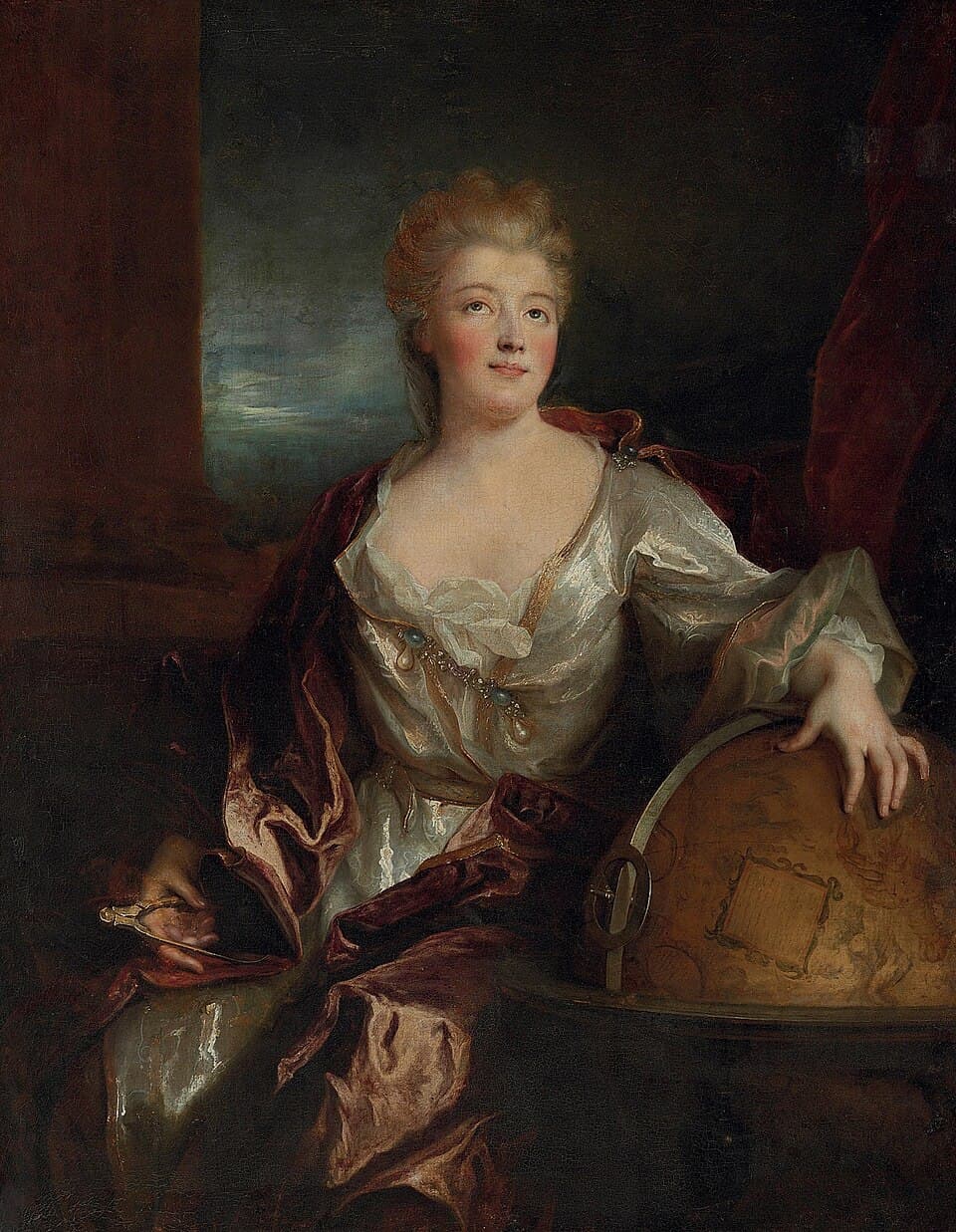
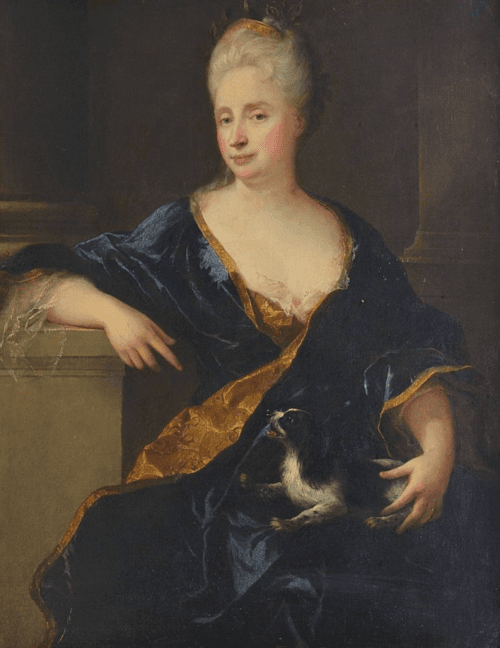
We meet the Marquise du Châtelet in her private study at the Château de Cirey-sur-Blaise in 1748 — a room where prisms and clay-dusted trays share space with towers of annotated Latin manuscripts and a globe whose surface she has traced so many times the varnish is wearing thin. It is late afternoon, and the light through the west window falls exactly as she has arranged it, splitting into a small spectrum across the edge of her desk. She speaks with the brisk precision of a mind accustomed to working through the night, and she wastes very little of either her time or yours.
—How did you first find your way into the scientific conversations of Paris, when so many of those spaces were formally closed to women?
The Café Gradot was — is — a kind of floating academy, where geometers and natural philosophers argued from morning until the candles burned low. No woman was supposed to sit there. So I did not sit there as a woman. I borrowed my husband's tailor, adjusted my silhouette, and walked in. Nobody looked twice. That is what troubled me most: not the disguise itself, but the ease of it. The wit and the reasoning I brought to the table were exactly the same as on any other evening. Only the coat was different. Paris would have me believe that what disqualified me from scientific life was some inherent deficiency of mind. The coat proved it was simply a deficiency of tailoring.
What disqualified me from scientific life was not a deficiency of mind. It was a deficiency of tailoring.
—You and Voltaire transformed Cirey into something altogether unprecedented — a private laboratory at the heart of a noble household. What was it like to conduct serious science in that atmosphere?
We rebuilt the west wing entirely. Where there had been a damp storage room there were soon prisms, lenses, a furnace for the fire experiments — and, naturally, more books than most provincial libraries could claim. At its height our library held upward of twenty thousand volumes. I remember a morning in 1738 when we had three open manuscripts on the table, a beam of light splitting through a new prism, and Voltaire arguing from one corner about the nature of heat while I measured flame temperatures from the other. We were, in fact, in competition: he had submitted his own memoir to the Académie's prize contest; I had submitted mine, without telling him. Cirey was that kind of place — generous in its freedoms and quietly, happily contentious.
—Your experiments with lead balls and clay must have struck your contemporaries as rather unconventional for a marquise. How did you conceive them, and what exactly were you trying to settle?
The question was fundamental: when a body moves, what is the true measure of its force? Descartes and his followers said mv — mass multiplied by velocity, a simple product. Leibniz said the true quantity was vis viva, the living force, which is mass times the square of velocity. To settle an argument between the greatest intellects of the century, one needs empirical evidence, not merely algebraic elegance. I had lead balls cast at different weights and clay prepared in flat trays. I dropped the balls from different heights and measured the craters. The geometry did not lie: double the height, and the crater deepens by a factor of four. The mv² formula was correct. I paid for every ball, every tray of clay, every observation. If the Académie des sciences would not fund a woman's experiments, I would fund my own.
If the Académie des sciences would not fund a woman's experiments, I would fund my own.
—You worked to reconcile Newton and Leibniz at a time when most natural philosophers felt compelled to choose one camp absolutely. What made you resist that tribal allegiance?
Newton gave us the machinery of the heavens — the inverse-square law, the motion of the planets, the tides at last explained with mathematical precision. Leibniz gave us something subtler: a more rigorous metaphysics, a deeper account of why forces behave as they do. In my Institutions de Physique — which I wrote as a course of instruction for my son, though it addressed itself to any reader willing to reason — I tried to demonstrate that these systems were far less incompatible than their partisans insisted. The vis viva quarrel is the clearest example: Newton's own Principia does not actually exclude the squared velocity. The dispute was often as much about English pride against German, Cartesian inheritance against continental mathematics, as it was about natural philosophy. I found such tribal loyalties tedious. A measurement is a measurement, wherever the measurer was born.
—In 1738 you submitted your memoir on the nature of fire to the Académie des sciences anonymously — at the same moment as Voltaire, without telling him. What moved you to that particular secrecy?
Voltaire would have been kind about it. That was precisely the problem. Had he known, he would have helped — editing, advising, perhaps inadvertently smoothing away the edges that were most distinctly mine. I wanted to know what a woman's unassisted reasoning was worth when it carried no name. Neither of us won the prize, as it happened — the winning entry was of a different character from both of ours. But the Académie published both memoirs nonetheless. Mine appeared under my own name in 1744, which surprised even me. An institution that refuses women the right to sit in its sessions was willing to print my arguments between its covers — a form of recognition so limited and so peculiar that I have never quite decided whether to call it an honor or an insult dressed in courtesy.
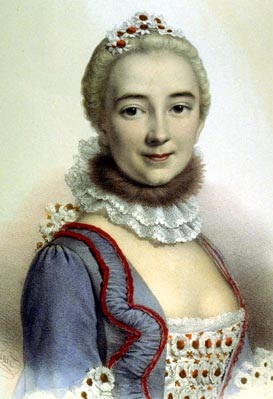
—In 1746, Voltaire was elected to the Académie française — an honor that, as a woman, you could not receive. How did you receive that news?
With sincere pleasure for him, and something else that I choose not to dress up with a prettier name. We had worked side by side at Cirey for more than a decade. I had read his drafts; he had read mine. He was often the wittier writer — I will not dispute that. But a wit is not a proof, and a proof is not a poem, and yet only one of these activities earns a seat in the Académie française. The asymmetry was precise: Voltaire, for being a great writer, received his fauteuil. I, for having translated, annotated, and extended Newton, received the Académie's polite appreciation in a footnote. I have written as much to Frederick II of Prussia — that women's talents go unrecognized not because they are absent, but because our education never allows us to discover them.
—You have argued that women's talents are lost through the defects of their education. What would a more just formation of the female mind actually look like?
My own case is instructive. My father was an unusual man: he had me taught Latin, mathematics, the sciences alongside my brothers, when other fathers of his rank were instructing their daughters only to curtsy and to embroider. The results of his experiment are before you. Had I been educated as girls of the French nobility ordinarily are, I would perhaps have been an accomplished conversationalist. I would not have translated Newton. What women could accomplish, given a genuine intellectual formation — the same formation extended without apology to both sexes — remains an entirely open question, which is to say: the experiments have not yet been performed at any scale worth measuring. I trust experiments. Their results tend to surprise those who designed them.
—In the final months of your work on the Principia translation, those closest to you described a pace of work that alarmed everyone in the household. What was driving that urgency?
I was expecting a child — my fourth — and I was forty-two years old. The mathematics of that situation were not especially favorable. I am a woman who believes in calculation, and the calculation was clear: there was not much time. Newton's Principia Mathematica had never been translated into French in its entirety. His mechanics were available to English and Latin readers, but the French scientific world had no complete version of its own to work from. I could not bear the thought of leaving the manuscript half-done — of a translation that simply stopped at Book Two, with the celestial mechanics of Book Three sitting untranslated in my notes. There were mornings when I wrote from before dawn until the afternoon candles were lit, stopping only when my hand would no longer hold the quill steadily enough to be legible.
Newton's Principia had never been translated into French in its entirety. I could not bear the thought of leaving it half-done.
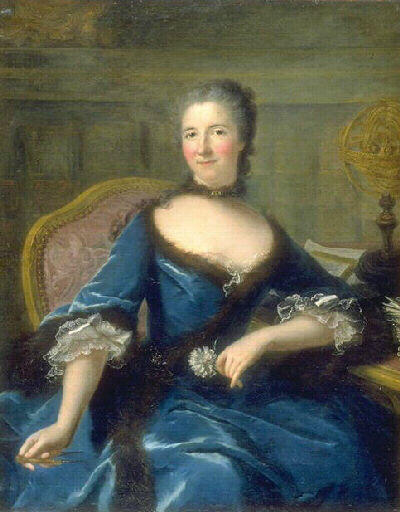
—What do you hope a reader will find in your translation that they could not find in Newton's Latin original?
The Principia is not a book that speaks easily to its readers. Newton wrote in the old geometric style — propositions, constructions, demonstrations — when algebra would have served the argument far more clearly for any reader trained in continental mathematics. My commentary does not merely render his Latin into French: it reinterprets the proofs in algebraic form, so that a geometer who reasons as Leibniz and Clairaut reason can follow the demonstration without first learning to read as a seventeenth-century English astronomer reads. I have also appended my own calculations on certain points where Newton's original demonstration could be strengthened or extended. If someone encounters this version in fifty years — or a hundred — I hope they find not simply Newton's physics, but a record of what it was to think alongside Newton, to argue with him in the margins, to insist on the algebra where he trusted the diagram.
—Your Discours sur le bonheur argues that passion and study are the true foundations of a good life. Was that philosophy tested — or earned — through your own experience?
I wrote it as a record, not a prescription. The argument is simple: the passions — love, curiosity, ambition — are not the enemies of reason. They are its fuel. Without a consuming attachment to something — a problem, a person, an art — the mind spends its force on nothing in particular and accomplishes nothing memorable. I noted in that essay that one must begin by telling oneself firmly that one possesses a mind capable of instruction, and must be willing to use it — that one must not be put off by the first difficulties. That is the whole philosophy. The rest is application. The hours I have spent over Newton's pages were among the happiest of my life, even the ones that lasted until three in the morning with a candle burned down to its socket and the château entirely silent around me.
—The evenings at Cirey were famously brilliant — theatre, supper, philosophical argument deep into the night. Did that social life feel like an obstacle to your science, or something else entirely?
Something else entirely. The social evenings were not separate from the scientific work — they were part of it. We performed plays in the little theatre; we dined with visitors who were often among the most searching minds in Europe. And the conversations that followed supper were frequently where an argument I had been turning over alone in my study suddenly became clearer in the friction of genuine debate. Voltaire was invaluable for this: he would take a half-formed idea of mine and push it toward extremes, and I would push back, and by midnight we had often arrived somewhere neither of us had imagined at dinner. The Institutions de Physique was written this way — not in isolated silence, but in the charged atmosphere of a house that was half laboratory, half theatre, and perpetually, wonderfully, unquiet.
Read further
This imaginary interview was generated by artificial intelligence from sources documented in Émilie du Châtelet's profile. It dramatises what the figure might have said based on what we know about them, but does not constitute attested historical testimony. For primary sources and factual documentation, refer to the full profile.