Imaginary dialogue between Voltaire and Émilie du Châtelet
by Charactorium · Émilie du Châtelet (1706 — 1749) · Philosophy · Sciences · 7 min read
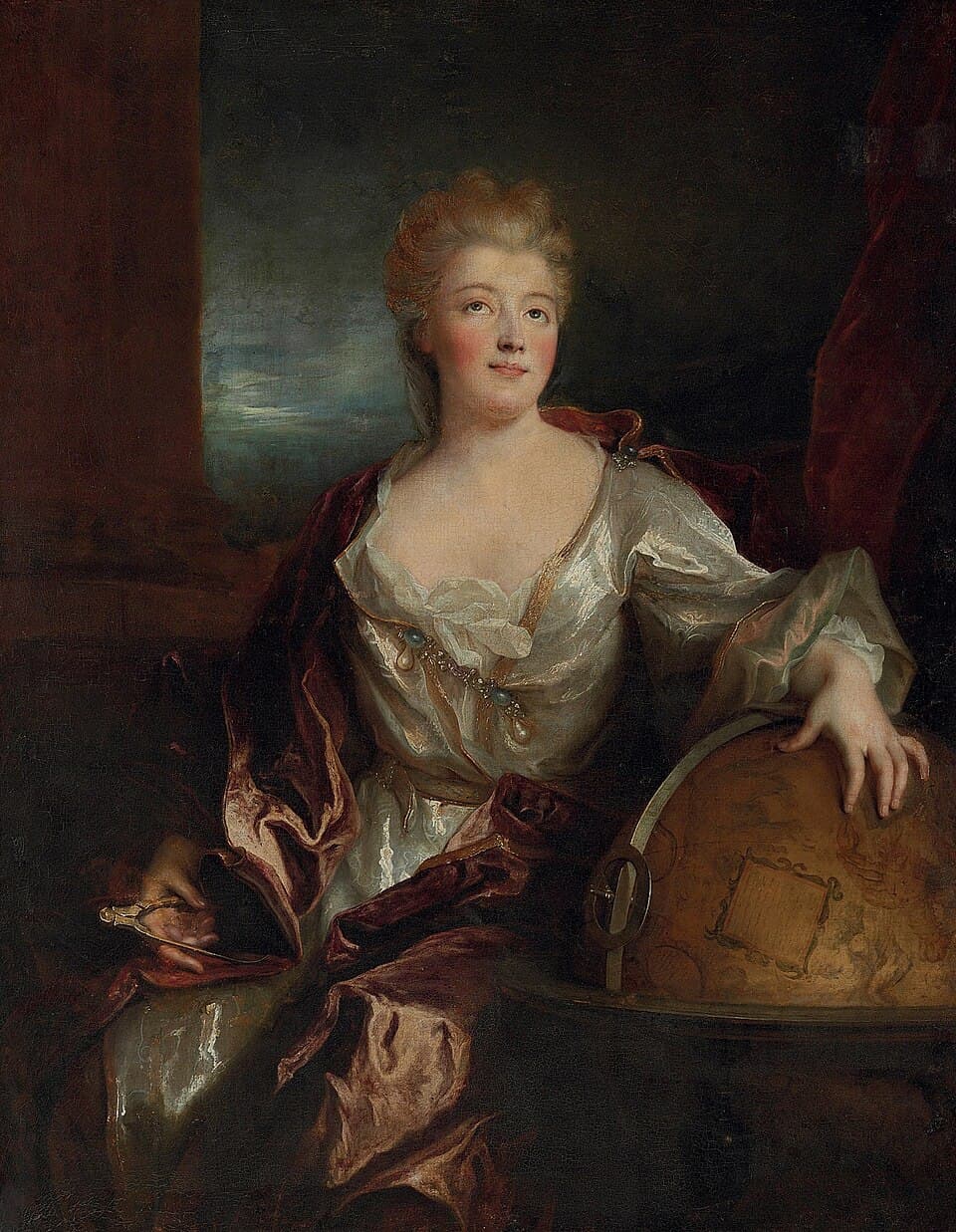
It is at Cirey-sur-Blaise, in the winter of 1747, that Voltaire finds Émilie du Châtelet at her worktable long past midnight, a candle guttering beside an open volume of Newton's Principia in Latin. Lead pellets and a slab of grey clay rest near her elbow — the remains of that afternoon's experiment. They have shared this château for more than a decade, transforming its stone corridors into corridors of argument and discovery, and tonight Voltaire sits across from her not as a philosopher composing verses but as the one person alive who has watched her work closely enough to ask what it costs.
—Émilie, when we first came to Cirey, this house was half-ruined. What made you decide to build a laboratory here?
The decision was made the moment I understood that no institution in France would ever open its doors to me. The Académie des sciences does not admit women — I knew that before I fully mastered differential calculus. So I did the only sensible thing: I built my own academy, here in Haute-Marne, where no one could bar the entrance. I ordered instruments from London and Amsterdam — prisms, telescopes, apparatus for measuring refraction. You brought your books and your wit; I brought my conviction that serious work requires serious space. By 1740 our library held more than twenty thousand volumes, and the instruments we had assembled were the envy of every savant who visited. I wanted a place where the question of who was permitted to think simply did not arise. Here, the only credential required is rigor.
I did the only sensible thing: I built my own academy, where no one could bar the entrance.
—You write until dawn, sleep four hours, come back to your desk. I hear your lamp, Émilie. When do you rest?
Rest is a word I understand intellectually but have never quite mastered in practice. My mornings begin with correspondence — Maupertuis, Bernoulli, Clairaut — because science conducted in isolation is merely private opinion; it becomes knowledge only when it survives argument with the best minds alive. The afternoons I guard jealously for my own work: calculations, experiments, the translation. There is a quality of attention that descends when the house falls quiet after dinner, a sharpening I can only describe as joy — not pleasure exactly, but the sensation of one's mind working at the speed it was built for. You have caught me, on more than one occasion, still at my desk when the servants came to light the morning fires. It is not discipline; it is something closer to appetite.
—Your Institutions de Physique reconciles Newton and Leibniz. Were you not afraid each school would accuse you of betraying both?
That fear occurred to me, and I dismissed it as irrelevant. My concern was never to please the Newtonians or the Leibnizians but to give my son — for whom the Institutions were first written — a coherent account of how the physical world operates. Newton gives us the mathematical laws that describe motion with extraordinary precision; Leibniz gives us the metaphysical principles that explain why those laws hold. To choose one and reject the other seemed to me not rigor but poverty of thought. I spent years reading both with equal care, and what I found was not a contradiction but two partial views of the same truth. The vis viva controversy is, at its root, a quarrel about how to measure force — and I believe the experiments settle it. Where the mathematics and the observation agree, I follow them. Where the authority of a great name conflicts with the evidence, I set the name aside.
—I watched you drop those lead balls into clay last spring, a hundred times over. What were you actually trying to prove?
I was trying to settle, once and for all, a question that had occupied me for years: whether the energy of a moving body is proportional to its velocity, as Descartes and the Newtonians maintain, or to the square of its velocity, as Leibniz argued. The method was simple and merciless. I dropped balls of lead from different heights onto a slab of clay and measured the depth of the impression each ball made. If the Cartesians were right, doubling the height should double the impression; if Leibniz was right, the impression should be four times as deep — because the velocity increases with the square root of the height, and the energy with the square of that. The clay told me, quite unambiguously, that Leibniz had the truth of it. I financed those experiments myself, because no institution would fund a woman's inquiry into a dispute her betters had already declared settled.
—Most of the Académie still follows Newton on forces vives. Does standing so openly against the received opinion concern you?
It would trouble me far more to see evidence clearly and then soften my conclusions out of deference. Newton was a genius of the first order — but he was a genius who measured force one way, and I have measured it another, with my own hands and my own instruments, and the measurement does not lie. The question of vis viva is not a matter of loyalty to a great name; it is a matter of what actually happens when a body strikes a surface. My clay does not care who is famous. I wrote what I found because science is not improved by politeness. The partisans of Newton will insist I am wrong for another generation; then the evidence will accumulate past the point of denial, and someone else may receive the credit. That is the nature of these disputes. I record the truth and let the decades sort the rest.
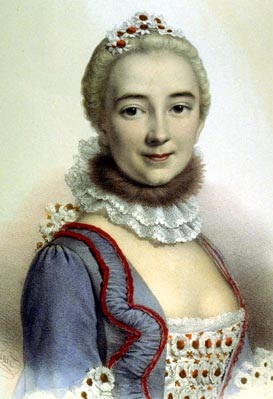
—Café Gradot — you dressed as a man to slip past the doormen. Was that defiance, Émilie, or simply the most practical solution available?
Both, and something else besides — a kind of cold fury, carefully disguised. I had a question I could not resolve alone. The men who might have helped me were meeting every evening at Café Gradot, and no woman was permitted through the door. So I changed my coat, walked in, sat down among them, and argued the point until I was satisfied. No one recognized me. That is perhaps the most instructive part: once you remove the dress and the title, a woman's reasoning is indistinguishable from a man's — but they will only discover that if she finds a way to be in the room. I was fortunate enough to have the audacity and a convincing coat. Most women of intelligence are simply turned away and told to concern themselves with other things. The indignity is not the door. The indignity is being made to feel that the question behind it was never yours to ask.
Once you remove the dress and the title, a woman's reasoning is indistinguishable from a man's.
—In 1738 we each sent a mémoire on fire to the Académie in secret, without telling the other. Was that deliberate silence?
It was deliberate, and I do not regret it. I wanted to know whether my mémoire could stand without the weight of your name beside it or the suspicion that you had shaped my arguments. I had reached conclusions different from yours about the nature of fire — I contended that light and fire are distinct phenomena, that fire is not a simple element but a mode of motion among insensible particles — and I needed the Académie to encounter those conclusions on their merits alone. When I discovered we had submitted on the same day, I confess I found it splendid. The Académie published both. I never became a member; I never can. But my name appears in their proceedings, and my argument stands for any scholar who cares to examine it. That is worth more than a chair at a table I was never invited to sit at.

—You have said women never discover their talents for want of education. Does your father's unusual choice account for all you have become?
Entirely, and that is precisely the problem — it should not have been exceptional at all. My father believed, against all prevailing custom, that a daughter capable of learning mathematics and Latin ought to be taught mathematics and Latin. I was given tutors, books, the same rigorous formation he would have given a son. By sixteen I could read Newton in the original and argue the calculus with some confidence. Most girls of my station were taught to dance, to play the harpsichord, to manage a household — accomplishments not without value, but that leave the intellect entirely uncultivated. I am not remarkable because I am more intelligent than other women. I am remarkable because I was given the tools that most women are denied from the beginning. What has been lost to France — to all of Europe — through that waste of capable minds, I cannot calculate; but the number would astonish us.
—Your translation of Newton's Principia has taken years already. Why add your own algebraic commentary rather than simply render the text faithfully?
Because a faithful translation alone would be, in some measure, a false one. Newton wrote in the geometric style of the ancients — his demonstrations are correct, but they are presented in a language that modern mathematicians no longer speak fluently. The Principia has influenced everything, yet few in France have read it entire, because few command both the Latin and the geometric analysis required to follow it. My commentary translates Newton not only from Latin into French but from one mathematical idiom into another. I expand the demonstrations, I verify the calculations, I supply what he omitted. It is not enough to say what Newton proved; one must show how the proof works, step by step, in the language that current analysis makes available. If I render only his words, I give France a beautiful monument that no one can enter. I want to give France a building they can actually work in.
—You work on the Newton translation as though time itself were pressing. What is the urgency you will not name aloud?
You see it because you know me well enough to see what I do not say. I am forty-one years old and I have not finished the work that matters most to me. The translation, with its commentary, is the thing I will leave behind that cannot be taken back — not by the Académie's rules, not by the conventions of my sex, not by time. Every other obstacle I have faced could be circumvented or endured. This one requires only that I finish before I am prevented from finishing. I will not tell you what I fear — you will think it morbid — but I will tell you that the manuscript is further along than anyone knows, and that I intend it to be complete. France has been reading Newton at second hand, through abstracts and summaries, for sixty years. The full text, properly rendered and annotated, will give French science a tool it does not yet have. That matters more than my comfort. It matters more than rest.
The translation is the thing I will leave behind that cannot be taken back.
Read further
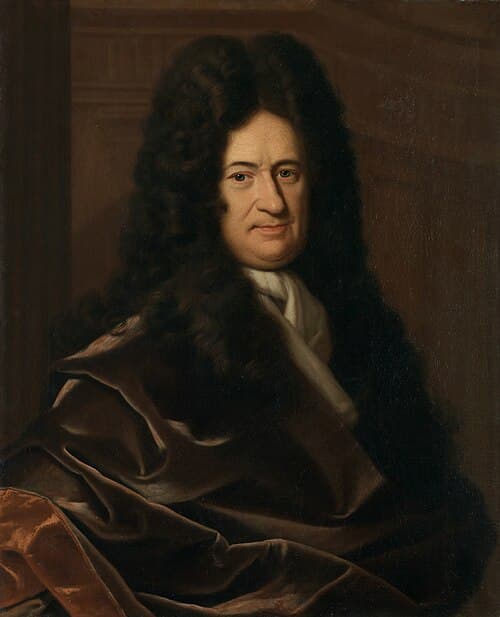
This imaginary interview was generated by artificial intelligence from sources documented in Émilie du Châtelet's profile. It dramatises what the figure might have said based on what we know about them, but does not constitute attested historical testimony. For primary sources and factual documentation, refer to the full profile.