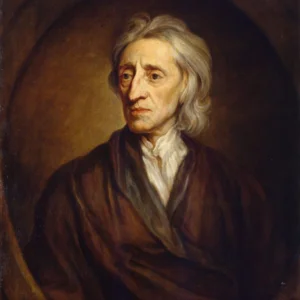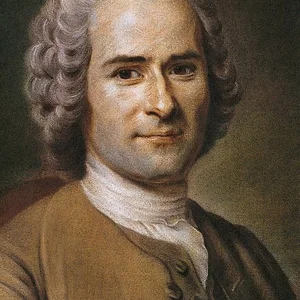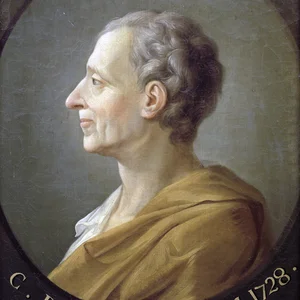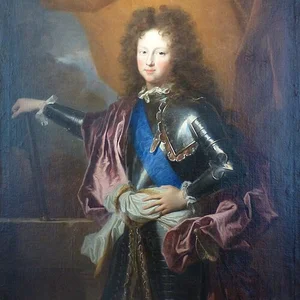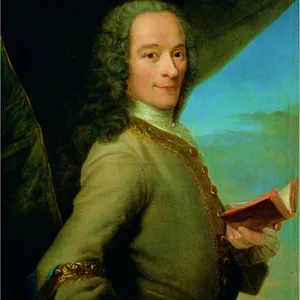

An 18th-century French writer and philosopher, Voltaire is a major figure of the Enlightenment. Through his works, most notably Candide, he championed tolerance, freedom of expression, and criticism of religious intolerance.
Voltaire(1694 — 1778)
Voltaire
France
8 min read
Frequently asked questions
Famous Quotes
« I disapprove of what you say, but I will defend to the death your right to say it»
« The best is the enemy of the good»
« Crush the infamous»
« It is a wonderful thing that man is capable of laughter: it is his prerogative»
Key Facts
- 1718: Performance of his first major tragedy, Oedipus, which brought him widespread acclaim
- 1734: Exile following criticism of the French regime; discovery of English thought and political system
- 1747–1759: Composition and publication of Candide, a philosophical tale critiquing naive optimism and celebrating the value of work
- 1755: Fierce condemnation of the Lisbon earthquake and the problem of evil in the world
- 1778: Death in Paris after a life devoted to defending reason and tolerance
Works & Achievements
A philosophical tale satirizing naïve optimism, criticizing religious intolerance and the absurdity of the world. One of the landmark works of the Enlightenment, widely studied in schools.
A philosophical essay defending freedom of conscience and religious tolerance, written in response to the Calas affair. It remains a foundational text of Enlightenment thought.
A collection of letters comparing French and English society, promoting ideas of freedom of thought and criticism of rigid institutions.
A theatrical tragedy exploring themes of religious tolerance and the conflict between love and faith, representative of Voltaire's renewal of French theater.
A reference work using the dictionary format to spread Enlightenment ideas on reason, tolerance, and the critique of obscurantism.
A historical work examining the reign of Louis XIV, combining political, cultural, and social history, reflecting Voltaire's critical and rational approach.
A philosophical tale featuring a Huron raised in France, satirizing ignorance, religious intolerance, and the absurdities of established institutions.
Anecdotes
In 1726, Voltaire was violently beaten by hired thugs acting on behalf of the Chevalier de Rohan, a nobleman he had offended with his mockery. Rather than seek revenge, Voltaire chose to exile himself to England for three years, where he discovered freedom of thought and political ideas that would shape his entire body of work. This traumatic experience drove him to become a passionate defender of tolerance and justice.
Voltaire maintained an intense correspondence with Frederick II of Prussia, the philosopher-king, for more than 50 years. Despite this celebrated friendship, the two men fell out in 1753 and Frederick even had Voltaire imprisoned for several months — a reminder that even the Enlightenment did not fully protect freedom of expression.
During the Calas Affair in 1762, Voltaire championed Jean Calas, a Protestant merchant wrongly accused of murdering his own son. Through his writings, he rallied public opinion and succeeded in securing a retrial and the posthumous exoneration of the condemned man, demonstrating the power of his pen in the fight for justice.
Voltaire stubbornly refused to return to Paris in his final years, fearing arrest by religious authorities hostile to his critical ideas. At the age of 83, he finally went back in 1778 and received a triumphant welcome — but he died just a few weeks later, already weakened by the journey.
The writer used the pen name 'Candide' for several of his works, most famously his celebrated philosophical tale, as a way to evade royal censorship and prosecution by the Church. This clever device allowed him to openly criticize religious intolerance and the absurdity of certain doctrines without risking imprisonment.
Primary Sources
In the land of Westphalia, in the castle of my lord the Baron of Thunder-ten-tronckh, there was a young man whom nature had endowed with the gentlest of dispositions. His countenance expressed his soul. His name was Candide.
Let us dare say to those who have authority: we are all fallible, we are all prone to error. It is in the nature of man, as of all animals, to feed on what pleases him. A child believes his nurses, a young man believes his teachers, and a grown man believes his own eyes.
Doubt is not a pleasant condition, but it is an honorable one. It is the beginning of wisdom to begin to doubt what one has long believed with certainty.
The English pride themselves on being the only free people in the world, and rightly so: for except for the King, no man has the right to say to another: You shall not think as I do.
There lived in Babylon a young man named Zadig, born with a fine nature and strengthened by education. Rich and young, he sought to be happy; but happiness eluded him.
Key Places
Birthplace of Voltaire (François-Marie Arouet) in 1694 and the center of his intellectual activity. The French capital was the heart of his philosophical and literary engagement during the Enlightenment.
The residence Voltaire acquired in 1758 near the Swiss border. He spent the final years of his life there (1760–1778), turning it into a center of intellectual influence where he welcomed leading thinkers of the Enlightenment.
The prison where Voltaire was imprisoned twice (1717–1718 and 1726) for his critical writings. These incarcerations sharpened his awareness of intolerance and deepened his commitment to freedom of expression.
Where Voltaire resided from 1750 to 1753 at the court of King Frederick II of Prussia. This period in Germany illustrates Voltaire's influence over enlightened monarchs and his role as a political adviser.
The site of his reburial in 1791. Voltaire has rested there ever since, in recognition of the foundational role he played in shaping the ideas that led to the French Revolution.
The château where Voltaire lived from 1734 to 1749 alongside Madame du Châtelet. It was a major center of intellectual production, where he wrote several of his most important works.
Typical Objects

Essential tools of the Enlightenment writer. Voltaire used the quill to compose his many works, correspondences, and critical pamphlets that left their mark on the 18th century.

Voltaire's satirical masterpiece published in 1759, this philosophical tale critiques naive optimism and champions tolerance. It is his defining work, symbolizing his Enlightenment commitment.

The typical lighting of the 18th century, indispensable for late-night intellectual work. It represents the tireless labor of Enlightenment philosophers who wrote deep into the night.

A defining fashion accessory of the 18th century and a mark of high social standing. Voltaire, a leading figure of the intellectual elite, wore this wig fashionable among aristocrats and philosophers alike.

The symbolic gathering place of the Enlightenment, where Voltaire and his peers debated philosophy, social criticism, and reform. These salons were the heart of 18th-century intellectual life.

Voltaire maintained an extensive correspondence with the leading thinkers of his era. These letters are invaluable documents reflecting the philosopher's critical spirit and dedication to tolerance.

The medium of pre-revolutionary writing. Voltaire's manuscripts, often annotated and revised, bear witness to his creative process and his passion for philosophical writing.

A symbol of the Enlightenment ideals Voltaire championed, particularly freedom of expression and human rights. His writings influenced 18th-century thinkers in the development of human rights.
School Curriculum
Vocabulary & Tags
Key Vocabulary
Tags
Époque
Concept
Mouvement
Daily Life
Morning
Voltaire wakes late, around 9 or 10 in the morning, after a night often spent writing. He has a light breakfast of coffee or hot chocolate — exotic drinks fashionable among men of letters in the 18th century. He immediately receives visitors in his bedroom or study, a common practice among Parisian philosophers who held morning audiences.
Afternoon
The afternoon is devoted to intensive correspondence with fellow philosophers, sovereigns, and friends across Europe. Voltaire works on his manuscripts, articles, and plays, often reclining in an armchair due to his chronic health problems. He also receives distinguished visitors and takes part in the literary salons of Paris, where he expounds his ideas.
Evening
Evenings are spent at intimate dinner gatherings or outings to the theatre to attend performances. Voltaire savors witty conversation with enlightened minds and figures of power. These moments provide opportunities to spread his ideas on tolerance and his critique of religious obscurantism.
Food
Voltaire follows a light diet suited to his fragile health: broths, poultry, fish, and fruit. He drinks coffee, tea, and red wine regularly, though in moderation. As a man of high society, he takes part in lavish meals at salon dinners, where 18th-century French cuisine takes center stage.
Clothing
Voltaire wears the typical dress of the French nobility of the robe in the 18th century: silk coat, knee breeches, silk stockings, and buckled shoes. He favors simple but quality garments, rejecting excessive ornamentation. His portraits often show him wearing a wig or a nightcap, a mark of his status as a man of letters.
Housing
Voltaire successively occupies several prestigious residences: a private mansion in Paris, then the estate at Cirey in Champagne, which he shares with Madame du Châtelet. His interiors reflect his standing: well-stocked libraries, a fully equipped study, and reception rooms for entertaining guests. These spaces become centers of intellectual life and philosophical debate.
Historical Timeline
Period Vocabulary
Visual Style
Un style visuel alliant la finesse des gravures du XVIIIe siècle français à l'ironie mordante des caricatures philosophiques, avec une palette chaude et aristocratique dominée par l'or et les teintes terreuses, créant une atmosphère de débat intellectuel éclairé et de critique sociale tempérée par l'élégance de l'époque des Lumières.
Sound Ambience
Une ambiance de salon des Lumières du XVIIIe siècle, mêlant les sons intimes du travail d'écrivain (plume sur papier, feuilletage de livres) aux bruits urbains parisiens filtrés, avec une musique harpsichord délicate et le crépitement d'un foyer, évoquant l'atmosphère raffinée et intellectuelle du philosophe des Lumières.
Liens externes & ressources
Références
Œuvres
Traité sur la tolérance
1763
Lettres philosophiques
1734
Dictionnaire philosophique portatif
1764
Siècle de Louis XIV
1751