Imaginary dialogue between Jean-Jacques Rousseau and Immanuel Kant
by Charactorium · Immanuel Kant (1724 — 1804) · Philosophy · 6 min read
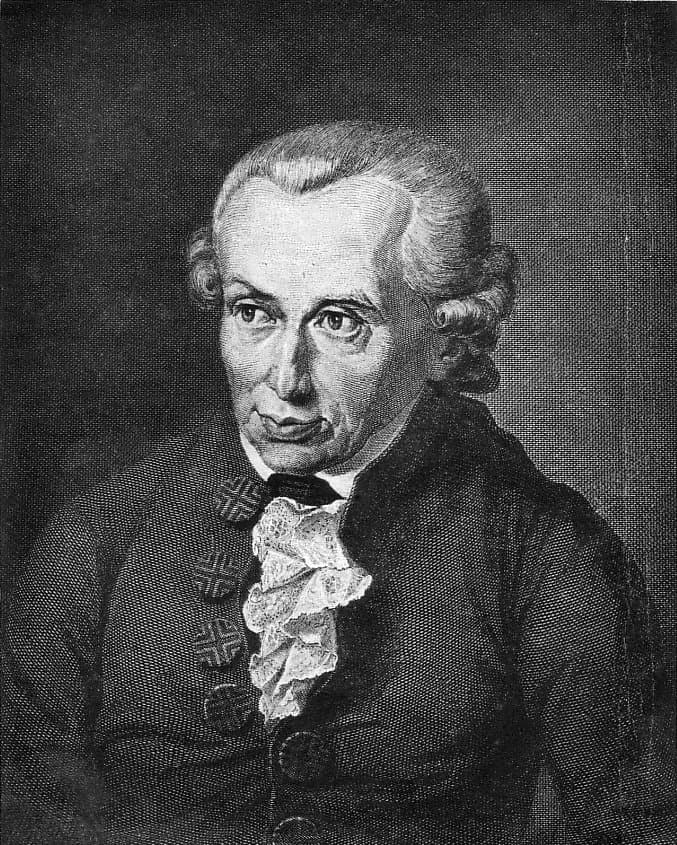
It is at the threshold of the modest garden on Prinzessinstraße, in Königsberg, that an exhausted traveler presents himself this spring of 1776: Jean-Jacques Rousseau, fleeing men as always, has made the detour to the edge of East Prussia to meet the professor whose rigor has been praised to him. Under the lindens of the neighboring alley, a bell strikes the half-hour and a small man steps forward, cane in hand, punctual as a clock. The two philosophers have never seen each other, but Rousseau knows that his Émile sits, the only engraving on an otherwise bare wall, in his host's study. He comes seeking, from this distant admirer, the echo of his own dreams of liberty and virtue.
—My dear professor, I was told on the way that the burghers of Königsberg set their watches by your walk. Does this regularity not weigh on you?
It does not weigh on me, Jean-Jacques: it sustains me. My servant Lampe wakes me at five o'clock, I take my tea and my pipe, I work, I teach, and at precisely half past three I go out along the linden alley, cane in hand. A mind as weak as mine needs an external rule to remain free within. You who wander ceaselessly will judge me a prisoner of my habits; I will answer that I have never been more master of my time. The only time I missed my walk was the day your Émile fell into my hands — it kept me chained to my armchair all afternoon.
A mind as weak as mine needs an external rule to remain free within.
—I who have never stopped running from one country to another, I am astonished: you have never left your province, yet you teach the geography of the whole world?
It is true, I have never strayed more than a few leagues from my native town. But one need not roam the earth to understand it; it suffices to read the accounts of travelers and order them by thought. My students think me a great navigator when I describe the winds, rivers, and customs of distant nations — and I have seen only the Pregel. The war nonetheless brought the world to my doorstep: when the Russians occupied Königsberg, from 1758 to 1762, I dined with their officers and learned a thousand things from them. You see, my friend, imagination governed by reason goes further than legs.
One need not roam the earth to understand it; it suffices to order it by thought.
—You know what debt I inspire in you, since my book adorns your wall. But tell me: what does it mean for you to be a man of the Enlightenment?
That engraving is not an ornament, it is a reminder, Jean-Jacques: you taught me to respect the common man as much as the scholar. The Enlightenment, the Aufklärung as we say here, is nothing other than man's emergence from a minority for which he himself is responsible — that laziness which makes us prefer the tutelage of others to the use of our own understanding. All my effort is contained in a motto I never cease turning over in my mind: Sapere aude! Dare to use your own understanding. Before you, I had contempt for the ignorant vulgar; you corrected me, and henceforth I hold that restoring the rights of humanity is worth more than all metaphysics.
The Enlightenment is man's emergence from a minority for which he himself is responsible.
—You speak of correcting your gaze. Must one believe that a book — mine — could change a philosopher already mature like you?
Believe it without false modesty on my part. I was a man of cold understanding, intoxicated by my own reasonings, persuaded that science alone constituted the honor of humanity. Your voice undecieved me. You made me feel that the illiterate shepherd who acts according to his conscience is worth the geometer, and that the dignity of man is measured not by his knowledge but by his freedom. Since then, I no longer separate criticism — that patient examination of the limits of our reason — from the respect due to every conscience. You see in me a Privatdozent become professor, who spent fifteen years begging his bread from his students; but it is you, the hunted man, who taught me where true nobility resides.
The shepherd who acts according to his conscience is worth the geometer: dignity is not measured by knowledge.
—I was shown a telescope on your desk. You, the man of pure reason, do you allow yourself to be moved by the contemplation of the sky?
Two things, my friend, fill my heart with ever-growing admiration: the starry sky above me and the moral law within me. As a young man, I wrote a Universal Natural History in which I proposed that our solar system formed from a primordial nebula, by the sole laws of matter. My mother already took me to observe the stars, and it is from her that I have this sensitivity. But see the strange: the more I measure the immensity of the worlds, the more I feel, within me, something that belongs to no world — a voice that commands and does not calculate. The telescope enlarges the universe for me; conscience makes it bearable.
The telescope enlarges the universe for me; conscience makes it bearable.
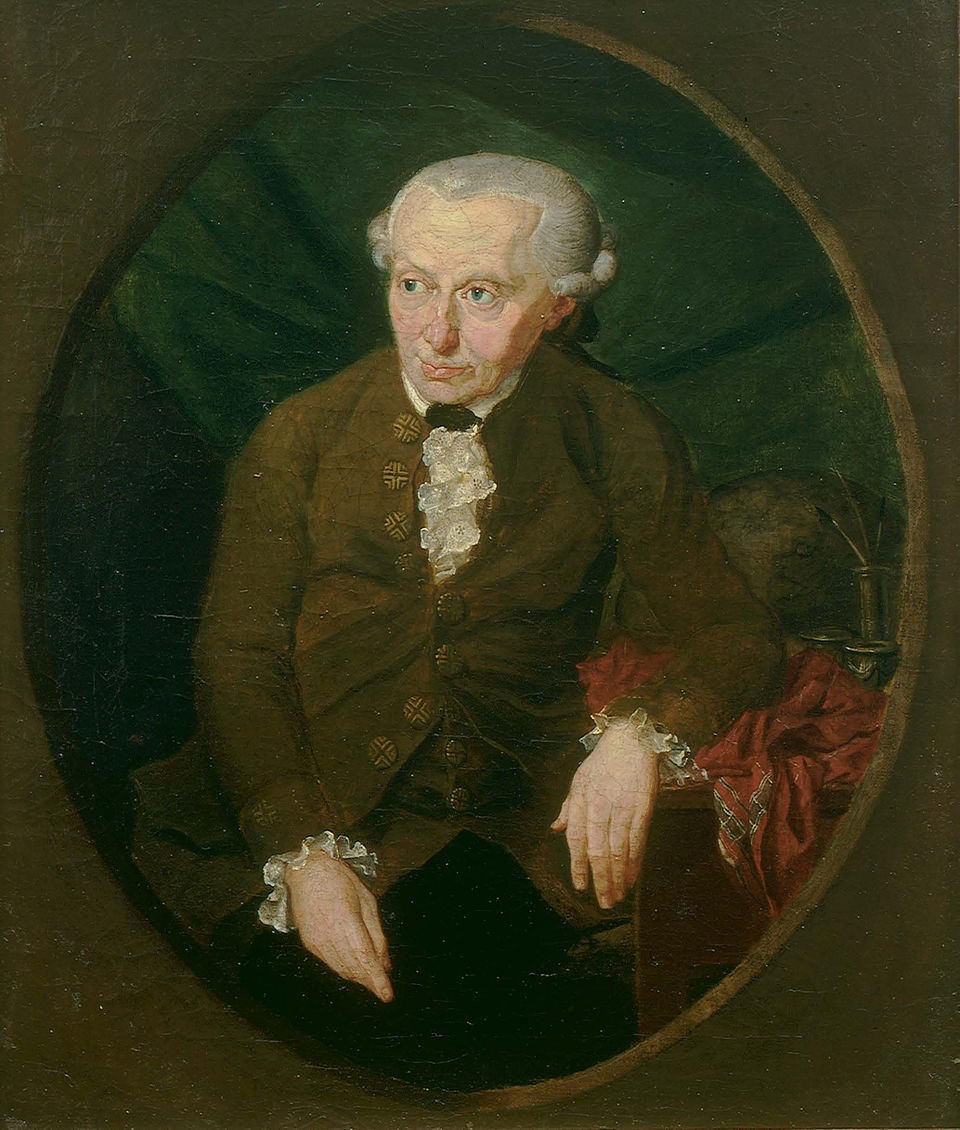
—This voice that commands within you, how do you name it? Is it the same natural sentiment that I, for my part, place at the bottom of man's heart?
We touch closely here, Jean-Jacques, and yet we differ. Your natural sentiment speaks to the heart; my moral law speaks to reason, and it formulates itself as an unconditional command, what I call a categorical imperative. Here it is as I forge it: act only according to that maxim whereby you can at the same time will that it should become a universal law. If every man simply asked himself, 'what if everyone acted like me?', he would carry within him the entire tribunal of virtue. This is not learned from books, which is why the humblest peasant knows as much about it as the doctor. You have felt this truth; I try, in my drier way, to demonstrate it.
Act only according to that maxim whereby you can at the same time will that it should become a universal law.
—The world we live in is full of wars and ambitious princes. Does a man of the study like you dare to dream of reconciled nations?
I dare, yes, and I hold it as the most serious of duties. I saw my city occupied, I saw the ravages of the Seven Years' War: nothing is more contrary to reason than those princes who throw peoples against each other like pawns. I dream of a federation of free states that would renounce making war, bound not by a single master but by a common law. I add to it an idea dear to me, cosmopolitanism: every man, in whatever land he arrives, should find hospitality there, for we are all citizens of one round earth from which no one can depart. You will call me a utopian; I will answer you that without this hope, thinking would be useless.
We are all citizens of one round earth from which no one can depart.
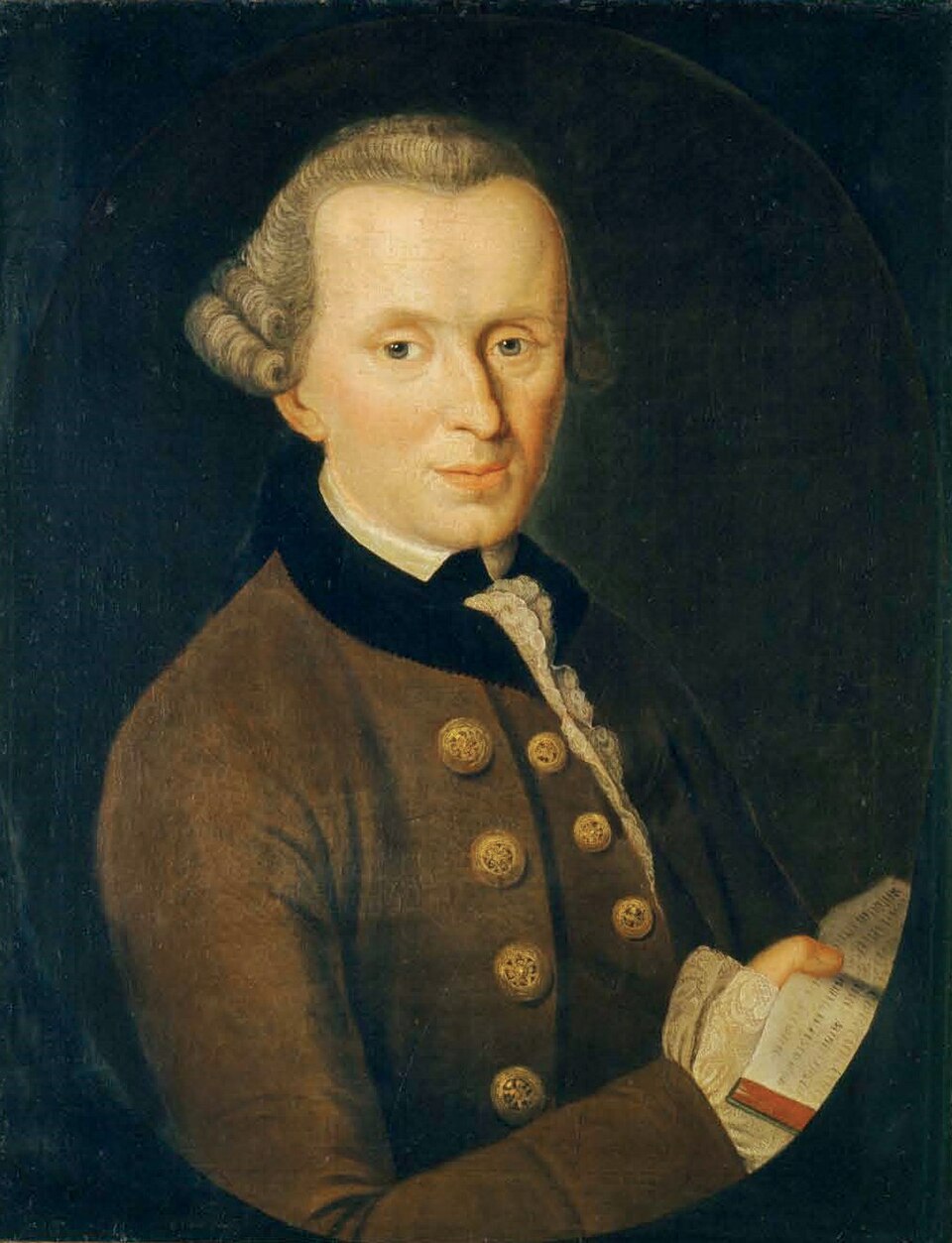
—Yet you live under an absolute king. How do you reconcile your love of liberty with the obedience you owe to Frederick?
Let us distinguish, my friend, for that is everything. Under our King of Prussia reigns what is called enlightened despotism: an absolute monarch who nonetheless lets his subjects reason. I therefore say: obey as a subject, but reason freely as a scholar. The soldier must march, but the thinking man can write what he judges true. That is the only liberty that no prince can take from me, and as long as it is left to me, I serve the state without denying myself. I know well that you could never bend thus, and that it cost you exile and stones thrown at your windows. I admire you for never having yielded; I try to keep my frankness within the bounds left to me.
Obey as a subject, but reason freely as a scholar.
—Before I leave you to your walk, tell me where this iron discipline comes from. Is it the philosopher or the child of Königsberg that shows itself?
It is the child, Jean-Jacques, long before the philosopher. I was born into a modest family of saddlers, steeped in Pietism, that rigorous Protestantism which makes every hour a duty. My mother, Anna Regina, planted in my heart the first seed of the good; I never speak of her without tenderness. From this frugal childhood remains my taste for order: a single real meal, lunch, which I want long and cheerful, where one talks about everything except philosophy; bedtime at ten o'clock, wrapped in my blankets according to an art I perfected myself. People think me the slave of my rituals; I am rather like the clockmaker who sets his watch so that he may then forget it all day.
I am like the clockmaker who sets his watch so that he may then forget it all day.
—One last thing, since you owe me so much: what, in your opinion, will a good man keep, when the scholar and the traveler are forgotten?
He will keep the moral law, which neither ages nor wears out. Everything else — my geography lectures, my hypotheses about the heavens, my habits that people mock — is but dust compared to that inner voice that neither time nor princes extinguish. You ask me what remains: I answer you that in every man remains the capacity to command himself, and it is in that alone that he is free. You who have suffered so much from men, Jean-Jacques, you know it better than I: everything can be taken from us, save the dignity of acting according to duty. If my books should one day fade, I would be consoled if only that seed were remembered, the one my mother and you yourself caused to sprout in me.
Everything can be taken from us, save the dignity of acting according to duty.
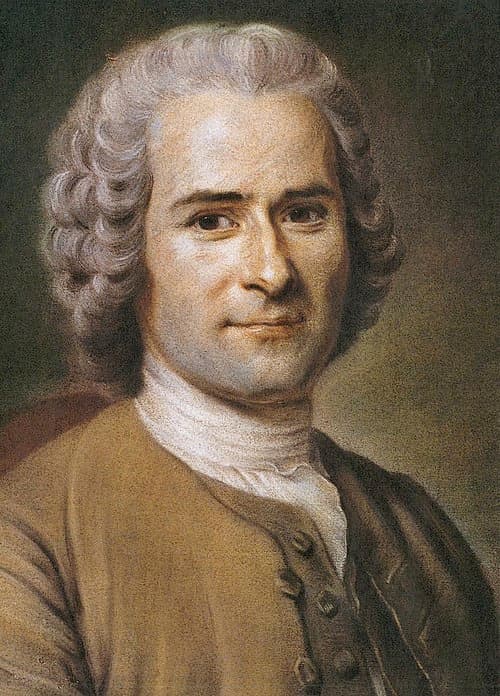
This imaginary interview was generated by artificial intelligence from sources documented in Immanuel Kant's profile. It dramatises what the figure might have said based on what we know about them, but does not constitute attested historical testimony. For primary sources and factual documentation, refer to the full profile.