Kids interview Immanuel Kant
by Charactorium · Immanuel Kant (1724 — 1804) · Philosophy · 5 min read
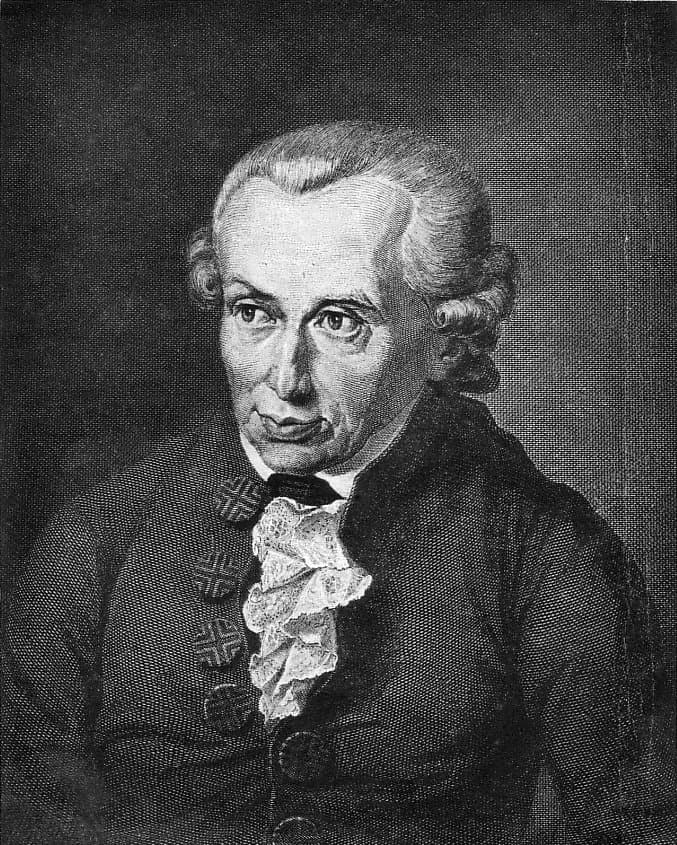
Two twelve-year-old visitors push open the door of a quiet house in Königsberg. An old man in a dark coat waits for them near his desk, a quill pen in hand. He smiles: he likes it when children come to ask him questions.
—Is it true that you never left your city your whole life?
It's true, my child, and many are surprised by it. I was born in Königsberg, in Prussia, in 1724, and I never went farther than a few hours' walk. Imagine a seaside city, with ships, merchants from everywhere, smells of fish and tar. Why would I leave? The whole world came to me through the port and through books. I didn't need to chase after it. People think you have to cross the earth to understand it. I understood it by sitting at my table, listening and reading.
The whole world came to me through the port and through books.
—But then how did you teach geography of countries you had never seen?
Ah, that's a good question! I gave lectures on physical geography, and my students thought I was a great traveler. Yet I had seen neither distant mountains nor deserts. But I read everything: the accounts of sailors, explorers, merchants. Imagine listening to a thousand people tell what they saw, then storing it all in your head like a big cabinet. I described rivers, winds, volcanoes with such detail that people asked me questions as if I had been there. The truth is, my only real journey was thinking.
My only real journey was thinking.
—We were told that people set their watches by your walk. Is that a joke?
Not at all! Every afternoon, at exactly 3:30 PM, I took my walking cane and went for a walk along the same alley, by the river. Always the same path, always at the same minute. The neighbors, seeing me pass, knew the time. Imagine a street with no engines, just the sound of hooves and wind in the linden trees, and an old man walking at a steady pace. I walked alone, on purpose, to breathe through my nose and think in silence. Only once did I miss my walk: the day I received a book by Rousseau; I couldn't put it down.
Always the same path, always at the same minute.
—And in the morning, what did your home smell like? What did you eat when you got up?
My servant, Lampe, woke me at exactly 5 AM, and I never lingered in bed. It smelled of light tea and the smoke from my pipe — that was my breakfast, one or two bowls of tea, nothing more. Then I worked on my writings, alone in my study full of books. My real meal was lunch, long and cheerful, with guests. We talked about everything except philosophy! In the evening, I read a bit, then went to bed at 10 PM, wrapped in my blankets using a technique I had invented to fall asleep quickly. You see, a life as regular as clockwork.
A life as regular as clockwork.
—What exactly are the Enlightenment that everyone talked about in your time?
You know, in German we said Aufklärung. Many people in my time didn't dare think for themselves. They waited for a priest, a master, or a king to tell them what to believe. It's comfortable, but it's like staying a baby your whole life. In 1784, I wrote a short essay to shake things up. My motto was two Latin words: « Sapere aude! Have the courage to use your own understanding! » Understanding is your mind, your ability to judge for yourself. Leaving the childhood of the mind — that is the Enlightenment. Daring to think without someone holding your hand.
Daring to think without someone holding your hand.
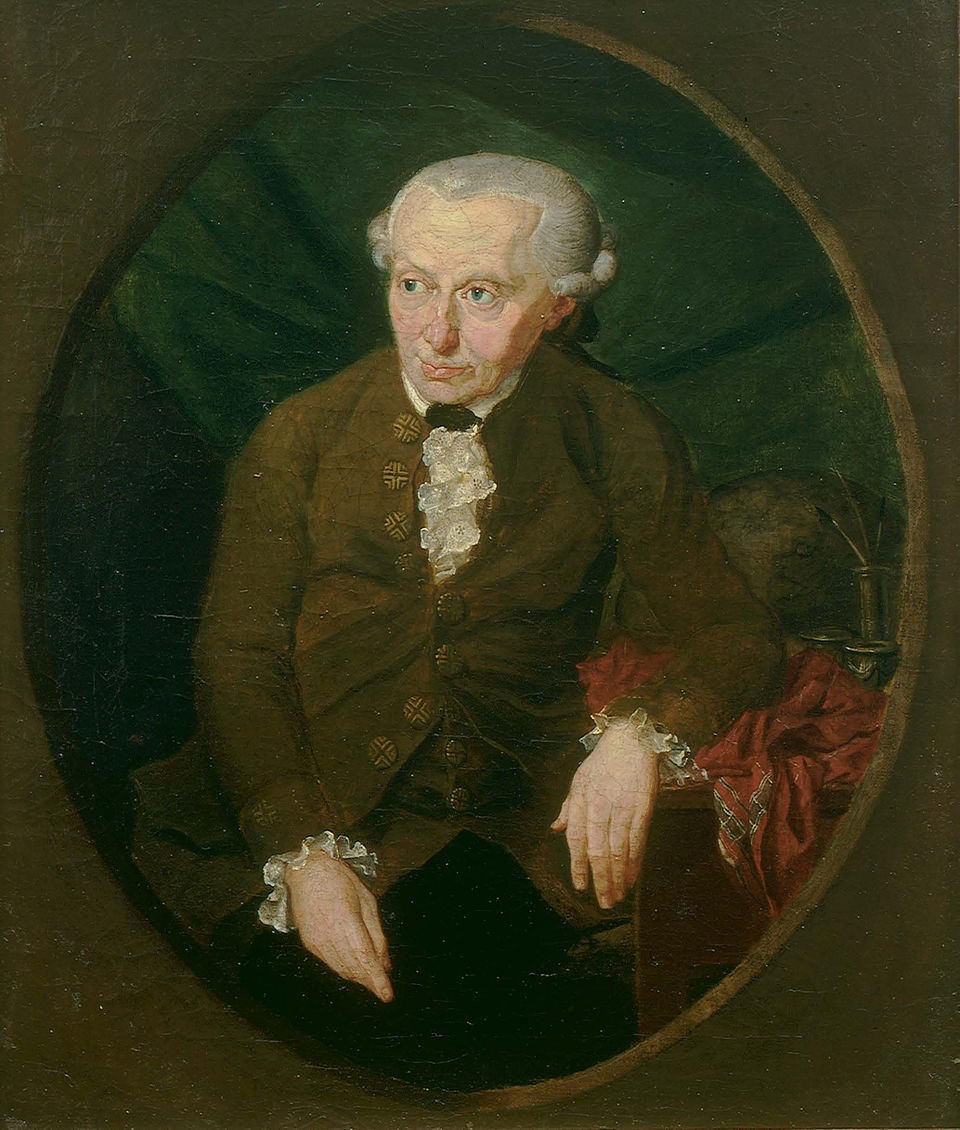
—But isn't it dangerous to tell people to think for themselves?
Yes, a bit! Many powerful people prefer that you obey without thinking. It's easier to govern a people that doesn't ask questions. But imagine for a moment: if no one dares to say 'wait, is what I'm being told true?', then the worst nonsense can last for centuries. I wasn't telling people to break everything. I told them to learn, to read, to judge, then to decide as adults. Thinking for yourself is not disobeying for fun. It's becoming truly free in your mind. And that, my child, no one can take from you.
Becoming truly free in your mind, no one can take that from you.
—Did you look at the stars at night? What did they make you feel?
Yes, since I was very young! My mother, Anna Regina, took me to observe the sky, and I kept that wonder all my life. As a young man, I even imagined how our solar system could have been born from a great rotating cloud. But what moved me most was not just the sky. It was two things together. I wrote it like this: « the starry sky above me and the moral law within me ». On one side, the immensity above your head. On the other, that little voice inside you that tells you what is right. Both seemed to me as vast, as mysterious as each other.
The starry sky above me, the moral law within me.
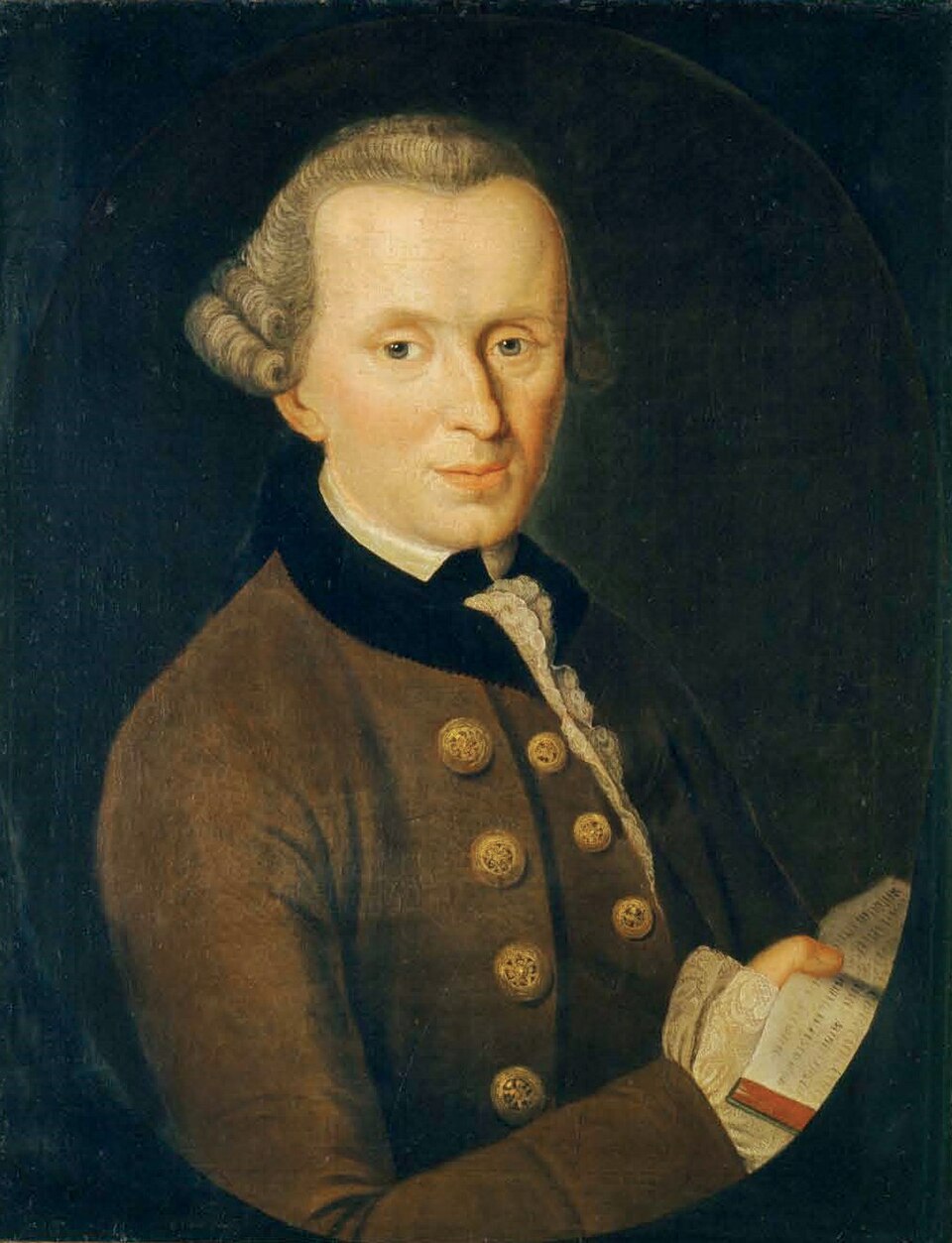
—The little voice that says what is right — how do we know if we are listening to it well?
I found a simple rule for you, you'll see. Before doing something, ask yourself: 'What if everyone did the same?' If you feel like lying, imagine a world where everyone always lies — no one would believe anyone, would they? So lying is not right. I called this the categorical imperative. It's a somewhat scholarly word for a very simple idea: « Act only according to that maxim whereby you can at the same time will that it should become a universal law. » In other words: act only in a way that you would accept as a rule for everyone.
Before acting, ask yourself: what if everyone did the same?
—Did you dream of a world without war? Was that possible in your time?
I dreamed of it, yes, even though war was everywhere. As a child, I saw Russian soldiers occupy my city for years. So in 1795, already old, I wrote a Perpetual Peace: A Philosophical Sketch. My idea: that states stop fighting and form a great federation, where each keeps its freedom but respects others. Imagine neighboring countries that, instead of sending armies, would welcome each other as guests. People thought it naive, an old professor's dream. Yet I believed that a traveler, wherever he goes, should be received without being treated as an enemy. Peace is not a gift: it is built.
Peace is not a gift: it is built.
—Did you ever get in trouble with the king because of your ideas?
Yes, and it saddened me. In 1793, I wrote a book on religion as seen by reason. King Frederick William II did not like it at all. Imagine receiving an official letter reproaching you for your writings and ordering you to keep silent on those subjects. At my age, it was heavy to bear. I obeyed as long as that king lived — not out of cowardice, but because one can respect authority while keeping one's ideas deep inside. Thinking freely does not mean shouting in the street. Sometimes one keeps silent out of wisdom, waiting for better days.
One can keep silent out of wisdom, without ever renouncing thought.
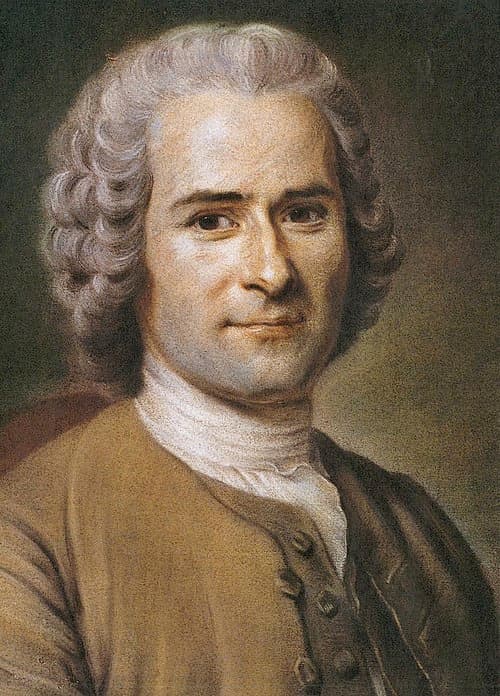
This imaginary interview was generated by artificial intelligence from sources documented in Immanuel Kant's profile. It dramatises what the figure might have said based on what we know about them, but does not constitute attested historical testimony. For primary sources and factual documentation, refer to the full profile.