Imaginary interview with Immanuel Kant
by Charactorium · Immanuel Kant (1724 — 1804) · Philosophy · 6 min read
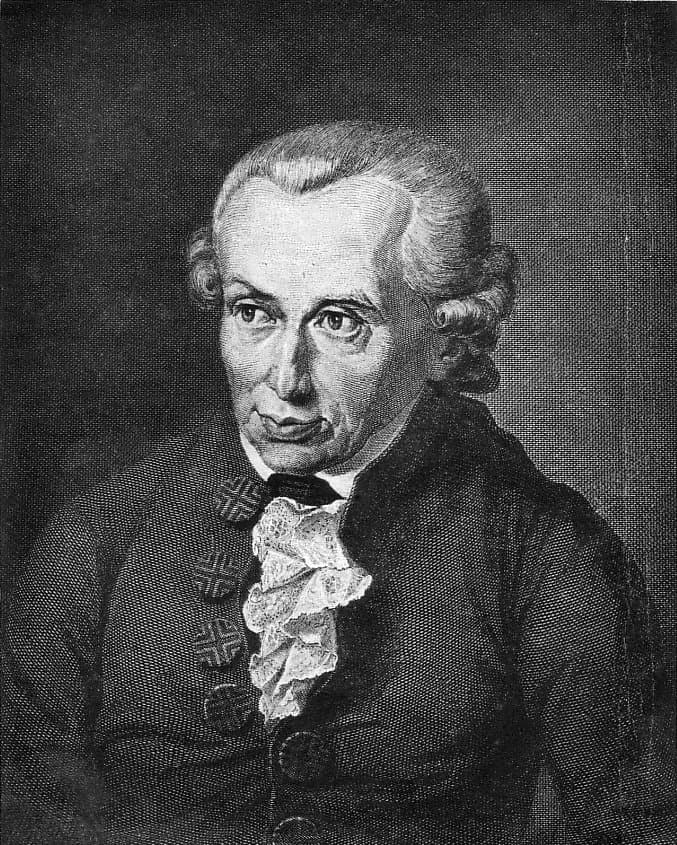
Königsberg, a gray afternoon in the year 1798. The philosopher has just returned from his walk, cane still in hand, and receives us in his book-lined study where the inkwell awaits. The conversation begins as the tea cools.
—How do you explain this discipline that governs each of your days almost to the minute?
You arrive just in time: three-thirty had barely struck when I was already setting down my cane at the foot of the alley. My servant Lampe knows that at 3:30 PM I leave my desk, whatever the season, to walk along the Pregel under the linden trees. I am told that the burghers of Königsberg set their watches by my passing; I did not ask for so much, but habit has become second nature to me. I walk alone, and always breathing through my nose, for I hold that air taken through the mouth chills the chest. My pocket watch, my counted back-and-forths, my silence: these are not quirks, believe me, but the architecture that allows the mind to build quietly, without the body constantly demanding its due.
These are not quirks, but the architecture that allows the mind to build.
—Do you remember a day when this immutable walk was interrupted?
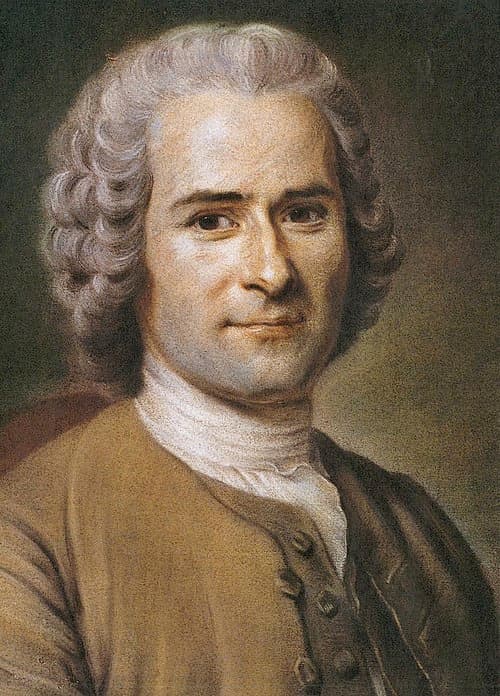
Only once, and I confess it without shame. Someone had just handed me Rousseau's Émile, and I sat down to skim a few pages before going out. A few pages! The hour for my walk passed, then another, and I did not notice. That man from Geneva affected me as a new star affects an astronomer: he straightened my gaze. Until then I had believed that a man's dignity depended on the extent of his knowledge; he taught me that it depends on the upright will of the humblest artisan. My desk still bears his portrait, the only ornament I have allowed myself in an otherwise bare room. That day, Königsberg could not set its watch by me, and I believe that disorder was worth more than all my orders.
That man from Geneva affected me as a new star affects an astronomer.
—In 1784, you were asked in a journal what the Enlightenment really is. What answer did you want to give?
The briefest I could, for the question deserved a formula rather than a treatise. I wrote that the Enlightenment is man's emergence from his self-incurred minority, this minority being the inability to use one's own understanding without the guidance of another. And I dared the watchword: Sapere aude! Have the courage to use your own understanding! Understand that I do not accuse nature: she has long since freed us. It is laziness and cowardice that keep so many men under tutelage, too happy to let a book serve as reason, a director serve as conscience. The Aufklärung is not another piece of knowledge to receive; it is a resolution to take, and it costs nothing but a little courage.
The Aufklärung is not another piece of knowledge to receive; it is a resolution to take.
—Why do you insist so much that everyone think for themselves, rather than deferring to sages and authorities?
Because tutelage, once comfortable, becomes a chain one no longer feels. I have known too many minds who repeated their masters like a schoolboy his lesson, without ever testing whether the thing was true. But thinking for oneself does not mean inventing everything alone in a corner — a man could not manage that — but submitting every received opinion to the tribunal of one's own reason before accepting it. This is the very spirit of what I call criticism: before claiming to know, first examine what the understanding can and cannot do. The freedom required for this is the most harmless of all: to make public use of one's reason, through writing, before the learned world. Remove this freedom, and you will have docile subjects; grant it, and you will gradually form men.
Tutelage, once comfortable, becomes a chain one no longer feels.
—At the heart of your morality lies the categorical imperative. How would you formulate it so that a simple mind can grasp it?
I wanted it so stripped that a child could carry it in his pocket. In my Groundwork of the Metaphysics of Morals, in 1785, I wrote it thus: act only according to that maxim whereby you can at the same time will that it should become a universal law. See the test it proposes. You are tempted to lie to get out of a jam? Ask yourself whether you could will that lying become the rule for everyone: you will immediately see that the very promise would collapse, and speech with it. The maxim contradicts itself, therefore it is wrong. I do not give you a list of prohibitions, like a catechism; I give you a scale you already carry within you. Duty is not a voice descending from heaven: it is a coherence that reason demands of itself.
Duty is not a voice descending from heaven: it is a coherence that reason demands of itself.
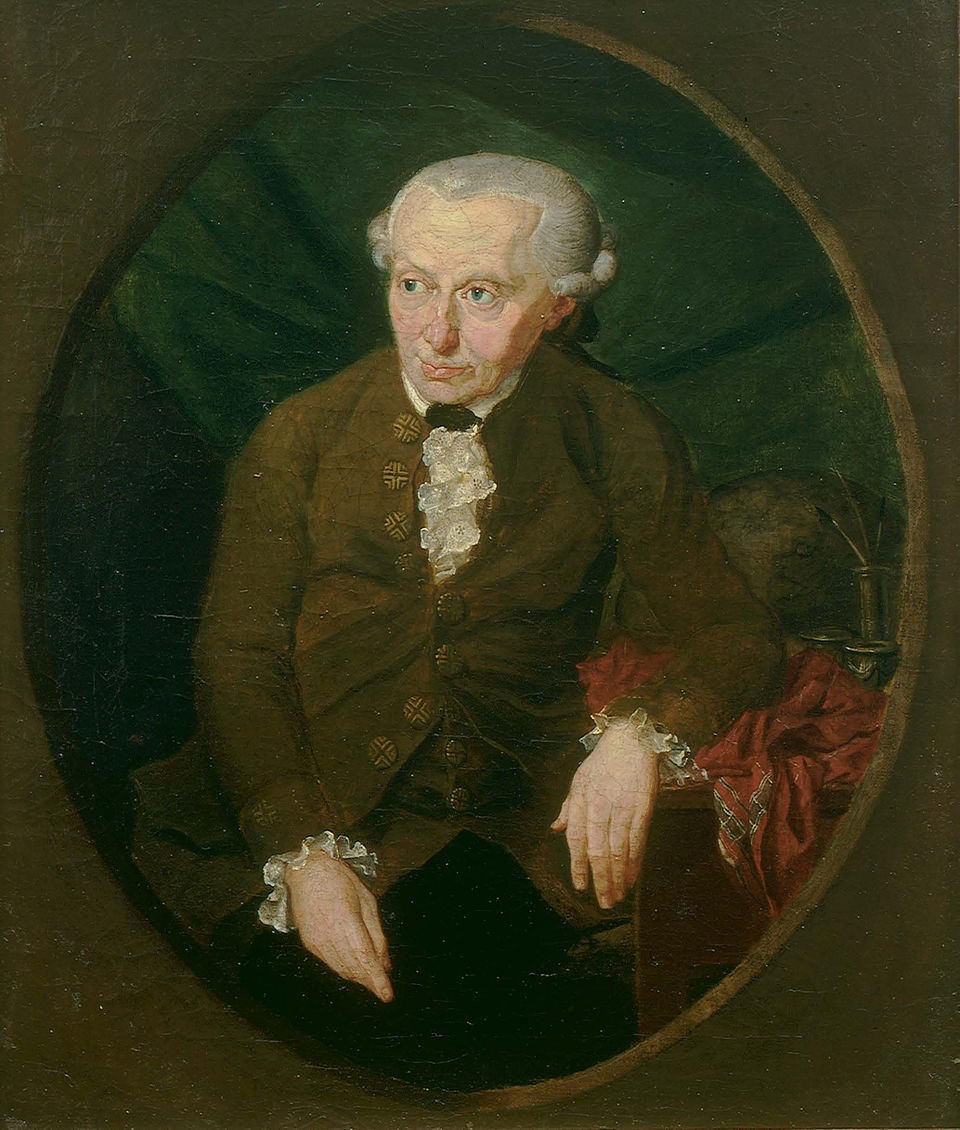
—What in the world still arouses the greatest wonder in you?
Two things, and I placed them side by side at the end of my second Critique, the Critique of Practical Reason, in 1788: the starry sky above me and the moral law within me. See the symmetry. When I lift my eyes to the vault of night — I who, as a young man, wrote an entire Universal Natural History of the Heavens — I feel reduced to a point in immensity, a speck of dust that lasts but an instant. But when I turn inward and find there this law that commands me unconditionally, I feel infinitely elevated. Astronomy crushes me; conscience straightens me. That is man: a grain lost in space, yet bearing a dignity that the stars do not have. This twofold admiration has never left me, and it grows, I assure you, the more I return to it.
—They say you never left the vicinity of your city. How could you teach the geography of the entire world?
The reproach amuses me, for my students thought me a great traveler! The truth is that I have never strayed more than a few leagues from Königsberg, and I am none the worse for it. But I read, sir, everything that was published: the accounts of navigators, the stories of passing merchants at our port, the memoirs of academies. For decades I gave a course on physical geography in which I described currents, volcanoes, the customs of peoples I would never see. The port brought the world to me; I had only to listen and to order what came to me. One can go around the earth without leaving one's chair, provided one knows how to read and has an imagination regulated by method.
One can go around the earth without leaving one's chair, provided one knows how to read.
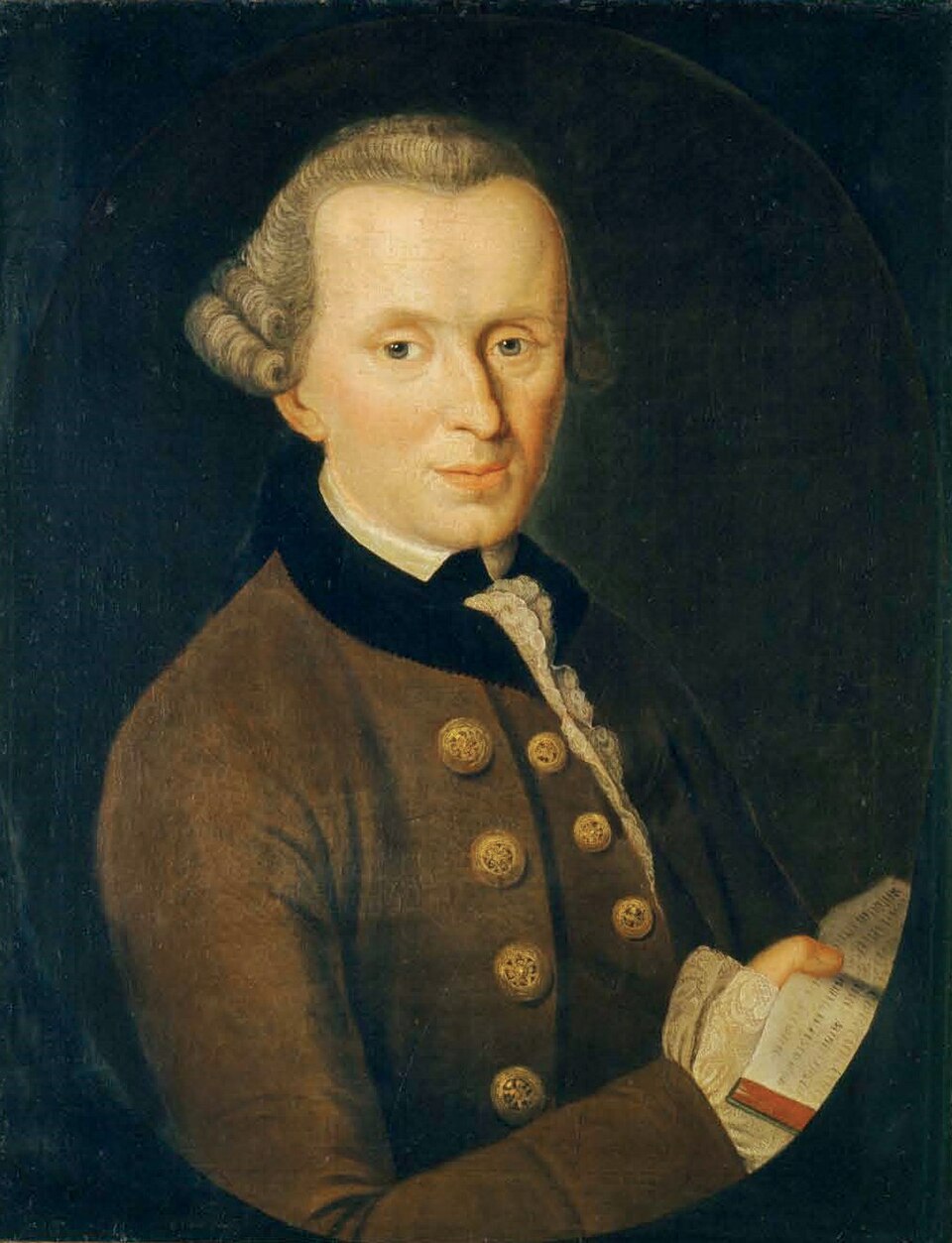
—Before philosophy, you were interested in the stars and the birth of the world. What were you seeking in the sky?
To understand how order arises from disorder through the sole laws of nature. In 1755, young and without reputation, I published my Universal Natural History and Theory of the Heavens. There I advanced that our solar system was not placed ready-made by a hand, but formed gradually from a nebula, matter gathering itself through attraction and repulsion. This idea has since been given a name that links me to Monsieur Laplace. My telescope was not a great instrument, but it sufficed for dreaming. Understand that I took nothing away from God by entrusting nature with the task of ordering itself: on the contrary, what higher idea of the Creator than to conceive Him giving laws capable of generating worlds? The cosmos taught me patience before morality taught me rigor.
—In 1793, your book on religion earned you a severe reprimand from the king. How did you get through that ordeal?
With prudence, but without renunciation. I had published Religion within the Bounds of Bare Reason, where I argued that true faith is measured by moral conduct, not by dogmas. This greatly displeased Frederick William II, quite different from his uncle Frederick the Great, under whose enlightened despotism I had been able to write freely. I was told that I must keep silent on these matters. I replied that I would keep my opinions to myself, for a subject owes obedience — but I took care not to disavow them, for one has no right to lie against one's conscience. The nuance seems slight to you? It is everything. As long as the king lived, I kept my word; upon his death, I considered myself released. The courage to think, you see, also knows how to bide its time without bowing within.
—In your later years, you imagined a lasting peace among nations. Was this hope reasonable, or an old man's dream?
A dream, I have been told, and the sign of a Dutch inn actually showed a cemetery to represent the only perpetual peace — that of the dead. I turned the irony around: in 1795, in my Perpetual Peace, I proposed that free states form a federation among themselves, renouncing settling disputes by arms, just as men renounced it when entering civil society. I added a right that I call cosmopolitan: every foreigner who approaches a land has the right not to full hospitality, but at least not to be treated as an enemy. They find me naive. Yet commerce already binds peoples better than treaties, and what is a duty cannot be impossible. I will not see that day; but reason, which never hurries, will eventually impose it on men as it imposes the moral law.
What is a duty cannot be impossible.
This imaginary interview was generated by artificial intelligence from sources documented in Immanuel Kant's profile. It dramatises what the figure might have said based on what we know about them, but does not constitute attested historical testimony. For primary sources and factual documentation, refer to the full profile.