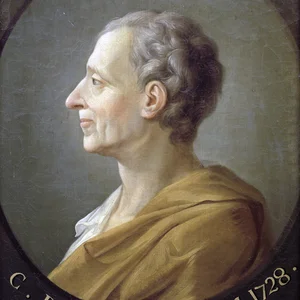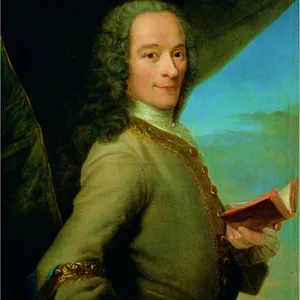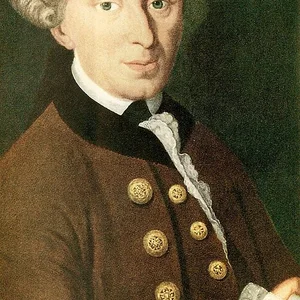

German Enlightenment philosopher (1724–1804), Kant revolutionized metaphysics by proposing a radical critique of human reason. Author of the Critique of Pure Reason, he founded transcendental idealism and developed a universal moral theory based on the categorical imperative.
Immanuel Kant(1724 — 1804)
Immanuel Kant
royaume de Prusse
7 min read
Frequently asked questions
Famous Quotes
« Sapere aude! (Dare to know!)»
« Act only according to that maxim by which you can at the same time will that it should become a universal law»
« Two things fill the mind with ever new and increasing admiration and awe, the more often and steadily we reflect upon them: the starry heavens above me and the moral law within me»
Key Facts
- 1781 – Publication of the Critique of Pure Reason, a foundational text of modern philosophy
- 1785 – Publication of the Groundwork of the Metaphysics of Morals, presenting the categorical imperative
- 1788 – Publication of the Critique of Practical Reason, developing his moral philosophy
- 1790 – Publication of the Critique of the Power of Judgment, reconciling theory and practice
- 1804 – Death in Königsberg, the city he never left throughout his entire life
Works & Achievements
Founding work of critical philosophy, it examines the conditions and limits of human knowledge, distinguishing between phenomena and noumena.
Short essay that became emblematic of the Enlightenment movement, defining it as the emancipation of the individual through the autonomous use of reason.
Work in which Kant formulates the categorical imperative, the foundational principle of his universal moral philosophy.
The Second Critique, devoted to morality, in which Kant establishes that the moral law imposes itself on reason as an undeniable fact.
The Third Critique, concerned with aesthetic judgment and teleological judgment, bridging the gap between nature and freedom.
Visionary political essay proposing a federation of free states and principles of international law, considered a precursor to the idea of a League of Nations.
Work on cosmology in which Kant proposes a theory of the formation of the solar system from a primordial nebula, anticipating the work of Laplace.
Anecdotes
Kant was so legendarily punctual that the inhabitants of Königsberg set their watches by the time of his daily walk. Every afternoon, at exactly 3:30 PM, he would cover the same route along the Linden Alley. The only time he missed his walk was the day he received Rousseau's Émile, so captivated was he by his reading.
Kant never left the Königsberg region his entire life, never straying more than a few dozen kilometers from his hometown. Yet, through his reading and the accounts of travelers, he gave lectures on physical geography so detailed that his students believed him to be a seasoned traveler.
For years, Kant invited guests to lunch at his home every day, as he detested eating alone. These meals often lasted several hours and were animated by conversations covering every subject except philosophy. Kant believed the dining table should be a place of pleasure and lightness.
Kant came from a modest family of saddlers of Scottish origin. His mother, Anna Regina, a devout Pietist, took him from a very young age to observe the stars and instilled in him a deep moral sensibility. Kant always spoke of his mother with great tenderness, claiming she had planted in him the first seed of goodness.
Primary Sources
Thoughts without content are empty, intuitions without concepts are blind. It is therefore just as necessary to make concepts sensible as it is to make intuitions intelligible.
Enlightenment is man's emergence from his self-imposed immaturity. Immaturity is the inability to use one's understanding without guidance from another. Sapere aude! Have the courage to use your own understanding!
Act only according to that maxim whereby you can at the same time will that it should become a universal law.
Two things fill the heart with ever new and increasing admiration and awe: the starry heavens above me and the moral law within me.
Key Places
Kant's birthplace, where he spent his entire life. He taught at the university there for more than forty years and composed the entirety of his work.
Founded in 1544, this university was the setting for Kant's entire academic career, first as a student and then as a full professor of philosophy.
Kant was interred in the professors' portico adjoining the cathedral. His tomb, rebuilt in 1924, is today a visited memorial site.
A shaded promenade along the Pregel River that Kant walked every afternoon with a punctuality that became proverbial.
Kant's last residence in Königsberg, where he lived from 1783 and where he received guests daily for lunch.
Typical Objects
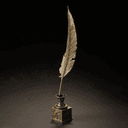
Kant's daily writing instruments, with which he wrote his entire critical body of work in his study in Königsberg.
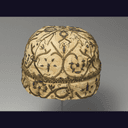
Kant wore a nightcap following a very precise bedtime ritual. He would methodically wrap himself in his blankets using a technique he had devised himself.
📷 CC0 · Wikimedia Commons ↗
An indispensable object for Kant, who organised every minute of his day with a mechanical regularity that became legendary.
📷 CC BY-SA 3.0 · Wikimedia Commons ↗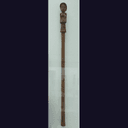
Kant carried his cane on his daily walk along the Philosophers' Alley in Königsberg, an unchanging ritual maintained for decades.
📷 CC BY-SA 4.0 · Wikimedia Commons ↗
Kant had an interest in astronomy and cosmology. He formulated a theory on the formation of the solar system, known as the Kant-Laplace hypothesis.
📷 CC BY-SA 2.0 fr · Wikimedia Commons ↗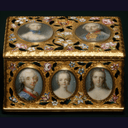
Kant regularly took snuff. His snuff box was one of the few personal objects he was attached to, kept permanently on his desk.
📷 CC0 · Wikimedia Commons ↗School Curriculum
Vocabulary & Tags
Key Vocabulary
Tags
Époque
Concept
Daily Life
Morning
Kant rose every morning at exactly 5 o'clock, woken by his manservant Lampe. He would drink one or two bowls of weak tea while smoking a pipe, then work on his writings and prepare his lectures in his study until it was time for his university classes.
Afternoon
Kant gave his lectures in the morning, then received guests for a long and lively lunch, his only real meal of the day. At precisely 3:30 p.m., he set out for his daily walk along the Philosophers' Walk, always alone so that he could breathe through his nose and meditate in silence.
Evening
In the evenings, Kant read works on natural science, geography, or literature. He went to bed at exactly 10 p.m., wrapping himself in his blankets according to a meticulous ritual he had devised himself to fall asleep quickly.
Food
Kant ate only one main meal a day — lunch — consisting of several simple but hearty courses: meat, fish, vegetables, and cheese, accompanied by wine and followed by mustard, of which he was particularly fond. He avoided eating supper in the evening, sometimes making do with a little tea.
Clothing
Kant dressed with sober, careful elegance, typical of an 18th-century Prussian professor: a dark cloth coat, waistcoat, knee breeches, white stockings, and buckled shoes. He wore a powdered wig in his youth, before abandoning it toward the end of the century.
Housing
Kant lived for many years in modest lodgings before acquiring a house on Prinzessinstraße in 1783. This home contained a study filled with books, a dining room for his lunches, and simple but orderly furnishings — a reflection of his regimented life.
Historical Timeline
Period Vocabulary
Visual Style
Esthétique austère et raffinée de la Prusse des Lumières, entre intérieurs studieux éclairés à la bougie et paysages brumeux de la Baltique, dans des tons sobres de bleu nuit, gris et ivoire.
Sound Ambience
L'atmosphère sonore paisible de Königsberg au XVIIIe siècle : cloches de la cathédrale, plume grattant le papier, pas réguliers sur les pavés et bruissement des tilleuls le long de la rivière Pregel.
Liens externes & ressources
Références
Œuvres
Critique de la raison pure
1781 (2e éd. 1787)
Qu'est-ce que les Lumières ?
1784
Fondements de la métaphysique des mœurs
1785
Critique de la raison pratique
1788
Critique de la faculté de juger
1790
Projet de paix perpétuelle
1795
Histoire naturelle universelle et théorie du ciel
1755