Imaginary dialogue between David Hilbert and Emmy Noether
by Charactorium · Emmy Noether (1882 — 1935) · Sciences · 5 min read
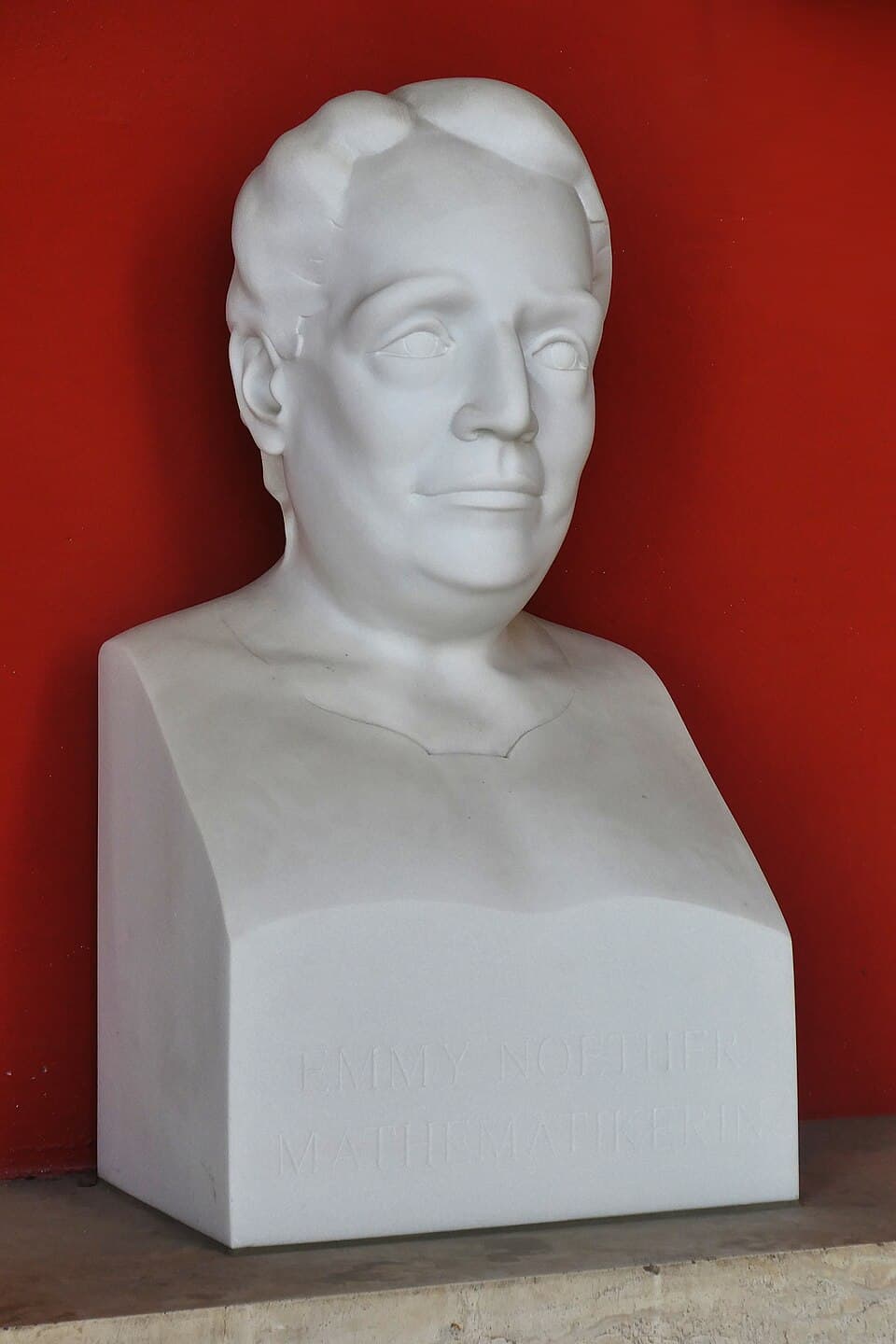
It is in the garden of his house in Göttingen, on an afternoon in the summer of 1934, that David Hilbert receives his former colleague, back from America for a visit. The tea grows cold on the iron table, and the bees buzz around the rosebushes that the old mathematician has neglected since the university emptied of its finest minds. They have known each other for nearly twenty years — since the day in 1915 when, with Klein, he brought her here to untangle the invariants of Einstein's relativity. Hilbert wants to hear, from her own lips, what these years have cost her and given her.
—Emmy, do you remember the day in 1915 when Klein and I brought you here? We were stuck on the invariants of Einstein's gravitation. What did you see that we did not?
I remember it as if it were yesterday, and you well know that it was you who opened that door for me. You were both puzzling over a strangeness in the energy in the equations of general relativity. Searching for the source of the problem, I realized it was not a fluke of calculation, but a general law: whenever a system possesses a continuous symmetry, a quantity is conserved, and vice versa. Invariance under time translation gives conservation of energy; symmetry of space gives conservation of momentum. What I published in 1918 under the title Invariante Variationsprobleme was at bottom merely an answer to your embarrassment. You called me in for a technical detail; I found a bridge between geometry and physics.
A continuous symmetry, and a quantity is conserved: that is the bridge between geometry and physics.
—I have never forgotten the faculty meeting where I was told a woman could not hold a chair. I spoke of a bathhouse. What did you feel, you, that day?
You were furious, and I was mostly weary, my dear Hilbert. They debated my woman's body as an administrative obstacle, where it was only a matter of mathematics. Your outburst about the bathhouse made the room laugh, but it changed nothing on the spot: the philosophy faculty maintained its refusal. It took until 1919, the war ended and a new regime, for me to finally obtain my Habilitation and the title of Privatdozent. Even then it was only a right to teach without salary. I was never Ordinarius, never holder of a chair. But I owe it to you that I held firm when others would have given in.
They debated my woman's body as an administrative obstacle, where it was only a matter of mathematics.
—For years, your courses were announced under my name, and you went up in my place in the lecture hall. Did this ruse weigh on you?
It amused me more than it weighed on me. In the bulletin, people read your name and the mention 'with the assistance of Miss Noether'; in the hall, it was I who covered the blackboards. The students were not fooled, and that is perhaps what made them loyal. Of course, the humiliation existed: being tolerated by the subterfuge of a great man rather than recognized for oneself. But I preferred to teach indirectly than not to teach at all. Ideas, after all, did not ask permission from the faculty. And you offered me your chair as one reaches out a hand to someone drowning — I do not forget it.
I preferred to teach indirectly than not to teach at all.
—You are the daughter of Max Noether, you grew up among his algebra treatises. How did you go from that legacy to your theory of ideals of 1921?
My father gave me a taste for structures, but his way was that of explicit calculation, formulas one unrolls. I wanted to take a higher perspective. In Idealtheorie in Ringbereichen, in 1921, I stopped looking at particular numbers and looked at the rings themselves, as abstract objects with their own laws. The key was a very simple condition: that no ascending chain of ideals can grow indefinitely. Almost everything follows from that. Today people speak of 'Noetherian' rings — I admit the word makes me smile in your garden. What I sought was to replace recipes with principles. Algebra was to become an architecture, not a bag of tricks.
I sought to replace recipes with principles: algebra was to become an architecture, not a bag of tricks.
—They called you der Noether, in the masculine, and your students followed you like a troop. What really happened in those courses whose disorder was reported to me?
Disorder, yes! I spoke too fast, I lost my chalk, I forgot to erase the board and wrote over my own traces. My poor 'Noether Boys' had to guess as much as listen. But you see, I never recited already fixed material: I thought before them, out loud, and they sometimes witnessed the birth of an idea before I mastered it myself. The masculine nickname, der Noether, was not mockery — it was their way of ranking me among mathematicians without reservation. In the afternoon, we would extend the seminar by walking in the countryside, and it was often on the path, away from any blackboard, that the proofs became clear.
I thought before them, out loud: they witnessed the birth of an idea before I mastered it.
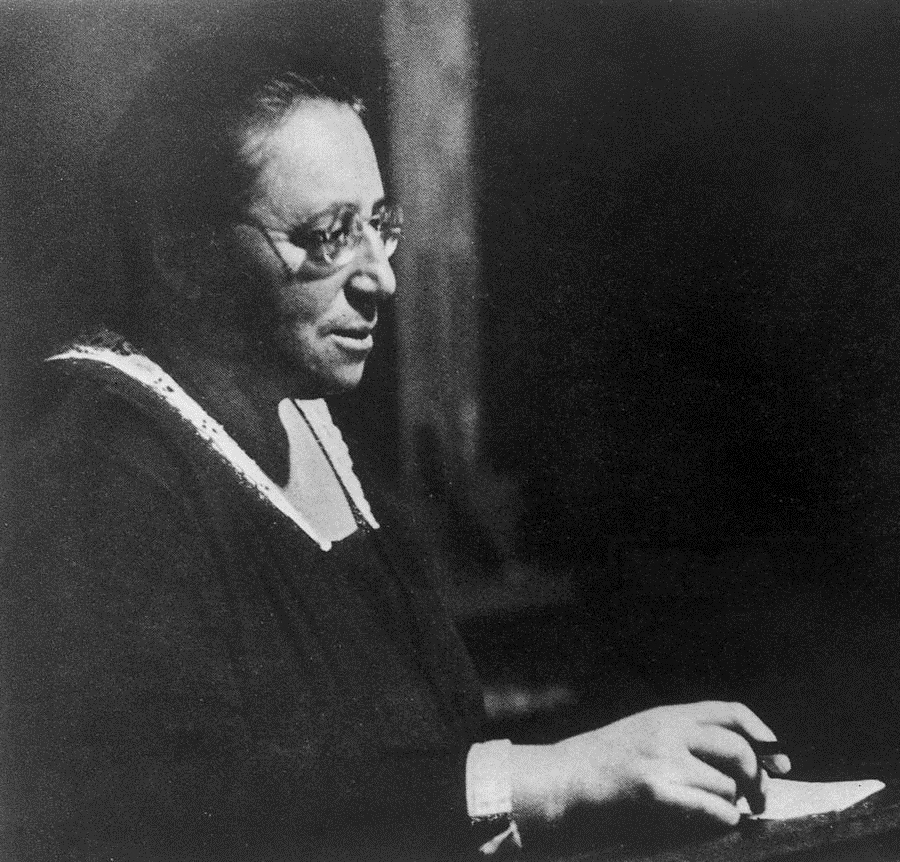
—You seem to have given everything to these young people, your notebooks as well as your ideas, without ever claiming authorship. Why this generosity that people here marveled at?
Because an idea kept to oneself is a dead idea, my friend. I handed out my notebooks, I let students publish results I had found, and it cost me nothing. What mattered was that the thing live and spread, not that my name appear at the top. Besides, I had neither chair nor fortune to pass on: my only possessions were these proofs, and the best way to preserve them was to sow them widely. When a young man left my home with a problem under his arm, I felt richer, not poorer. You always gently reproached me for this disinterest — I never knew how to do otherwise.
An idea kept to oneself is a dead idea.
—After ideals, you sought to unify algebras and representation theory. What drove you to always seek even more abstraction?
Abstraction is not an escape, it is an economy. When one rises high enough, two theories thought foreign reveal themselves to be one thing seen from two angles. In 1929, in Hyperkomplexe Größen und Darstellungstheorie, I was able to bring together group representation theory and non-commutative algebra under one roof. What required pages of particular calculations suddenly fit into a single principle. My ambition was to build algebra as an autonomous discipline, no longer dependent on the concrete numbers from which it was born. You yourself, in geometry, sought axioms where others saw figures. We were after the same thing, fundamentally: simplicity beyond entanglement.
Abstraction is not an escape, it is an economy.
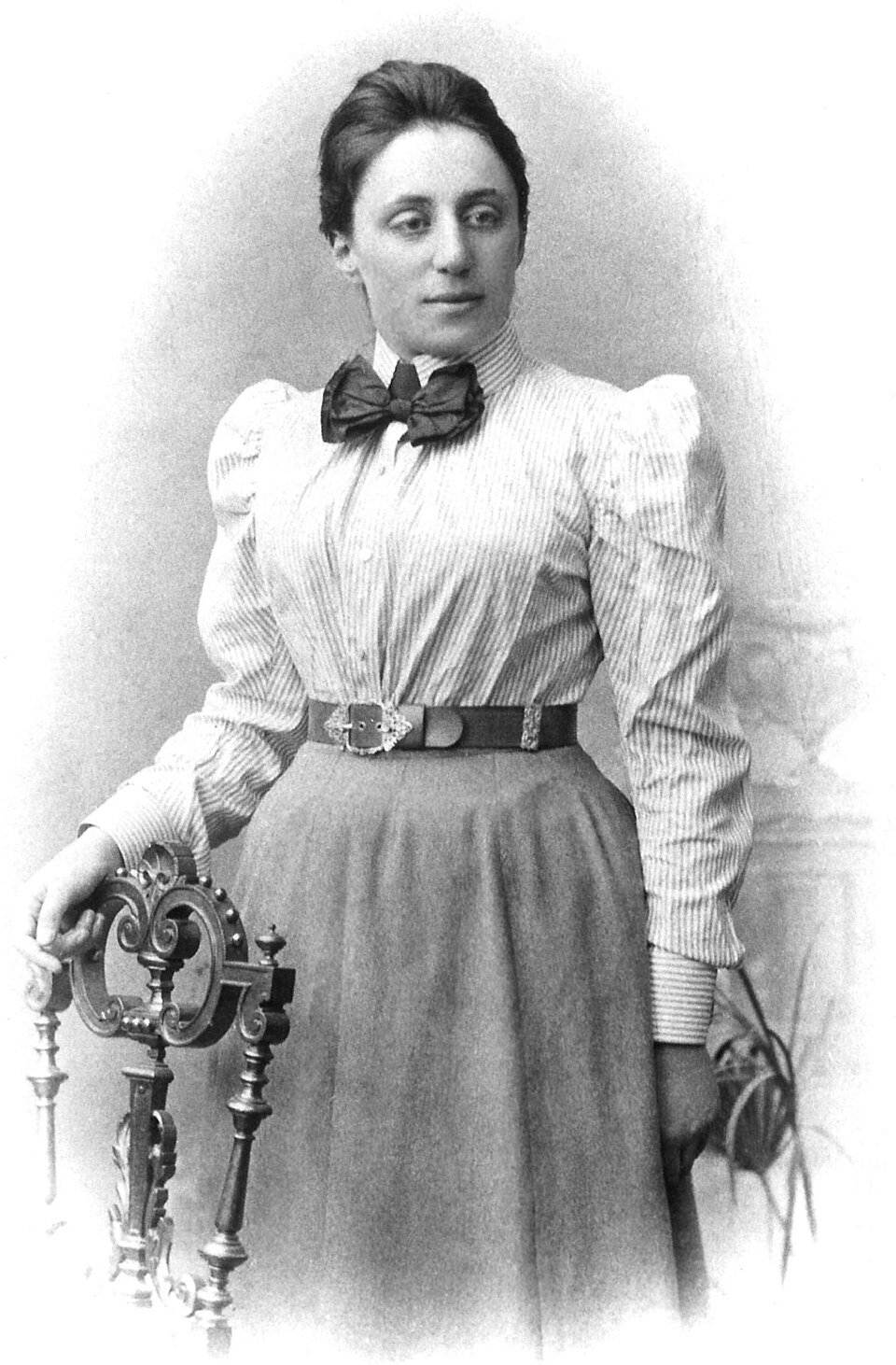
—Last year, in 1933, you were driven out of this university. I saw the benches empty. How did you hold up, in the weeks before leaving?
With a calm that surprised even those closest to me, I think. The Gleichschaltung did its work: revocation of the right to teach, an administrative letter, and everything was said in a few lines. But they did not take the essential from me. For weeks, I continued to receive my students at home, around tea, for seminars that the law now forbade. Some of these young people wore the party uniform and yet came to listen to a Jewish woman talk about ideals — algebra, you see, knows neither race nor regime. I had no heart for anger. Hatred is a waste of time when you have proofs to finish.
Algebra knows neither race nor regime; hatred is a waste of time when you have proofs to finish.
—Here you are a professor at Bryn Mawr, across the ocean. Tell me frankly, Emmy: did you find a home there, or only a refuge?
A bit of both, and more than I dared hope. Bryn Mawr is a women's college, modest after the splendor of Göttingen, but they welcomed me as one welcomes a person, not as one tolerates a foreigner. I teach there, I have found lively students, and each week I go give lectures at Princeton, where so many of our people have ended up after exile. Of course, I miss German, and this city, and our walks. You cannot rebuild a school like yours in a year. But I have understood that my home was not a place: it was a table, some chalk, and a few minds ready to think with me. That I carried in my suitcases.
My home was not a place: it was a table, some chalk, and a few minds ready to think with me.
—One last question, as a friend. Of everything you have built — the rings, the algebras, that theorem of 1918 — what would you like to be remembered?
You push me to choose, and it is cruel, because a work does not cut into slices. But if I had to save a single idea, it would be that of 1918: that symmetry and conservation are two faces of the same truth. It is the simplest and deepest thing I have encountered, and it does not belong to me — it was there, in the equations, waiting to be formulated. As for the rest, the rings and algebras, I prefer that the method be remembered rather than the results: learning to see structures, to step up a level each time the calculation gets tangled. If my 'boys' and my students continue to think that way, then I will have lost nothing, even having left everything behind.
Symmetry and conservation are two faces of the same truth.
This imaginary interview was generated by artificial intelligence from sources documented in Emmy Noether's profile. It dramatises what the figure might have said based on what we know about them, but does not constitute attested historical testimony. For primary sources and factual documentation, refer to the full profile.