Kids interview Emmy Noether
by Charactorium · Emmy Noether (1882 — 1935) · Sciences · 5 min read
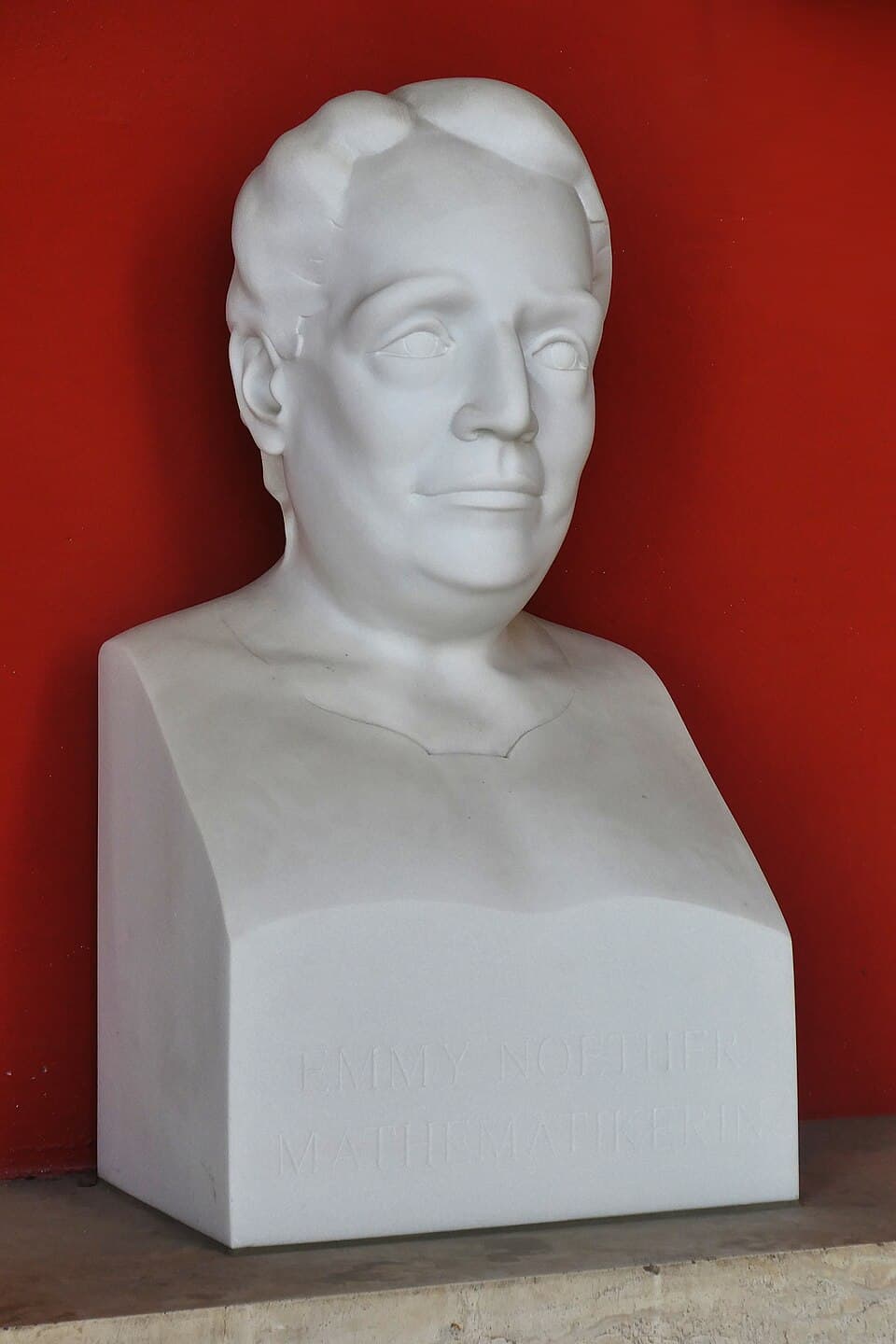
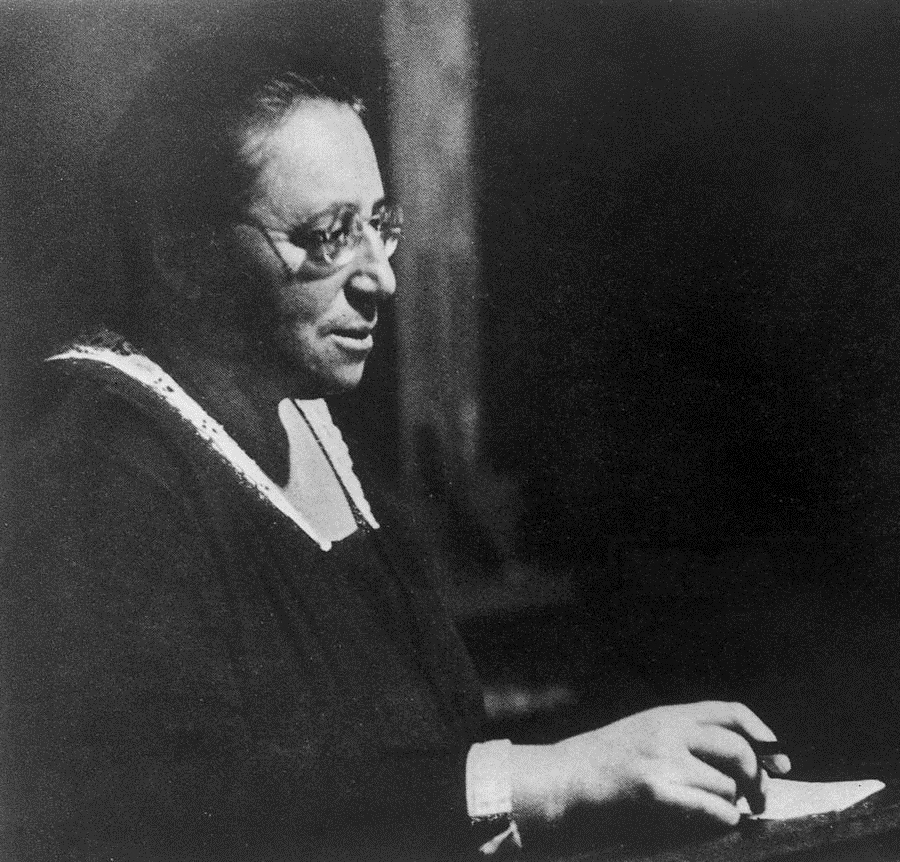
That morning, two young visitors of twelve push open the door of a room full of chalk and blackboards covered with signs. A lady with round spectacles awaits them, a warm smile on her lips. Emmy Noether has agreed to answer all their questions, even the most naive ones.
—What were your classes like? They say you were always losing your chalk!
Ah, you’ve heard that story! It’s true, I spoke very fast. I gesticulated, I lost my chalk, I forgot to erase the blackboard. Imagine a room where I cover three boards with signs without ever stopping. My students laughed, but they stayed seated, fascinated. Do you know why? Because beneath all that mess, there was always a very clear idea. I wasn’t trying to be elegant. I was trying to understand, and to make others understand. I left the graceful gestures to others. I wanted the thought to pass through, like water finding its way between stones.
—Is it true they banned you from teaching just because you were a woman?
Yes, my child, and it hurt me. In 1915, Hilbert and Klein invited me to Göttingen, the greatest city of mathematics. But the faculty refused: a woman could not be a Privatdozent, a lecturer authorized to give courses. Hilbert flew into a terrible rage. He replied that we were a university, “not a bathhouse”! I laughed at the time, but deep down I was sad. They judged me for something I hadn’t chosen. Not for my ideas. Imagine being prevented from running because you wear a dress.
They judged me for what I hadn’t chosen, never for my ideas.
—You taught under someone else’s name? That’s weird!
Yes, it was strange. For years, my courses were announced under Hilbert’s name. Officially, he was the professor. In truth, it was me, standing before the students. And they came in droves. Do you know what they called me? “der Noether” — in the masculine! In German, “der” means the for masculine nouns. Normally, for a woman, you say “die.” But they said “the Noether.” It wasn’t mockery, not at all. It was their way of respecting me, as one respects a great master. It touched me deeply. My official name mattered less than my demonstrations at the blackboard.
—I hear there are things in math that bear your name. What are they?
Yes! They are called Noetherian rings. Don’t be afraid of that fancy word. A “ring,” in mathematics, is simply a set of objects that can be added and multiplied. In 1921, I wrote a paper, Idealtheorie in Ringbereichen, where I found a simple rule that puts it all in order. Before me, people patched things up case by case. I looked for the hidden structure, common to all. That’s what abstract algebra is: not looking at numbers one by one, but at the form that connects them. My father, Max Noether, was already a mathematician. I grew up surrounded by his big bound books.
—What’s your most famous discovery? The one the scholars talk about?
Ah, you’re talking about my theorem from 1918! Listen carefully, because it’s beautiful and simple at the same time. Imagine you spin an object, or you wait an hour: if nothing changes in the rules of the game, then something is conserved, somewhere. A symmetry always hides a quantity that is never lost. For example, if the laws of nature are the same today and tomorrow, then energy is conserved. This is called a conservation law. It’s a bridge between the beauty of forms and the laws of physics. Physicists still use it every day.
A symmetry always hides a quantity that is never lost.
—Why did great scholars actually bring you to Göttingen?
Because they had a problem on their hands! In 1915, Hilbert and Klein were working on Einstein’s ideas, his theory of relativity. Something bothered them about energy: it seemed not to behave normally. They called me because I knew invariants well — quantities that don’t change when you transform things around. That was exactly the subject of my thesis, at Erlangen, my hometown. So I rolled up my sleeves. And while trying to solve their little problem, I discovered my theorem. You see, sometimes you want to fix a friend’s small issue, and you discover a much greater truth.
—What did you do with your students, besides staying in class?
Oh, we walked! In the afternoon, I went out with my students — they were called the “Noether Boys.” We set off into the countryside around Göttingen, and we discussed mathematics while walking, for hours, in good weather or rain. In the evening, I received them at my home. My apartment was small, cluttered with books and papers everywhere. I served tea and cakes, and we debated late into the night. For me, mathematics wasn’t a cold job done alone, locked up. It was a conversation among friends. You think much better together, outdoors, than sitting alone in a silent office.
—What did you eat in the morning before going to work?
Very simple things, you know. Black bread, butter, and a bit of coffee. I hardly cared about food — my head was always elsewhere, in my demonstrations! I got up early, and I reread my notes from the day before while eating. Then I walked to the university. And there, I must confess a little secret: I was so absorbed in my thoughts that I sometimes took the wrong path! Imagine a quiet street, horse hooves clattering on the cobblestones, and a woman walking, completely forgetting where she’s going, lost in numbers. That was me.
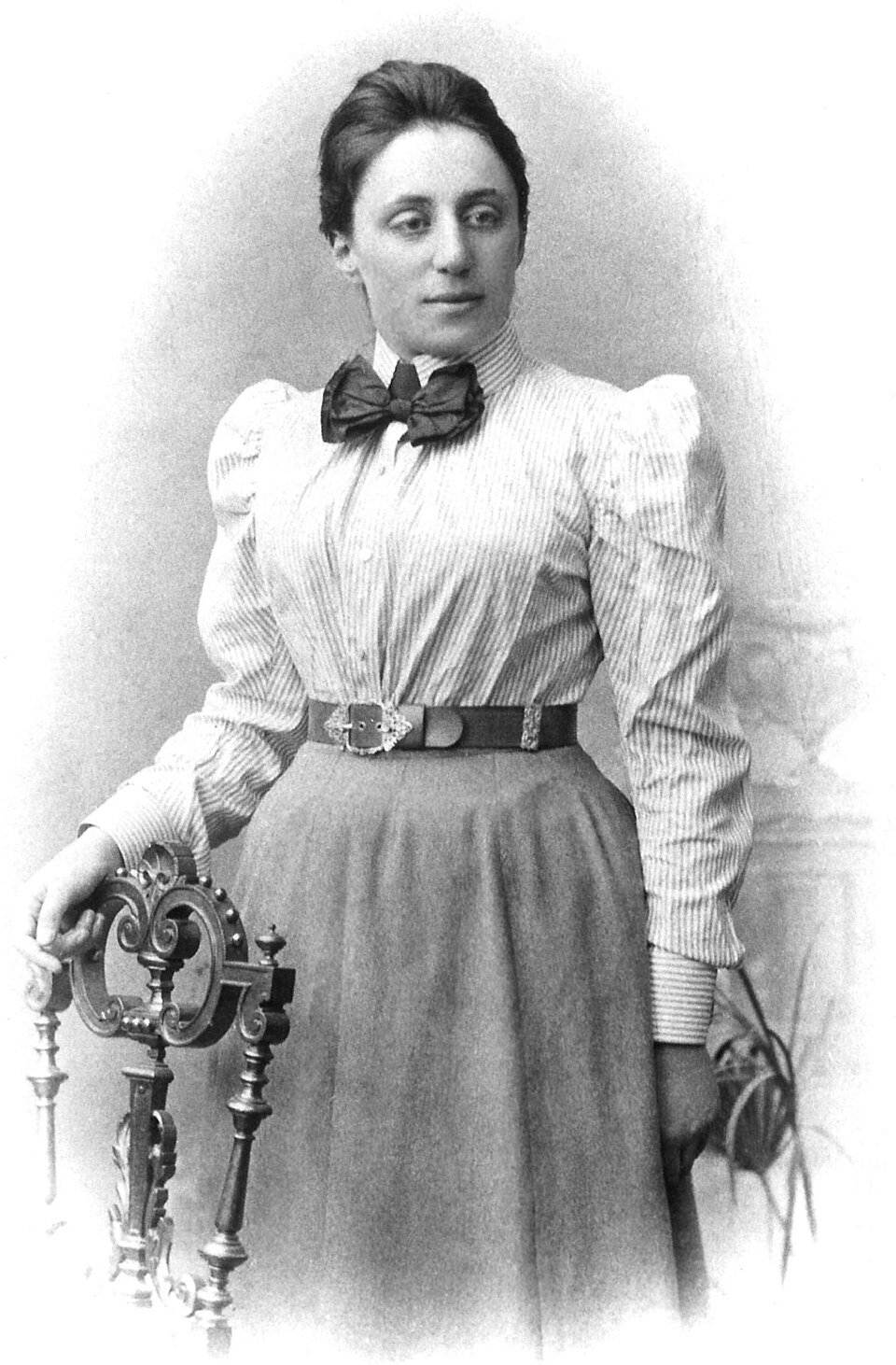
—What happened to you when the Nazis came to power?
It was a dark year, 1933. Hitler came to power. New laws forbade Jews from teaching — and I was Jewish. Overnight, I was expelled from Göttingen, my university, after eighteen years of work. Do you know what I did? I didn’t shout, I didn’t cry in front of them. I invited my students to my home, in secret, and I continued teaching in my living room, for weeks. They called this great “coordination” of the country Gleichschaltung. But you cannot coordinate a true idea. A proof remains true, even when it is forbidden.
You cannot coordinate a true idea.
—Where did you go after that? Was it hard to leave everything?
I went very far, across the ocean, to the United States. I was welcomed at Bryn Mawr College, a women’s university in Pennsylvania. Yes, it was hard, I won’t lie to you. I was past fifty, I left my language, my friends, my chalk from Göttingen. But do you know something? There too, students were waiting for me. I started teaching again, walking, passing on knowledge. I even went to give lectures at Princeton. They can tear you from your home, my child. They cannot tear from you what you know, nor the joy of giving it to others. That travels with you everywhere.
—If you are remembered today, what would you like us to remember?
What a beautiful question to end with. I wouldn’t want them to remember only that I was a woman in a man’s world — even if it was a long struggle. I would like them to remember my ideas. That I taught mathematicians to look for the structure behind things, the hidden form rather than the small detail. And if you must keep only one thing from our meeting, keep this: never let anyone tell you that you cannot think because of who you are. A good idea has neither sex, nor homeland, nor religion. It belongs to whoever seeks it hard enough.
A good idea has neither sex, nor homeland, nor religion.
This imaginary interview was generated by artificial intelligence from sources documented in Emmy Noether's profile. It dramatises what the figure might have said based on what we know about them, but does not constitute attested historical testimony. For primary sources and factual documentation, refer to the full profile.