Imaginary interview with Emmy Noether
by Charactorium · Emmy Noether (1882 — 1935) · Sciences · 6 min read
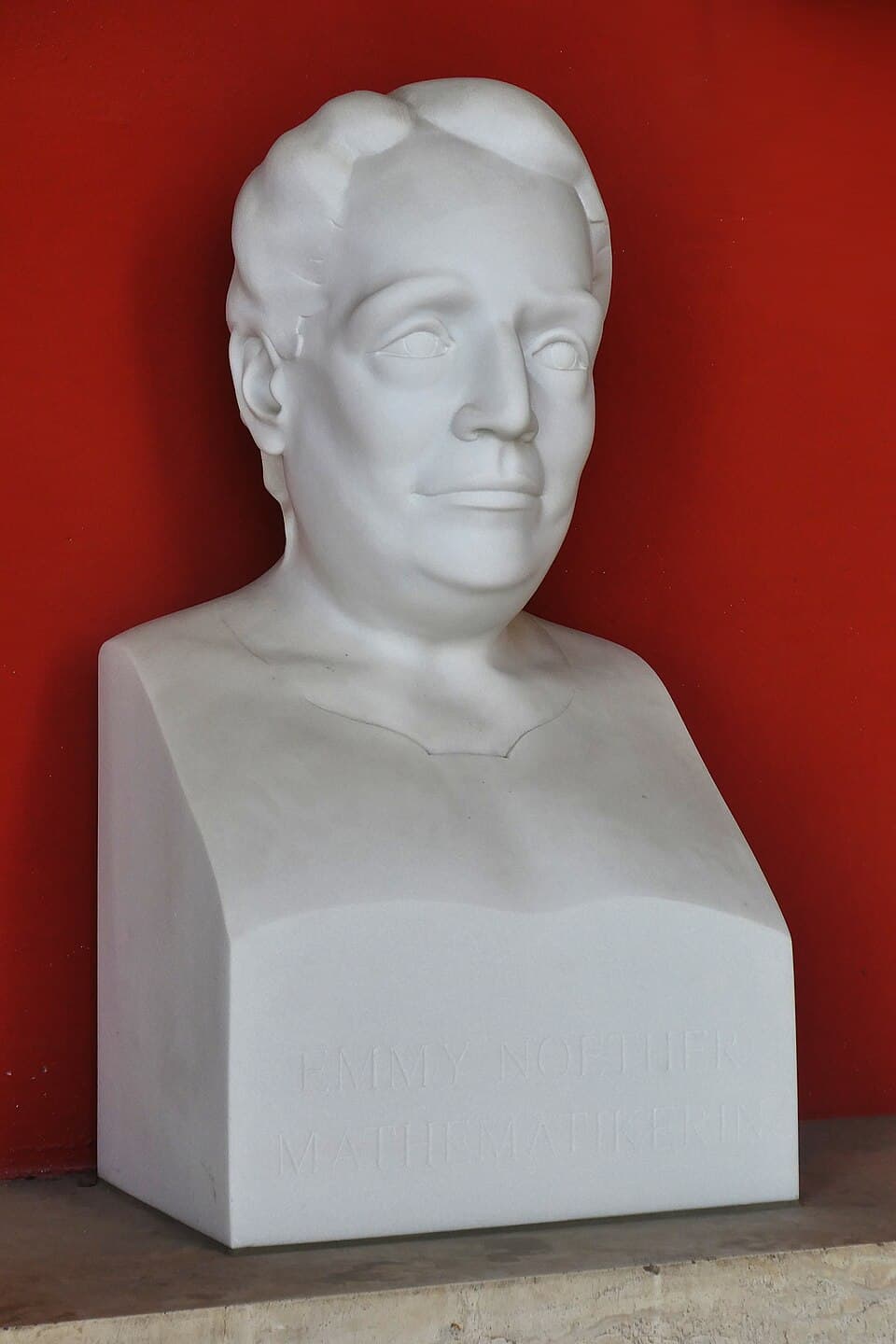
Göttingen, a spring afternoon. In an apartment cluttered with books and handwritten notebooks, a woman with round spectacles welcomes us, a piece of chalk still between her fingers. Emmy Noether speaks quickly, laughs loudly, and always seems on the verge of returning to her blackboard.
—How were your first years in Göttingen, when Hilbert and Klein brought you here?
It was 1915. Hilbert and Klein wanted my help with Einstein's relativity, and I asked nothing more than to work. But the philosophy faculty balked: a woman as Privatdozent? Unthinkable. Hilbert, furious, retorted that he didn't see how a candidate's sex was an argument against admission: “After all, we are a university, not a bathhouse!” We laughed about it for a long time, but the core was anything but funny. For years, I could only teach under his name, my courses announced as his. Students still came, in droves, to listen to the one they called der Noether — in the masculine, out of respect. I only obtained my Habilitation in 1919, after the war. Four years for the right to sign my own lessons.
My courses were announced under his name; students still came, in droves.
—How did you experience this constant denial of recognition in daily life?
I was called extraordinary professor, which sounds grand but translates to no salary. I never obtained the title of Ordinarius, the real chair that supports a man. So I lived simply, in a modest, messy apartment where papers overflowed from shelves. In the morning, black bread, butter, coffee, and I reviewed my notes from the day before before walking out, often so absorbed that I lost my way. Official recognition? An Ackermann-Teubner Prize in 1932, almost by accident. But you see, I never did mathematics for titles. What kept me going were the ideas and the young people who came to seek them. The rest — committees, protocols — always seemed like a theater whose bad script I knew too well.
I was called extraordinary professor, which sounds grand but translates to no salary.
—Let's come to your 1918 theorem. How did the idea come to you?
It was born from Einstein's project. When I arrived in Göttingen, people were stuck on a difficulty in general relativity: energy seemed to behave strangely. Digging deeper, I saw a regularity of almost insolent beauty. To every continuous symmetry of a system — invariance under translation in time, in space — corresponds a conserved quantity, a conservation law. Energy, momentum: they are not gifts from heaven, but the shadows cast by symmetries. I published this in Invariante Variationsprobleme, in 1918. For me, it was almost a youthful work, an extension of my research on invariants, the very subject of my thesis. I had no idea it would become a pillar of all physics. I had simply pulled on a thread, and the whole fabric was revealed.
Energy, momentum: they are not gifts from heaven, but the shadows cast by symmetries.
—Why did this bridge between symmetry and conservation seem so natural to you, where others saw a mystery?
Because I didn't look at equations as calculation recipes, but as structures. A physicist sees a formula to solve; I see the form underlying it, what remains when everything moves. An invariant is precisely that: a quantity that doesn't flinch when you transform the rest. My entire training led me there — my father Max Noether lived in invariant theory, his bound treatises lined our shelves in Erlangen. So when the energy problem arose with Einstein, I didn't look for a trick, I looked for the hidden symmetry. And there it was. The mystery, you see, is never in the result; it is in our habit of looking through the wrong end of the telescope. Turn your gaze toward structure, and the miracle becomes obvious.
A physicist sees a formula to solve; I see the form underlying it.
—They say your lectures were... lively. What really happened at the blackboard?
Ah, my poor chalk! I lost a piece with every demonstration, forgot to erase the board, talked too fast and my hands flew everywhere. I know it well, I've been described enough. But I didn't give a lecture, I thought out loud in front of my students. An idea would arise, I grabbed it, covered one board, then a second, and too bad if the end contradicted the beginning — that's how mathematics is done, in fertile disorder. My Noether Boys, as they were called, understood that. They came not for polished lessons, but to witness a thought being built, alive, stumbling, brilliant. The broken chalk, the poorly wiped board, that was the price of such honesty.
I didn't give a lecture, I thought out loud in front of my students.
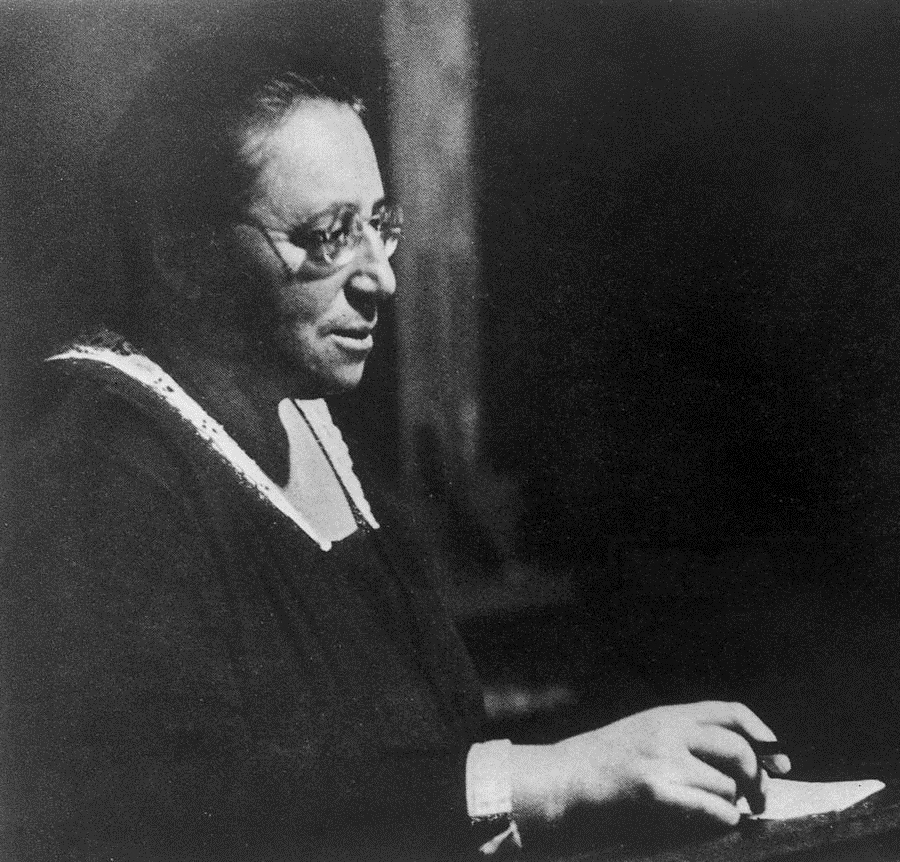
—What did these students, who followed you with such devotion, mean to you?
Everything, or almost. In the afternoon, after seminars, we would go walking in the countryside around Göttingen, debating an algebra problem as others talk about the weather. The conversation didn't stop at the university threshold. In the evening, I received them at home, over tea and a few cakes, and we scribbled proofs in my notebooks that I let circulate from hand to hand. I never believed in the ownership of ideas. A discovery that sleeps in a drawer is a dead discovery. My Noether Boys came from Moscow, Japan, America; I gave them my intuitions without counting, and they carried them further than I could have alone. A school is not a master surrounded by disciples: it is a shared thought that no one possesses.
A discovery that sleeps in a drawer is a dead discovery.
—Many consider you the founder of modern abstract algebra. How would you describe what you built?
I learned to forget numbers. My teacher in Erlangen, Paul Gordan, calculated, calculated, mountains of formulas; I wanted to see the structures behind calculation. In 1921, in Idealtheorie in Ringbereichen, I laid down a simple condition — the ascending chain of ideals — and the entire edifice of abstract algebra organized itself around it. What is now called a Noetherian ring is a structure that obeys this rule; the name embarrasses me a little, but the idea, I claim it. Studying groups, rings, fields not for themselves but for their common laws: that is the gesture. It is not a science of objects, it is a science of relations. I removed the flesh to show the skeleton, and people realized the skeleton could stand on its own.
I removed the flesh to show the skeleton, and people realized it could stand on its own.
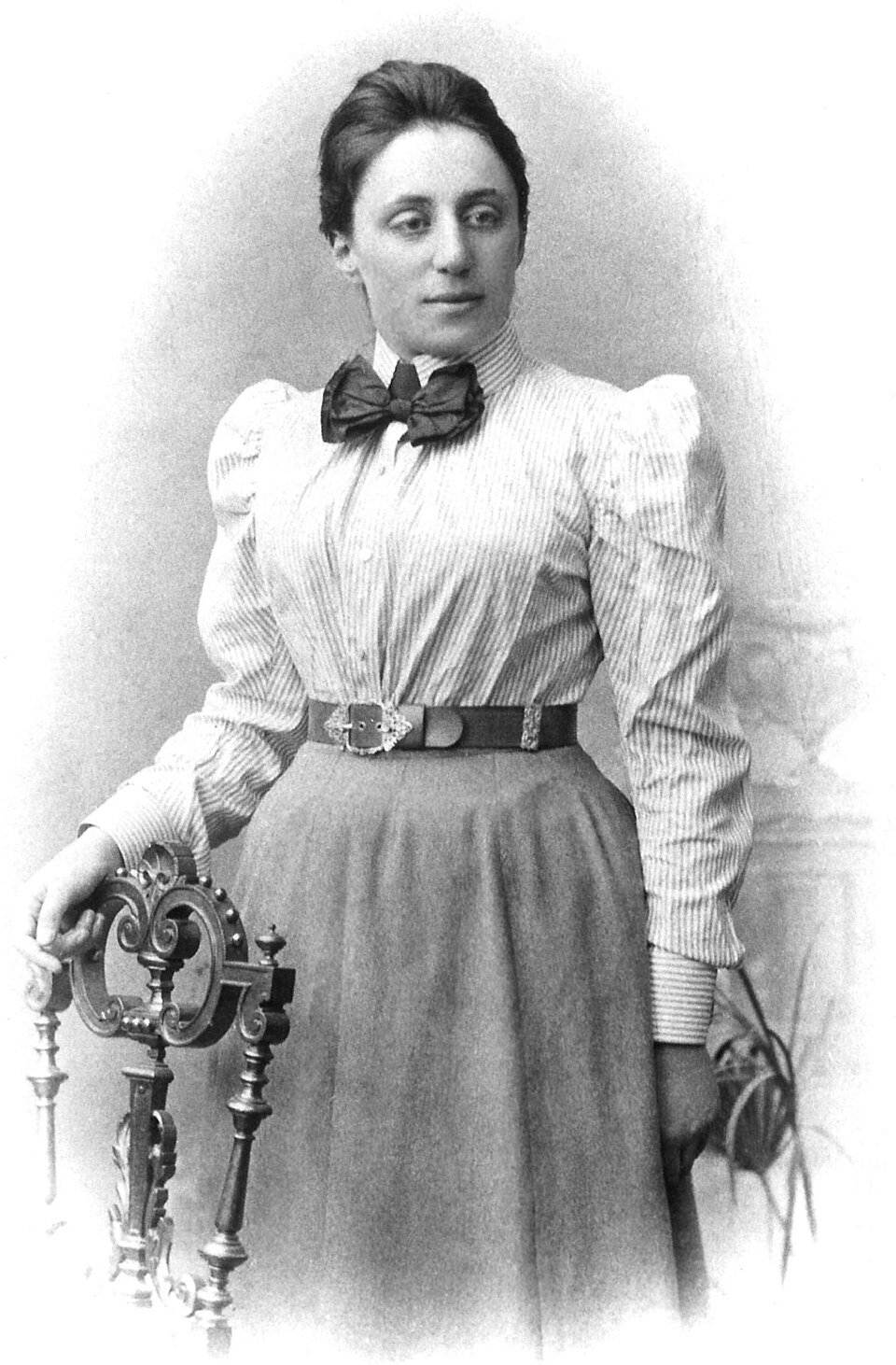
—Your influence crossed borders. What did your stay in Moscow bring you?
The trip of 1928-1929 to Moscow State University ranks among my fondest memories. I taught there, and above all I found first-rate interlocutors, Pavel Alexandrov foremost among them. There, algebra and the nascent topology spoke to each other, and my structural methods found wonderfully fertile ground. What delighted me was that an idea thought in Göttingen could germinate in Moscow, passed through other hands, other habits. Mathematics has no homeland; it has only friendships. I brought back from that stay the conviction that my school reached far beyond the walls of my cluttered apartment: it had become a way of thinking, traveling without a passport, from one language to another, and that no government could ever fully confiscate.
Mathematics has no homeland; it has only friendships.
—In 1933, everything changed. Do you remember the moment you were expelled from Göttingen?
Spring 1933. Hitler in power for a short time, and already the anti-Semitic laws, that Gleichschaltung that was to bring everything into line. I was stripped of the right to teach overnight — I, a Jew, at a German university, was now forbidden. I admit, I didn't storm. What good would it do? I simply opened my door. For weeks, my students came to my home, in my living room, for seminars one would call clandestine today. We did algebra as we breathed, despite everything, perhaps because of everything. Some of those young people already wore the uniform of the new regime, yet came to listen to a banned professor. In those weeks, mathematics was the last place where reason still held its rights.
We did algebra as we breathed, despite everything, perhaps because of everything.
—How do you view the exile that awaits you, across the Atlantic?
I am told a position awaits me at Bryn Mawr College, in Pennsylvania, a women's university. The idea does not displease me: after so many years teaching under another's name, here I will be listened to in my own name. I will cross the ocean with my worn leather satchel and my notebooks, as I crossed Göttingen in the rain. They also say I will give lectures at Princeton, where I would have the pleasure of meeting Einstein and so many other exiles again. I do not mourn the Germany that expelled me; I have already left it in spirit. A chair, a blackboard, a few curious minds: I have never needed more. The symmetry of my life remains intact — only the scenery has changed continents.
A chair, a blackboard, a few curious minds: I have never needed more.
This imaginary interview was generated by artificial intelligence from sources documented in Emmy Noether's profile. It dramatises what the figure might have said based on what we know about them, but does not constitute attested historical testimony. For primary sources and factual documentation, refer to the full profile.