Imaginary dialogue between Métrodore de Lampsaque and Epicurus
by Charactorium · Epicurus (341 av. J.-C. — 269 av. J.-C.) · Philosophy · 6 min read
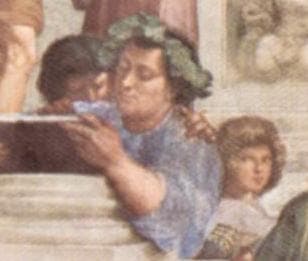
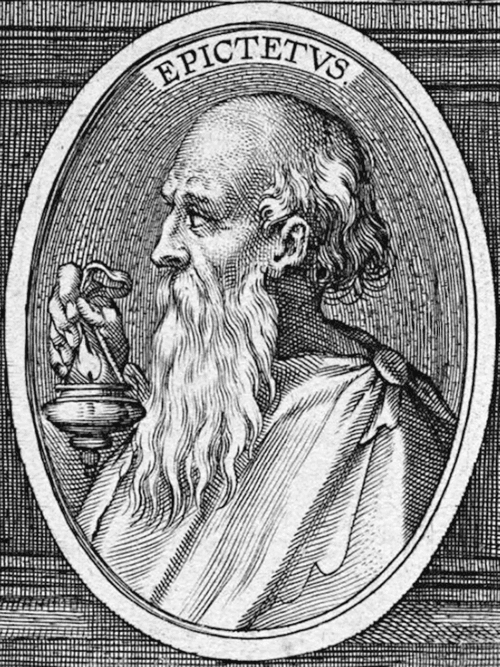
It is in the Garden, between the Dipylon and the Academy, that I find my master Epicurus on a mild spring evening in 300 BCE. An oil lamp still lights the table where papyrus scrolls lie scattered, and the smell of barley bread lingers from the evening meal. I, Metrodorus, who left Lampsacus to follow him, sit down beside him as I have so many times, this time eager to gather his words for those who will come after us. He smiles, his face marked by the years, and invites me to speak.
—Master, do you remember when you opened this Garden to us around 306? Why welcome women and slaves here, something no one dared before?
I remember it, Metrodorus, as if it were yesterday — you had already joined me from Lampsacus. You see, I chose a simple garden, not the Stoa or the prestigious walks of the Academy, because wisdom is not measured by the prestige of the place. If pain and death strike free man, woman, and slave alike, then the philosophy that delivers from them must open itself to all in the same way. I call this loving humanity, without regard to rank. Those who marvel at this think that thinking is a privilege; I know it is a remedy from which no one should be deprived. Here, under these trees, a slave who understands that death is nothing is worth more than a king who fears it.
Wisdom is not measured by the prestige of the place, but by the trouble it dispels.
—People imagine you outside, feasting in luxury. Yet our monthly meals are bread and water. Does that not offend you?
That I am thought a debauchee makes me smile, Metrodorus, you who share my barley bread and water jug. True pleasure lies not in abundance of food but in absence of want. When I am hungry, a little bread gives me a joy that no feast gives to a full belly. That is why I sometimes ask for a piece of cheese: not out of gluttony, but to feast on feast days and taste how little suffices. Accustom yourself to simplicity, and you will be free before fortune as before scarcity. He who needs only what is necessary never trembles at losing it. That is the wealth I bequeath to you, and our modest meals are its clearest lesson.
True pleasure lies not in abundance of food, but in absence of want.
—Outside, they mock our school as a pigsty of pleasure-seekers. You, who place pleasure at the summit, what do you answer to that?
They have not read what I write to Menoeceus, or they read it poorly. When I say that pleasure is the end, I speak neither of the pleasures of the debauched nor of those of the table: I speak of not suffering in the body and not being troubled in the soul. That is what the Greeks call aponia and ataraxia. The hedone I seek is stable, not that fever that always demands more and leaves a man emptier than before. A misunderstood desire is a chain; well-regulated pleasure is a deliverance. Those who accuse us confuse the enjoyment that agitates with the rest that calms. You who live here, Metrodorus, know which of the two inhabits our Garden.
A misunderstood desire is a chain; well-regulated pleasure is a deliverance.
—In the Letter to Herodotus, you teach that nothing comes from nothing. Explain to me again how atoms make us free.
Listen well, Metrodorus. Nothing comes from what is not, and nothing is lost into non-being: everything is made of eternal atoms moving in infinite void. Democritus sensed it, but he chained everything to blind necessity. But if each atom fell straight, never swerving, no collision would occur and we would be mere cogs. That is why I say that the atom sometimes swerves, by a minimal and unpredictable deviation. From this swerve arises the contact of bodies, and in us the possibility to will and choose. Understand this: knowing nature is not vain curiosity; it is what delivers us from fear. He who knows what the world is made of no longer trembles before omens or gods.
He who knows what the world is made of no longer trembles before omens.
—You often say that fear of the heavens makes men unhappy. How does your physics truly free them from it?
Look at the sky on a stormy evening: lightning, thunder, eclipses. The ignorant man sees the wrath of the gods and is consumed with terror. But if you know that these phenomena arise from the motion of atoms and not from divine will, fear falls away of itself. The gods may exist, but blessed and indifferent, they do not concern themselves with our affairs and hurl no punishment. I wrote to Pythocles for this: to give celestial phenomena natural causes, several if need be, rather than a fable that enslaves. Superstition is the worst torment because it never abates. The science of nature is not for scholars: it is the first remedy for the anxious soul.
The gods are blessed and indifferent: they hurl no punishment.
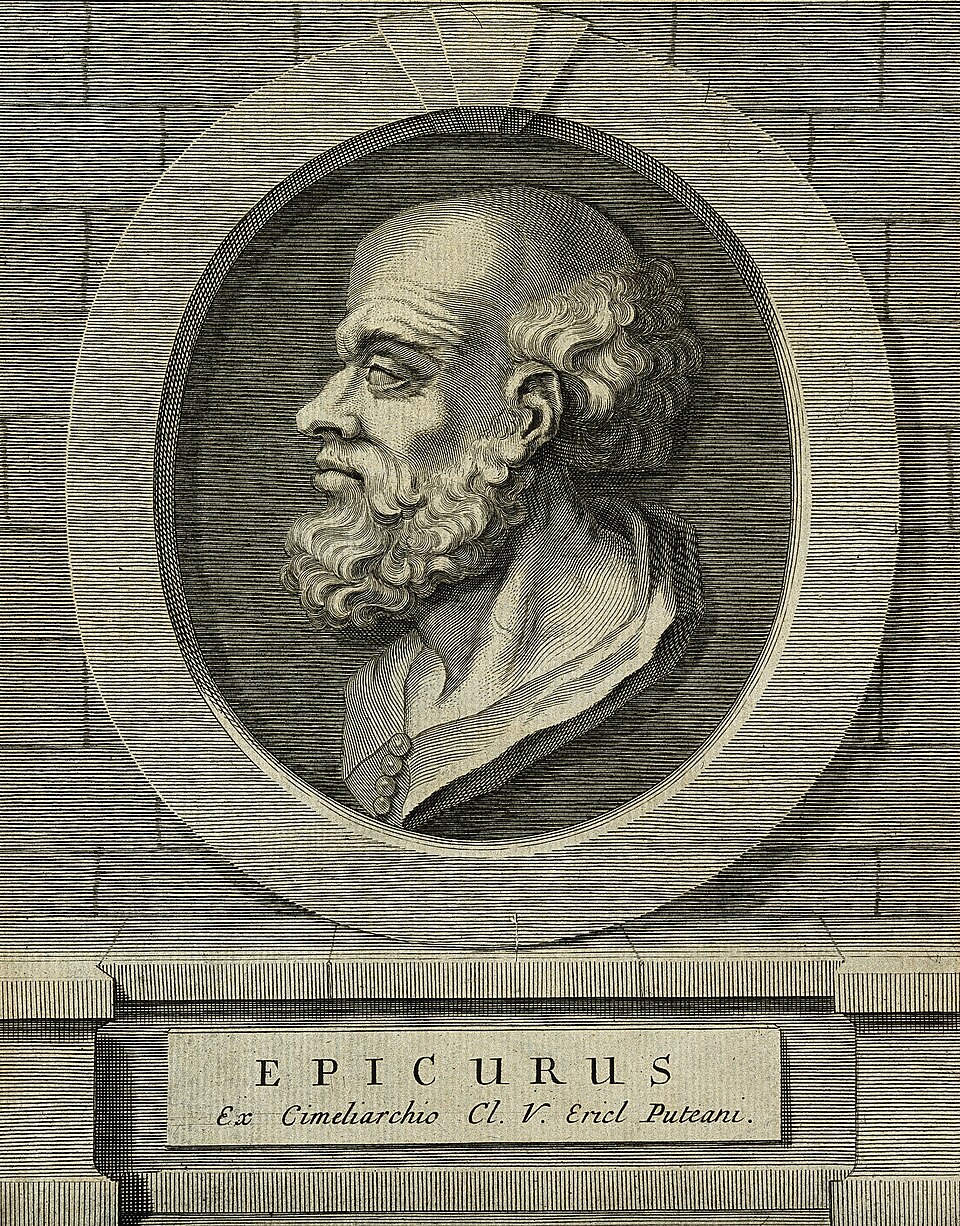
—Master, how does an ordinary day unfold for you in this Garden we have shared for so many years?
I rise at dawn and walk for a while under the trees, before the heat comes. In the morning, I write: letters to our friends who are far away, and these treatises that accumulate in scrolls. The afternoon belongs to you and the others: we talk under the foliage, not as a master to students, but as friends seeking together. In the evening, a simple meal, then before sleep I review the hours that have passed. Have I acted well? Have I let useless trouble invade me? You see, Metrodorus, I ask for little: a bit of bread, the shade of trees, and the conversation of those I love. Such a day, repeated, is already almost all of happiness.
A bit of bread, the shade of trees, and the conversation of those I love.
—You have your maxims engraved on our walls and we recite them. Why do you hold so much to these brief formulas?
Because philosophy is worth nothing if it remains in books, Metrodorus. What good is a long treatise that one admires and then forgets? When pain strikes, when fear seizes, a man has no time to unroll thirty books: he needs a short saying, engraved in memory as in stone. That is why I have summarized the essentials in maxims that you murmur every day. Meditate on them until they become your flesh, and you will have the remedy at hand in the moment of need. A stele on the wall of the Garden speaks more to the soul than an entire library never reread. Knowledge that is not practiced is mere ornament.
Knowledge that is not practiced is mere ornament.
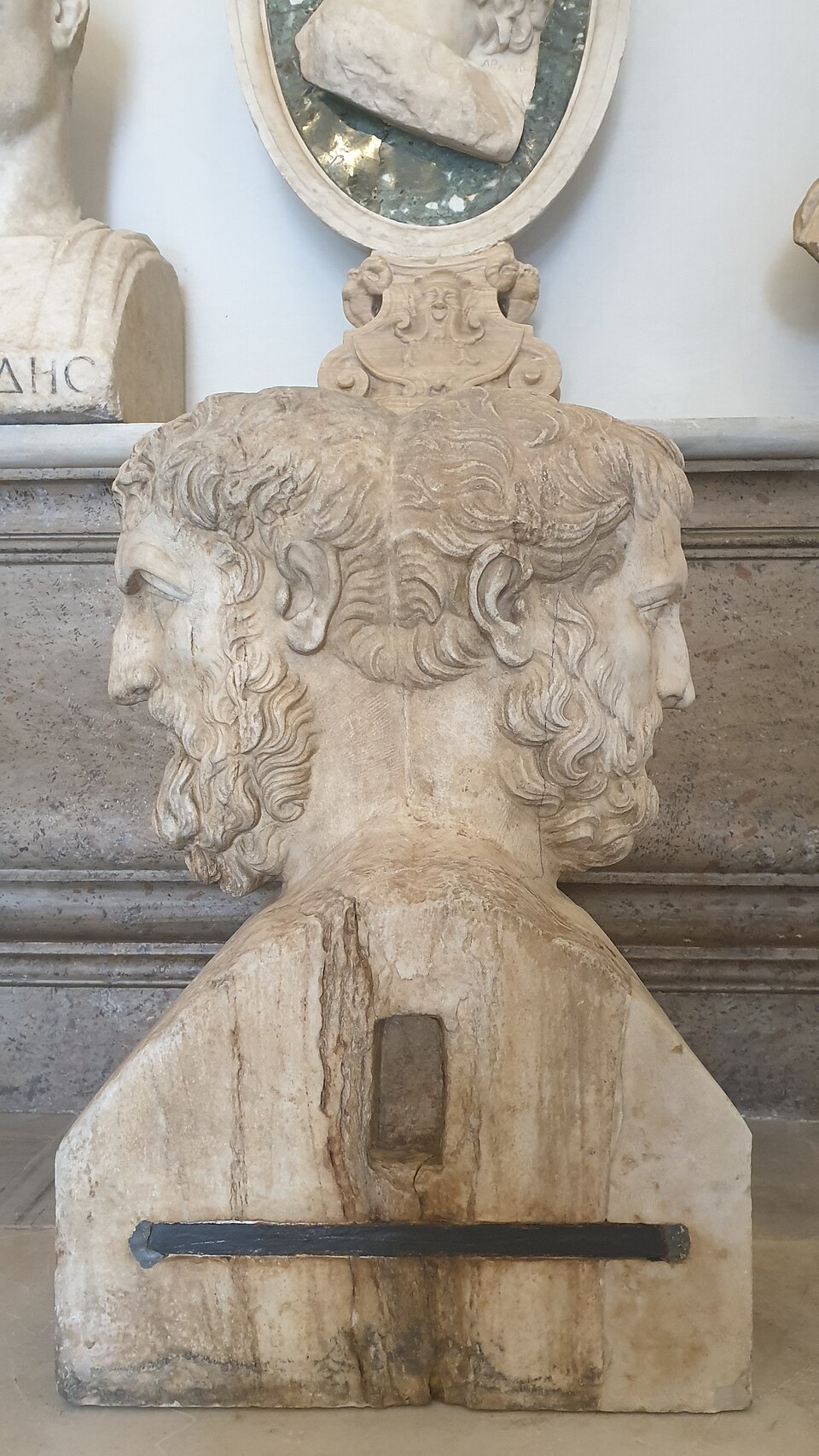
—The world imagines you surrounded by rare dishes. I see you in a worn himation, barefoot in summer. Why this chosen austerity?
My cloak is simple, yes, and I often go barefoot when the stone is warm — you have noticed, you who follow me everywhere. It is not contempt for comfort, Metrodorus, it is freedom. He who needs precious garments, rare furniture, a thousand things — he is the slave of all he possesses and trembles to lose it. I, needing only what is necessary, have nothing to fear from fortune. Nature is content with little, and that little is easy to obtain: that is a great consolation. Poverty measured by nature is great wealth; limitless wealth is great poverty. My worn himation makes me freer than the purple cloak of a tyrant.
Poverty measured by nature is great wealth.
—You repeat that friendship is the greatest of goods. Why does friendship matter so much in the happy life?
Of all the things that wisdom provides for the happiness of a whole life, friendship is by far the greatest good. Consider what we are here: not disciples received for payment, but friends bound by the common search for rest of the soul. Friendship lightens present pains and assures us against future ones, for knowing that a friend will watch over us delivers us from many anxieties. It is not only his help that aids, but the very confidence in that help. You, Metrodorus, who came from Lampsacus to live at my side, are the living proof of this doctrine. I say without hesitation: our conversations are worth more to me than all the rest, and their memory would be sweet to me even in pain.
Friendship is by far the greatest good that wisdom provides.
—Master, your kidneys are causing you cruel pain these days. How can you claim to remain happy in such torment?
You are right, my friend, the disease gnaws at me and some days it is atrocious. But listen well, for this is the test of all I have taught. Intense pain is brief, and lasting pain is bearable: the body cannot suffer beyond a certain measure without ceasing to suffer. And against it I have a rampart that illness cannot reach: the memory of our conversations, of those hours spent together under the trees. As long as I can recall our talks, my soul remains in joy while my body groans. Death, moreover, is nothing to us: as long as I am, it is not, and when it is, I will no longer be. Only see to it, Metrodorus, that our Garden and our friendships continue after me.
My soul remains in joy while my body groans.
Read further
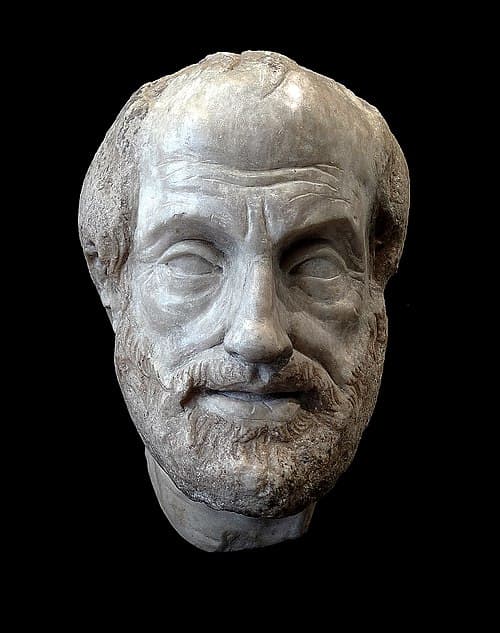
This imaginary interview was generated by artificial intelligence from sources documented in Epicurus's profile. It dramatises what the figure might have said based on what we know about them, but does not constitute attested historical testimony. For primary sources and factual documentation, refer to the full profile.