Imaginary dialogue between James Chadwick and Ernest Rutherford
by Charactorium · Ernest Rutherford (1871 — 1937) · Sciences · 5 min read
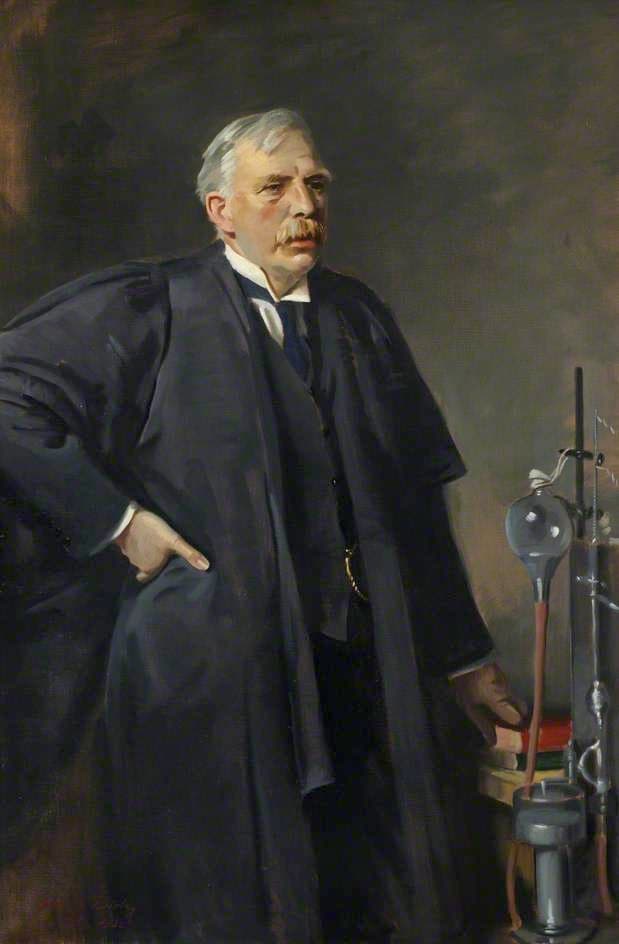
It is in the smoky office of the Cavendish Laboratory at Cambridge, on an autumn afternoon in 1932, that James Chadwick comes to find his mentor. The smell of briar pipe still lingers near the window, and in the distance echoes a burst of booming voice. Chadwick has known this man since Manchester, where he was one of his students before the war; today he returns with a pounding heart, for he believes he has finally captured the particle his patron had predicted for twelve years. Between student and master, memories of experiments and scintillations counted in the dark weave a complicity that questions will not hide.
—Patron, before Manchester and the Cavendish, there was a potato field in New Zealand. What did you feel the day the scholarship arrived?
Ah, Chadwick, you touch on the oldest of my memories. I was on my knees in the soil of Brightwater, digging up my father's potatoes, when news of my scholarship to England was brought to me. I was twenty-four years old and I threw my spade in the air like a madman — that was the last time I dug that soil. A farmer's son, I never thought I would go from McGill to Manchester, then to this office. When you joined me in Manchester, I had barely left that world. Experimental work, you see, is nothing other than digging: you turn the soil patiently until something unexpected emerges.
Experimental work is nothing other than digging, until something unexpected emerges.
—You have so often told me about the 1909 experiment. When Geiger and Marsden saw the particles bouncing back, what did you really think?
It is the most incredible event of my entire life, I assure you. Imagine: we were bombarding a thin gold leaf with alpha particles, and most passed through as if nothing were there. But some came back! It was as unbelievable as firing a fifteen-inch shell at a piece of paper and seeing it bounce back to hit you. It took me nearly two years to understand. In 1911, I realized that all the charge must be concentrated in a tiny volume, at the center of the atom. A nucleus. You, who counted so many scintillations on the zinc sulfide screen in the dark, know how much each flash cost us our eyes.
It was as unbelievable as seeing a fifteen-inch shell bounce off a piece of paper.
—In Manchester, we talked about the Curies, Becquerel, Thomson. Did you feel you were running the same race as all those scientists?
What a decade, James! When Röntgen discovered his X-rays in 1895, then Becquerel the radioactivity of uranium in 1896, and Thomson the electron right here at the Cavendish in 1897 — the whole world was bubbling. The Curies were isolating radium in Paris while I was classifying my alpha and beta radiations in 1899. We were not racing against each other; we were enlightening each other. Without Thomson's electron, my nucleus made no sense; and when young Bohr came in 1913 to lay his quantum structure on my planetary model, I saw that the chain would continue long after us. Science is a relay: each passes the torch to the next.
We were not racing against each other; we were enlightening each other.
—A question that always amuses you: the Nobel Prize in Chemistry in 1908, to you, a physicist at heart. Had you digested it?
Ha! You know it still makes me laugh. They awarded me the Nobel Prize in chemistry, to me who always considered myself a physicist! I said then that of all the transmutations I had observed in my career, the fastest and most surprising was my own transformation from physicist to chemist. But deep down, it was justice. With Soddy, in 1903, we had shown that radioactivity is a true transmutation — one element changes into another, spontaneously. The alchemists dreamed of it; we observed it. The old dogma of the immutable atom, Dalton's, shattered. How else to call it but chemistry, after all?
The fastest transmutation I ever observed was my own, from physicist to chemist.
—In 1919, you transformed nitrogen into oxygen using alpha particles. Did you realize you were fulfilling the old dream of the alchemists?
When I saw those long-range atoms emerging in nitrogen, I first thought it was a mistake. Then I had to admit that they were hydrogen atoms, torn from the nitrogen nucleus by my alpha particles. I had broken the nucleus and created oxygen. The alchemists wanted to change lead into gold through incantations; I transmuted nitrogen by bombardment, in a brass tube. The difference, Chadwick, is that I understood what I was doing. It was while reflecting on these collisions that the idea came to me, around 1920, that there must exist in the nucleus a particle without charge. You see where I'm going...
The alchemists chanted; I transmuted nitrogen in a brass tube.
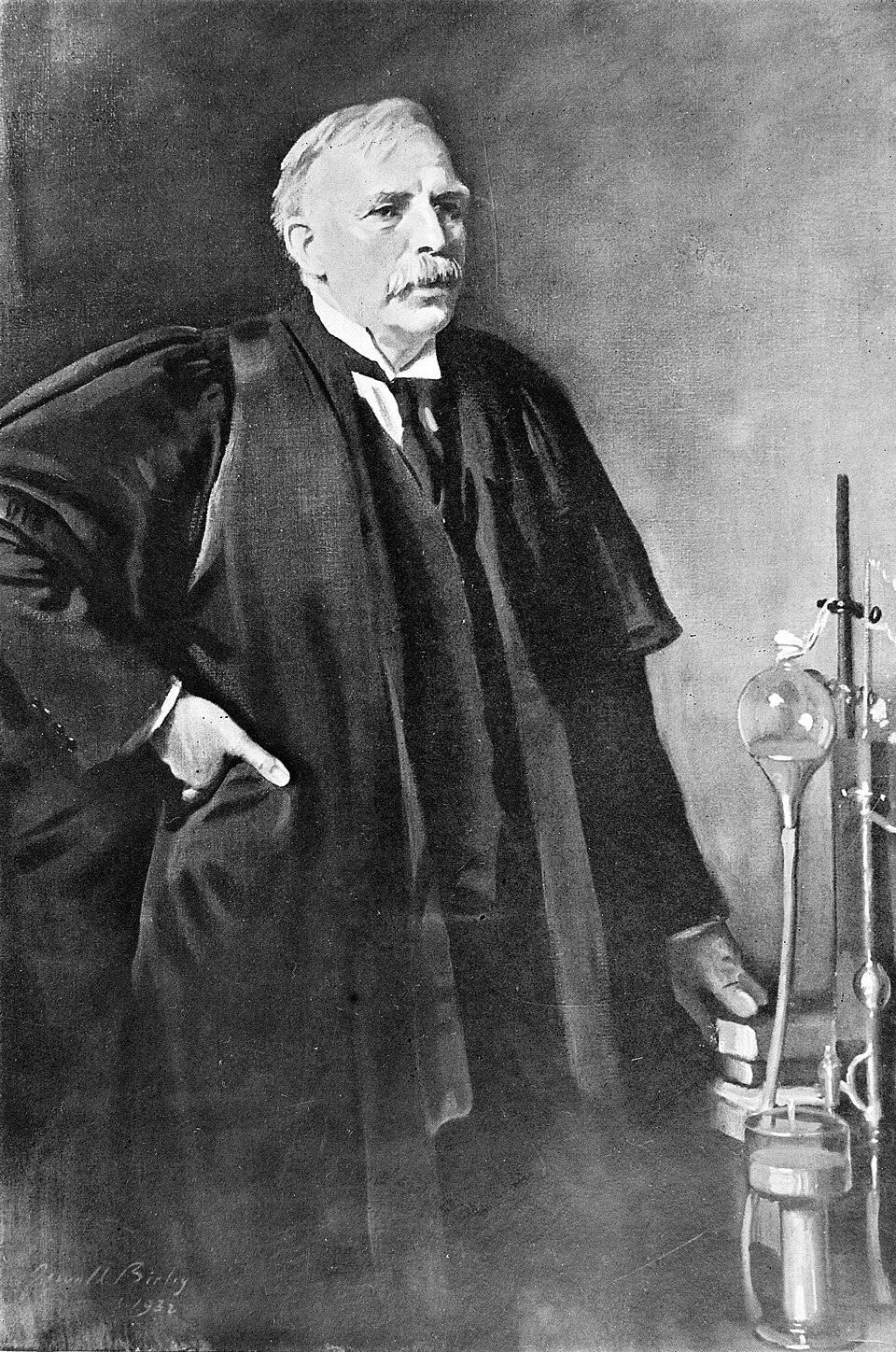
—Exactly, patron — that neutral particle you predicted in 1920. You believed in it for twelve years without seeing it. What made you so sure?
The logic of the nucleus demanded it, James. Charge alone could not explain the mass: a heavy, neutral brick was needed, able to slip into the nucleus without being repelled. I imagined it as a proton and an electron tightly bound. Many of my colleagues shrugged — a particle that cannot be detected, they said, is a chimera. But a neutral particle should precisely pass through matter without leaving an electrical trace. That is what made it so hard to track down. You, who have come to see me today, I think I can guess from your expression that you are finally bringing me the means to settle this old bet.
A neutral particle should pass through matter without leaving a trace: that is why it was hiding.
—In Manchester days, we all knew your experiments were going well when we heard you singing in the hallways. Was that really a signal?
I was reproached enough for it! Yes, when the measurements fell into place, I apparently would belt out Onward, Christian Soldiers at full volume, off-key as a pot. My collaborators had learned to read my mood from my voice: if I was thundering in the corridor, the scintillations matched my theory. Running a laboratory, Chadwick, is not just counting flashes; it's kindling a flame in young people. I wanted us to work hard, but also to keep a light heart. A discovery without joy is not worth wearing out your eyes over.
If I was thundering in the corridor, the scintillations matched my theory.
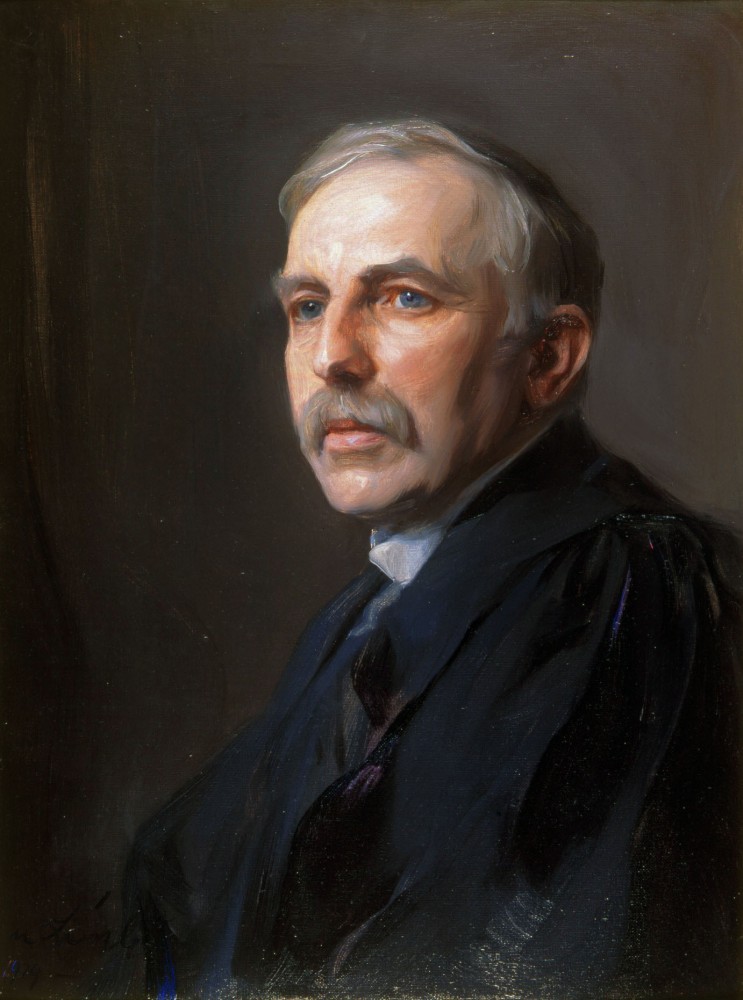
—You would chase us out of the lab before nightfall, sometimes against our will. Why were you so strict about those hours, you who worked so much?
Because I don't believe for a second in the merit of the lamp that burns late, James. If a man cannot finish his work before six o'clock, it means he hasn't thought enough during the day. Experimental work requires a clear eye and a fresh mind, not an exhausted brain that stubbornly persists. In the morning, I would make my rounds of the rooms, discuss with each of you; then in the afternoon came the manipulations and the seminars where I loved to bombard you with questions. In the evening, I would go home to dine with Mary, smoke my pipe, and read. A rested mind sees what a tired mind misses — remember that when you have your own students.
If you cannot finish your work before six o'clock, it means you haven't thought enough during the day.
—Master, when you wrote in 1911 that the atom contains a concentrated central charge, did you measure that you were overturning the very idea of matter?
At the time, I was only trying to account for my numbers. The large deflections of alpha particles could only be explained by a central charge, packed into a tiny volume. I wrote that one had to assume this, simply because nothing else fit. But yes, I saw clearly that Dalton's full and indivisible atom was collapsing: matter was almost entirely empty, with this tiny dense nucleus at its heart. It made me dizzy. The entire edifice you learned in school was crumbling under my calculations — and it was exhilarating. Nature is stranger than anything we dare imagine.
Matter is almost entirely empty, with this tiny dense nucleus at its heart.
—Your ashes will one day rest among the greats. From Brightwater to the Cavendish, what do you take away from this long journey, you who taught me so much?
I don't much like talking about such things, Chadwick. What I take away is the path itself: a New Zealand boy who turned the soil, and ended up turning the atom. From McGill to Manchester, then to the head of this laboratory where Thomson reigned before me, I never stopped being that farmer who digs. But my true pride is not my gold leaves or my transmutations — it's the men I trained, you first among them. A discovery ages; a student who surpasses his master, that is what lasts. So go and find me that neutron, my boy. I trust you.
A discovery ages; a student who surpasses his master, that is what lasts.
This imaginary interview was generated by artificial intelligence from sources documented in Ernest Rutherford's profile. It dramatises what the figure might have said based on what we know about them, but does not constitute attested historical testimony. For primary sources and factual documentation, refer to the full profile.