Kids interview Ernest Rutherford
by Charactorium · Ernest Rutherford (1871 — 1937) · Sciences · 5 min read
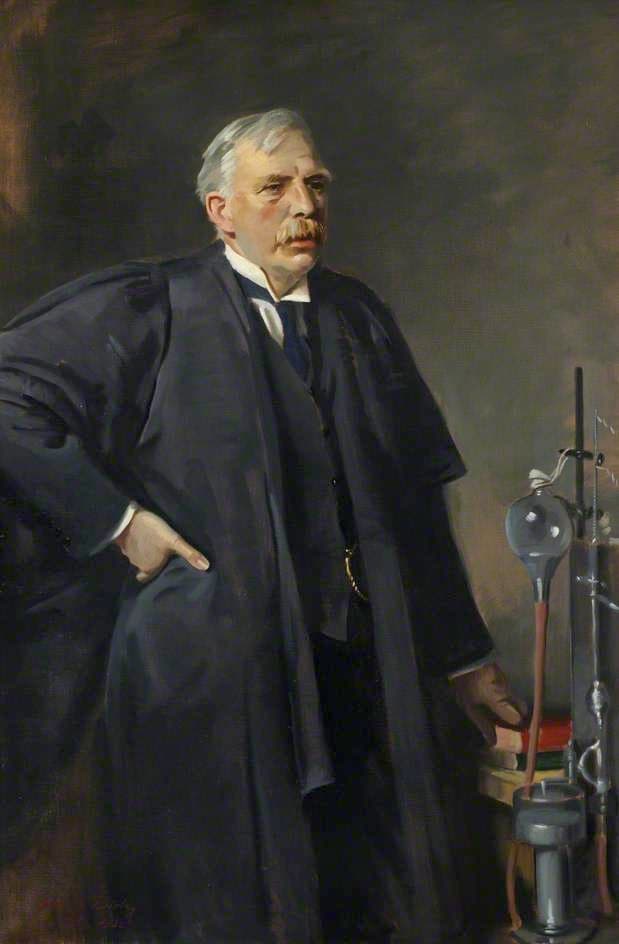
Two twelve-year-old students, on a field trip, have an appointment with an old gentleman with a thick mustache and a booming voice. He waits for them in his laboratory, pipe in hand. That morning, Ernest Rutherford has decided to tell them everything, from the potato field to the heart of the atom.
—Is it true that you learned some big news right in a potato field?
Yes, my child, it's absolutely true! I was 24 years old. I was born in a small village, Brightwater, in New Zealand, to a farming family. That day, I was digging in the earth to unearth potatoes, as I did every morning. Imagine: hands full of mud, back bent. And then, a letter was brought to me. I had won a scholarship to go study in England! I threw my spade in the air and shouted that this was the last potato I would ever dig in my life. And you know what? I never lied. I never touched a spade again.
This is the last potato I will ever dig in my life!
—What did your childhood home in New Zealand smell like?
Ah, that's a good question! It smelled of wet earth, cut wood, and baking bread. We were a large family, and we had to work hard. Imagine a house with no engine noise, just the wind, the birds, and the voices of brothers and sisters. No great learned schools near us, you see. But my father fixed everything with his hands, and my mother loved books. That's where I learned something: with curiosity and patience, a farmer's son can understand the most hidden secrets of the world.
A farmer's son can understand the most hidden secrets of the world.
—What was that experiment with a gold leaf? Why gold?
You know, gold can be beaten into incredibly thin leaves, thinner than a hair. At Manchester, around 1909, I asked my two assistants, Geiger and Marsden, to fire tiny invisible projectiles, called alpha particles, at this gold leaf. These particles are like very small bullets spat out by certain dangerous materials. To see them, we placed a special screen that flashed light with each impact. My assistants counted those flashes in total darkness, eyes wide open, for hours. Exhausting, patient work. And it was this little play of lights that would change everything.
—And what surprised you so much during that experiment?
Almost all the particles went straight through the leaf, as expected. But a few, every now and then, bounced back! Toward me! I thought I was dreaming, my child. It was as if you fired a huge cannonball at a thin sheet of paper, and it came back to hit you in the face. Impossible, right? I understood then that at the center of every atom hides a tiny, heavy, powerful point: the nucleus. It was this that repelled my particles. In 1911, I announced that the atom is not a solid ball: it is almost entirely empty, with a very small, very dense heart.
The atom is almost entirely empty, with a tiny, very dense heart.
—Is it true that you transformed one metal into another, like a magician?
Almost, my child! Not a metal, but a gas. In 1919, I bombarded nitrogen atoms — the gas you are breathing right now — with my alpha particles. And surprise: the nitrogen turned into oxygen! I had changed one element into another. You know, for a very long time, men called alchemists dreamed of transforming matter, for example lead into gold. They were thought mad. Well, I really succeeded in a transmutation — that's the word they used. Not with magic formulas, but with patience and experiments. The old dream had finally come true.
The old alchemists' dream has finally come true.
—You received a great prize. Why did it make you laugh?
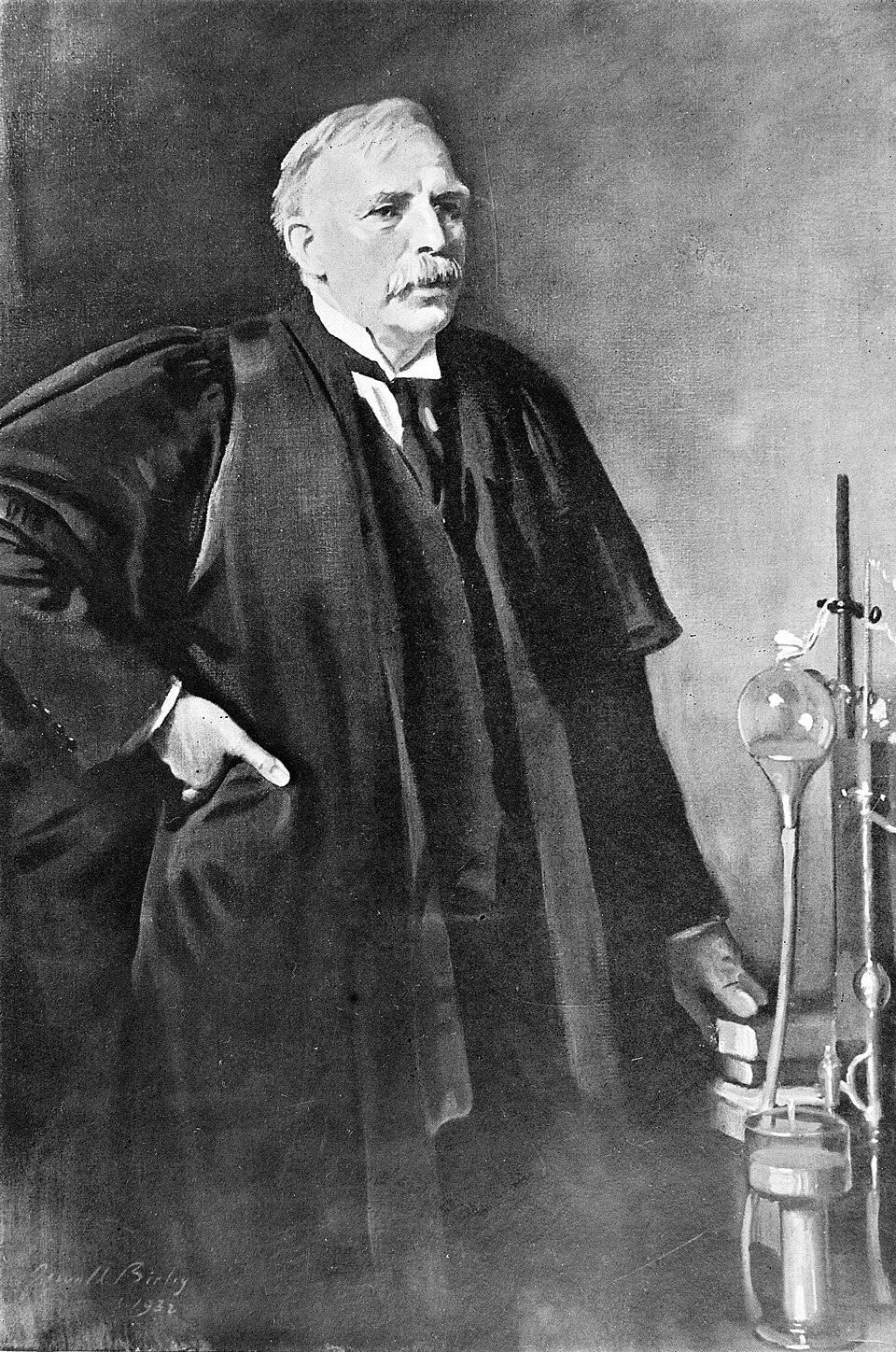
Ha! You'll understand. In 1908, I was awarded the Nobel Prize. It's the greatest honor for a scientist. But they gave it to me in Chemistry! Yet I have always felt a physicist at heart — one who studies forces and matter, not mixtures and reactions. It amused me greatly. I joked that of all the transformations I had observed in my life, the fastest was my own: turning from a physicist into a chemist in a single evening! You see, my child, even a great scientist must know how to laugh at himself.
The fastest transmutation I ever saw was my own.
—How did you understand that atoms can change on their own?
It's a long story of patience. With my friend Frederick Soddy, in Montreal, around 1903, we were studying strange materials that constantly spat out energy: they are called radioactive. And we made a startling discovery. Those atoms do not remain the same forever! Slowly, by themselves, they break apart and change into another element. At the time, everyone believed atoms were eternal and indestructible. We showed the opposite. Imagine being told suddenly that a stone could, by itself, become a different stone. That is what we proved.
Atoms are not eternal: they transform on their own.
—Is it true that you sang in your laboratory?
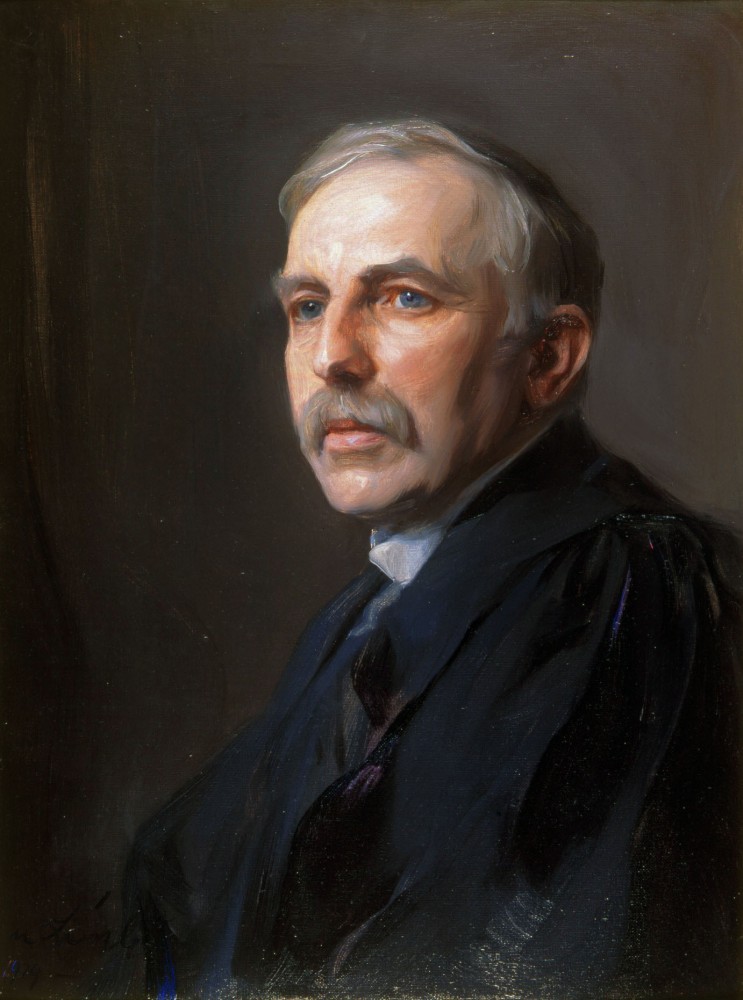
Oh yes, and loudly! I directed a great famous laboratory, the Cavendish, at Cambridge. I had a voice like thunder, heard in all the hallways. When an experiment went well, I would start singing an old hymn, Onward, Christian Soldiers, at the top of my lungs. My researchers then knew the news was good! It was our little secret signal. You see, a laboratory is not a sad, silent place. It is a place where we search, where we fail, and where we rejoice together when nature finally agrees to reveal one of its secrets. Joy is part of a scientist's work.
—And is it true that you forbade your researchers from working in the evening?
Absolutely true! When evening came, I chased everyone out of the lab. 'Go home!' My young researchers couldn't believe it. But I had my reason: I thought that if you hadn't finished your work by 6 PM, you hadn't thought enough during the day. You understand? What matters is not exhausting yourself for hours, but thinking well. A tired brain finds nothing good. I myself went home in the evening to dine and read quietly. A rested head is worth a thousand hours of work in the dark.
A rested head is worth a thousand hours of work in the dark.
—If we saw you today, where would we find you buried?
Ah, that's a question that touches me. When I died, in 1937, my ashes were placed in a vast and solemn place: Westminster Abbey, in London. And do you know near whom? Right next to Isaac Newton, the greatest scientist of all, and Lord Kelvin. Think of that, my child: the little boy who dug potatoes in New Zealand rests for eternity alongside the greatest minds in the world. If I can leave you a message, it is this: no matter where you come from. With curiosity and hard work, you can go further than all your dreams.
No matter where you come from: curiosity can take you further than all your dreams.
This imaginary interview was generated by artificial intelligence from sources documented in Ernest Rutherford's profile. It dramatises what the figure might have said based on what we know about them, but does not constitute attested historical testimony. For primary sources and factual documentation, refer to the full profile.