Kids interview Étienne de La Boétie
by Charactorium · Étienne de La Boétie (1530 — 1563) · Literature · Philosophy · 5 min read
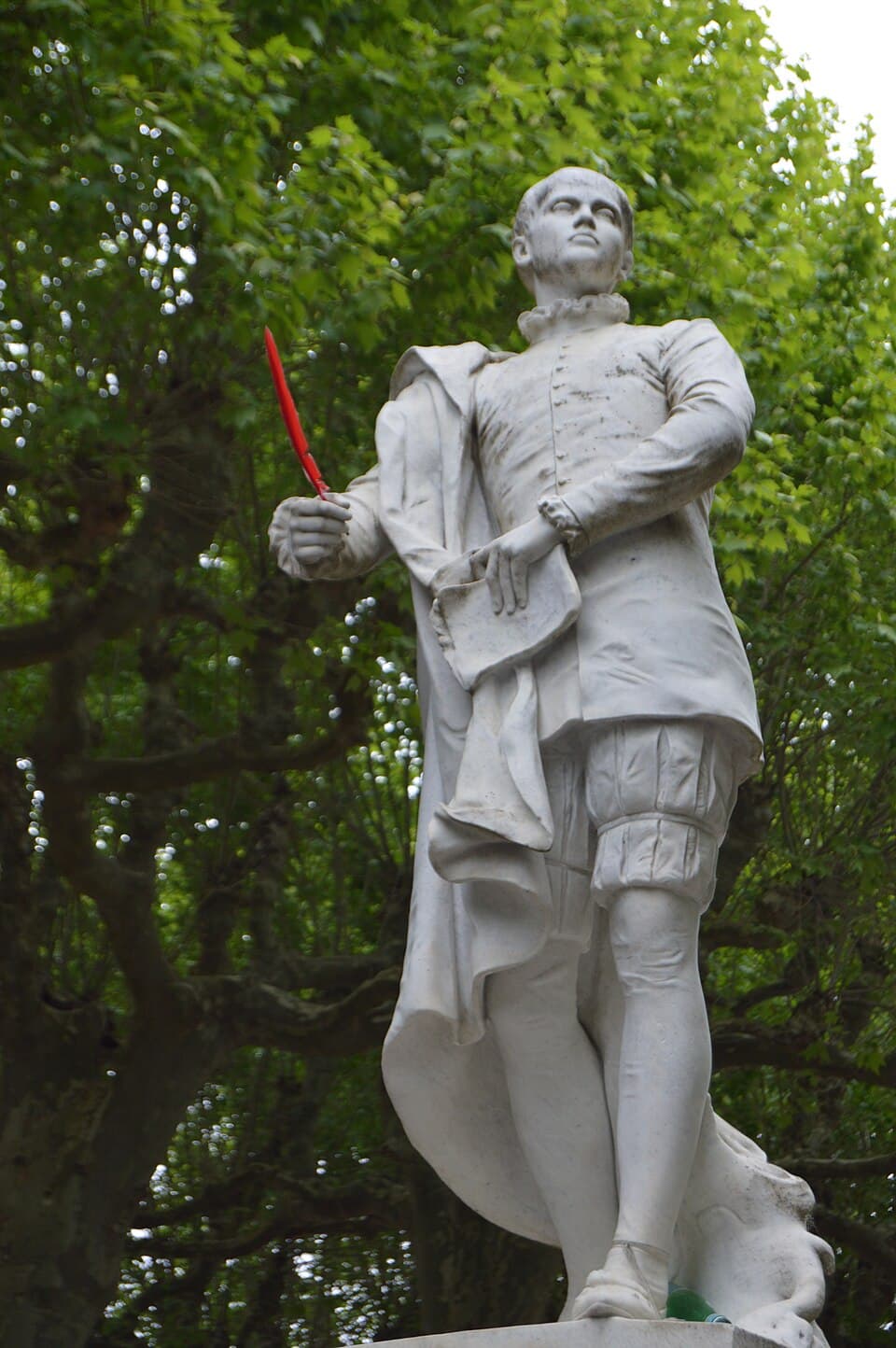
Two middle school students visit the Renaissance house in Sarlat one spring morning. There, a man in a black magistrate's robe greets them with a smile. His name is Étienne de La Boétie, and he has much to tell them.
—How old were you when you wrote your most famous book?
You know, my child, I was barely older than you. They say I was 16 or 18 when I wrote the Discourse on Voluntary Servitude. Picture a boy bent over his table, by candlelight, asking a huge question. Why do people obey a cruel man, when they are thousands and he is all alone? I couldn't understand. Grown-ups were astonished that a young person had dared to ask that. But you see, sometimes it's when you're young that you see most clearly. You haven't yet learned to bow your head.
Sometimes it's when you're young that you see most clearly.
—How can one wicked king make a whole people obey?
That's the real question! And the answer will surprise you. The tyrant — that's the word for a leader who crushes everyone — has no strength on his own. It's WE who hold him up. Imagine a giant statue, a huge colossus. Do you think it takes an army to topple it? No. You just have to stop holding it up. I wrote this: “Be resolved to serve no longer, and you are free.” The day people stop obeying, the giant falls all by itself, crushed by its own weight. No one needs to fight. You just have to stop helping the tyrant.
The day people stop obeying, the giant falls all by itself.
—Weren't you afraid to write things against kings?
Good question, you're clever. Yes, it was dangerous. So the Discourse wasn't printed right away. It circulated in secret, copied by hand on vellum — that's smooth calfskin we used to write on in my time. Learned friends passed these sheets among themselves, discreetly. Imagine a text traveling from hand to hand, like a precious secret. I wasn't trying to start a revolution, you see. I mostly wanted to understand. But a written idea never dies. Even hidden, it continues its path.
A written idea never dies.
—Is it true you had a super famous best friend?
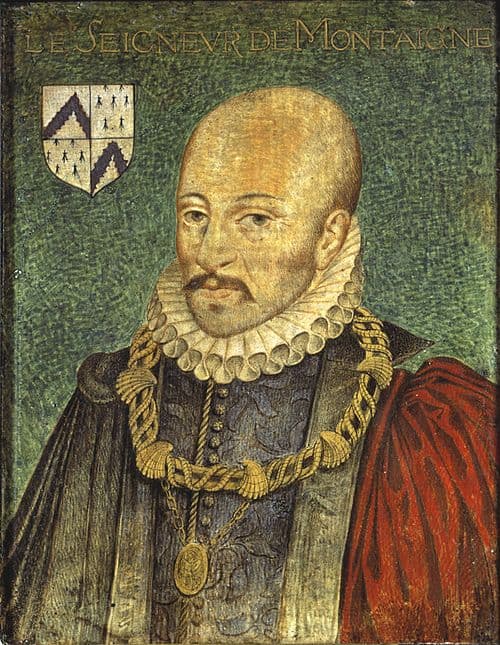
Ah, you touch what is dearest to me! My friend's name was Michel de Montaigne. We met around 1558, and right away, it was as if we had known each other forever. You know what he wrote to explain our friendship? “Because it was him, because it was me.” That's it. No big explanation. We loved each other because it was him and because it was me. Imagine meeting someone and feeling in one day that they are your other half. That's rare. It sometimes happens only once in a lifetime.
We loved each other because it was him and because it was me.
—How did you see each other, what did you talk about?
In the evenings especially, my child! During the day, I was at court judging cases. But when night fell, Montaigne and I would sit by the fire. We talked about poetry, philosophy, ancient books. We discussed for hours by candlelight — there was no other light in my time. I also wrote poems for him. In one of my sonnets, I said that in him I had found “the other half of myself”. You see, a true friend isn't someone who resembles you. It's someone who completes you.
A true friend isn't someone who resembles you, it's someone who completes you.
—What happened at the end, when you were ill?
It's a sad story, but also a gentle one. I fell very ill in 1563, at just 32. Probably dysentery or the plague — they didn't know how to treat well in my time. Montaigne stayed by my bedside until the end, at Germignan, near Bordeaux. He held my hand during my agony. And you know what? I asked that my wife inherit my library, my beloved books. My poems and translations I left to Montaigne. Dying is scary. But dying surrounded by those you love is less hard. You are not alone.
Dying surrounded by those you love is less hard.
—What was your real job, actually, in everyday life?
Good question, people often forget! I wasn't just a writer. I was a judge. At 23, I became counselor at the Parliament of Bordeaux. Mind you, in my time, a parliament wasn't an assembly that votes on laws. It was a high court that dispensed justice. In the morning, I put on my long black robe and square cap — that was the magistrate's attire. Picture me solemn and serious, judging cases. Then in the evening, I became a poet again. You see, you can have two lives in a single day: judge in the morning, poet in the evening.
You can have two lives in a single day.
—Was it hard living during a war between religions?
Yes, my child, it was a terrible time. Catholics and Protestants were tearing each other apart in France. It's called the Wars of Religion. People killed each other over how they prayed to God, can you imagine? I wanted peace. In 1562, I was sent on a mission to Agenais to try to reconcile both sides. I even wrote a text, the Memorandum on the Edict of January, to propose solutions. I believed we could talk instead of fight. I didn't succeed, alas. But trying for peace is always better than choosing war.
Trying for peace is always better than choosing war.
—What did you read when you were quiet at home?
Ah, my books! They were my whole joy. I would get up at dawn and, before going to court, read the authors of Greek and Latin antiquity. Plutarch, Xenophon, Tacitus. You know, I loved those texts so much that I translated them from Greek into French, to share them. I translated Xenophon's Oeconomicus, a book on how to manage your home and fields. People like me were called humanists: scholars who study the Ancients to better understand humans. Imagine opening a book a thousand years old and finding advice that is still true. That's magical.
Imagine opening a book a thousand years old and finding advice that is still true.
—What was the point of reading such old books?
You'll understand. Those old books weren't just to look pretty on a shelf. They nourished my mind. When I read how the Romans or Greeks lived under their leaders, I reflected on my own time. It's by reading the Ancients that I understood voluntary servitude — that habit peoples have of accepting domination. Books taught me to ask questions no one dared to ask. Imagine a treasure hidden in the pages: with each reading, you become a little freer in your head. Reading, my child, is learning to think for yourself.
Reading is learning to think for yourself.
—How would you have felt knowing your book would be published after your death?
What a strange idea, isn't it? My Discourse, I never saw it printed. It was only in 1576, thirteen years after my death, that Protestants published it. But mind you: they used it as a weapon against the king, in a collection of political struggle. Yet I hadn't written it to make war! I had just asked myself a question, as a young man, in my corner. You see, when you release an idea into the world, it no longer belongs to you. Others seize it and make it say what they want. An idea is like a bird: once it flies away, you can't catch it again.
An idea is like a bird: once it flies away, you can't catch it again.
This imaginary interview was generated by artificial intelligence from sources documented in Étienne de La Boétie's profile. It dramatises what the figure might have said based on what we know about them, but does not constitute attested historical testimony. For primary sources and factual documentation, refer to the full profile.