Imaginary interview with Étienne de La Boétie
by Charactorium · Étienne de La Boétie (1530 — 1563) · Literature · Philosophy · 6 min read
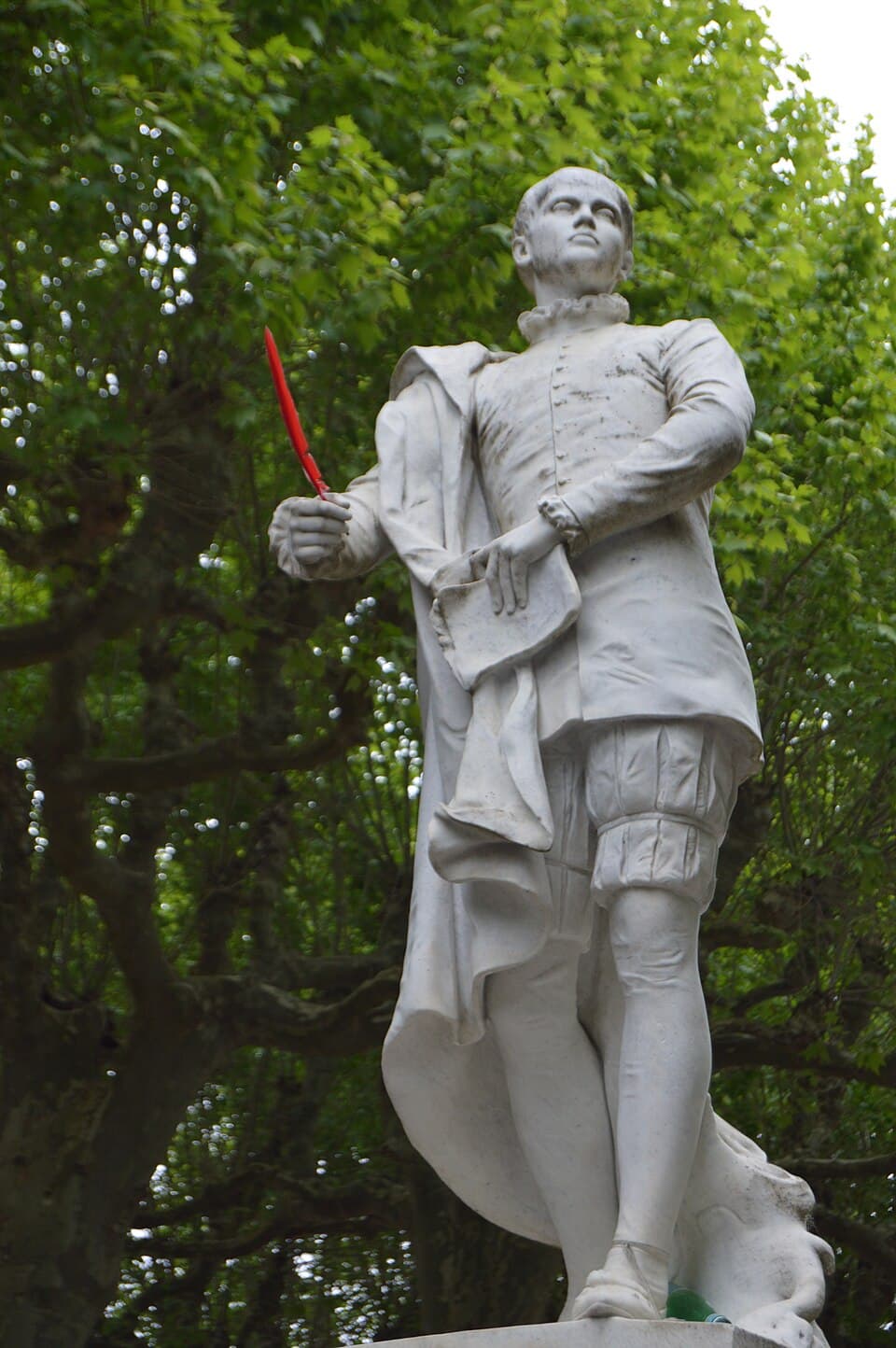
Bordeaux, an evening in the year 1562. In a study cluttered with Greek editions and parliamentary records, a young magistrate of thirty-two closes a vellum-bound manuscript and listens to the sound of the Garonne. Étienne de La Boétie agrees, by candlelight, to speak of the servitude of peoples, of friendship, and of the Ancients.
—It is said that you were barely eighteen when you wrote your famous treatise. What drives such a young man to question the obedience of peoples?
It was at the College of Guyenne, in Bordeaux, that the idea came to me, between two lessons in Greek and Latin. My masters had me read Plutarch and Tacitus, and I marveled at a riddle that none of them solved: how a single man, sometimes weak, sometimes cowardly, holds under his heel thousands of others who could overthrow him with a shrug. I was not yet twenty, and people mocked my youth; but youth has this advantage: it has not yet resigned itself. I wrote down these reflections without thinking they would be read, like an indignant schoolboy's exercise. I entitled it Discourse on Voluntary Servitude, and the word voluntary carries all my astonishment.
—You readily compare the tyrant to a colossus. What is meant by this image?
Imagine a stone idol, as tall as a tower, that the crowd carries aloft in the great square. Take away the hands, and it collapses under its own weight. That is the image I engraved in the Discourse: "Resolve to serve no more, and you are at once free. I do not ask that you push it or shake it, but only that you no longer support it, and you will see it, like a great colossus whose base has been stolen, melt under its own weight and shatter." The tyrant feeds only on our consent; that is both the scandal and the hope.
The tyrant feeds only on our consent; that is both the scandal and the hope.
—How does one live with judging one's fellow men when one has written against all servitude?
At twenty-three, in 1553, I took my seat as a counselor at the Parlement of Bordeaux, in the long black robe and square cap that make a young man suddenly appear grave. It is a strange thing to judge one's fellow men when one has oneself written that no one is born to obey blindly. In the morning, I read the king's edicts that we had to register; in the afternoon, I settled boundary disputes and blood crimes. The nobility of the robe, of which I was now a part, does not have the antiquity of the sword, but it has the pen and the law — and sometimes, believe me, the pen cuts deeper. I learned there that justice is dispensed less in great treatises than in the patience of court hearings.
—France is sliding into civil war. What role were you given in this tearing apart?
When blood began to flow at Wassy, at the start of 1562, I understood that France was entering a night whose end no one could see. Chancellor Michel de L'Hospital sent me to Agenais to try to extinguish the fire: Catholics on one side, Reformed on the other, and between them a few men of good will shouting themselves hoarse in vain. I then drafted a memoir on the January Edict, that edict which granted Protestants a freedom of worship so fragile that a breath sufficed to extinguish it. I argued for concord rather than the victory of one party. Strange fate for one said to be an enemy of tyrants: here I am begging everyone to disarm, knowing all too well that a divided people serves its masters even better than a submissive one.
A divided people serves its masters even better than a submissive one.
—You are often reduced to the political pamphleteer. What would you say about the other side of your work, that of translator?
People think I am entirely in politics; they forget my sweetest hours, spent translating the Ancients. I rendered into French Plutarch's Rules of Marriage and Xenophon's Oeconomicus — one on the art of living together, the other on the governance of a house and a field. Translating, you see, is not a copyist's work: it is bringing a dead man into one's own language, lodging him under one's roof, lending him one's voice. In my study, between the goose quill and the inkwell, I spent whole evenings searching for the right word to render a Greek thought. A humanist is nothing other than that: a man convinced that the Ancients still have something to teach us about how to live rightly.
—You also wrote love verses. How does one move from political philosophy to the sonnet?
I rhymed, yes — twenty-nine sonnets in the manner of Petrarch, those verses where love complains in set figures and metaphors. Petrarchism, as they say in Italy, is a demanding school: one must suffer with elegance, desire with measure, and fit an entire heart into fourteen lines. I put into them what political prose could not say: tenderness, absence, the half of oneself that one seeks in another. In one of them, I wrote that I know well that in you I have found the half of myself, and that absent you love me just the same. Those poems I did not give to the printers; I entrusted them to a friend, certain that he would be their best guardian.
—How was this friendship with Montaigne, of which so much is said, born?
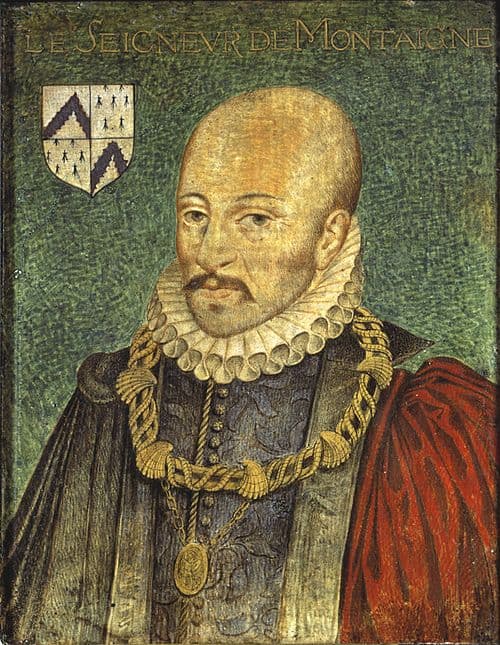
It was around 1558, in Bordeaux. We knew each other by reputation before we knew each other by sight: he had read my writings, I had heard his wit praised. And from the first meeting, it was as if we were reuniting after a long absence, though we had never seen each other. Michel de Montaigne was three years younger than me, lively, curious, rebellious beneath his magistrate's exterior. I cannot explain what bound us so quickly; the reasons for true friendship elude reason. It is, I believe, that there exist souls made to recognize each other, and that ours, both of them, had been seeking each other without knowing it.
—What does this friendship mean to you, in light of all the rest of your life?
How can I tell you? Ordinary friendships are only transactions and familiarities; this one was of a different fabric. We lent each other nothing, for everything was shared. I have so few possessions to leave that my greatest wealth is my books and papers — those manuscripts bound in vellum, my verses, my translations. I already know to whom I will entrust them: to Montaigne, who will be their heir as much as of my memory. Let him keep my sonnets, publish them or not, do with them what friendship dictates. A man does not die entirely if he leaves his thought in the hands of one who understands him better than he understands himself.
A man does not die entirely if he leaves his thought in the hands of one who understands him.
—Your Discourse circulates from hand to hand, without a printer. If you imagined it would still be read a century from now, what would you think?
That is a reverie that troubles me. My Discourse has never seen a press; it passes from hand to hand, copied out by pen sometimes on vellum, slipped under a cloak among people who trust each other. That is how dangerous ideas travel: not through booksellers' shops, but through friendship and secrecy. If I could imagine being read a hundred years from now, I would fear it as much as I would hope it. For a text without its author is an orphan: everyone pulls it to himself, makes it speak according to his needs. I wrote against all tyranny, not for a party; but who knows if the living of tomorrow will not make me say what I never intended?
—Your ideas could attract warring parties. Do you fear that one day your text will be seized for other battles than your own?
That is my dread, I confess. I have seen the Reformed and Catholics tear apart anything that could serve as a weapon — a sermon, an edict, a libel. Should my Discourse fall into the hands of a party, it would be turned into a war machine against a king, whereas I aimed at tyranny in general, that disease of the human soul that has neither religion nor homeland. If one day I were published in some Huguenot polemical collection, I would be made a soldier when I only wanted to be a physician. Such is the fate of writings: they survive their author, only to serve causes he would not have recognized. I still prefer the silence of the manuscript to that clamor.
—At the end of this interview, what would you like to be remembered for?
Let this be remembered, if anything is: freedom is not received; it begins the day one stops yielding. I did not call peoples to revolt or to bloody barricades — I saw too early, at Wassy and elsewhere, where fury leads. I only said that it would suffice to no longer want to serve in order to no longer be a serf. That is at once the easiest and the hardest thing in the world, for we love our chains almost as much as we curse them. The rest — my sonnets, my translations of Plutarch, my counselor's robe — is only the ornament of a life. The essential lies in this bare idea: a free man is a man who has stopped supporting the colossus.
This imaginary interview was generated by artificial intelligence from sources documented in Étienne de La Boétie's profile. It dramatises what the figure might have said based on what we know about them, but does not constitute attested historical testimony. For primary sources and factual documentation, refer to the full profile.