Kids interview Eugène Ionesco
by Charactorium · Eugène Ionesco (1909 — 1994) · Literature · 5 min read
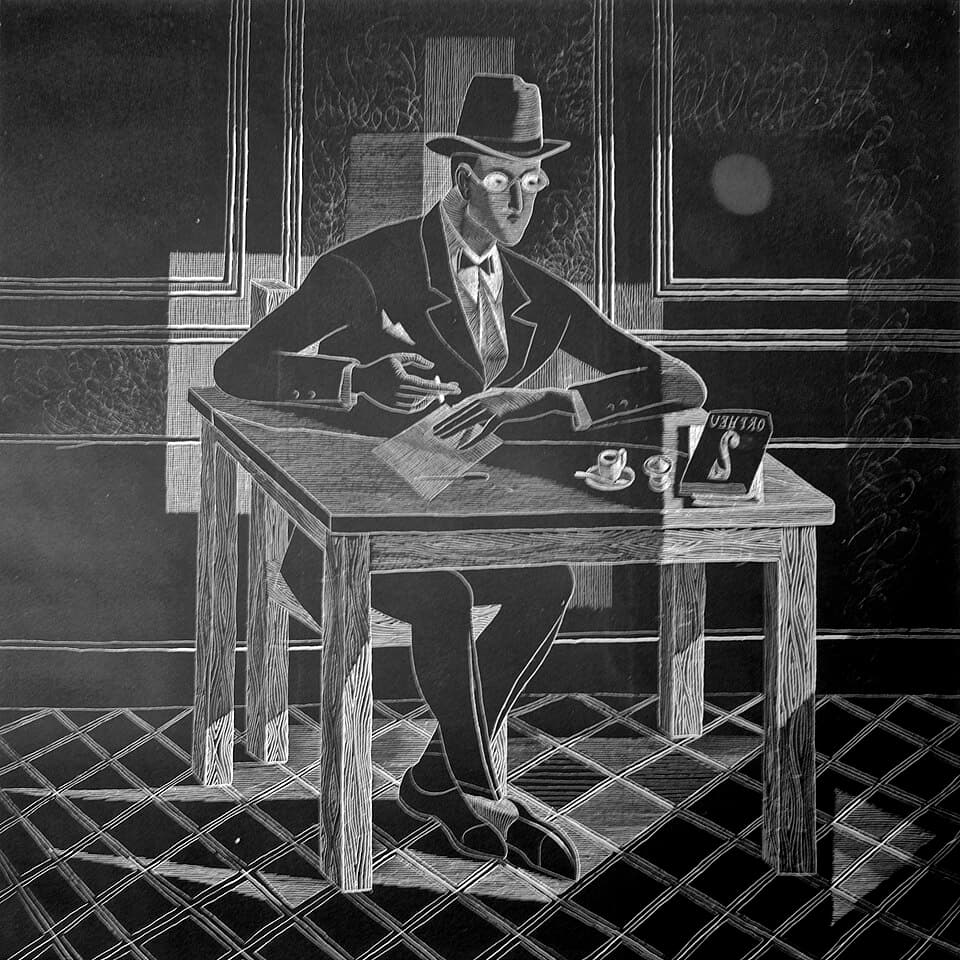
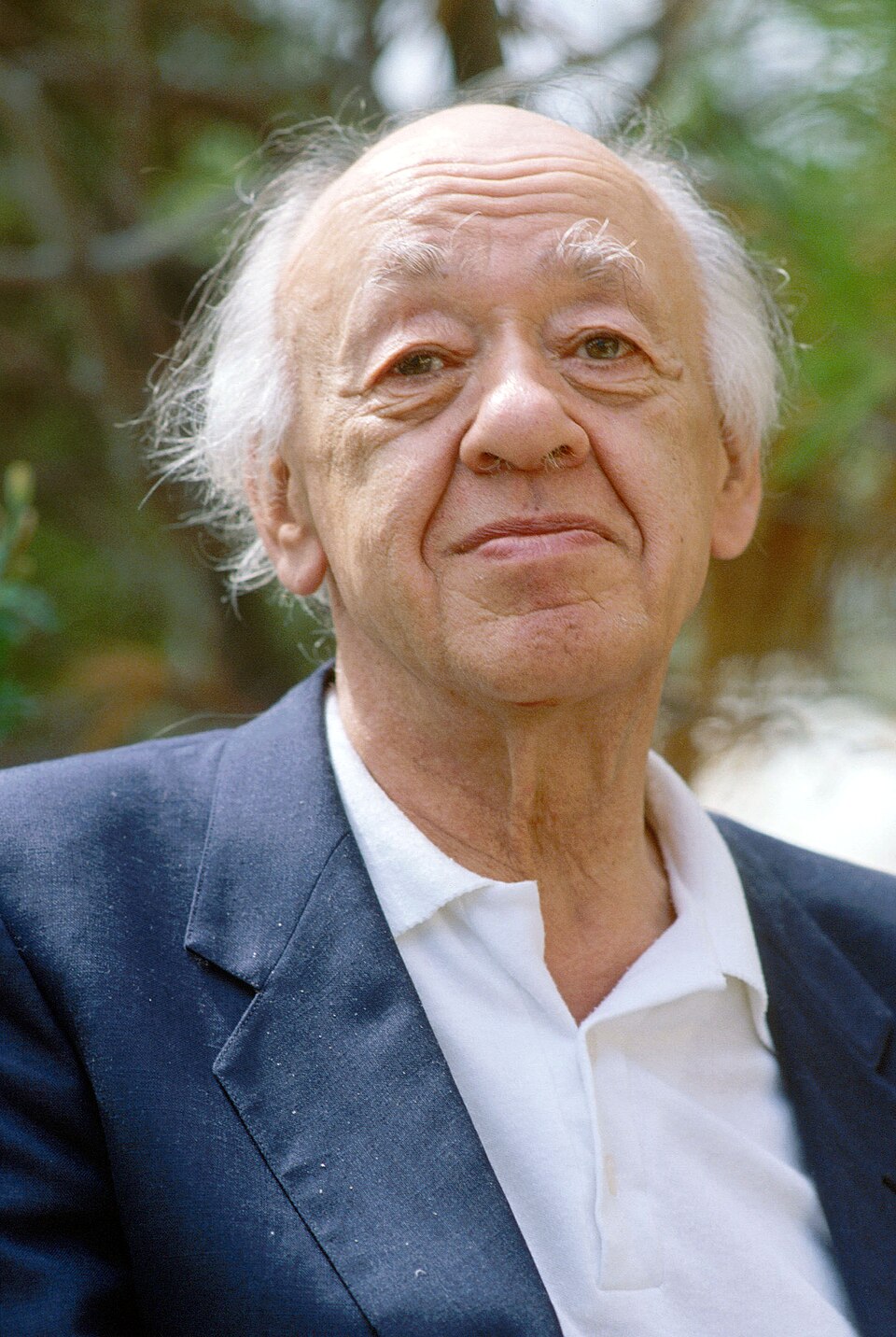
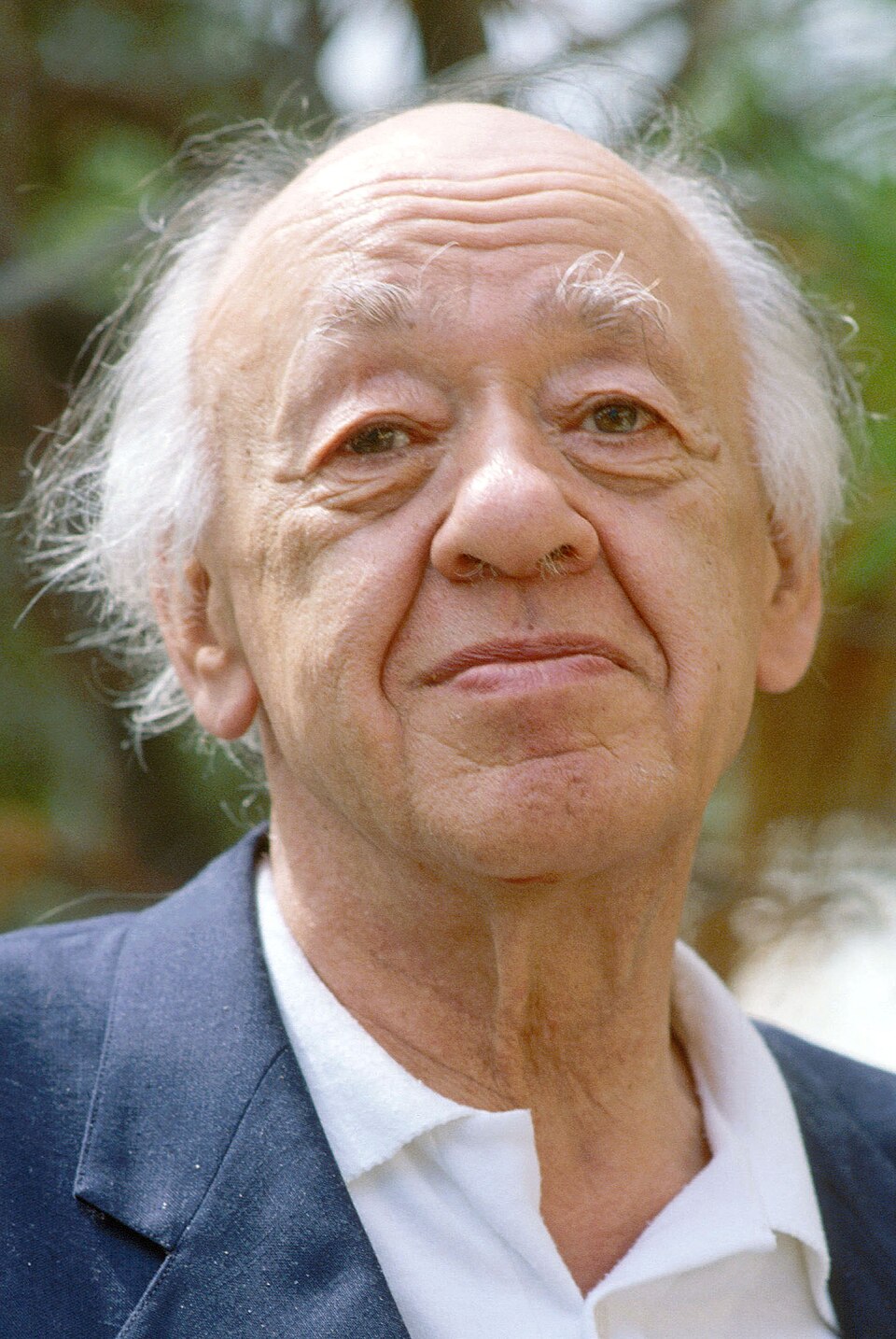
Two 12-year-old students came with their class trip to meet an old gentleman with a round face and big glasses. He is waiting for them in his Parisian apartment full of books and paintings he painted himself. His name is Eugène Ionesco, and he really likes children's questions.
—Where were you born? They say you were a bit Romanian and a bit French.
You're right, my child. I was born in 1909 in Slatina, a small town in Romania. My father was Romanian, my mother was French. Imagine a child who hears two languages at home, like two different musics. Very young, we moved to Paris. French became my real home, not a country on a map, but words in my head. You know, all my life I felt a stranger everywhere. In Romania, they found me too French. In France, too Romanian. Deep down, my real country was the language I loved.
My real country wasn't a map, it was a language.
—And then you went back to Romania? Why did you come back?
Yes. When I was sixteen, in 1925, my parents divorced and I went back to Romania. But a few years later, I felt something terrible rising there. Imagine a street where, little by little, people all start shouting the same thing, hating the same people, without thinking anymore. It was the rise of fascism. In 1938, I fled that and came back to Paris. I wanted to write a thesis on a poet and on death. I was afraid, I was poor. But I preferred the fear of freedom to the tranquility of the herd.
I preferred the fear of freedom to the tranquility of the herd.
—Is it true that one of your plays was born from a book to learn English?
Yes, and it still makes me laugh! I was learning English by myself, with an Assimil method. You know, those little books with sentences to repeat. And I come across sentences like 'the ceiling is up, the floor is down'. Obvious, right? So stupid, so empty, that it was funny. I said to myself: that's how people often talk, without saying anything real. I made a whole play out of it, The Bald Soprano, in 1950. I called it an 'anti-play': a play that mocks the rules of theater. It all started from a language manual!
The ceiling is up, the floor is down: and if we all talked like that?
—Did it work right away? Were there many people on the first night?
Oh no, not at all! The premiere of The Bald Soprano, at the Théâtre des Noctambules, there were three spectators in the hall. Three! Imagine: you go on stage, you've worked for months, and you can count the people on one hand. Many would have given up. But I believed in my weird idea. And you know what? Since 1957, my plays have been performed every night at the Théâtre de la Huchette in Paris, without ever stopping. The lesson is simple: it's not the crowd on the first night that decides. It's time.
It's not the crowd on the first night that decides, it's time.
—Why did you write a play where people turn into rhinoceroses?
Because I had seen it for real, my child. Not animals, of course. But men. In Romania, I had seen friends, intelligent people, suddenly start thinking all the same, following a violent idea like a herd. One day one, the next day another. It was like a disease. In my play Rhinoceros, in 1959, I invented a word for it: 'rhinoceritis'. The disease of those who lose their heads to be like everyone else. The hero, he stays human until the end. Difficult, but he refuses to become a beast.
Rhinoceritis is the disease of those who all think alike.
—How did you want it to happen on stage? Was it supposed to be scary?
Yes, I wanted it to stir the gut! During rehearsals, I asked the actors to really imitate rhinoceroses, the breath, the heaviness. The director, Jean-Louis Barrault, thought I was exaggerating. We argued a lot to find the balance. You know, I had lived through the Occupation in Paris, hiding, poor, while armies marched. I had felt in my flesh what a crowd that crushes everything is. I wanted the spectator to feel that discomfort, not to watch calmly. Theater, for me, is not pretty. It's life magnified until it disturbs.
Theater is not pretty: it's life magnified until it disturbs.
—You were elected to the Académie française? That's strange for someone who made fun of everything, isn't it?
Ah, you've understood the paradox! Yes, in 1970, I was elected to the Académie française. Imagine: me, who spent my life mocking empty speeches and beautiful ceremonies, here I am in a green habit with a sword, under the great dome! Some intellectuals like Sartre really mocked me. But you know, I accepted with a wry smile. You can criticize rituals and, sometimes, enter them to look from the inside. I said something there that I believe: literature is the living memory of a people, capable of saying no to what is not human.
You can make fun of a ritual and, one day, smile as you enter it.
—They say you were very afraid of death. Is that true?
Yes, and I won't lie to you, my child. I have been afraid of dying all my life. I called it 'the great absence'. At night, I couldn't sleep thinking about it. In my Fragments of a Journal, I wrote that I was afraid of dying and afraid of living, two very different fears. So, like a child who talks about what frightens him to be less afraid, I wrote a play about it: Exit the King, in 1962. A king learns he will die in an hour, and he refuses. Like all of us. Writing my fear was my way of facing it.
Writing my fear was my way of facing it.
—And is it true that at the end you started painting rhinoceroses?
It's true, look, there are some on these walls! From the 1970s, I took brushes and a palette. I painted somewhat ghostly figures, strange silhouettes, and yes, sometimes my famous rhinoceroses. You know, when you're afraid of something all your life, you look for many ways to say it. With words in the theater. With sentences in my notebooks, in the morning, when I wrote down my dreams upon waking. And now with colors. Painting served me to say what words could no longer say. It was like breathing differently.
Painting served me to say what words no longer said.
—If we remember one thing from you, what would it be, do you think?
What a beautiful question, my child. If you remember one thing, remember this: beware of ready-made phrases, of those that everyone repeats without thinking. I built my whole theater on that, from that little English manual to the rhinoceroses. When people talk without saying anything real, or think all alike, something human fades away. Keep your own words. Ask questions, even seemingly stupid ones, as you did today. That's what it means to remain a free man and not a beast of the herd. And that, you see, lasts longer than any applause.
Keep your own words: that's what it means to remain free.
This imaginary interview was generated by artificial intelligence from sources documented in Eugène Ionesco's profile. It dramatises what the figure might have said based on what we know about them, but does not constitute attested historical testimony. For primary sources and factual documentation, refer to the full profile.