Imaginary dialogue between Jean-Louis Barrault and Eugène Ionesco
by Charactorium · Eugène Ionesco (1909 — 1994) · Literature · 6 min read
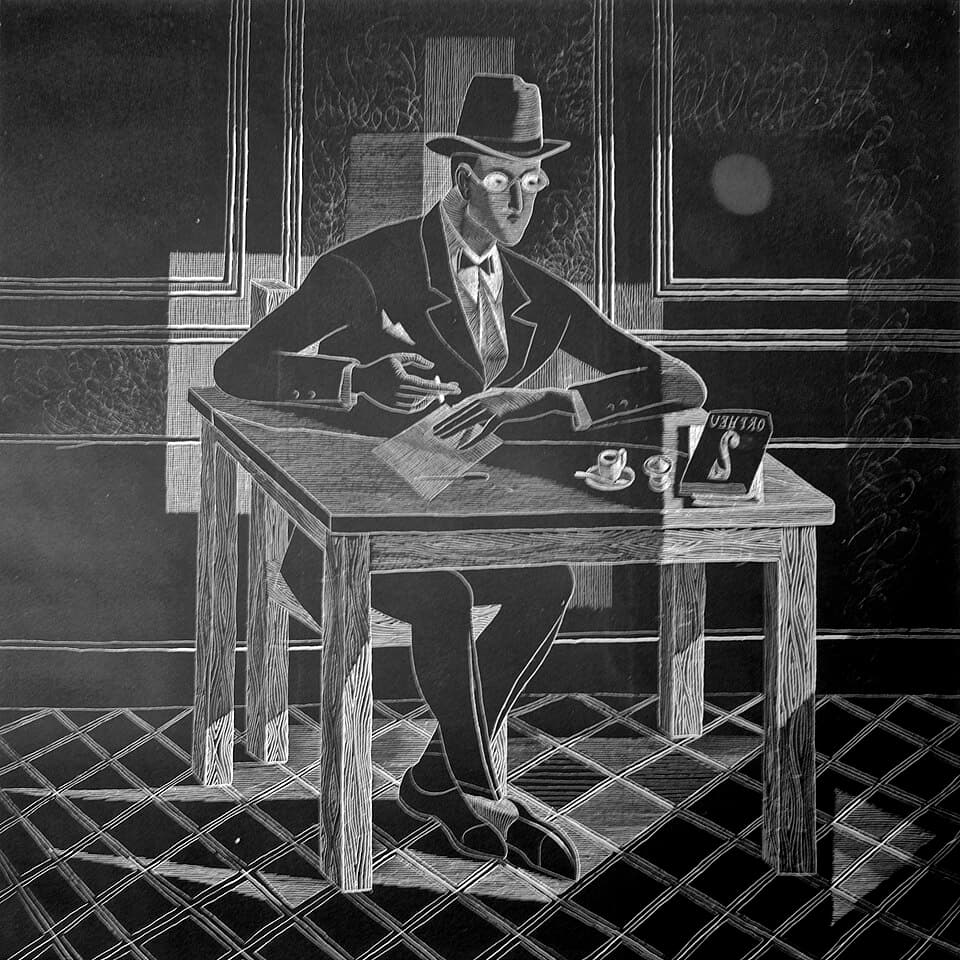
It is in the apartment on rue de Rivoli, whose windows overlook the gray gardens of the Tuileries, that Jean-Louis Barrault meets Eugène Ionesco on a winter afternoon in 1974. On the walls, canvases populated with ghostly rhinoceroses stand next to a typewriter cluttered with manuscripts. The two men have known each other since they staged Rhinoceros together, painstakingly negotiating the balance between the absurd and realistic acting. Barrault, more as a director than a visitor, comes that day to seek behind the plays the man who wrote them.
—My dear Eugène, before the theater there was childhood — between Slatina and Paris. Where does this feeling of being a stranger everywhere come from?
You touch on something I rarely tell journalists, Jean-Louis. I was born in 1909 in Slatina, to a Romanian father and a French mother, and all my life I have been split in two. As a child in Paris, I dreamed in French; taken back to Romania after my parents' divorce, I had to relearn a language that was nonetheless mine. When I returned in 1938 to prepare a thesis on Baudelaire and death, I was already fleeing something. This dual belonging is not a comfort; it is a wound: you are never quite at home, never quite yourself. But perhaps that is where my ear for the absurdity of language comes from — when you inhabit two languages, you better hear the emptiness hidden in ready-made phrases.
This dual belonging is not a comfort; it is a wound: you are never quite at home.
—They say it all started with an English textbook. You, the man of the theater, began with an Assimil method?
That is the exact truth, and no one wants to believe it! I was learning English, conscientiously, and the textbook hammered home obvious truths: the ceiling is up, the floor is down, the week has seven days. From copying these sentences over and over, I was seized with vertigo: these self-assured truths were comically absurd, perfectly empty. I realized that people talk to each other like that all day without saying anything. The Bald Soprano was born from that, in 1950, performed at the Théâtre des Noctambules before three spectators — three! I thought I had written a tragedy of language; the audience laughed. You who direct actors, you know how thin that line between laughter and terror is. All my theater lies in that fruitful misunderstanding.
I thought I had written a tragedy of language; the audience laughed.
—Let us talk about us, then. When we were rehearsing Rhinoceros in 1959, you wanted my actors to become truly stupid. Do you remember our arguments?
How could I forget them, my friend! I tormented you, I confess. I wanted the spectator to feel in his gut the contagion, the trampling, the monstrous thing rising — not to understand it from afar, comfortably seated. You, as a shrewd man of the stage, held me back: an actor who imitates the rhinoceros too much makes you laugh or disgusts you, but does not frighten you. We sought together that balance where the absurd remains inhabited by a human truth. You were right about the dosage, and I was right about the stakes. Rhinoceros is not a fantasy: it is a play against epidemics that disguise themselves as reason. Without your craft, my fever would have remained illegible on the stage.
You were right about the dosage, and I was right about the stakes.
—That "rhinoceritis" you talked about constantly during rehearsals — where did you really get it? From what memory?
From my own flesh, Jean-Louis. In Romania in the thirties, I saw friends, subtle minds, people I loved, suddenly start speaking the language of the Iron Guard, that fascist movement. One morning they were lucid; the next day they had hard eyes and repeated the words of the pack. The transformation was physical, almost animal — I invent nothing in the play. Then the Occupation, in Paris, from 1940 to 1944, in precariousness and fear, confirmed the horror: ideologies grow like a horn on the foreheads of reasonable men. Rhinoceritis is that: not the stupidity of fools, but the capitulation of the intelligent who no longer want to think alone.
Rhinoceritis is not the stupidity of fools, but the capitulation of the intelligent.
—You speak of the horror of others. But there is your own horror — this fear of dying. What do you call it, to me?
I call it the great absence, and it never leaves me. Since childhood, the idea that I will cease, disappear, become nothing, overwhelms me — not as one fear among others, but as the very ground of all thought. I made Exit the King from it, in 1962: a king who is told he will die within the hour and who refuses to admit it, like all of us. In my Fragments of a Journal I write it without shame — I am afraid of dying and I am afraid of living, and these are two different fears. To you, I can say it: theater was never a game for me. It is a way of looking death in the face while pretending to play. We laugh so as not to scream.
Theater was never a game: it is looking death in the face while pretending to play.
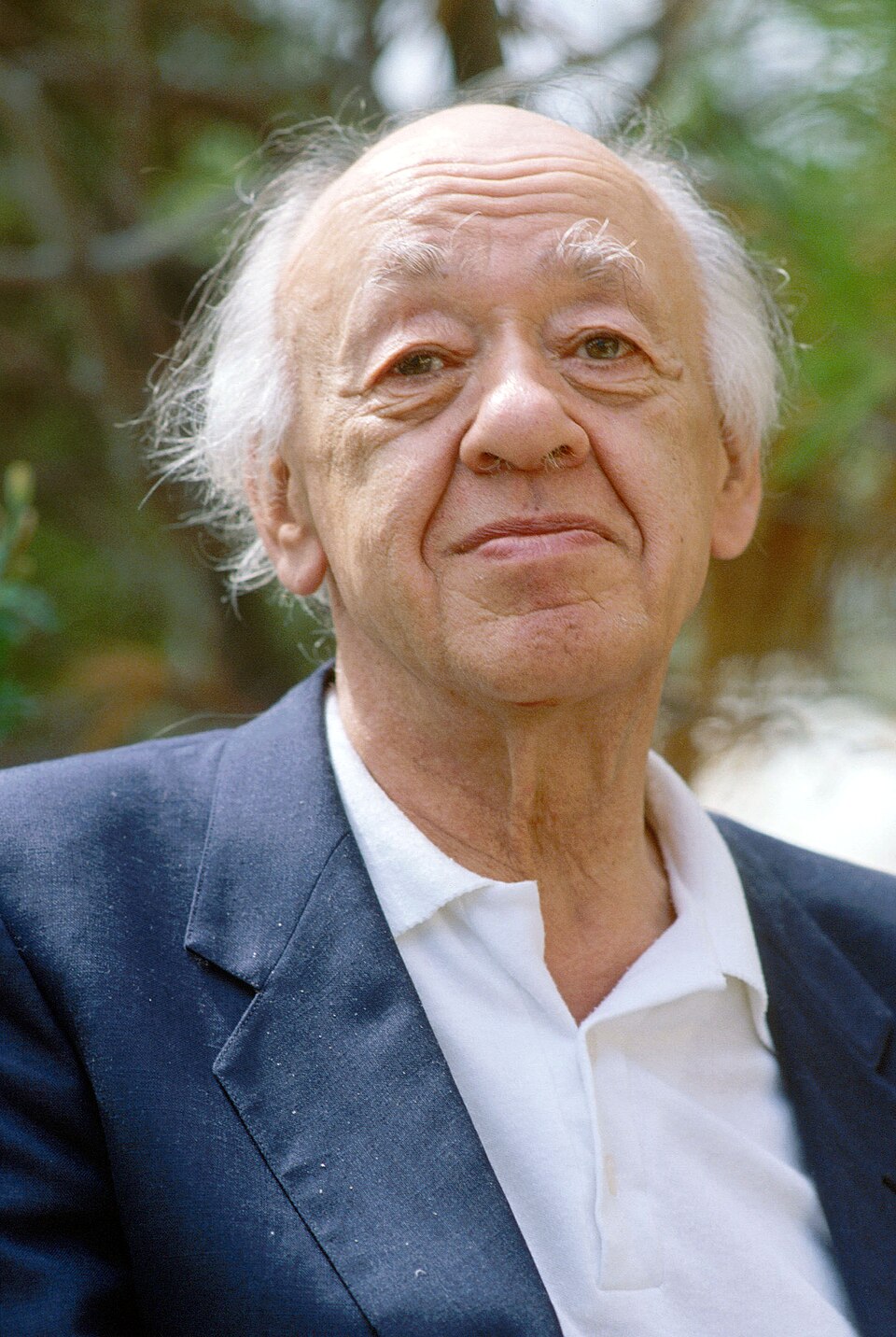
—And painting, these canvases around us? Why do you, the man of words, take up the brush late in life?
Because words, in the end, are no longer enough, or rather they betray me — those words I spent my life deconstructing. Before the canvas, I do not have to fabricate sentences; I let dreams come, ghostly figures, the rhinoceroses that still haunt me. Look at these around you: they are my anxieties coming out through another door. Painting is silent, and that silence gives me rest from the world's chatter. I believe that every artist, growing old, seeks to express the unsayable through the medium he masters least — it is there, in the awkwardness, that one is most sincere. My notebooks in the morning, my typewriter in the afternoon, and now these colors: three ways to exorcise the same fear.
Painting is silent, and that silence gives me rest from the world's chatter.
—Let us come to what set all Paris gossiping: your election to the Académie in 1970. You, the slayer of rituals, under the Dome?
I know, I know — the irony was lost on no one, least of all me! Sartre, who had refused even the Nobel, must have smiled to see me in a green habit, sword at my side, delivering an induction speech in seat number six, that of Jean Paulhan. The man who spent his life denouncing empty discourse and hollow ceremonies himself taking part in the most solemn of them! But you see, I never believed one had to stay pure by staying outside. You can enter an institution without ceasing to see its absurdity — on the contrary, you see it from the inside, which is even funnier. And besides, at my age, a bit of social comedy does no harm, provided you are not taken in by it.
You can enter an institution without ceasing to see its absurdity.
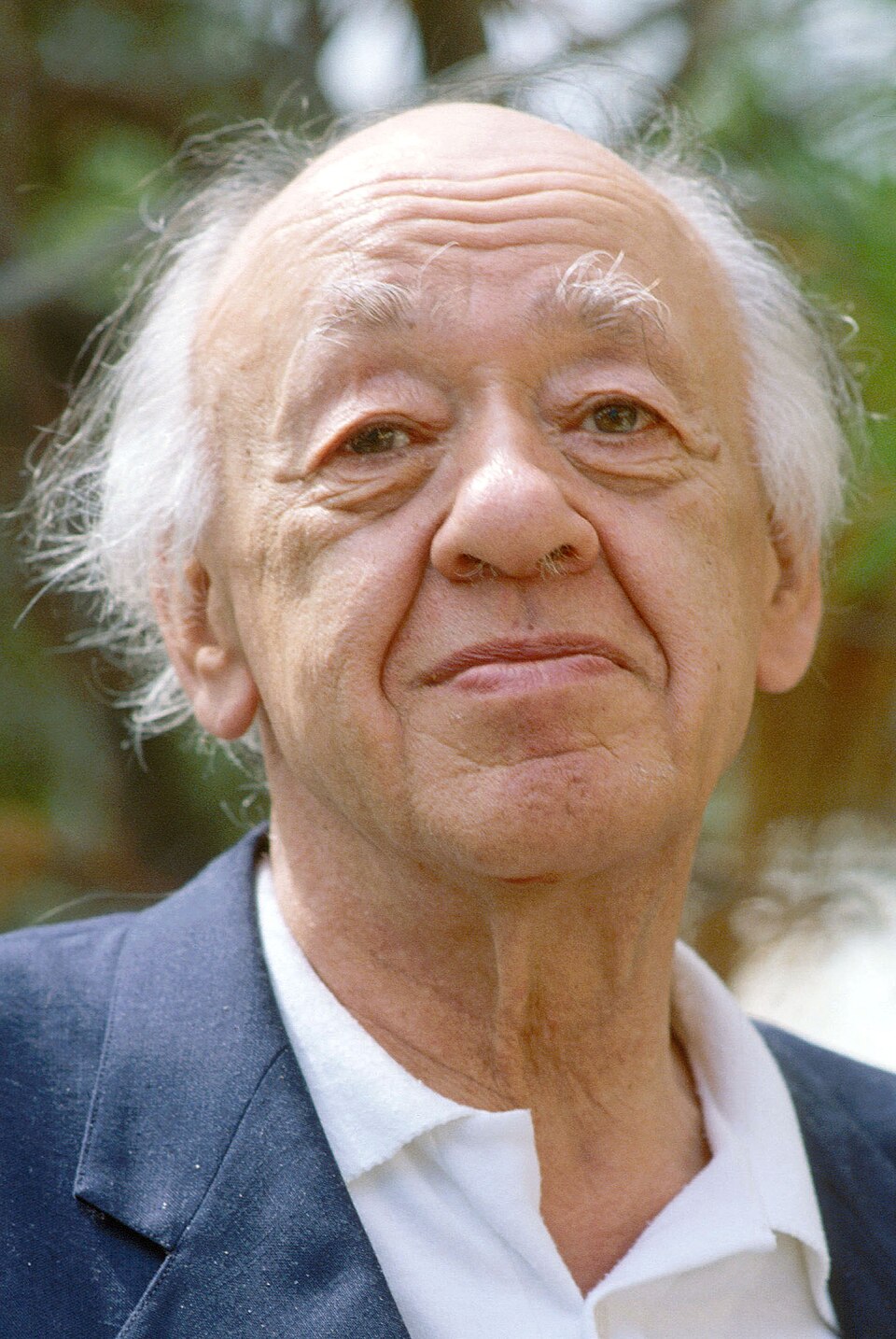
—In 1968, however, when the youth took to the streets, you kept your distance. Many of your friends did not understand.
And I expected that. They wanted me to rejoice, to march with the movement, to commune. But my whole life has been a long warning against herd thinking, against the intoxication of crowds sure they are right together. Yet I saw in some of the slogans of May the same thing that had horrified me in my youth: free minds suddenly happy to repeat in chorus. I do not deny the generosity of those young people — but generosity too can turn into rhinoceritis. My role is not to applaud, it is to say no when everyone says yes, and yes when everyone says no. It cost me friendships. I prefer lucid solitude to the warmth of shared certainties.
My role is to say no when everyone says yes.
—Let us return to the stage. Your Chairs, your The Lesson — those tiny theaters on the Left Bank. Why did you flee the big theaters?
Because my theater is not a Boulevard entertainment, and it needed spaces to match: narrow, poor, almost clandestine. At the Noctambules, at the Huchette, you were a meter from the actor, you breathed his anguish. The Chairs, in 1952, that old couple piling up empty chairs for invisible guests, could not bear the gold and velvet of a big theater — the absence would be drowned there. I needed the bareness for the void to be palpable. That, I think, is what we also sought together, you and I: to make the spectator feel that he is witnessing something necessary, not a society spectacle. Luxury reassures, and I especially did not want to reassure.
I needed the bareness for the void to be palpable.
—One last question, my dear Eugène. After all we have been through together on the boards — what remains for you of this craft of writing for the stage?
What remains, Jean-Louis, is the feeling of having tried to tell the truth through the lie of theater. For theater does not imitate life: it magnifies it, pushes it to the paroxysm, until it reveals its hidden face. I never wanted to tell well-made stories; I wanted to stage men who have nothing left to say to each other, and to make heard, in that silence, the immense question that runs through us all. With you, I learned that this question lives only in an actor's body, in a light, in a rhythm. The rest — theories, quarrels, my Notes and Counter-Notes — is just chatter around the essential. The essential is played out in the evening, before strangers, and dies with the last line. That is what still moves me.
Theater does not imitate life: it pushes it to the paroxysm.

This imaginary interview was generated by artificial intelligence from sources documented in Eugène Ionesco's profile. It dramatises what the figure might have said based on what we know about them, but does not constitute attested historical testimony. For primary sources and factual documentation, refer to the full profile.