Imaginary dialogue between Léonard de Vinci and Francis I
by Charactorium · Francis I (1494 — 1547) · Politics · 5 min read
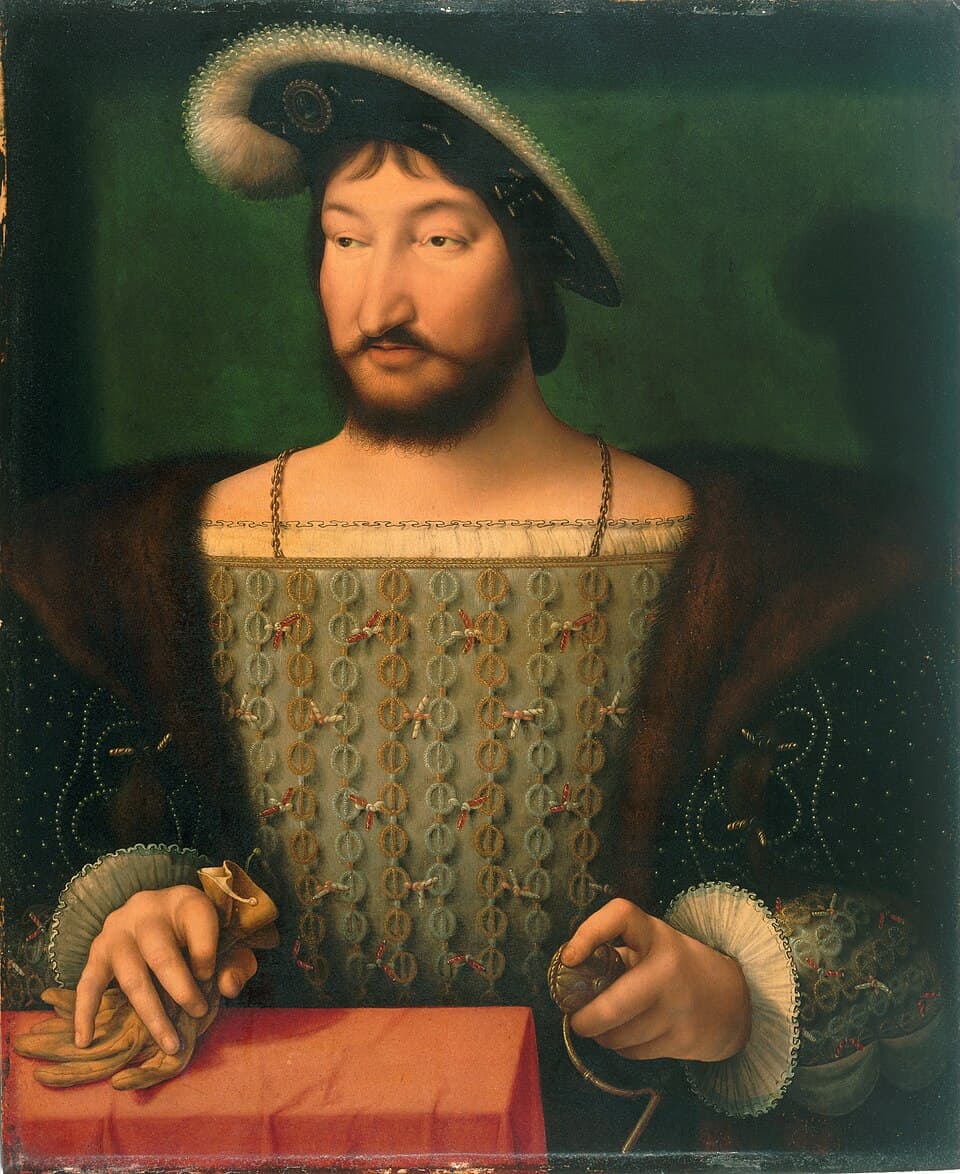
It was at the manor of Clos Lucé, near Amboise, that in the winter of 1518 the king once again climbed the path leading to his old master. The pale light of the Loire enters through the windows and falls upon notebooks scrawled with flying machines and spiral staircases. Since he brought him from Italy two years earlier and appointed him his first painter, engineer and architect, Francis I often comes to sit beside Leonardo da Vinci. Today, it is the old man who questions the young sovereign, as one seeks to understand the prince one has learned to love.
—Sire, it has been two years since you brought me from Italy to install me at Clos Lucé. What did you expect from an old man like me?
Master Leonardo, I expected not another servant, but a mind like none seen in a century. From my coronation in 1515, I dreamed of a court where painters, engineers and scholars would be worth as much as my captains. To make you leave Italy, to give you this manor near my château of Amboise, to appoint you my first painter, engineer and architect: that is my finest conquest, perhaps more lasting than Marignano. When I come to sit beside you, it is not to command, but to learn. A king who surrounds himself only with soldiers rules only over battlefields; I want to rule over the arts and minds as well.
—You dream aloud of that palace of Chambord. That double-helix staircase I sketched for you, what do you seek in it, Sire?
What do I seek in it, master? Nothing less than a château like Europe has never seen. From next year, the first stones will rise near the forests where I love to hunt. Your staircase, where one ascends and descends without ever meeting, will be its heart — an Italian idea in service of a French dream. Everywhere I will have my salamander engraved, so that in a thousand years they may know which king willed it. My predecessors built fortresses to defend themselves; I want to build a dwelling to dazzle. Stone, you see, is a way to govern men through admiration rather than fear.
Stone is a way to govern men through admiration rather than fear.
—They say the Sorbonne distrusts Greek and Hebrew. Do you, Sire, truly plan to found a college of new learning?
I ardently wish it, master. In Paris, the doctors cling to their ancestors' Latin and regard Greek as a language of pagans. But how to read Plato or the Gospels in their truth without those ancient languages? I plan to institute royal readers, paid by me alone, free to teach Greek, Hebrew, mathematics, free from all oversight. You who have dissected bodies and measured the flight of birds know better than anyone that knowledge does not suffer barriers to be raised against it. A kingdom grows not only by its armies: it grows by what its minds dare to know.
—I who always speak my Tuscan tongue, I hear you defend French against Latin. Why do you insist on it so, Sire?
Because a justice that the people do not understand is not justice, master. In my courts, deeds are written in Latin, and the peasant affixes his mark at the bottom of rulings he cannot read. What more insidious tyranny than that of obscure words? I want that one day every judgment, every contract, every register be written in good French, clear, without ambiguity, so that no one may be deceived by the uncertainty of a phrase. To unify my kingdom is not only to draw its borders: it is to give all my subjects a single language to speak the law. Language, believe me, is a kingdom before the kingdom.
—Everywhere on your walls and books, I see that salamander in the flames. What does the strange motto you accompany it with mean?
It is my very soul, master. The salamander, they say, lives in fire without being consumed: it feeds the good flame and extinguishes the bad. My motto proclaims it — Nutrisco et extinguo, 'I nourish it and I extinguish it.' By this I mean that a good prince tends the fire of arts, faith, courage, and smothers that of revolts and discord. I have already had it carved at Blois, and I will have it engraved on every fireplace at Chambord. Let them look up in a hundred years: they will know that this fire was mine. A king must choose the image that will speak when his voice has fallen silent.
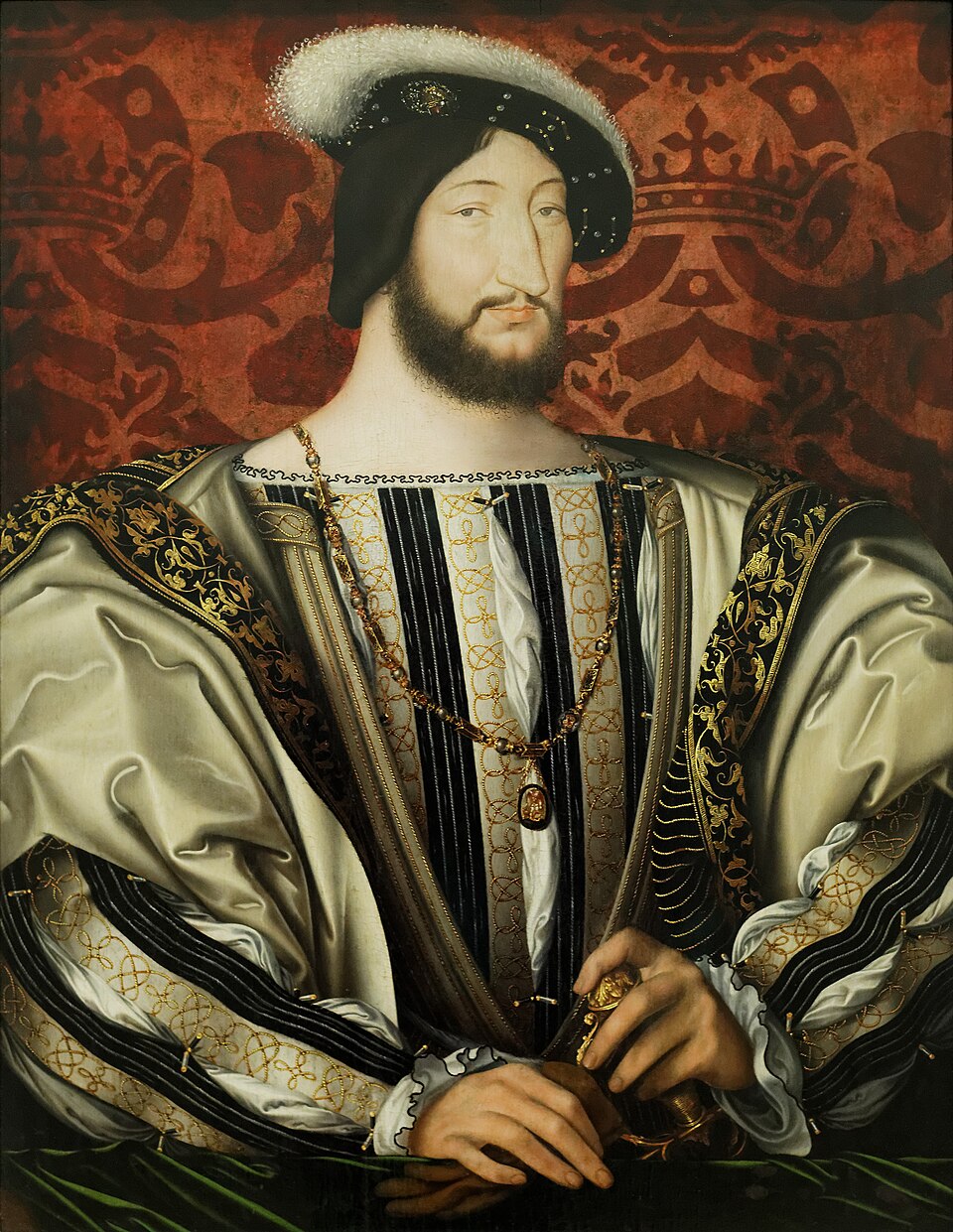
—When you receive me at court, I see those gold-embroidered doublets and endless banquets. Is this splendor vanity or calculation, Sire?
Calculation, master, far more than vanity — though I confess I take great pleasure in it! A king who is not seen to shine soon ceases to be feared and loved. My velvet doublets with slashed sleeves, my berets adorned with jewels, my tables where game and Loire wines parade: all this speaks to ambassadors louder than a long speech. When the day comes that I must appear before the other princes of Europe, it is by brilliance that I wish to surpass them, not by arms alone. Hunting in the morning, balls in the evening, poets at my table: my court must be the center of the world.
—Even before you knew me, you defeated the Swiss at Marignano. What remains in you of that young warrior king, Sire?
Marignano, master... I was twenty years old, and for two days the plain was nothing but blood, mud, and cries of agony. On the evening of victory, I wanted to be knighted by Bayard himself, that captain without fear and without reproach — for a king must earn his crown by arms as much as by blood. I deny none of that ardor: I was born for the horse, the lance, and honor. But I already know that Italy is a mirage that devours kings. The emperor will soon be my rival, and we will have to begin again. Whatever happens, a prince may lose everything — his lands, even his freedom — never his honor, if he knows how to remain standing.
A prince may lose everything, his lands, even his freedom, never his honor.
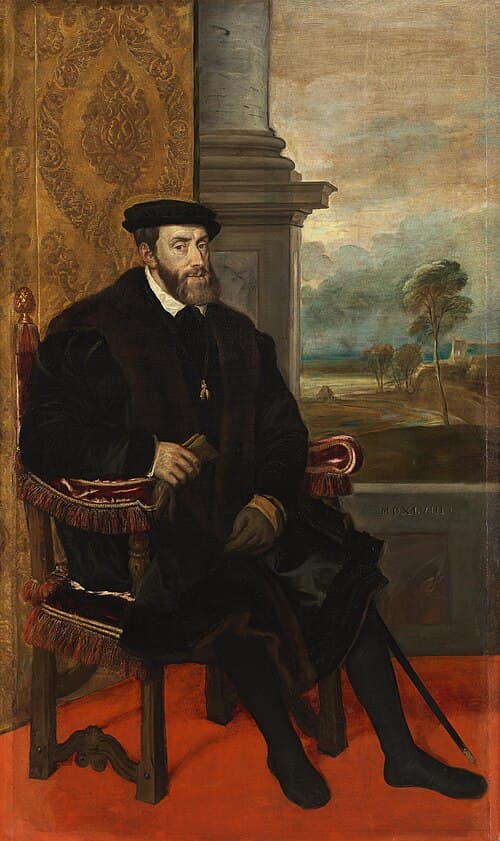
—You already speak of that young Habsburg as an enemy. You who had me draw war machines, do you fear the coming war?
Fear it? No, master — but I do not underestimate him. Charles already rules over Spain, Flanders and Naples; if he is also given the imperial crown, he will enclose me like a vice. I myself sought that crown, for I cannot suffer one man to dominate all Christendom. Your machines, your mobile bridges, your designed fortresses, I keep them carefully: a foresighted prince prepares for war even as he builds châteaux. Italy gave us your genius and so many wonders; she will also, I sense, be the field where my reign is played out. One does not possess Italy, master — one wears oneself out there or is lost.
—For your festivities, I built that mechanical lion that opened to reveal lilies. What does my art give you that another could not offer, Sire?
That lion, master, I will never forget: the entire court held its breath when its chest opened onto an armful of French lilies. That is what no other gives me — you never separate beauty from science, the hand from the mind. An ordinary painter makes pretty pictures; you understand water, the flight of birds, the human body, light itself. When I come to sit beside you, it is not the king visiting his craftsman, it is a hungry man coming to drink from a spring. The day you leave us, I think I will weep as one weeps for a father.
When I come to sit beside you, it is a hungry man coming to drink from a spring.
—I approach the evening of my life; you are not yet thirty. What do you want to be remembered from your reign, my king?
Do not speak of evening, master — your eyes still burn brighter than those of my pages. What do I want to be remembered? Not only the battles, which are won and lost, but what endures: a kingdom where one speaks and judges in French, châteaux that defy time, scholars free to teach what fear forbade. I want them to say one day: under this king, France ceased to look at Italy with envy, for she had become herself a beacon of light. And if only one thing is remembered of me, let it be this: I knew how to recognize genius when I met it, and I loved it. The rest belongs to God and the centuries.

This imaginary interview was generated by artificial intelligence from sources documented in Francis I's profile. It dramatises what the figure might have said based on what we know about them, but does not constitute attested historical testimony. For primary sources and factual documentation, refer to the full profile.