Imaginary interview with Francis I
by Charactorium · Francis I (1494 — 1547) · Politics · 6 min read
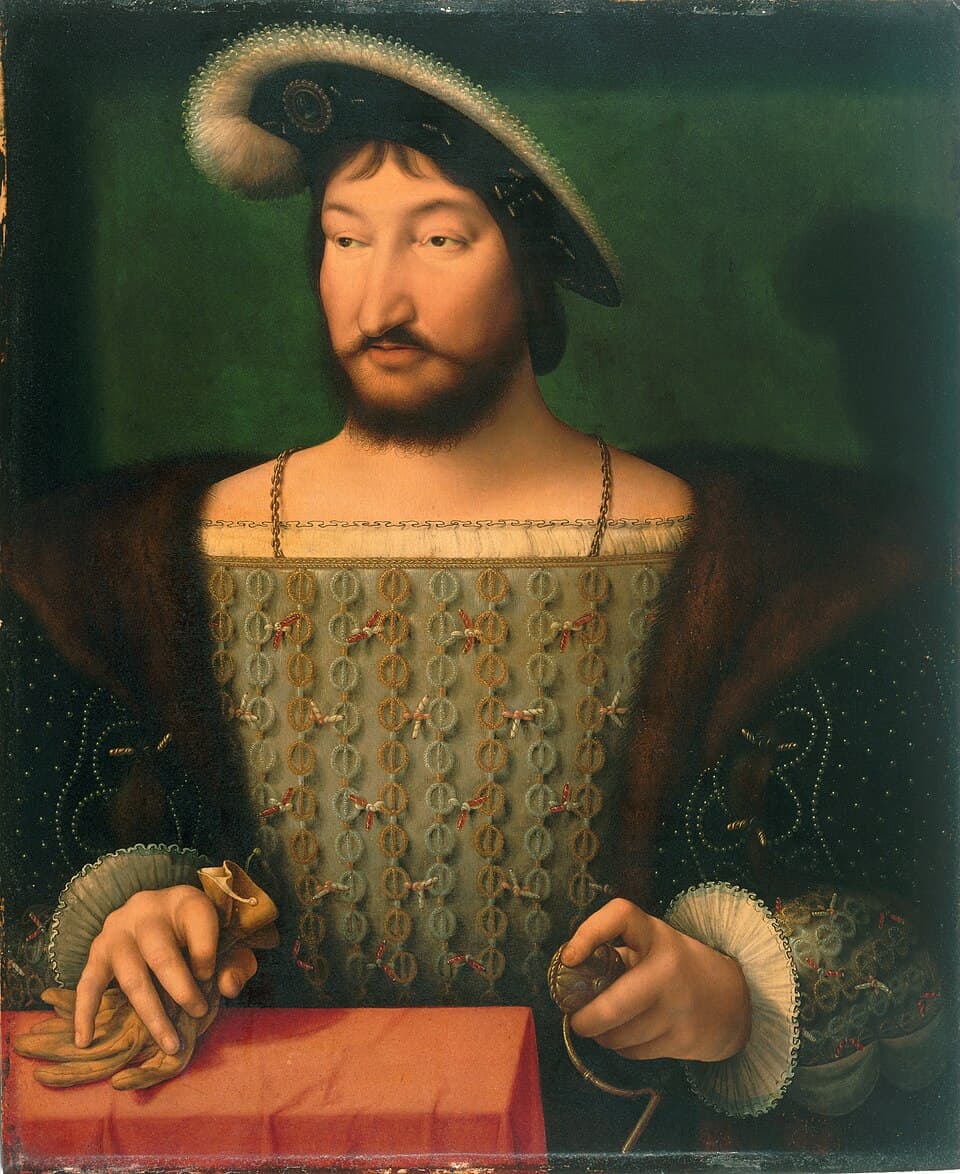
Gallery of Francis I, Château de Fontainebleau, an autumn evening. Amid the stuccoes of Primaticcio, the king has just returned from the hunt, still booted, his beret powdered with dust. He agrees to sit for a moment and talk — about Leonardo, about Pavia, and about that language he wanted to impose on an entire kingdom.
—How did you convince Leonardo da Vinci, already old, to leave Italy for your kingdom?
One does not convince such a man; one opens a door and waits for him to walk through. In 1516, I offered him the manor of Clos Lucé, close to Amboise where I grew up, and the title of first painter, engineer, and architect to the king. It was not a salary; it was a promise: here, you will no longer be asked to finish, you will be asked to think. I would cross the gardens to visit him, often without an escort, and we would talk of water, machines, and how a staircase might rise without two men ever crossing paths. He died in my home, after three winters. I kept from him not only paintings, but a way of seeing the world as a workshop one has not yet finished understanding.
Here, you will no longer be asked to finish, you will be asked to think.
—It is said that the double-helix staircase at Chambord was born from his mind. What is the truth?
Go to Chambord and climb that staircase: two intertwined spirals, and you ascend without ever meeting the one descending. That is indeed an idea of Leonardo's, his obsession with the spiral that he drew everywhere, in seashells and in women's hair. Did he hold the pen for the first sketch? The master masons did the rest, and the site lasted nearly twenty years, mobilizing thousands of workers in the mud of Sologne. But the spirit, I recognize it. On every wall I had my salamander carved, which feeds on fire without burning — Nutrisco et extinguo. A king builds to outlast his own flesh; this castle is my way of continuing to breathe when I am no longer here.
A king builds to outlast his own flesh.
—Let us speak of Pavia. What remains to a king when he becomes the prisoner of his worst rival?
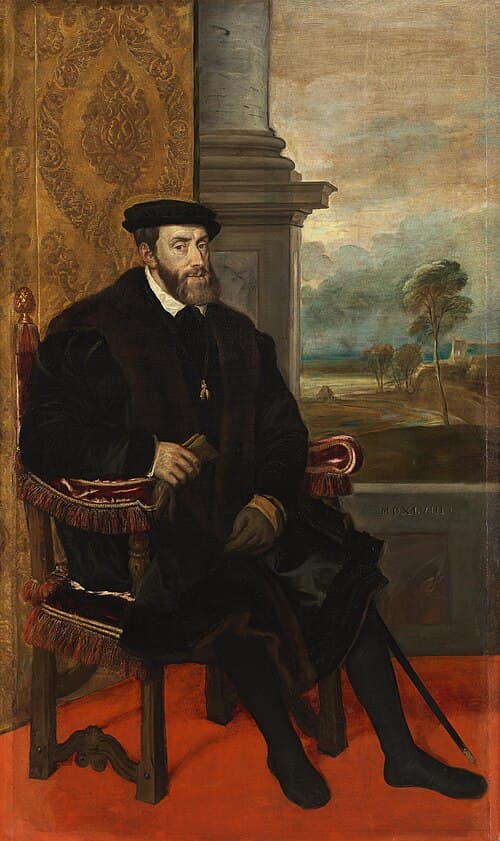
On February 24, 1525, beneath the walls of Pavia, my horse fell and everything collapsed around me. My gentlemen fell, the arquebuses of Charles V spat a death that chivalry had not foreseen. I was picked up, alive, which is sometimes worse. From my prison, I wrote to my mother Louise of Savoy these words that have been much repeated since: “of all things, nothing has remained to me but honor and my life, which is safe.” Understand me: I had lost an army, my freedom, my illusions about Italy. But honor is not taken in a battle; it is kept or lost within. That was all I had left to offer my mother so that she would not weep for a man already dead.
Honor is not taken in a battle; it is kept or lost within.
—You signed a treaty in Madrid that you knew was untenable. How do you live with such a promise?
A prisoner signs what is put before him as one drinks to avoid dying of thirst. In the Treaty of Madrid, in January 1526, I renounced Burgundy, Flanders, Naples — I promised provinces as one throws ballast to resurface. Charles V thought he held my word; he held only my body, and only long enough for me to cross the Pyrenees again. Burgundy was not mine to give: it belonged to the kingdom, and a kingdom does not fit in the hand of a captive man. I was reproached for it, called a perjurer. But I learned in Madrid that a king who no longer exists except in a cell must first become king again before he can become an honest man. Freedom first; accounts later.
I promised provinces as one throws ballast to resurface.
—In 1539, you imposed French in all official acts. Why this war against Latin?
It was not a war against Latin; it was a peace offered to my subjects. Imagine a peasant from Berry facing a legal document written in a language none of his neighbors can read: he is condemned by words he does not understand. With the Ordinance of Villers-Cotterêts, in August 1539, I wanted everything to be written “so clearly that there be no ambiguity or uncertainty, nor occasion to demand interpretation.” The language of the kingdom should be the one spoken in the streets and fields, not that of clerics alone. By the same letters patent, I ordered that registers of baptisms be kept: for the first time, the humblest man had a date, a name recorded on paper. To govern is first to make the world legible.
To govern is first to make the world legible.
—You also wanted a copy of every printed book to go to your library. What idea drove you?
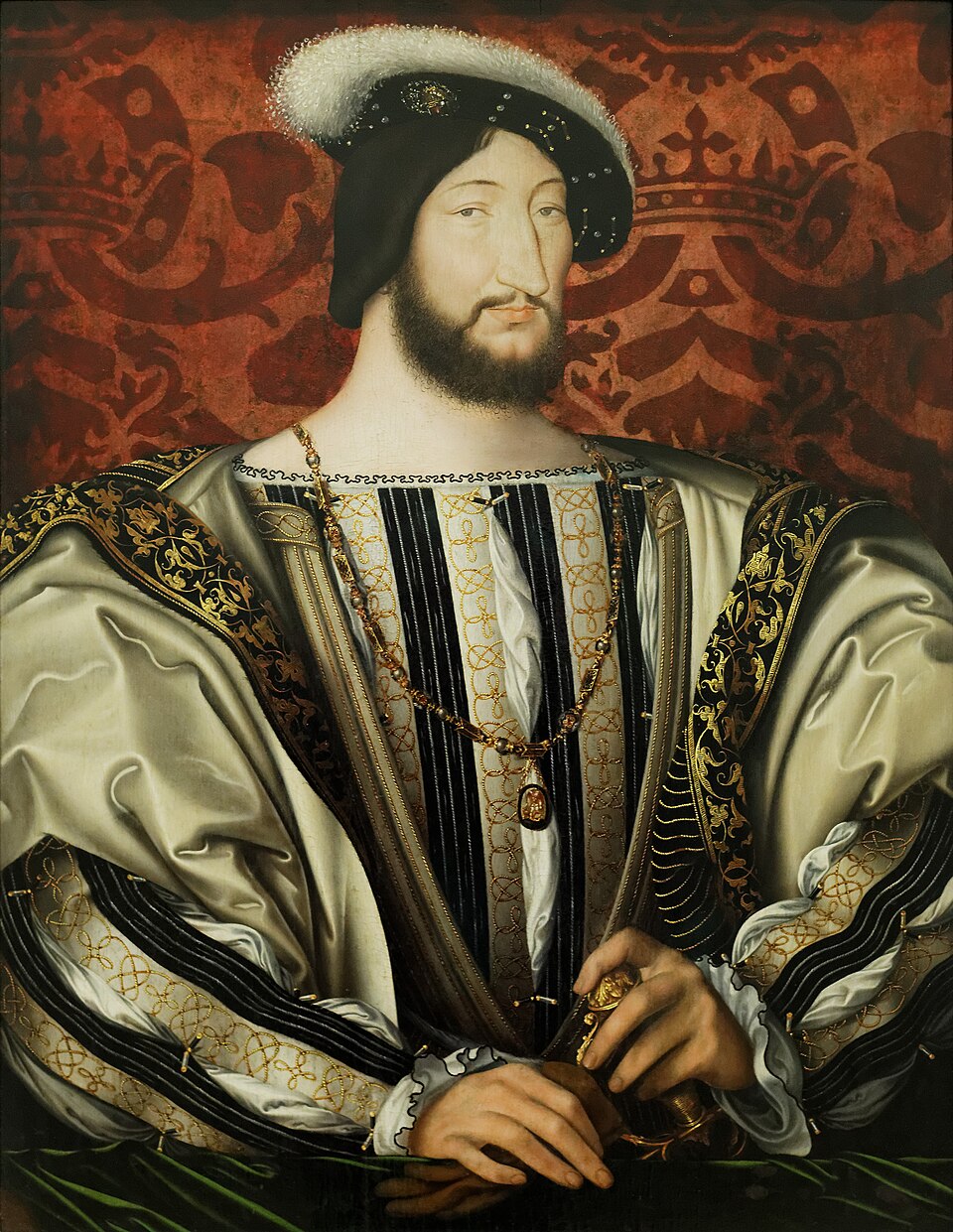
Printing made books spring forth like a harvest that can no longer be counted, and everything that is not preserved eventually disappears. By the Edict of Fontainebleau, in 1537, I ordered that a copy of every work offered for sale be deposited in my library. Some saw it as a bibliophile's whim — it is true that I collect illuminated manuscripts as others collect precious stones. But it was more: a kingdom that preserves its memory is a kingdom that knows itself. I had already founded, in 1530, the College of Royal Readers, where Greek, Hebrew, and mathematics are taught — subjects the Sorbonne looked askance at. Gathering books, paying scholars: these are two gestures of the same care. One does not rule only over lands; one rules over what a people knows.
A kingdom that preserves its memory is a kingdom that knows itself.
—Your emblem is a salamander. What did you mean to say by having it carved everywhere?
The salamander is that animal the ancients swore lives in fire without being consumed: it feeds on good flames and extinguishes bad ones. Nutrisco et extinguo. I had it cover the walls of Chambord and Blois because it says in silence what a king would like to be: ardent enough to nourish the arts and letters, master enough of himself to extinguish the quarrels that devour a kingdom. A prince must live in the midst of fire — war, ambition, the passions of the court — without burning. See it as a warning as much as a vanity: whoever looks at my salamander understands that he is before a man who has chosen not to fear the flames. It is a motto, but also a promise I make to myself every morning.
A prince must live in the midst of fire without burning.
—The extraordinary splendor of the Field of Cloth of Gold is remembered. What did you want to show Henry VIII?
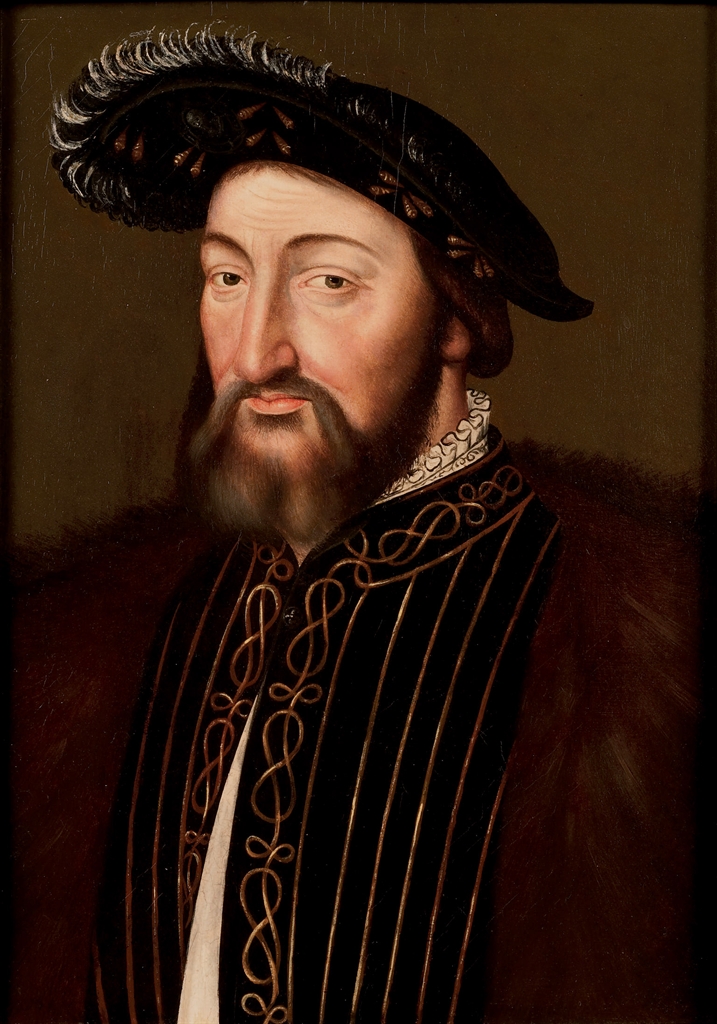
In June 1520, near Ardres, I set up tents embroidered with gold thread until the very ground seemed sewn with light — hence the name, the Field of Cloth of Gold. Henry VIII of England awaited me there, and we vied in pavilions, banquets, tournaments for days. Some said it was pure extravagance; they did not see that magnificence is as serious a weapon as a lance. My silk doublets with slashed sleeves, embroidered in gold and silver in the Italian fashion, were not the vanity of a dandy: they told England that France could dazzle before fighting. A king who appears poor invites the audacity of his neighbors. I preferred to be thought too rich for anyone to dare think me weak.
Magnificence is as serious a weapon as a lance.
—How do you justify your alliance with Suleiman the Magnificent, a Muslim sovereign, which so scandalized Christendom?
When one man, Charles V, wears at once Spain, the Empire, and Flanders, he encloses France like a closing hand. To breathe, I sought support where no most Christian king had dared look: from Suleiman, in that alliance sealed in 1536 that all Europe called impious. I was called a renegade. But I govern a kingdom, not a sermon. My correspondence with the sultan, sealed with the royal seal, was worth all the crusades to loosen the vise that choked me. My faith I keep in my chapel, where I hear Mass every morning; politics, however, is conducted with the forces of the world as it is, not as preachers dream it. A king alone against a universal empire cannot afford to have too many enemies at once.
I govern a kingdom, not a sermon.
—As early as 1516, through the Concordat of Bologna, you obtained the right to appoint bishops and abbots yourself. Why was this so important to you?
A crown placed on a head is not enough to make a king: one must hold what in the kingdom escapes the crown. By the Concordat of Bologna, in 1516, Pope Leo X granted me the right to appoint the bishops and abbots of France. Understand what this means: the richest offices of the Church, the abbeys, the dioceses, would henceforth depend on my favor rather than on Rome. Thus I bind the nobility to my person through the hope of a benefice, and I make the Church of France a part of the kingdom rather than a rival power. Some said I was selling souls; I would say I was unifying power. A state where the prince controls neither language, nor books, nor miters is but a mosaic waiting to fall apart.
A crown placed on a head is not enough to make a king.

This imaginary interview was generated by artificial intelligence from sources documented in Francis I's profile. It dramatises what the figure might have said based on what we know about them, but does not constitute attested historical testimony. For primary sources and factual documentation, refer to the full profile.