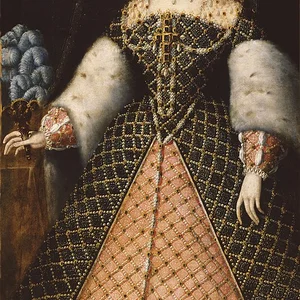

Isabella I of Castile (1451-1504) unified Spain by marrying Ferdinand II of Aragon, forming the Catholic Monarchs. She financed Christopher Columbus's voyage in 1492, opening the era of conquest in the Americas. Her reign was marked by the establishment of the Spanish Inquisition and the expulsion of the Jews from Spain.
Isabella I of Castile(1451 — 1504)
Isabella I of Castile
couronne de Castille
7 min read
Frequently asked questions
Famous Quotes
« Fortune favors the bold.»
Key Facts
- 1469: Marriage to Ferdinand II of Aragon, uniting the two great Iberian kingdoms
- 1478: Establishment of the Spanish Inquisition with the approval of Pope Sixtus IV
- 1492: Financing of Christopher Columbus's voyage and the capture of Granada, marking the end of the Reconquista
- 1492: Alhambra Decree ordering the expulsion of the Jews from Spain
- 1494: Treaty of Tordesillas dividing the world between Spain and Portugal
Works & Achievements
At the request of Isabella and Ferdinand, Pope Sixtus IV authorized the creation of an inquisitorial tribunal in Castile. This institution, led by Tomás de Torquemada, left a lasting mark on the religious and political history of Spain.
Isabella signs the Capitulations of Santa Fe with Christopher Columbus, granting funding and titles in exchange for the exploration of Atlantic routes. This document opens the era of European colonization of the Americas.
After ten years of war, Isabella and Ferdinand conquered the Nasrid Kingdom of Granada, ending eight centuries of Muslim presence on the Iberian Peninsula. This event is one of the most symbolic of their reign.
These ordinances deeply reorganized the governance of Castile: strengthening of the Royal Council, regulation of the nobility, financial reform. They laid the foundations of a modern centralized state.
Isabella actively supported the humanist revival in Spain, funding Cardinal Cisneros in the founding of the University of Alcalá de Henares, which would become a major intellectual center of the Iberian Renaissance.
Isabella negotiates this treaty with Portugal, dividing the world into two spheres of influence to the west and east of a meridian line. This foundational text organized the colonization of the globe by the two Iberian powers.
Anecdotes
Isabella I of Castile was born on April 22, 1451, in Madrigal de las Altas Torres, into a modest royal family. Her path to the throne was far from assured: she had to face a civil war against her niece Joanna la Beltraneja, supported by Portugal, before establishing herself as the legitimate queen of Castile in 1479.
In 1469, Isabella secretly married Ferdinand of Aragon without the consent of her half-brother King Henry IV. The two young people disguised themselves as merchants to meet in Valladolid, defying the conventions of the time. This union would lay the foundation for the future unified Spanish monarchy.
It was Isabella who personally funded Christopher Columbus's project after he had suffered numerous rejections. According to legend, she offered to pawn her jewels to finance the expedition, although historians believe that royal funds were actually mobilized. Columbus's caravel set sail on August 3, 1492.
Isabella was renowned for her keen sense of justice: she personally traveled through her kingdoms with a traveling court to administer justice directly to her subjects, including the most humble. She always carried royal documents with her and received petitions even during her military campaigns.
During the Granada War (1482–1492), Isabella played an active role at the front by organizing troop supplies and visiting the wounded in field hospitals she had herself established — a pioneering initiative in the history of European military medicine.
Primary Sources
Your Highnesses give and grant to Don Christopher Columbus, in some remuneration for what he has discovered in the Ocean Seas… the office of Admiral over all those islands and mainlands.
We command all Jews and Jewesses of whatever age who live and dwell and reside in our said kingdoms and dominions… that by the end of the month of July next, of the present year, they depart from all our said kingdoms and dominions.
I most affectionately beseech the King, my Lord, that he may wish and be pleased to hold dear the persons, souls and goods of the said Indians… and not consent to nor permit that the Indians… receive any harm in their persons or their goods.
We give, grant and assign to you and your heirs and successors, kings of Castile and León, forever, all and each of the aforementioned unknown lands and islands.
Key Places
Birthplace of Isabella I, where she was born in 1451 in the royal palace. This Castilian town symbolizes the humble origins and determination of the future queen.
The intellectual and religious capital of medieval Castile, Toledo was a nerve center of Isabella's reign. It was here that the ordinances of 1480 reforming royal administration were promulgated.
On January 2, 1492, Isabella and Ferdinand received the keys to Granada, the last Muslim stronghold in Spain. The Alhambra then became a royal residence and symbol of the Reconquista's victory.
A fortified town built by Isabella for the final siege of Granada, Santa Fe was also the place where the Capitulations were signed, granting Columbus the right to sail westward in 1492.
A merchant town in Castile where Isabella died on November 26, 1504. The Castle of La Mota, which stands there, was one of her favorite residences and a symbol of Castilian power.
Typical Objects

Isabella's crown, adorned with precious stones, symbolized the dynastic legitimacy of Castile. It was worn during the great religious and political ceremonies that marked her reign.

Isabella was a cultured and deeply pious woman who owned a remarkable library of illuminated manuscripts. Her Books of Hours, richly illustrated with biblical scenes and royal portraits, accompanied her in her daily devotions.

During the Granada War, Isabella donned armor to galvanize her troops during sieges. This image of a warrior queen made a striking impression and reinforced her authority over her generals.

The official seal bearing the arms of Castile and Aragon authenticated royal decrees. It was affixed to all the foundational documents of the reign, from the agreements with Columbus to religious edicts.

Isabella took an interest in navigation projects and had maritime charts at court. These portolans, depicting the known coasts of the Atlantic, were crucial in discussions with Christopher Columbus.

Isabella was of deep Catholic fervor and always carried her rosary with her. Her support for reforming religious orders and the Inquisition was rooted in this intense devotion.
School Curriculum
Vocabulary & Tags
Key Vocabulary
Daily Life
Morning
Isabella rose at dawn and began her day with morning prayers (Prime and Lauds) in her private chapel, accompanied by her ladies-in-waiting. She then heard a daily Mass, often celebrated by her appointed confessors such as Cisneros or Talavera.
Afternoon
The afternoon was devoted to affairs of state: audiences with ambassadors, reading reports from her advisors on the Royal Council, and signing decrees. During wartime, she received captains and personally supervised the supply of the armies.
Evening
In the evening, the queen retired with her children — whom she educated rigorously — and her ladies-in-waiting for reading, sometimes aloud, from religious works or historical chronicles. She learned Latin as an adult in order to better read sacred texts.
Food
The Castilian royal table was abundant: roasted meats (lamb, game), fish on lean days, white breads, vegetables, and dried fruits. Castilian wine was served diluted with water according to custom. Isabella, a pious woman, strictly observed liturgical fasts.
Clothing
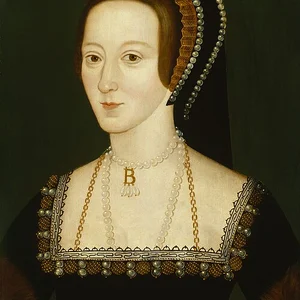
Isabella wore long gowns of silk brocade, often in red, black, or gold tones, embroidered with royal emblems. A veil covered her auburn hair during religious ceremonies. Her portraits show a sober yet majestic woman, wearing pearl necklaces and a crown on important occasions.
Housing
Isabella's court was itinerant: she resided successively in the alcazars and royal palaces of Segovia, Toledo, Burgos, or Granada according to political necessity. These residences blended Castilian Gothic architecture with Mudéjar décor (ceramics and stucco of Moorish influence).
Historical Timeline
Period Vocabulary
Visual Style
Le style visuel du règne d'Isabelle Ire s'inscrit dans l'esthétique gothique tardif hispano-flamand : ors et écarlates des tissus royaux, architecture gothique sévère, enluminures raffinées et paysages arides de la Castille.
Sound Ambience
L'univers sonore d'Isabelle Ire mêle la solennité de la cour royale castillane — chants liturgiques, conseillers en délibération, fanfares — au fracas de la guerre de Grenade et aux cloches des cathédrales de Tolède.
Liens externes & ressources
Références
Œuvres
Fondation de l'Inquisition espagnole
1478
Capitulations de Santa Fe — financement du voyage de Colomb
1492
Achèvement de la Reconquista — Prise de Grenade
1492
Ordonnances de Tolède — Réforme administrative
1480
Patronage des Lettres et de l'Université d'Alcalá
1499
Traité de Tordesillas
1494