Kids interview François Rabelais
by Charactorium · François Rabelais (1500 — 1553) · Literature · 4 min read
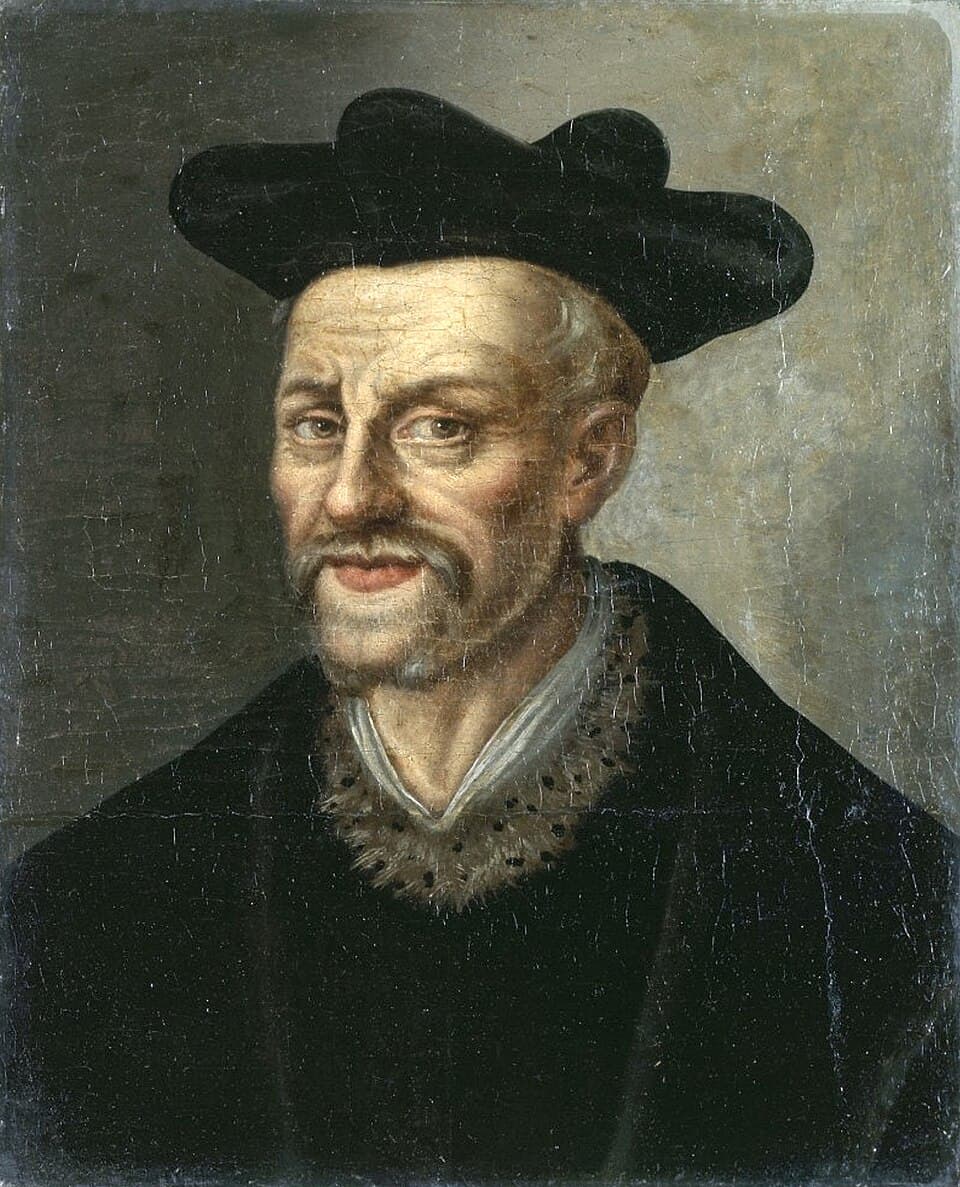
That morning, during a school trip to Touraine, two young middle-school students push open the door of the Devinière, the house where Rabelais was born. The writer awaits them, mischievous, ready to tell the story of his life as a monk, a physician, and a teller of giant tales. The questions fly immediately.
—Is it true they confiscated your books when you were a monk?
You know, my child, I was a young monk among the Franciscans, at the convent of Fontenay-le-Comte. I loved ancient Greek. Imagine: a language that almost no one around me could read. My superiors, though, found it suspicious. One morning, they came into my cell and took away my Greek books. All of them. It was as if they were tearing a piece out of my mind. I was very sad. But that sadness taught me one very simple thing.
“When a book is forbidden to you, it’s often because it’s worth reading.”
—And after that, did you give up Greek to please them?
Never in my life! Quite the opposite. I asked for a very special favor: permission from the Pope himself to change orders. I joined the Benedictines, monks who were more tolerant of those who loved to study. You see, I wasn’t going to abandon my dear Greek letters for a few grumpy superiors. In my time, reading Greek was almost a forbidden adventure. Later, I even managed to leave the monk’s habit entirely. But that desire to learn never left me. One day you’ll understand: they can take away your books, but never your curiosity.
—Is it true you became a doctor super fast?
Ah, so they say! I earned my degree at the faculty of Montpellier, in 1530. They say it took only a few weeks. I must admit I had already read a great deal before. In my time, medicine was learned mainly from old Greek texts, like those of Hippocrates, that great physician of antiquity. I read them in the original language, not in poor translations. That gave me a head start. Imagine a cook who reads the original recipe, while others copy a copy of a copy. That was my secret, more or less.
—Did you really touch dead bodies? That must have been scary, right?
Yes, and it was very rare at the time, you know. At the Hôtel-Dieu de Lyon, the great hospital where I treated the sick, I performed public dissections. We would open a body in front of spectators to understand how it was made inside. Many found it shocking, almost forbidden. But how can you heal a body if you don’t know how it works? Sometimes I was afraid of what others would think. Not of the body. It teaches you in silence what no old book truly tells.
“The dead body does not lie: it teaches you in silence.”
—Why did you sign your first book with a false name?
Ha! You have a sharp eye. My first novel, Pantagruel, I published in 1532 under the name Alcofribas Nasier. Take a piece of paper and have fun: it’s exactly the same letters as François Rabelais, scrambled! That’s called an anagram. Why hide like that? Because my book made fun of the powerful and made people laugh with somewhat risqué things. The judges of the Sorbonne, the great school of theology, were not laughing at all. They quickly condemned my book. A mask doesn’t protect you for long. But it gives you time to make people laugh before you get scolded.

—Were the people of the Sorbonne really that mean?
Let’s say they didn’t like people thinking differently. The Sorbonne wanted to decide what you had the right to read or not. I found them narrow-minded, closed to new knowledge. I even invented a mocking nickname for them: sorbonagres — a mix of Sorbonne and donkey! That was my way of defending myself. But the danger was very real: my friend Étienne Dolet was burned at the stake in 1546 for his ideas. So I kept on laughing, yes, but I was very careful with every word I wrote.
—Is it true you went all the way to Rome? What was it like?
Twice, yes! I accompanied Bishop Jean du Bellay as his personal physician. The journey was long: weeks on horseback, through the mountains, on dusty roads. Imagine a road with no engine noise, only the sound of horses’ hooves and the creaking of wooden wheels. In Rome, I gazed at the ancient ruins of the Romans, those broken columns a thousand years old. I was amazed like a child. I even obtained the Pope’s forgiveness for having left my convent long ago. Traveling, you see, is like reading the world instead of reading a book.
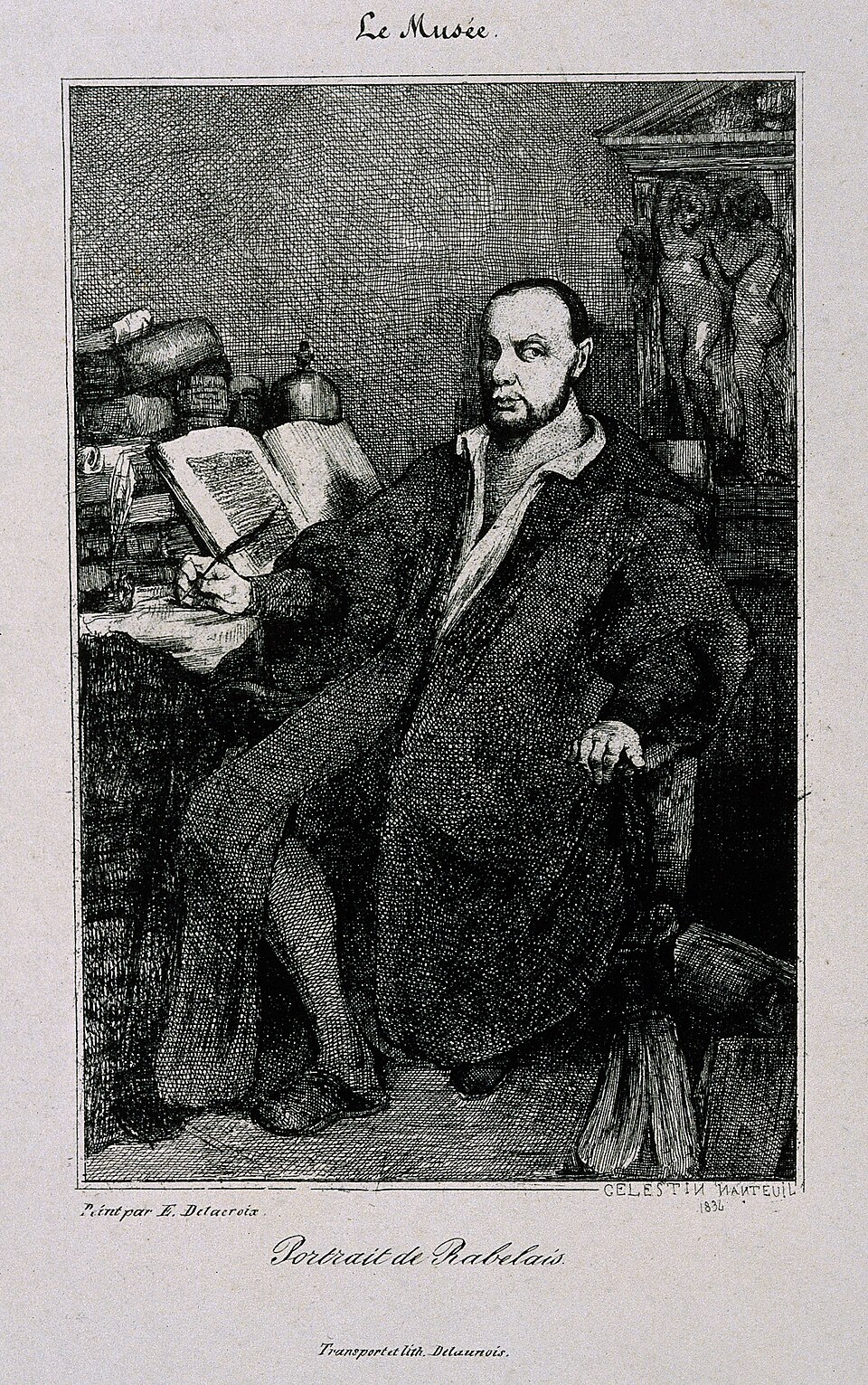
—What did you bring back from all those travels?
Guess! Not gold, no. Seeds! Roman lettuce, melons, artichokes. Plants that were almost unknown in France. I brought them back in my luggage like treasures. I loved botany, the study of plants, especially those that heal. A physician in my time had to know herbs as well as books. And besides, I was a gourmand, I confess! A winemaker’s son, I loved good food and the wine of Touraine. Thanks to those little seeds, new vegetables arrived on French plates.
—In your book, there’s an abbey without rules? What’s that idea?
Ah, my abbey of Thélème, in Gargantua! It’s a dream house I imagined. There, no clock, no bell to force you to get up. A single motto: “Do what you will.” You sleep, eat, and work whenever you feel like it. Do you think that’s crazy? I had lived in very strict convents, with a rule for every minute. I wanted to imagine the exact opposite. But be careful: Thélème only welcomes well-educated people.
“True freedom is not doing anything you want: it’s knowing how to choose well.”
—If you are remembered today, what would you like us to remember?
What a beautiful question, my child. I even invented a word for my way of seeing life: Pantagruelism. It means loving to learn, loving to laugh, and staying kind to others, even when life is hard. They often tried to silence me: the Sorbonne, the judges, fear. But my giants Gargantua and Pantagruel still make people laugh after all this time. If you remember one thing from me, remember this: laughter and knowledge together are stronger than fear. Keep reading, keep laughing. That’s how you stay free.
This imaginary interview was generated by artificial intelligence from sources documented in François Rabelais's profile. It dramatises what the figure might have said based on what we know about them, but does not constitute attested historical testimony. For primary sources and factual documentation, refer to the full profile.