Imaginary interview with Franklin D. Roosevelt
by Charactorium · Franklin D. Roosevelt (1882 — 1945) · Politics · 6 min read
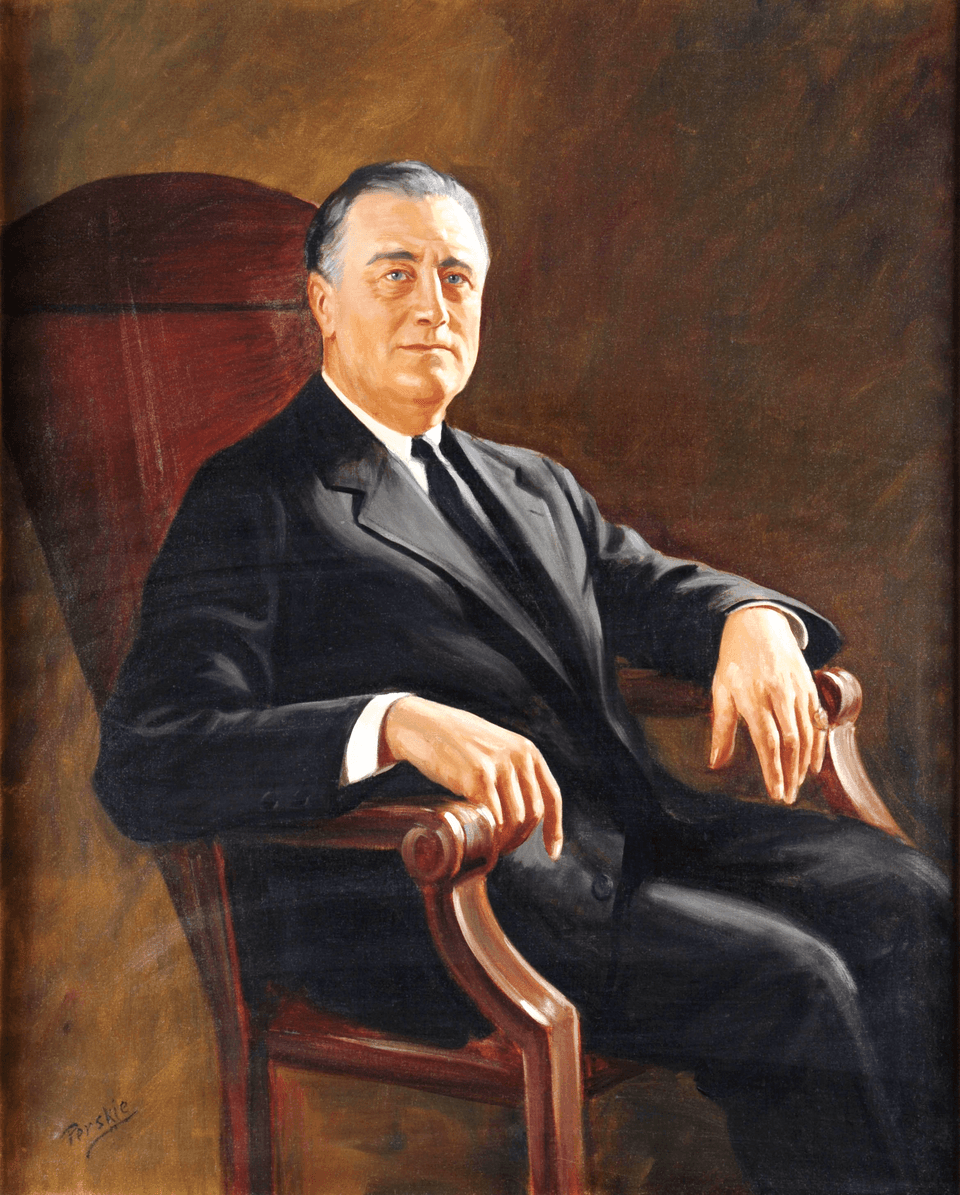
April 1944. In the Oval Office, draped with heavy curtains, a man in a dark suit welcomes us from his chair, a long cigarette holder tilted between his fingers. The CBS radio sleeps in a corner, a stamp album open on the coffee table. He smiles, and one understands why an entire nation learned to trust him through the airwaves.
—How would you describe the moment when illness burst into your life?
In the summer of 1921, at Campobello, I was thirty-nine and thought myself immortal. A swim in cold water, a strange fatigue, and by morning my legs would not respond. Polio, they told me, as one pronounces a sentence. I refused to see it as an end. They forged steel braces for me, each weighing nearly five pounds, and I relearned to stand, to take three steps leaning on a son's arm, a smile fixed on my face so no one would guess. At Warm Springs, Georgia, the warm spring water gave me the illusion of lightness. A man who wants to lead others cannot afford to seem diminished; so I made my chair a secret, and my face a promise.
I made my chair a secret, and my face a promise.
—What did this ordeal teach you about the Americans you would govern?
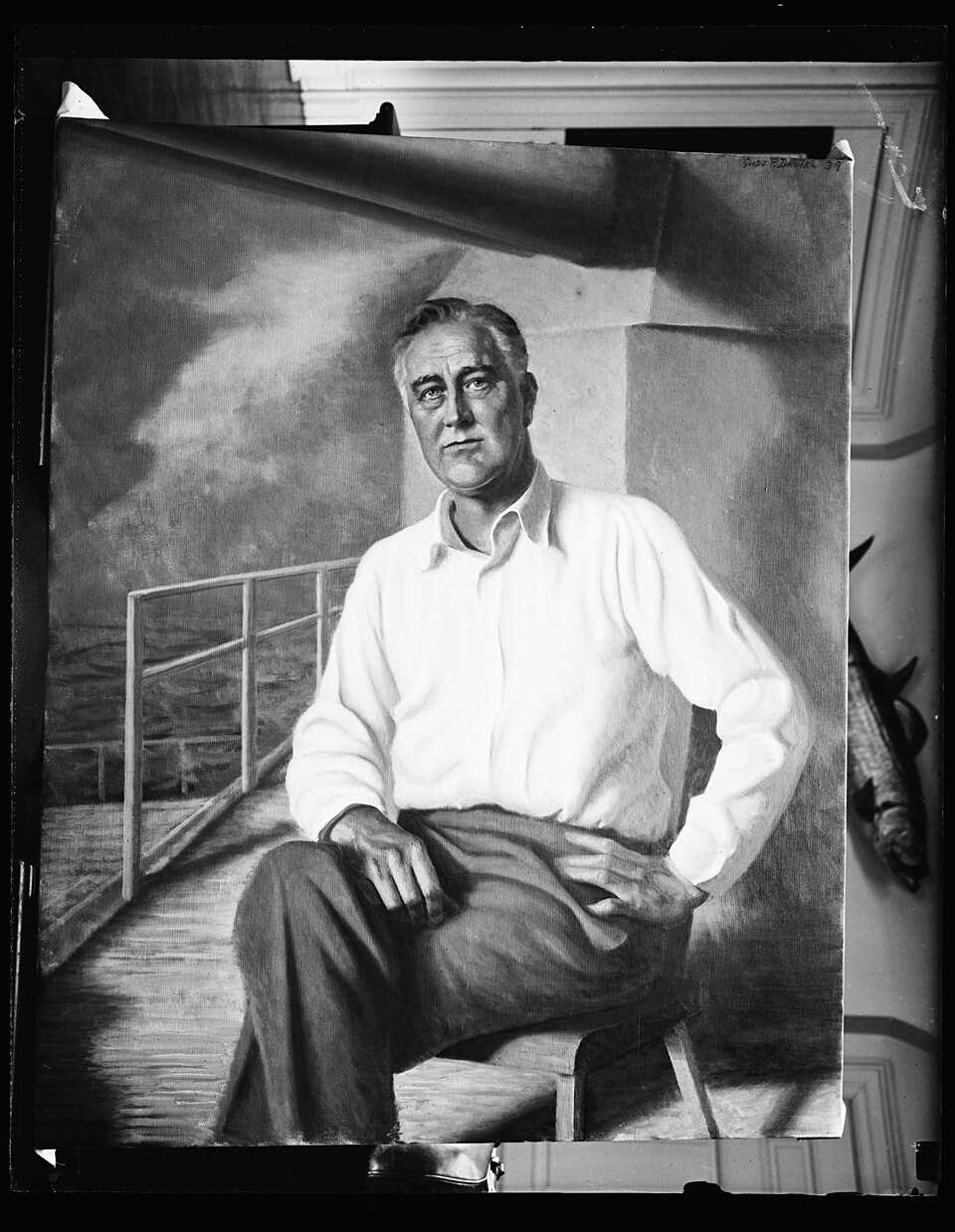
When you have spent months staring at a ceiling, begging your toes to move, you stop believing in easy solutions. Pain teaches patience, and patience teaches compassion. At Warm Springs, I met men and women ruined by the same disease, without a dollar for treatment. I understood then, better than in any book, that a stricken people do not need a lecture: they need a helping hand. My wheelchair I had mounted on a simple kitchen chair, modest on purpose. That humble seat reminded me every day that a leader's greatness is measured by his closeness to the humblest, not by the height of his pedestal.
A stricken people do not need a lecture: they need a helping hand.
—Why did you choose radio over the podium to speak to your country?
Because the podium separates and the microphone brings together. From March 1933, I wanted to sit, metaphorically, in the living room of every American home. My first chat was about the banks: the country was withdrawing its money in panic, stuffing it under the mattress, and the system was collapsing from fear. I told them simply that it was safer to entrust their savings to a reopened bank than to a bedspring. No jargon, no chin held high — a man explaining to his neighbors. I am told that up to sixty million Americans listened by their sets. I called them Fireside Chats because that is exactly what I aimed for: the warmth of a conversation, not the cold of a decree.
The podium separates and the microphone brings together.
—What did you feel at the exact moment the microphone went live?
A strange intimacy. Before me, the cold microphone of a station; behind it, kitchens, workshops, farms in Kansas where a family paused their meal to listen. I was not speaking to a crowd; I was speaking to one face at a time, multiplied by millions. I chose words that a child and his grandfather could understand together. Remember my inauguration, in March 1933: I told the nation that the only thing we had to fear was fear itself. On the microphone, that idea did not thunder; it whispered, like a friend's advice. Fear dissolves in a familiar voice better than in any argument. It was my most powerful weapon, and it cost nothing but sincerity.
I was not speaking to a crowd; I was speaking to one face at a time, multiplied by millions.
—When you came to power in the midst of the Depression, where did you need to start?
By giving back work and hope on the same day. In 1932, the country counted its unemployed by the millions, and its shantytowns — those Hoovervilles named after my predecessor — sprouted at city gates. My New Deal was not a cabinet doctrine but an avalanche of projects: the WPA that hired idle hands to build roads, bridges, and theaters, dams in the Tennessee Valley, murals on post office walls. I surrounded myself with a Brain Trust, those professors and lawyers who thought of government differently. The idea was simple and scandalous to some: the federal government is not a spectator of misfortune; it is the remedy. They called me every name; I preferred employment figures to insults.
The federal government is not a spectator of misfortune; it is the remedy.
—Among all these reforms, which one do you think should outlast you the longest?
Without hesitation, the Social Security Act of 1935. Dams will crack, murals will fade, but the idea that an old person should not die in poverty and that a jobless man should have a safety net beneath him — that, I hope, will not be unraveled. Before this law, growing old poor in America meant depending on charity or nothing. We laid a cornerstone: old-age insurance, unemployment insurance, aid to families. Some accused me of importing socialism; I reply that I was saving capitalism from its own excesses. A system that lets its weak collapse always ends up collapsing itself. If one thing about me is remembered in a century, let it be that net stretched beneath the most fragile.
I was not saving socialism: I was saving capitalism from its own excesses.
—How do you keep a deeply isolationist country out of war while arming its future allies?
That is the tightrope act of my life. America, in 1939, wanted to sleep soundly, the ocean as its pillow; isolationism was almost a religion. But I saw London under bombs and knew that a democracy that lets its neighbors burn ends up alone in the flames. So I devised the Lend-Lease in 1941: lend, lease our equipment without demanding cash, like lending your garden hose to a neighbor whose house is on fire. You don't ask for the price of the hose during the fire. I spoke of making our country the arsenal of democracy. That allowed us to act without declaring war, to support without crossing the line. The people were not ready to fight, but they were ready to help — you just had to present it in their language.
You don't ask a neighbor for the price of the hose while his house is on fire.
—Do you remember that December 7, 1941, and how everything changed?
How could I forget? A peaceful Sunday afternoon, and suddenly the dispatches from Pearl Harbor: the Japanese fleet struck our base in Hawaii, our ships burning in the harbor. The next day, before Congress, I said that December 7, 1941, would remain a date marked in infamy. In one morning, isolationism collapsed; the debate I had led for two years was settled in a few hours of fire. What a thousand speeches could not do, the enemy accomplished for me. I felt anger, yes, but also a strange clarity: there was no more ambiguity to manage, no opinion to spare. An entire nation rose as one. The war I had dreaded became the cause that would unite us.
What a thousand speeches could not do, the enemy accomplished in one morning of fire.

—Beyond winning the war, what world were you seeking to shape?
A world resting on four essential freedoms. In January 1941, before Congress, I sketched what we must strive for: freedom of speech, freedom of worship, freedom from want, and freedom from fear. Winning the war without building that peace would be to repeat the mistake of 1918. With Churchill, on a ship in August 1941, we signed the Atlantic Charter: no territorial conquests, respect for the freely expressed will of peoples. It was the blueprint for a larger edifice. Guns fall silent one day; then an architecture is needed so that nations sit at the same table rather than rush at each other. That is what kept me awake at night.
Guns fall silent one day; an architecture is needed so that nations sit at the same table.
—What would you say about that common table of nations you called for?
I devoted my last strength to it. At Yalta, in February 1945, in that frozen Crimea, I met Churchill and Stalin to decide the fate of Europe and, above all, to wring their agreement on an organization of nations. I dreamed of an assembly where disagreement would be settled by speech and vote, not by bayonets — what the League of Nations had missed for lack of America in its ranks. My health was declining, I felt it; each conference cost me more. The charter was signed in San Francisco a few months later, but I was no longer there to see it. That is the lot of those who plant trees: they never sit in their shade. At least I dug the hole and held the sapling upright.
That is the lot of those who plant trees: they never sit in their shade.
—At the end of an exhausting day, how does a man keep standing, literally and figuratively?
Through the small things that remind you you are still a man. In the evening, at the White House, after telegrams from the fronts and visits from generals, I would mix Martinis myself for my close ones — my ritual, the children's hour, when state affairs were banned. And then I would retreat to my stamp albums. Over a million little rectangles from around the world, which I sorted with a magnifying glass while Europe burned. People are surprised that a president finds time for such childishness; I know it is the opposite. That silent meticulousness rested my mind, untied knots, made solutions emerge by surprise. A leader who can no longer be silent with a stamp between his fingers soon loses himself in the noise.
A leader who can no longer be silent with a stamp between his fingers soon loses himself in the noise.
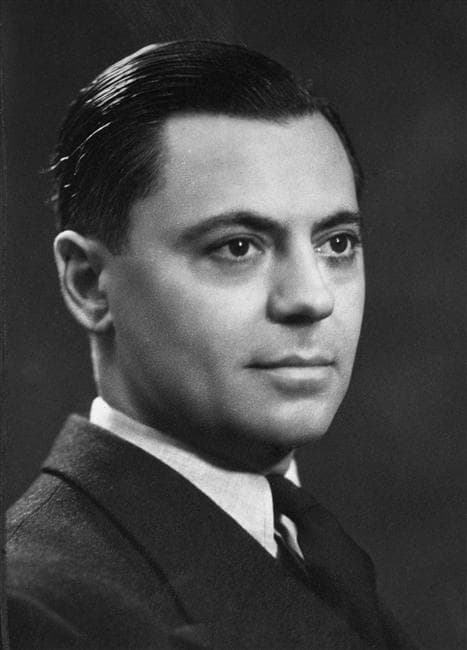
This imaginary interview was generated by artificial intelligence from sources documented in Franklin D. Roosevelt's profile. It dramatises what the figure might have said based on what we know about them, but does not constitute attested historical testimony. For primary sources and factual documentation, refer to the full profile.