Imaginary dialogue between Winston Churchill and Franklin D. Roosevelt
by Charactorium · Franklin D. Roosevelt (1882 — 1945) · Politics · 6 min read
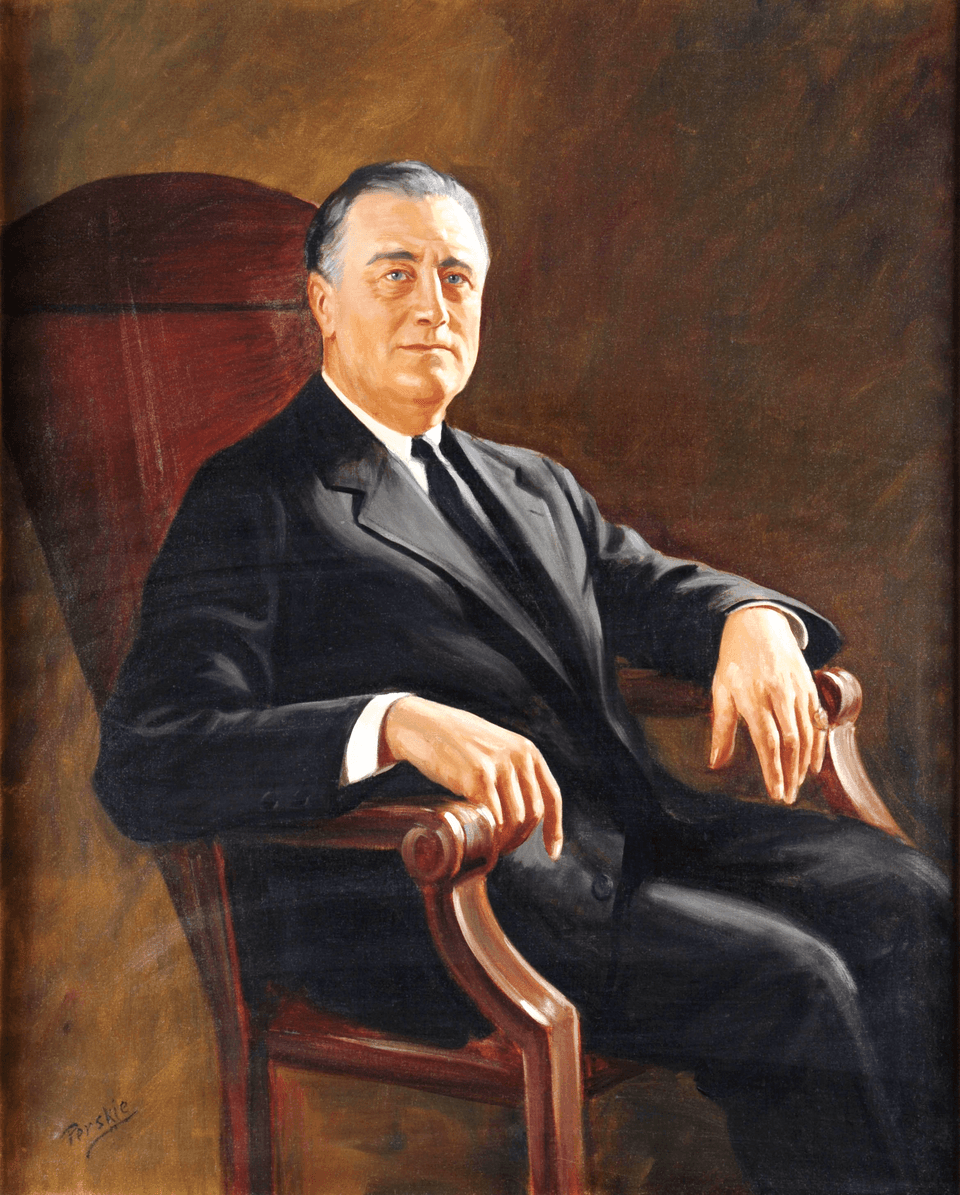
It is in a room of the Livadia Palace, overlooking Yalta, that Winston Churchill meets Franklin D. Roosevelt in this month of February 1945. Through the window, the cold light of the Black Sea illuminates the blanket spread over the president's knees, his long cigarette holder in hand. They have known each other since the early letters of the war and the secret meeting in 1941 off the coast of Newfoundland, and Churchill, tired but affectionate, comes tonight to speak not to the head of state but to the friend, before the conference calls them back. The brazier crackles; the maps of postwar Europe wait on the table.
—Franklin, I have known you master of yourself in the midst of a storm. But in March 1933, facing a ruined people, what did you really feel?
You know what a nation on the edge of the abyss is, Winston — you in 1940, me in 1933. Banks closed, lines of the unemployed, Hoovervilles springing up like mushrooms after the crash of 1929. When I stepped forward to take the oath, I understood that my first battle was not economic but moral. A people that is afraid stops acting, withdraws, becomes paralyzed. So I told them what I believed: the only thing we have to fear is fear itself. It wasn't a politician's catchphrase; it was a diagnosis. I had to give people the courage to move forward before even reopening the banks. The New Deal came after — but without that first spark, no law would have sufficed.
A people that is afraid stops acting, withdraws, becomes paralyzed.
—You have a way of entering people's homes that I envy. How did you start speaking like that, by the fireside, to your people?
From the very first week, Winston. On March 12, 1933, the banks were closed and panic was brewing. Rather than a press release, I picked up a microphone and explained, simply, why money was safer in a reopened bank than under a mattress. I didn't speak as a president: I spoke as a neighbor. I imagined a family around their radio, and I addressed them. They say up to sixty million Americans listened to those Fireside Chats. The secret is never to lie and never to condescend. Radio makes any false tone audible; it does not forgive bombast. You, who know what a voice can do for a besieged people, understand me better than anyone.
I didn't speak as a president: I spoke as a neighbor.
—Between us, Franklin — I have seen you stand up at a cost the press ignores. How do you bear this burden, since 1921?
You are one of the few to whom I will say it frankly. Polio took my legs at thirty-nine, and I decided it would take nothing else. Those steel braces weigh nearly five kilos each; to stand before a crowd, I lean on one arm and smile while the pain saws through me. In the morning, I receive my advisors in bed, still in pajamas, because getting dressed is an ordeal. But the public must not see the diminished man — it must see the man who endures. At Warm Springs, in those warm waters of Georgia, I become just a patient among others, and that rests me more than anything. You also govern with a body you no longer have.
Polio took my legs; I decided it would take nothing else.
—Do you remember, in August 1941, aboard the Prince of Wales? Your country was still neutral. How did you tip it toward us?
I remember it every day, Winston. My people had barely emerged from isolationism; Congress was wary of any European adventure. I could not declare war — I could arm those who were fighting it. That is the whole meaning of the Lend-Lease Act of 1941: to supply Britain and the USSR with planes, ships, shells, without waiting for payment. I had promised my compatriots to make the United States the arsenal of democracy, not its battlefield. And when we signed the Atlantic Charter together, I understood that we were no longer discussing deliveries but a world to rebuild. You asked for destroyers; I gave you far more — a common cause that my public was not yet ready to name.
I could not declare war; I could arm those who were fighting it.
—Then came Pearl Harbor. The morning you called me, your voice had changed. What did you decide in that instant?
Everything changed in one morning, December 7, 1941. Japan struck our fleet by surprise, in peacetime, without declaration. The next day, before Congress, I spoke of a date which will live in infamy. And then, Winston, isolationism collapsed on its own. No one in Washington could claim the ocean protected us anymore. Within days, Germany and Italy declared war on us in turn, and there we were in the same fight. I won't hide from you that on the phone, despite the horror, I felt a terrible relief: at last our two nations would march in step. The attack meant to destroy us united us.
The attack meant to destroy us united us.
—In January 1941, you proclaimed your four freedoms. Isn't that promising a lot to a world in flames?
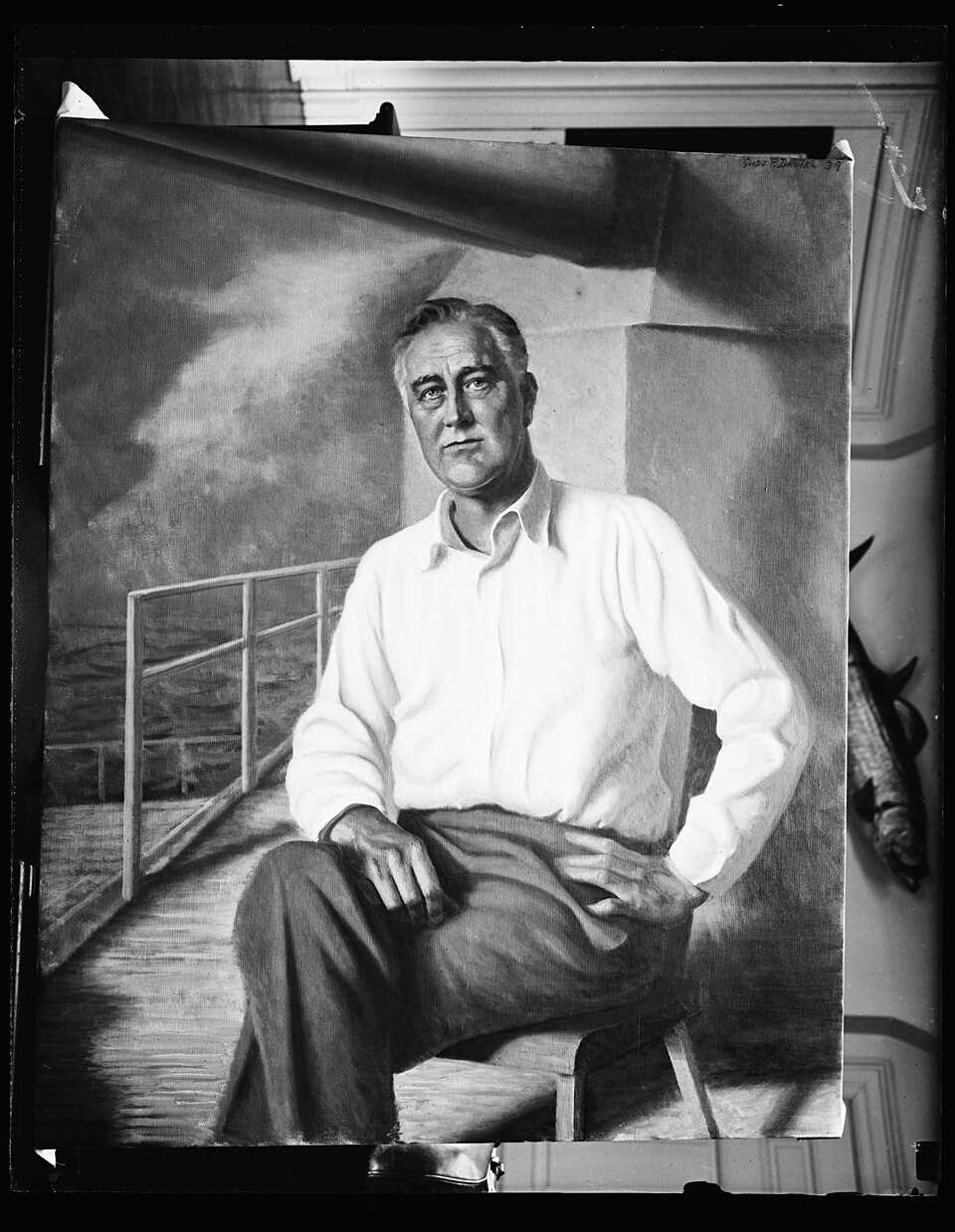
Precisely because it is in flames that we had to promise, Winston. When I gave that speech, I wanted to say why we would fight, not just against whom. Four essential freedoms: freedom of speech, freedom of worship, freedom from want, and freedom from fear. The first two, democracies already know. The last two are new: a hungry man is not free, a terrified man is not free either. The New Deal taught me that at home — political freedom does not feed a family. I refuse a victory that simply restores the old world. If our peoples shed their blood, it must be for an order where these four freedoms apply everywhere, for everyone.
A hungry man is not free, a terrified man is not free either.
—On the deck, in 1941, we wrote together that no one would seek territorial expansion. Do you still believe that, here at Yalta?
More than ever, and that is why this table weighs on me as much as on you. The Atlantic Charter said that our countries coveted no gains, no annexation contrary to the will of the peoples. Those words, Winston, I did not sign for show. But now we must deal with Stalin, who does not read the same map as we do. I know what you fear for Poland and Eastern Europe. I still believe it is better to bring the bear into a common house than to leave him prowling outside. The charter remains my compass, even when the wind blows against the course. Otherwise, what is all this blood for, if we redraw borders as in 1919?
Better to bring the bear into a common house than to leave him prowling outside.

—You dream of an organization of nations where the League of Nations failed. What will make yours different?
The League of Nations was a beautiful body without arms, Winston — many principles, no force. My project for the United Nations, sketched last summer at Dumbarton Oaks, rests on the opposite: the great powers that win this war must stay together to keep the peace. Not just debate, but act, in concert. My country must not turn its back on the world this time as it did after 1919 — that was our capital mistake. All my diplomacy these months aims to anchor the United States in this edifice before isolationism revives at home. If we succeed here, at Yalta, in finalizing the charter of this assembly, I will have accomplished the work dearest to my heart. The rest, history will judge.
The League of Nations was a beautiful body without arms.
—Twelve years in the White House, four terms, a world war. You look weary, Franklin. What keeps you going?
You, who sleep hardly more than I do, may ask without sparing me. Yes, I am tired — war wears you down more surely than polio. But you do not leave the bridge while the storm still rages. My compatriots re-elected me a fourth time in 1944 knowing my condition; they entrusted me to finish what I started. What keeps me going is the idea that my generation will not bequeath to the next the same chaos we inherited. In the evening, I escape for an hour into my stamp albums — a million little windows on the world — and that is enough to clear my mind for the next day. When peace is signed, then I can go home to Hyde Park and watch the Hudson flow.
You do not leave the bridge while the storm still rages.
—Here we are, both at Yalta, in February, deciding the fate of Europe. What would you like to be remembered from this table?
That two old friends here preferred the future to rancor, Winston. We do not agree on everything — you defend your Empire, I distrust it; you distrust Stalin, and you are probably a thousand times right. But we are sitting together, and that is already a victory that 1919 did not see. I would like it remembered that the surrender of the dictatorships was demanded without haggling, as we decided at Casablanca, and that on its ruins we laid the foundations of an organized peace, not just a signed one. If the organization of nations is born from these days, the cold of this Black Sea will have been worth all our troubles. The rest — glory, statues — does not interest me. What matters is that my grandchildren do not fight our war again.
Two old friends here preferred the future to rancor.
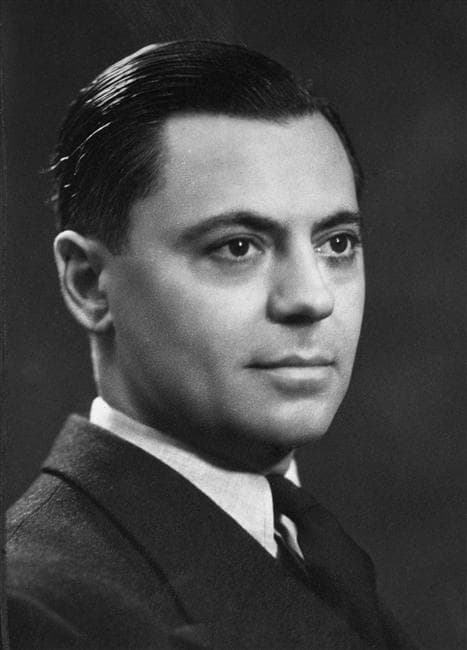
This imaginary interview was generated by artificial intelligence from sources documented in Franklin D. Roosevelt's profile. It dramatises what the figure might have said based on what we know about them, but does not constitute attested historical testimony. For primary sources and factual documentation, refer to the full profile.