Kids interview Franklin D. Roosevelt
by Charactorium · Franklin D. Roosevelt (1882 — 1945) · Politics · 7 min read
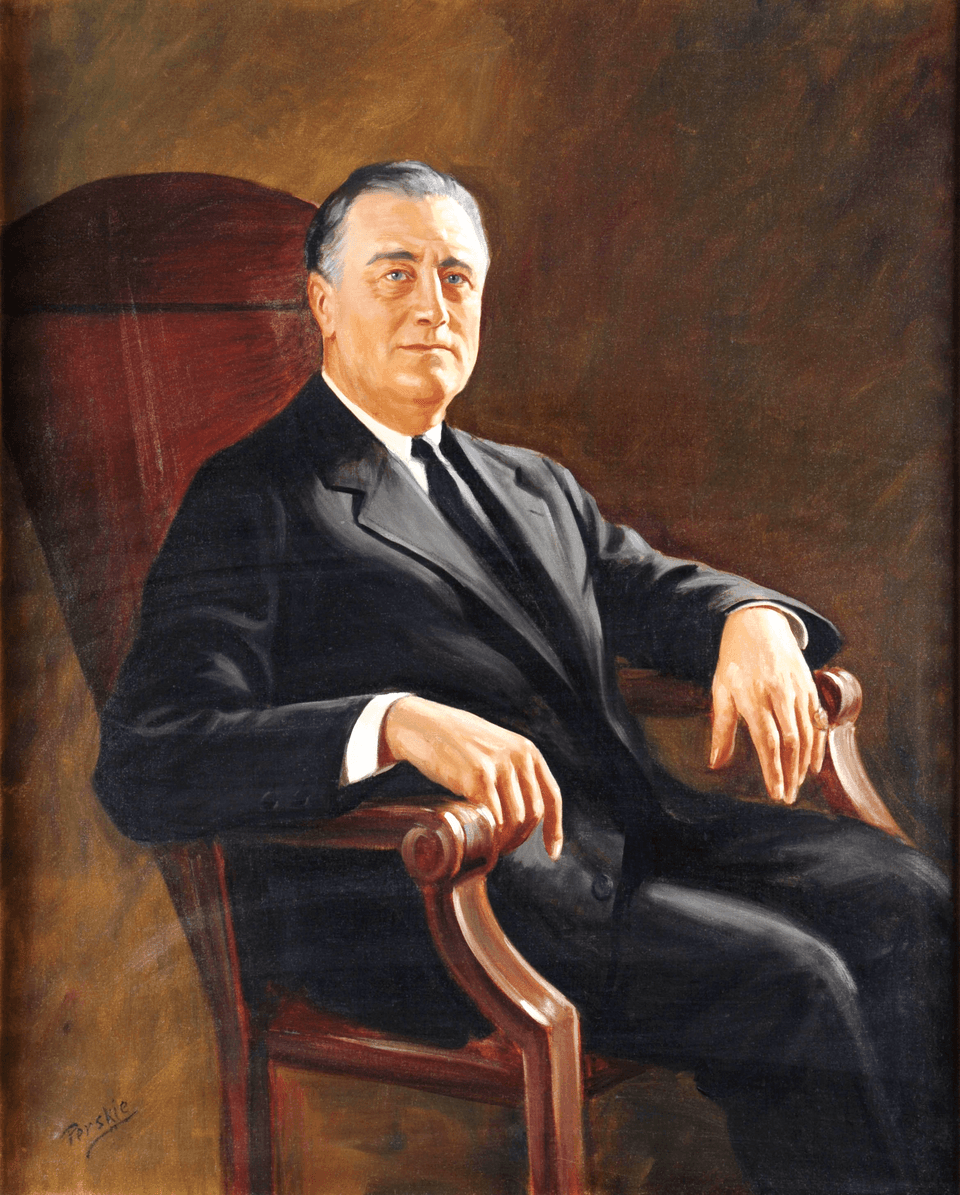
Two twelve-year-old students push open the door to the Oval Office, a little intimidated. A man in a dark suit welcomes them, a long cigarette holder in his hand and a broad smile. “Come in, sit down,” he says. “You really want to listen to an old chatty president?”
—How old were you when you got sick in your legs?
You know, I was 39 years old, back in 1921. I was on vacation, full of energy, and then one morning my legs refused to obey. Polio — a disease that attacks the muscles — had taken the use of both my legs. Imagine waking up and not being able to get out of bed. I was very scared, I admit. Many people told me, “It's over for you in politics.” But I gritted my teeth. I wore steel braces, each as heavy as a big dictionary, on both legs. And I relearned how to stand, step by step, holding on to a strong arm. The disease had taken my legs; it would never take my courage.
The disease had taken my legs, not my courage.
—Is it true that you hid your wheelchair from people?
Yes, it's true, and I'll tell you why. In my time, people believed that a man in a wheelchair was a finished man, incapable of leading a country. So I was cunning. I had my wheelchair made from a simple kitchen chair, very small, so it would be noticed as little as possible. In front of crowds, I leaned on my son's arm and took a few steps very slowly, smiling. No one was supposed to guess the effort it cost me. It was exhausting, you know. But I wanted them to look at my ideas, not my legs. A captain doesn't show his wounds to the crew in the middle of a storm.
I wanted them to look at my ideas, not my legs.
—Was there a place where you felt less pain?
Oh yes, my child. In Georgia, there is a village called Warm Springs. There, the water comes out of the ground warm, and when I soaked in it, my legs hurt less. I felt light, almost healed. I had a simple little house built there, which I jokingly called my “Little White House.” I came there to rest away from the noise of Washington, to listen to the silence and think. And it was there, in that place I loved so much, that I died, one day in April 1945. Funny, isn't it: the place that healed me was also my final resting place.
—Is it true that you spoke to people in their homes over the radio?
Yes! And it's one of the things I'm most proud of. In my time, in the evening, families gathered around a big radio, like they gather around a fireplace. So I had a simple idea: speak to them directly, in a gentle voice, like talking to friends. They called them the Fireside Chats. I sat down in front of a microphone and began with “My friends…” Then I explained difficult things in everyday words. Up to 60 million people listened to me at the same time. Imagine: an entire country silent in the evening, ears pricked up to hear their president like a reassuring grandfather.
—What did you tell them the very first time?
Ah, the first one, I remember it very well: it was March 12, 1933. The country was in a terrible panic. People were afraid of losing their savings, so they rushed to withdraw their money from banks, and the banks collapsed one after another. A real storm. That evening, I simply talked to them about their money. I explained that their money was safer in a reopened bank than hidden under their mattress. And you know what? They believed me. The next day, instead of withdrawing money, many brought it back. Calm words had stopped the panic. That is the true power of a voice that is listened to.
—What was the Great Depression? Were people poor?
Terribly poor, yes. In 1929, just before I became president, the stock market crashed. Factories closed, millions of people lost their jobs overnight. Imagine entire families without homes, building shacks of boards and tin on the outskirts of cities. Those shantytowns were called Hoovervilles, after the president before me. People were hungry, and above all, they had lost all hope. On the day I took office, in 1933, I told them a simple phrase: the only thing we have to fear is fear itself. Because a people paralyzed by fear cannot rise again. First, we had to restore their courage.
—And what did you do to help all those people?
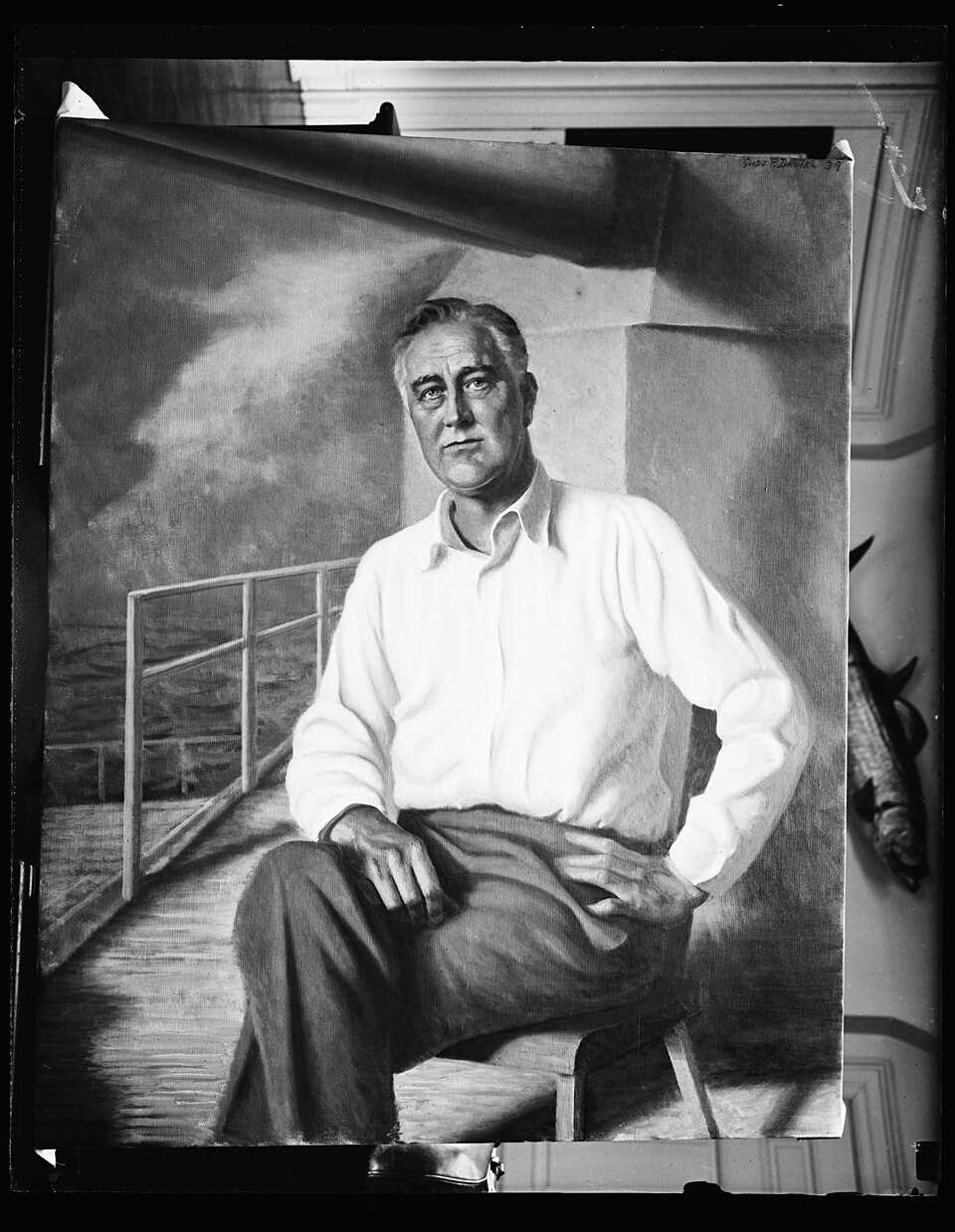
I launched what was called the New Deal. The idea was summed up in one sentence: if people have no work, the state will give them work. I created agencies with funny names — the WPA, the TVA, the CCC. Through them, millions of men were paid to build roads, bridges, dams, schools. Young people planted entire forests. Imagine: giving a father a pickaxe, a salary, and above all, his pride. And in 1935, we passed a great law, the Social Security Act, so that a worker who was too old or unemployed would never be left alone with nothing. The duty of a state is to protect the weakest.
—Who helped you invent all these ideas?
Ah, I wasn't alone, fortunately! I surrounded myself with a small group of very learned people: professors, economists, lawyers. They were nicknamed my Brain Trust. In the evening, we would meet and talk for hours. They brought the numbers and big ideas; I figured out how to make them simple for the people. You know, a leader alone doesn't know everything, and the one who thinks he does makes big mistakes. The secret is to surround yourself with people smarter than you on each subject, and to really listen to them. A good decision almost always comes from a good conversation.
A leader alone doesn't know everything.
—Why didn't America enter the war right away?
That's a difficult question, and very fair. Many Americans absolutely did not want another war in Europe, so far from home. This was called isolationism: staying at home, not getting involved in others' fights. I could see that England, all alone, risked falling to Germany. So I looked for a side path. In 1941, through a law called the Lend-Lease Act, we lent weapons, ships, trucks to our friends without making them pay right away. I kept saying that America should be the arsenal of democracy — the great workshop that makes weapons for free peoples. Helping without yet fighting was already choosing a side.

—And what really made you enter the war?
A terrible morning, my child: December 7, 1941. Without any warning, Japanese aircraft attacked our base at Pearl Harbor, in Hawaii. Ships sunk, thousands dead in just a few hours. The next day, standing before all the representatives of the country, I said that this December 7 would remain “a date which will live in infamy.” This time, there was no choice: America entered the war. A few months earlier, I had already stated what I believed in: a world built on four freedoms, including freedom of speech, freedom of worship, and freedom from fear. It was for that world that we would fight.
—Did you try to prevent other wars afterward?
Yes, that was my great dream for the end of my life. I thought: what good is winning the war if another breaks out twenty years later? As early as 1941, on a ship in the middle of the ocean, I had signed the Atlantic Charter with my friend Churchill, a promise to build a fairer world. Then in February 1945, despite my great fatigue, I made a very long journey to Yalta, on the Black Sea, to meet Churchill and Stalin to organize the peace. My dearest idea: a great common house where all countries would come to talk instead of fight. It was called the United Nations. Its charter was signed two months after my death; I never saw it.
What good is winning the war if another breaks out twenty years later?
—They say you wanted the enemy to surrender completely, is that true?
Yes, and it was a serious decision. In 1943, I met Churchill in a North African city, Casablanca. There, together, we set a firm rule: our enemies could not bargain for the end of the war. They would have to surrender totally, without conditions — we called it Unconditional Surrender. Why be so harsh? Because after the first great war, we had left Germany half-defeated, full of resentment, and that resentment had fueled a new war. I absolutely did not want to repeat that mistake. This time, it had to be clear and final, so that peace would truly last a long time. You see, being firm today sometimes protects the children of tomorrow.
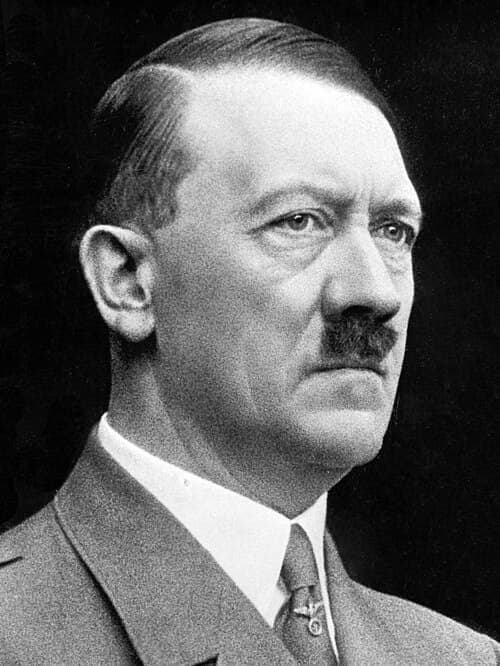
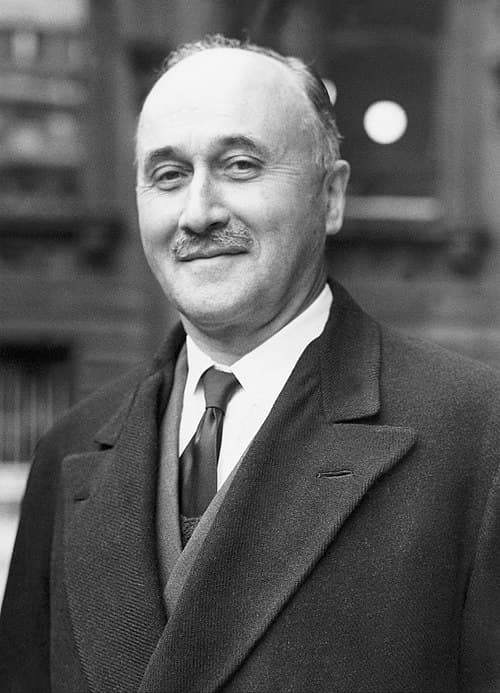
This imaginary interview was generated by artificial intelligence from sources documented in Franklin D. Roosevelt's profile. It dramatises what the figure might have said based on what we know about them, but does not constitute attested historical testimony. For primary sources and factual documentation, refer to the full profile.