
Dorothea Viehmann (1755-1815) was a German storyteller, the daughter of an innkeeper near Kassel. Her exceptional memory for folk tales made her one of the main sources for the Brothers Grimm, who collected many stories from her for their “Children's and Household Tales.”
Dorothea Viehmann(1755 — 1816)
Dorothea Viehmann
Électorat de Hesse
5 min read
Frequently asked questions
Key Facts
- Born in 1755 near Kassel (Hesse) into a family of innkeepers of Huguenot descent
- From 1813 onward, she recited many tales from memory to Wilhelm and Jacob Grimm
- Her stories enriched the 2nd edition of the “Kinder- und Hausmärchen” (Children's and Household Tales)
- Renowned for the precision and faithfulness of her oral delivery, held up as a model by the Grimms
- Died in 1815 in Kassel
Works & Achievements
Dorothea provided the Brothers Grimm with some forty tales and variants, making her one of their most important sources.
A tale partly attributed to her repertoire, in which a simpleton triumphs thanks to his kindness and a magical object.
A tale handed down by Dorothea, blending trials, cunning and the marvellous, typical of the oral tradition she preserved.
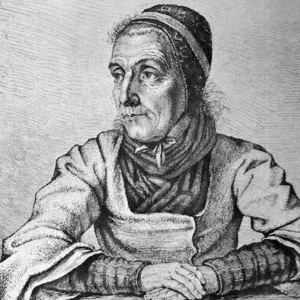
An engraving by Ludwig Emil Grimm depicting her, which became the emblematic image of the folk storyteller throughout Europe.
Anecdotes
Dorothea Viehmann had such a precise memory that she could repeat a tale word for word, several times in a row, without changing the slightest detail. This was how the Brothers Grimm checked that they were faithfully recording each story: with every repetition, the tale stayed identical, as if etched into her mind.
Wilhelm Grimm described her as a woman of about fifty with a firm face and clear eyes, who told her stories “thoughtfully, confidently and with extraordinary liveliness.” She clearly took pleasure in storytelling, which made her testimony particularly vivid for the two brothers.
Descended from a family of French Huguenots who had taken refuge in Germany, Dorothea knew tales tinged with French influences. Several of the stories she passed on to the Grimms resemble tales by Charles Perrault, a sign of the exchanges between European folk traditions.
To thank the woman who had supplied them with so many stories, the Brothers Grimm placed her engraved portrait as the frontispiece of the second volume of their tales. This portrait, drawn by their brother Ludwig Emil Grimm, became the classic image of the German “storyteller.”
The daughter and later the wife of an innkeeper, Dorothea had spent her life listening to the travelers, merchants and soldiers who stopped at the inn. It was while serving and chatting that she had gathered her treasure trove of stories, which she later handed down to the Grimms.
Primary Sources
This woman, still vigorous and not yet fifty, is named Viehmännin. […] She holds these old legends firmly in her memory, a gift, she says, that is not granted to everyone.
She tells her stories thoughtfully, confidently, and with an uncommon liveliness, taking obvious pleasure in it; first quite naturally, then, if asked, slowly, so that with a little practice one can follow along and write them down.
An engraving depicting the “Märchenfrau” of Niederzwehren, placed at the head of the second volume of the Tales to honor the Grimms' principal storyteller.
Key Places
Locality in Hesse where Dorothea was born, into a family of innkeepers of Huguenot descent.
Village near Kassel where Dorothea lived and ran the inn with her husband; it is here that she became known as the “Märchenfrau.”
City in Hesse where the Brothers Grimm lived and where Dorothea came to dictate her tales to them; she died here in 1815.
Typical Objects
A device used to spin wool or flax, found in nearly every rural household. Spinning was a daily activity well suited to the telling of tales.
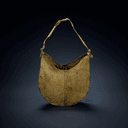
A beer vessel used in the family inn. At the counter, travelers and soldiers traded stories and rumors that Dorothea committed to memory.
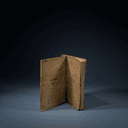
The book by the Brothers Grimm in which the tales gathered from her were printed. Her portrait adorns the frontispiece of the second volume.

Traditional garments worn by the women of the Kassel region. They appear in the engraved portrait of Dorothea by Ludwig Emil Grimm.
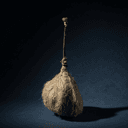
The tools with which Wilhelm Grimm wrote down the tales dictated by Dorothea. His deliberate slowness allowed everything to be transcribed by hand.
School Curriculum
Vocabulary & Tags
Key Vocabulary
Tags
Daily Life
Morning
From dawn, Dorothea took care of the inn's chores and housework: lighting the fire, preparing bread and soup, milking and feeding the animals. The morning was paced by the first travellers on their way to Kassel.
Afternoon
In the afternoon, she served passing customers, spun at the spinning wheel and tended the vegetable garden. It was by listening to merchants and soldiers at the counter that she constantly enriched her repertoire of stories.
Evening
When evening came, around the fire, people stayed up spinning and telling tales. Dorothea would then recite the old stories from memory, to entertain the family and the guests before nightfall.
Food
Their food was modest and rustic: rye bread, grain porridge, soups, potatoes, cabbage and vegetables from the garden. Meat remained scarce, and locally brewed beer accompanied the meals.
Clothing
She wore the dress of the peasant women of Hesse: a dark woollen gown, an apron, a shawl and a cap covering her hair. This regional costume, plain and practical, appears in her engraved portrait.
Housing
Dorothea lived in a half-timbered village inn, with low rooms heated by a large stove. The dwelling combined family living quarters, a common room for customers and farm outbuildings.
Historical Timeline
Period Vocabulary
Liens externes & ressources
Références
Œuvres
Contribution aux Kinder- und Hausmärchen (tome 2)
1815
L'Oie d'or (Die goldene Gans)
1812-1815
Le Diable aux trois cheveux d'or
1812-1815
Portrait de la « conteuse » (frontispice)
1815