Imaginary interview with Galla Placidia
by Charactorium · Galla Placidia (386 — 450) · Politics · Military · 6 min read
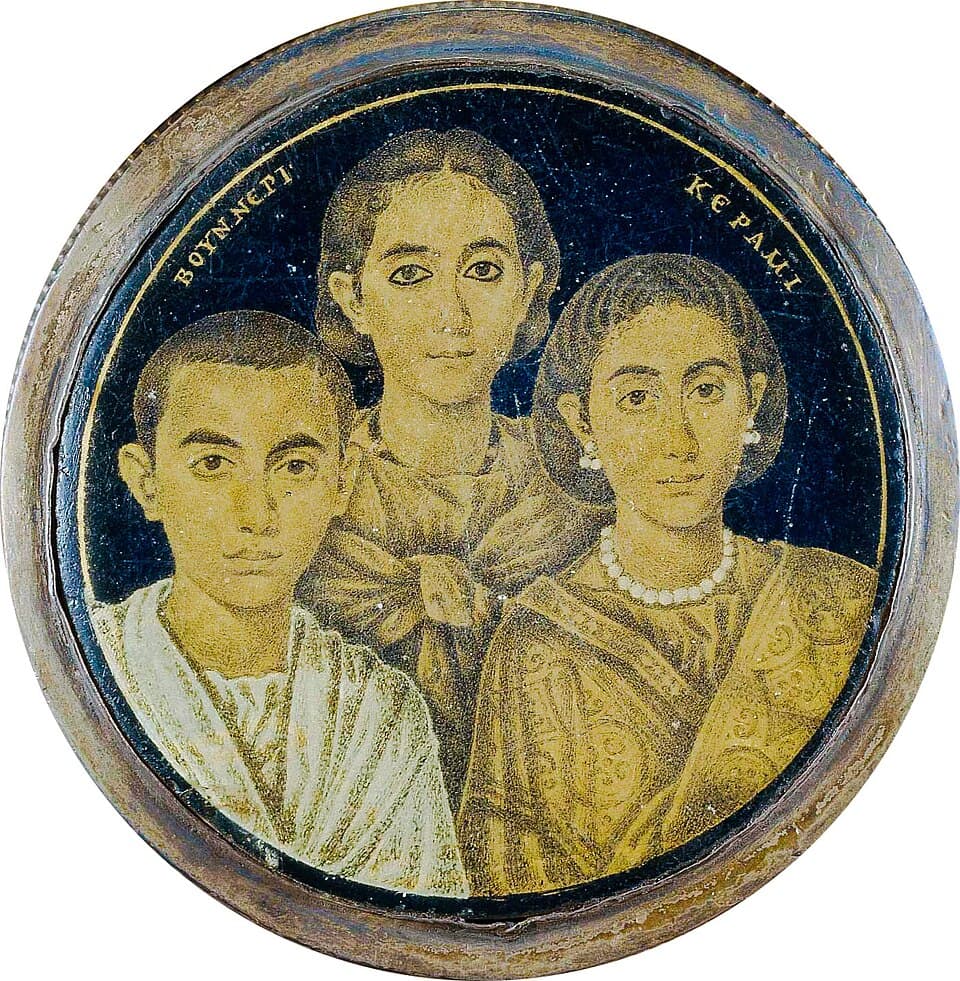
Ravenna, in the marshes that protect the last capital of the West. The Augusta receives us in a room where marble reflects the lamplight and where, already, mosaics ripen under the hands of artisans. She has known the sack of Rome, exile, two marriages and many mournings; she speaks low, unhurriedly, like a woman who has learned to weigh every word.
—How do you remember the year Rome fell to the Visigoths?
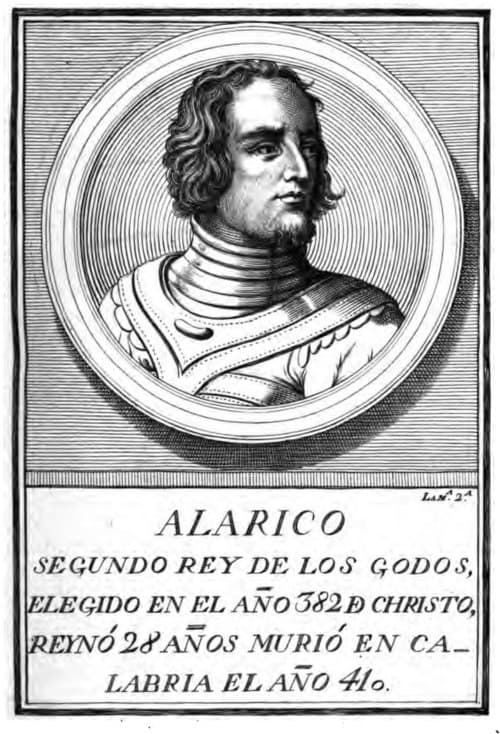
The year 410, in the month of August. I was in the city when Alaric's men burst through the gates; for three days we heard what no Roman believed could be heard. I was taken away, not as a captive in chains, but as a precious pledge: the daughter of Theodosius was worth more than a treasure. I followed that people across Italy, then Gaul, in their wagons and camps. I saw how they dispensed justice, how they honored their dead, how they spoke of Rome — half covetousness, half respect. People pitied me for being their hostage. As for me, I was learning. A prisoner who observes always ends up richer than his guards.
People pitied me for being their hostage. As for me, I was learning.
—What would you say about that marriage to King Ataulf, celebrated in Narbonne?
Narbonne, the year 414. I had been told that a barbarian king knows only the sword; Ataulf also knew the measure of things. The ceremony mingled our rites and theirs, and he had me presented, according to custom, with fifty young men each holding two trays — one overflowing with gold, the other with jewels, the very plunder torn from Rome four years earlier. It was as if my pillaged city was returning to me in the form of a dowry. Ataulf dreamed of merging his people into the Empire, of making the Goths the arms of a renewed Romania. That dream did not last; but I shared it, and it has guided my entire life since. A marriage can be a treaty sealed with one's own flesh.
My pillaged city was returning to me in the form of a dowry.
—You lost a child during those years of exile. Can you speak of it?
My first son was born in Barcelona, and I gave him my father's name, Theodosius, as one entrusts to a child the weight of an empire. He died before he could walk. I had him laid in a silver coffin, for I could not consent that the earth should take him entirely. Shortly after, Ataulf was murdered, and I became the prisoner of another king. For a long time I wore the dark garments of Roman mourning over the purple that was mine — two colors that never parted. People think that women of my rank weep in secret. We weep before all, for our dead are also those of the State. That child born between two worlds, I have never consigned to the past.
—How did you go from being a hostage to an Augusta?
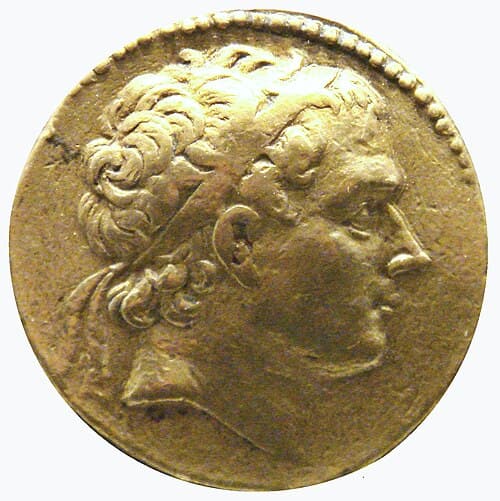
I was exchanged for grain — that is the price of a princess when a people is hungry. Back in Ravenna, my brother Honorius destined me for the general Constantius, a harsh and ambitious man. I refused at first; my opinion was not long asked. But I am not one to endure a bed without gaining a throne. At his death, in 421, I received the title of Augusta, that dignity which few women have borne. Understand: that word was not an ornament. It placed me at the summit, above counts and prefects, with the right to mint coins with my image. A gold solidus bearing my profile is worth a thousand speeches: it tells every province that I govern, not that I wait.
I am not one to endure a bed without gaining a throne.
—The usurper John seized power. How did you reconquer the throne for your son?
At Honorius's death, a certain John, a mere secretary, donned the purple that was not his due. A usurper: we have seen so many over this century that the word hardly frightens anymore. I took my children and made for Constantinople, where my nephew Theodosius II ruled over the East. I wrote him letter after letter, pleading the cause of Valentinian, of legitimate blood, of order to be restored. The East sent its armies; John was captured and executed. In 425, my son, aged six, was proclaimed Augustus. A child on the throne, a mother behind him: that is how one saves a dynasty when men have betrayed you. The words I traced then on wax weighed heavier than many legions.
—Governing in the name of a six-year-old: what did your days as regent look like?
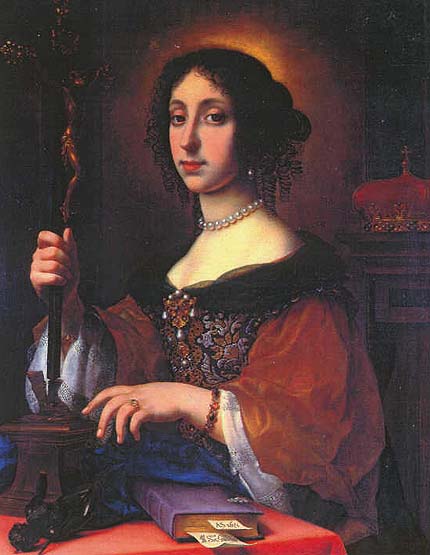
I was called regent, which means: deciding everything while pretending to only obey a child. My mornings began with prayer, then dispatches — from Rome, Carthage, Constantinople — which my notaries read to me while I dictated replies. In the afternoon, I sat in the hall of the palace in Ravenna, crowned with the diadem, and received bishops, ambassadors, generals who came to beg or threaten. I decided in my own name or in that of Valentinian, without the boundary ever seeming to exist. Believe me: maintaining the authority of a throne on which sits a boy who prefers horses to edicts is an hourly labor. I kept the West standing for more than ten years. It tottered, but it stood.
Regent means deciding everything while pretending to only obey a child.
—You sought to make barbarian peoples into allies. Why this path rather than war?
Because I lived among them, and you do not fight forever those with whom you have shared bread. The legions of old no longer exist; so we must bind these peoples by treaty, make them foederati — give them lands, and receive their warriors in return. It is a dangerous bargain, I know: the one you settle in your home may tomorrow refuse to leave. But when Genseric and his Vandals crossed into Africa around 429 and took from us that granary which feeds Rome, I measured what it costs to have no one to hold the frontier. Better a barbarian bound by oath than a barbarian free of all ties. Rome no longer has the means to disdain; she must learn to ally.
You do not fight forever those with whom you have shared bread.
—Faced with rival generals like Aetius and the threat of the Huns, how does one maintain balance?
Power, in my court, resembles a banquet table where everyone watches his neighbor's place. Aetius, Boniface: two indispensable swords, each dreaming only of tearing the other apart. My art was to use one without letting the other become my master — for a general too victorious is already half an emperor. In the distance rumbled the threat of the Huns, those horsemen whom Attila would soon launch against the East. I knew they would one day come knocking at our Western gates. Maintaining balance is not choosing a side: it is preventing each side from believing it has won. The day one of them thinks himself sole master, my son will be no more than a hostage under his own purple.
—You are building a small mausoleum in Ravenna covered with mosaics. What are you trying to say there?
Enter it at noon: the light passes through the alabaster windows, and the vault becomes a night sky. I wanted to show a firmament of blue tesserae, a scattering of gold stars on lapis lazuli, and Christ as shepherd among his sheep. The artisans lay these glass and gold mosaics one by one, patient work if ever there was. Why so much gold for such a small building? Because a princess whose throne wavers must lean on something more solid than men: on Heaven itself. Whoever prays under this vault understands that my authority comes from above. I build in stone and glass what armies can no longer guarantee me: a legitimacy that cannot be plundered.
I build in glass and gold a legitimacy that cannot be plundered.
—Why devote so many resources to churches, like the basilica of Santa Croce?
Because in Ravenna, the bishop now counts as much as the prefect. I had the great basilica of Santa Croce erected, of which perhaps only fragments will one day be seen, and I filled the churches with reliquaries, those precious caskets where the bones of saints sleep. Some will say it is piety: it is, I sincerely believe. But a throne is not held by sincerity alone. By giving to the Church, I win the clergy; by winning the clergy, I win the people, who listen to it more than to my edicts. Constantius, my second husband, understood armies; I learned to reckon with altars. In a century where emperors fall like leaves, the alliance of bishops lasts longer than that of generals.
—Thinking of your children, Valentinian and Honoria, what legacy do you hope to leave them?
In the evening, when audiences fall silent, I watch over their education as one watches over a flame in the wind. To Valentinian, I wish to transmit the art of endurance; to Honoria, his sister, prudence — for an emperor's daughter who is bored can set many fires. I fear, I confess, that I have succeeded better at preserving the throne than at shaping the one who must sit on it. I have carried this Empire through exile, mourning, barbarian kings, and usurpers; but a legacy is only alive if the heir knows how to carry it in turn. If, in a century, anyone should remember me, let it be before those starry vaults of Ravenna: there, at least, I have left something that neither Huns nor time can take.
I have succeeded better at keeping the throne than at shaping the one who must sit on it.
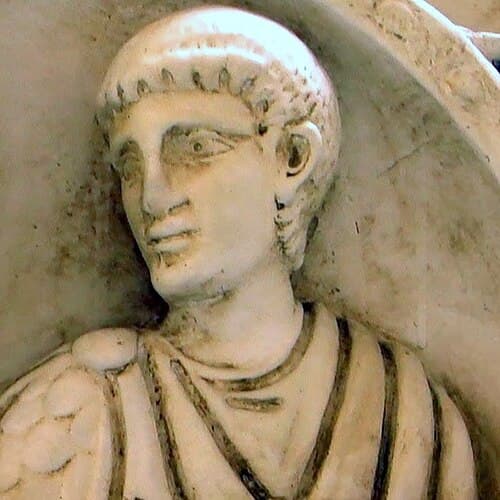
This imaginary interview was generated by artificial intelligence from sources documented in Galla Placidia's profile. It dramatises what the figure might have said based on what we know about them, but does not constitute attested historical testimony. For primary sources and factual documentation, refer to the full profile.