Imaginary interview with Georg Ohm
by Charactorium · Georg Ohm (1789 — 1854) · Sciences · 6 min read
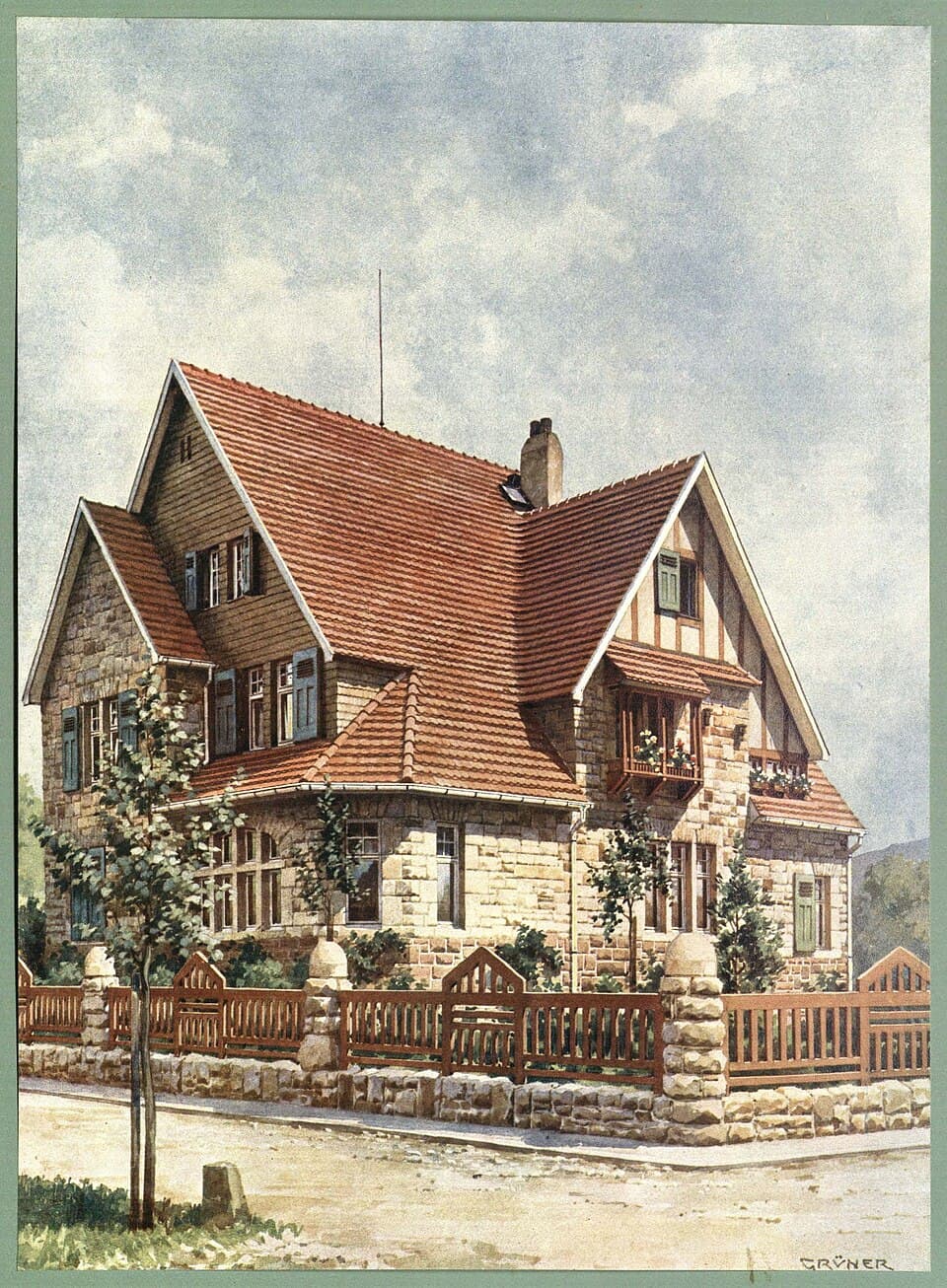
Munich, winter 1853. In a modest study adjoining the university, an old man puts copper wires into a wooden box. He has finally obtained the chair he waited his whole life for, and agrees to look back, in a measured voice, on the long path that led him from his father's workshop to recognition.
—How did you come to science, in a family where university was not attended?
My father, Johann Wolfgang Ohm, was a locksmith in Erlangen. A man of the workbench, but one who had taught himself, in the evenings, what the schools had denied him. He took my brother Martin and me, and taught us geometry and mechanics as one passes on a trade: with rigor, without flattery. I can still see his hands, calloused, drawing a circle on the slate with a precision that many professors would have envied. When you grow up near a forge, you know that a poorly measured piece will not hold. I carried that all my life. Martin became a mathematician, I a physicist; two sons of a locksmith adjusting numbers like one adjusts iron. I owe my rigor to that man far more than to my teachers.
When you grow up near a forge, you know that a poorly measured piece will not hold.
—What remains of that paternal education in your way of working?
A distrust of words without measure. My father repaired locks: you do not argue with a mechanism, you test it. At the University of Erlangen, where I completed my doctorate in 1811, I found that same ingrained habit — never put forward anything that I had not verified with my own hand. Later, at the Jesuit college in Cologne, I made my own conducting wires, cut them to different lengths, weighed them. My colleagues found this unworthy of a scholar, this craftsman's work. I saw it as a continuation of the workshop. A physicist who cannot handle a tool cannot handle a proof either. My father taught me that a truth, like a lock, is only worth something if it works when tested.
—Why did you insist so much on making your own instruments?
Because nature yields only to those who harass it with patience. I needed a stable current, and the voltaic pile of the time drifted constantly: you measured one intensity in the morning, another in the afternoon, the metal corroded. So I adopted Seebeck's thermoelectric pile, based on the temperature difference between two metals. There, the current held steady; I could repeat the same measurement ten times. For the rest, I drew my wires — copper, silver, brass — to chosen cross-sections and lengths, and I noted everything in my notebook. A bought instrument, you do not know it; an instrument you have shaped, you know even its flaws. And it is the flaws you must track before claiming to have found a law.
Nature yields only to those who harass it with patience.
—What does it take to turn a series of measurements into a reliable law?
Distrust of oneself, above all. My magnetized needle galvanometer deflected under the current's passage, and I watched that deflection like a doctor watches a pulse. But a needle lies if you are not careful: heat, the humidity of my Cologne laboratory, the slightest imperfect solder would skew the result. So I varied the wire lengths, methodically, until a regularity appeared, stubborn, beneath the noise of errors. The force acting between the ends of a circuit segment turned out to be the product of the current intensity and the resistance of that segment. That seems simple today; it cost me hundreds of weighings. The law did not spring from an intuition: it emerged from an obstinacy never to believe my first number.
—Do you remember the reception of your 1827 book?
How could I forget. I had published Die galvanische Kette, mathematisch bearbeitet, and I put into it everything I understood about the galvanic circuit, set in equations. I thought I was offering an edifice; I got a shrug. Too much mathematics, they said, for a science that should remain one of observation. Some saw it as a fancy, almost an imposture — a high school teacher who claimed to govern nature with formulas. 1827 should have been my year; it was one of isolation. I understood then that presenting a truth too early, and too naked, is to expose it to mockery rather than honors. Galvanism was in vogue; mathematizing it seemed to profane it. I had to learn the hardest science: that of patience in the face of incomprehension.
1827 should have been my year; it was one of isolation.
—Recognition came from London before it came from your own country. How did you experience that?
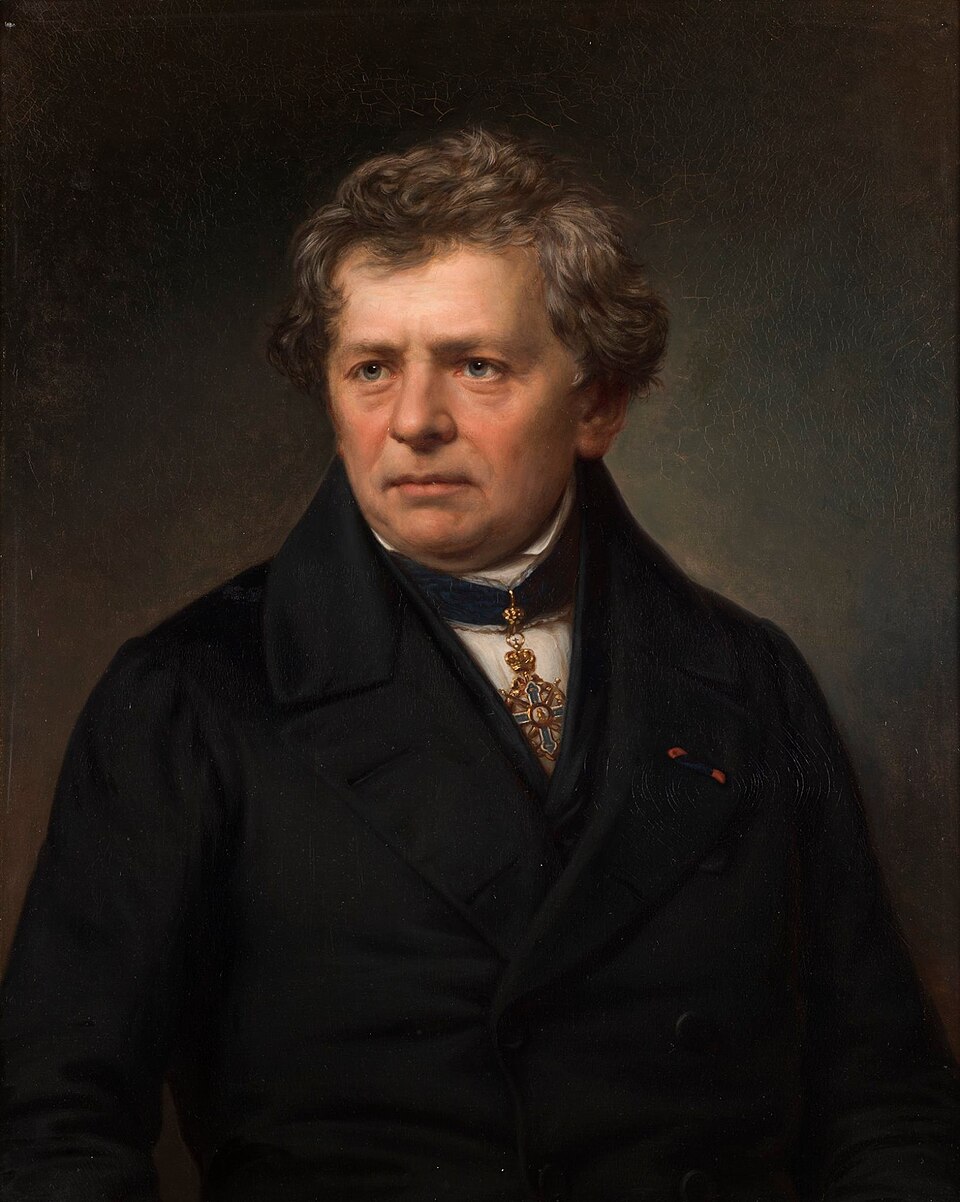
With an emotion I no longer expected. In 1841, the Royal Society of London awarded me the Copley Medal, its highest distinction. Consider the irony: a foreign nation honoring research that my own had disdained for fourteen years. They praised my work on the laws of electric current as a fundamental contribution to the science of electricity. I held that medal in my fingers, and I thought of all those years when I had been judged negligible. Recognition, when it comes so late, has a strange taste — half sweetness, half reproach for lost time. But I would be ungrateful to complain. London gave me back to science; without it, I believe my name would have died out in the indifference of provincial gymnasiums.
—Why did you leave your post in Cologne in 1828?
Out of spite, and perhaps wounded pride. After the icy reception of my book, staying in Cologne teaching the rudiments seemed a slow burial. So I resigned in 1828, believing a better situation awaited me elsewhere. Madness. The years that followed were the hardest of my life: I lived on private lessons, in rented rooms, counting every thaler. Sometimes I was offered the status of Privatdozent — teaching without a fixed salary, paid only by students' registration fees. That is to live on alms disguised as academic dignity. I knew rye bread as my only fare and the Bavarian winter without a good fire. Leaving a secure post to defend the value of one's work: that is a luxury only a man convinced he is right can afford — and he pays dearly.
Leaving a secure post to defend the value of one's work: a luxury one pays dearly.
—You had to wait for Munich, and an advanced age, to obtain a chair. How do you view that wait?
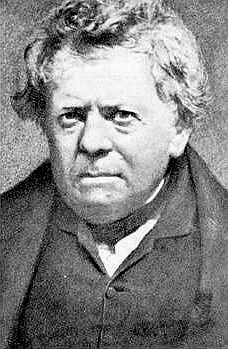
As a slow climb out of a well. After the years of hardship, Nuremberg reached out a hand in 1833, at the polytechnic school: finally a roof, an income, stability. Then the Bavarian Academy elected me in 1845. But the true chair of physics, the one I had hoped for all my life, I only obtained in Munich in 1852, at sixty-five. Sixty-five! The age when others think of rest, I was finally mounting the chair I had dreamed of as a young man. I do not complain: I teach there, I am still writing a textbook for my students. But I cannot help thinking of all that those decades of waiting stole from me — not the honors, which I care little for, but the years of research that poverty robbed me of.
—It is said your approach clashed with the dominant philosophy of your time. In what way exactly?
My time was steeped in Naturphilosophie, that school stemming from Schelling which claimed to grasp nature through intuition, through a kind of communion of the spirit with the great Whole. They despised number, deemed too dry, too mechanical to capture the soul of things. Yet I did exactly the opposite: I reduced current to a relation, a proportion, U equals R times I. To those gentlemen, that was to amputate nature of its poetry. To me, it was to do it justice. An intuition that cannot be measured is just a waking dream; a law that can be verified is a conquest. We lived in a Biedermeier era, withdrawn, wary of ruptures. Mathematizing electricity in those days was a small insolence — and I fully embrace it.
An intuition that cannot be measured is just a waking dream; a law that can be verified is a conquest.
—How do you situate your discovery within the great scientific movement of your century?
As a link between giants. In 1820, Ørsted had shown that a current deflects a compass needle — electricity and magnetism ceased to be strangers. Then, in 1831, Faraday revealed induction, that marvel of motion generating current. Between those two flashes, my work was humbler: not to discover a new force, but to measure its flow, to give engineers a reliable relation for calculating their circuits. The notion of electromotive force, which I sought to quantify, is the thread connecting all that. Ørsted and Faraday opened doors; I laid down the surveying rules for the territory they discovered. Without measurement, their wonders would have remained spectacles. That is the modest but necessary fate of one who transforms wonder into science.
This imaginary interview was generated by artificial intelligence from sources documented in Georg Ohm's profile. It dramatises what the figure might have said based on what we know about them, but does not constitute attested historical testimony. For primary sources and factual documentation, refer to the full profile.