Imaginary dialogue between Augustus De Morgan and George Boole
by Charactorium · George Boole (1815 — 1864) · Sciences · 5 min read
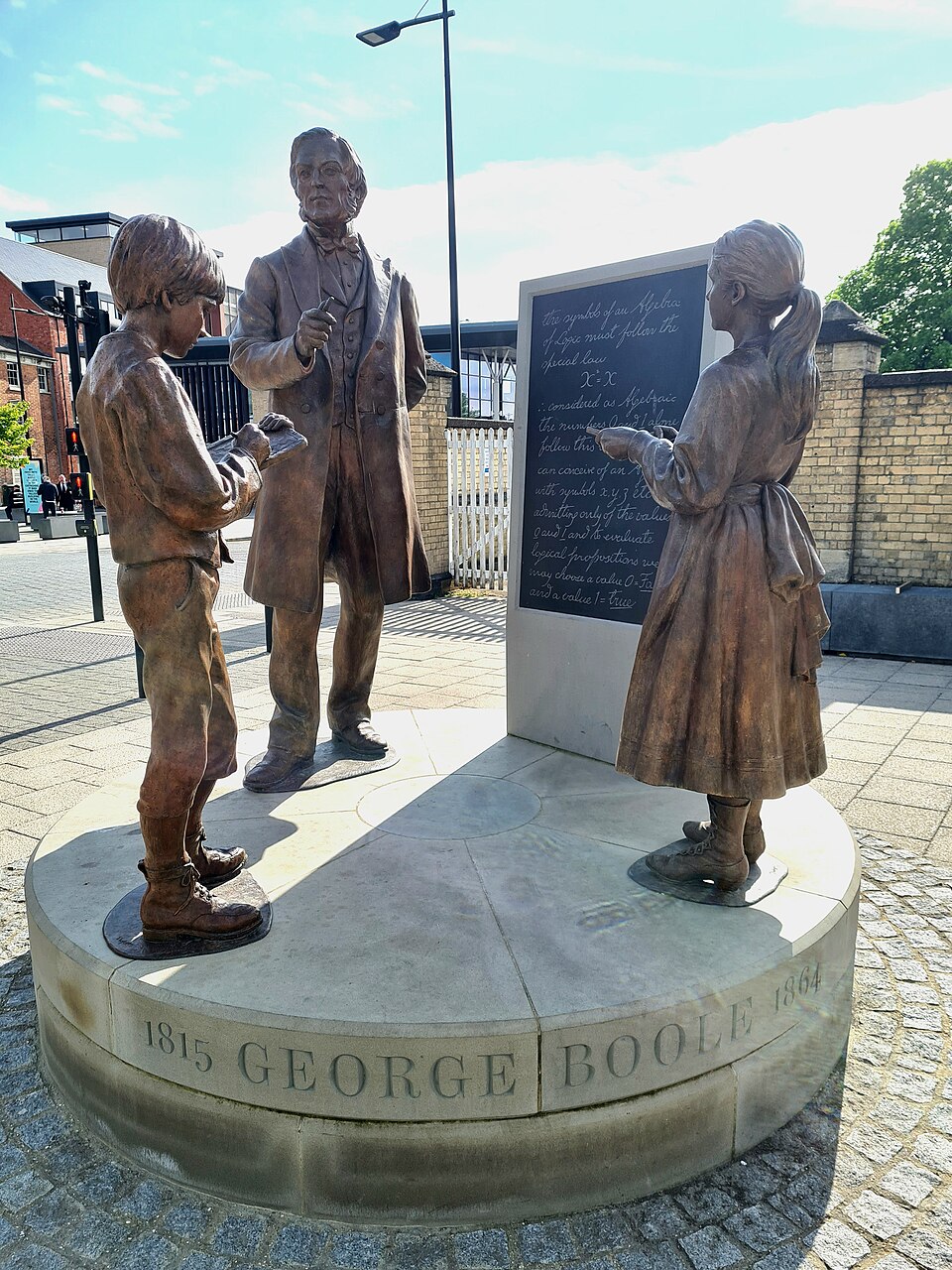
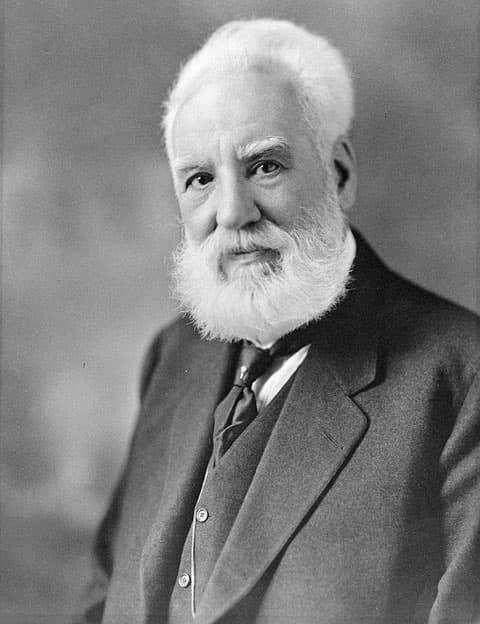
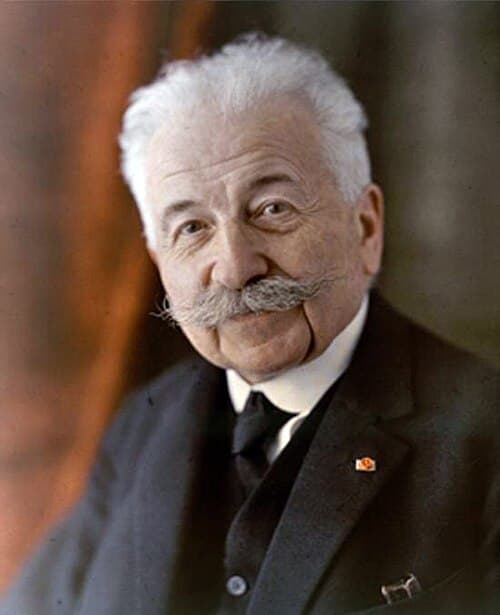
It is in the cluttered study of Queen's College Cork, in this autumn of 1857, that Augustus De Morgan finally visits his correspondent of so many years. The slate on the wall still bears half-erased equations, and the smell of chalk mingles with that of coal from the fireplaces. The two logicians have known each other through letters for ten years, ever since that first treatise of 1847 which recognized them as brothers-in-arms without ever having met. De Morgan comes with the curiosity of a peer: to understand how this cobbler's son from Lincoln dared to reduce thought to symbols.
—My dear Boole, before our letters I hardly knew you had emerged from Lincoln. How does a cobbler's son teach himself Latin and Greek?
You touch on the tenderest point, my friend. My father repaired shoes, but he dreamed of optical instruments and mathematics far above our station. The Lincoln library was my true school: I borrowed grammars there, and I conquered Latin, Greek, then French and German almost without a teacher, in the evening, by candlelight. At sixteen, in 1832, I was already teaching to support my family. Understand: I never had the leisure to be a schoolboy. I had to be both student and tutor. That necessity perhaps spared me the ruts of universities; I only learned what I judged true, without reverence for authority.
I had to be both student and tutor.
—You even opened your own school in Lincoln in 1838, I believe. What drives a young man without fortune to thus become master of a house?
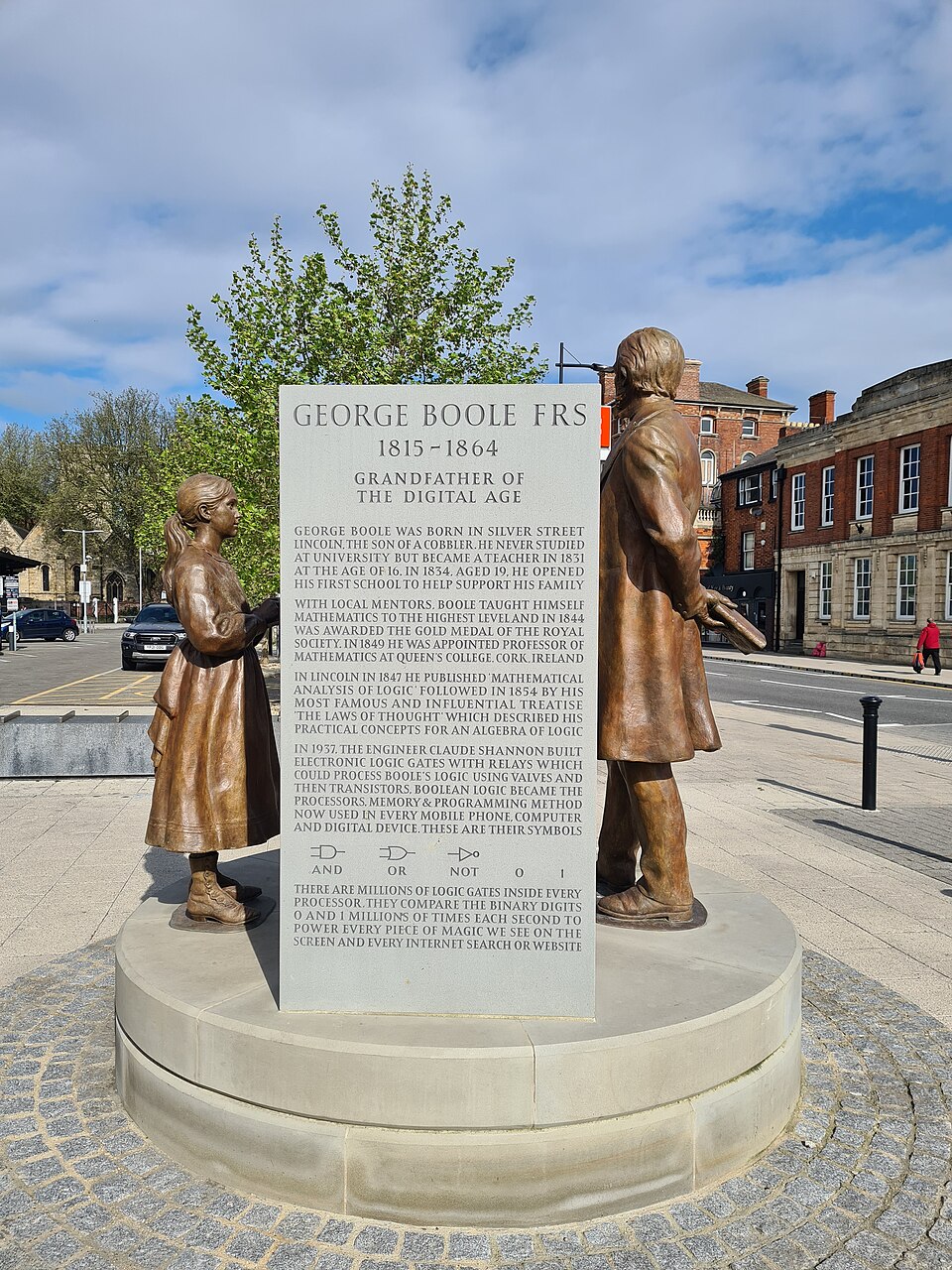
Hunger, first of all, De Morgan, I will not hide it from you. A family to support leaves little leisure for pure vocations. But in running that school, I discovered one thing: teaching mathematics to children forced me to understand it from its foundations. One cannot explain to a fresh mind what one does not clearly possess oneself. It was in seeking how to make the rules of calculation understood that I began to question the very nature of those rules, their laws of combination. My school was my laboratory as much as my livelihood. Many of the ideas that surprised you in my treatises were born from a lesson given to a twelve-year-old boy.
My school was my laboratory as much as my livelihood.
—Let us come to what binds us. When your Mathematical Analysis of Logic reached me in 1847, I realized we were plowing the same furrow. What did you have in mind?
What joy it was to receive your note, you who were working on your own toward the same thing! I had in mind a simple and almost brazen conviction: that logic belongs not to philosophers but to mathematicians. Since Aristotle, people reasoned by syllogisms, by words. I wanted to give the operations of the mind the expression of a true Calculus, with symbols whose laws of combination are known and general. A reasoning then becomes an equation that one solves. Understand: I do not claim that man thinks in algebra, but that the laws of his thought obey a form that algebra can capture. You were one of the few not to see this as an extravagance.
Logic belongs not to philosophers but to mathematicians.
—In your Laws of Thought of 1854, you speak of investigating the very laws of the mind. Is that not an immense claim for a mathematician?
Immense, perhaps, but not arrogant, I hope. My design in that work was to investigate the fundamental laws of those operations of the mind by which reasoning is performed, and to give them expression in the symbolic language of a Calculus. Consider: when I posit that a thing is or is not, that it belongs to a class or is excluded from it, I handle certainties as rigid as numbers. I discovered that my symbolism admitted only two values, as if the mind, at its deepest, knew only yes and no. Aristotle's syllogism is but a particular, narrow case. What I sought was the universal grammar of deduction, beyond the grammar of languages.
The mind, at its deepest, knows only yes and no.
—One thing has always intrigued me. In 1849, you were made professor at Cork without any degree whatsoever. How was that even possible?
Through the effect of a few scholarly friendships, of which yours was not the least, De Morgan. I had neither Cambridge nor Oxford behind me, nothing but articles in journals and the Treatise that had earned me the Royal Medal in 1844. When this new Queen's College Cork sought a first professor of mathematics, my reputation rested solely on those pages, and on the credit that men like you were willing to grant them. I confess I trembled a little: appearing before a university senate when one has never worn a student's gown is somewhat intimidating. But I thought that theorems do not require parchment. They are true or false, regardless of the title of whoever proves them.
Theorems do not require parchment.
—You mention the Royal Medal of 1844 for your method on operators. Would you say that work was the threshold to everything else?
The threshold, yes, and even the key. My memoir On a General Method in Analysis dealt with the calculus of differential operators, and it was by treating them as algebraic quantities that I acquired the habit of separating the symbolic form from the meaning it carries. Do you see where that leads: if one can manipulate an operator like a letter, without thinking at the moment about what it operates on, why not treat the classes and propositions of logic in the same way? The Royal Society, by crowning that work, unwittingly blessed the bolder enterprise that was to follow. My entire edifice rests on that first audacity: to trust the laws of symbols, and to seek their interpretation only at the end.
To trust the laws of symbols, and to seek their interpretation only at the end.
—Let us be frank between logicians. Many still regard our logical algebra as an idle curiosity. Does this coldness weigh on you?
It would weigh on me more if I did not have you, at the other end of the penny post, to assure me that I am not deluded alone. Yes, many serious minds shrug: what is the point, they say, of writing in symbols what common sense already does? I answer that common sense errs, and rigor does not. Our age may not see the use of these laws; I do not despair that one day some engineer or calculator will find an application we do not suspect. A mathematical truth does not die for lack of immediate application. It waits. Our correspondence, my friend, is proof that it already has at least two convinced readers.
A mathematical truth does not die for lack of immediate application. It waits.
—I am told you have just been elected a Fellow of the Royal Society. Does this recognition change anything in your solitary work at Cork?
It touches me, I confess, more than I would have thought of myself. This election of this year 1857 is a hand extended by the scholarly establishment to a man not born into it. But it changes nothing about my afternoons: I remain alone before my slate, blackening pages that ten people will read. The true reward, you see, is not the ribbon or the letters after my name, but these letters, ours, where we argue over a sign or a definition. You have kept me in suspense more surely than the Royal Society. The glory of learned societies is tepid; the conversation of a peer who understands you, that is the only honor that warms the isolated worker that I am.
The conversation of a peer who understands you, that is the only honor that warms.
—Allow a concerned friend: you are seen walking in all weather to the college, heedless of your health. Are you not imprudent, George?
You sound like Mary, who scolds me in the same way! I have gotten into the habit, in Cork, of walking from Ballintemple to the college, in rain as in fine weather; a professor cannot miss his lecture for a shower. I confess the Irish climate does not spare a man of my age, and I have sometimes arrived drenched before my students. But my umbrella and frock coat seem a sufficient armor. The duty of teaching comes before care of self: these young people await their lesson, and I have never been able to fail them. You are wrong to worry, my friend; a little water does not undo a mathematician.
A professor cannot miss his lecture for a shower.
—In your letters, you depict your family evenings with a rare tenderness. What does this home bring you, far from our abstractions?
All the balance I would lack without it, De Morgan. The day belongs to symbols and students; but in the evening, around Mary and our daughters, I become again a simple father reading aloud. I enjoy literature, philosophy, sometimes the Ancients I loved as a child. My wife has a singular mind, bold in matters of education and science, and our conversations are worth many learned societies. Believe me, the purest algebra does not console a man; a living home does. When I work late on a manuscript, by lamplight, it is knowing those beings asleep under the same roof. The logician needs a home like the sailor needs a port, to put out to sea again in the morning.
The logician needs a home like the sailor needs a port.
This imaginary interview was generated by artificial intelligence from sources documented in George Boole's profile. It dramatises what the figure might have said based on what we know about them, but does not constitute attested historical testimony. For primary sources and factual documentation, refer to the full profile.