Imaginary interview with George Boole
by Charactorium · George Boole (1815 — 1864) · Sciences · 6 min read
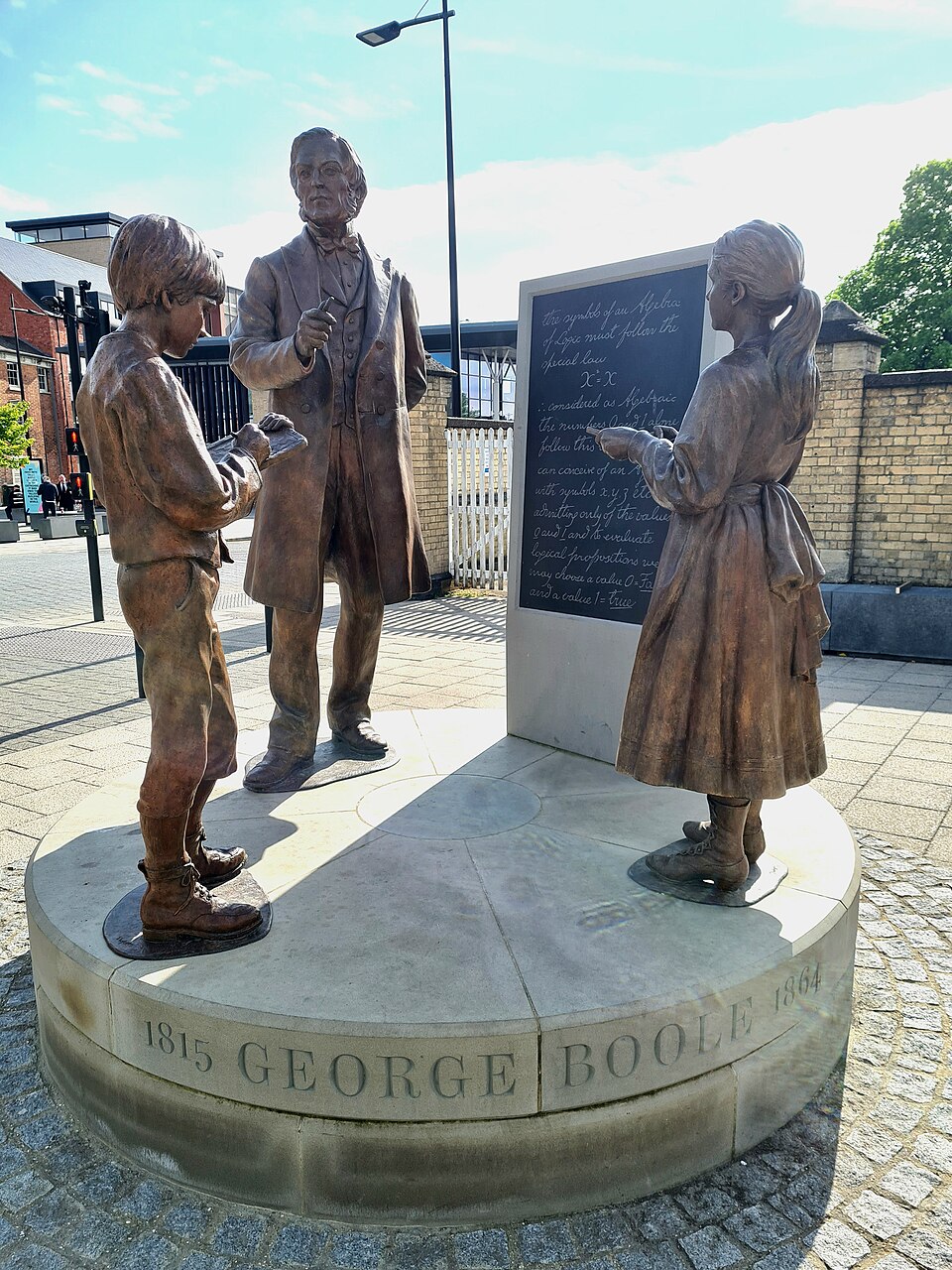
Cork, autumn 1864. In the study of a Georgian house in Ballintemple, an oil lamp illuminates pages blackened with symbols. George Boole, in a dark frock coat and high collar, sets down his chalk to answer our questions. Outside, an Irish rain drums against the windowpanes.
—How did a cobbler's son from Lincoln come to mathematics?
My father repaired shoes, but his mind was turned toward optical instruments and lenses; it is from him that I acquired the taste for observation. For the rest, I was my own master. At the library of Lincoln, I borrowed whatever I found: Latin, Greek, then French and German, which I deciphered alone as a teenager. At sixteen, in 1832, I was already teaching in a school to help my family. Mathematics came later, almost out of necessity: a schoolmaster must know what he teaches. I opened my own school in 1838. What others receive from a tutor, I took from books, by candlelight, without anyone ever telling me that such a path was forbidden.
What others receive from a tutor, I took from books.
—You became a professor without holding any university degree. How was that possible?
In 1849, I was offered the first chair of mathematics at Queen's College, Cork, one of those colleges founded by the Queen in Ireland to broaden access to learning. I had no degree, no gown from Oxford or Cambridge to display. My only credentials were my papers, published in scholarly journals, and the medal that the Royal Society awarded me in 1844 for my work on differential operators. Men like Augustus De Morgan had read those pages and judged them serious. You see, a theorem does not ask whether its author attended the right schools. People call me self-taught with a hint of pity; I wear it rather as a quiet pride.
A theorem does not ask whether its author attended the right schools.
—Your great ambition was to translate reasoning into algebra. Where did that idea come from?
Since Aristotle, the syllogism had been taught: two premises, a conclusion, and a whole apparatus of rules learned by heart. That seemed too narrow to me. Why should reasoning, which is an operation of the mind, not obey laws as regular as those of calculation? In The Mathematical Analysis of Logic, in 1847, I dared to write that logic could be treated as a branch of mathematics. The key idea is this: what makes a true Calculus is the use of symbols whose laws of combination are known, general, and whose results admit a coherent interpretation. Represent propositions by signs, give those signs rules of assembly, and reasoning becomes a calculation that can be carried out with a pen as one solves an equation.
—What were you truly aiming to achieve with An Investigation of the Laws of Thought?
Nothing less than the fundamental laws of the operations of the mind by which reasoning is performed, and to give them expression in the symbolic language of a Calculus. The title is not a metaphor: I believe that thought, when it reasons correctly, follows laws as determined as the fall of a body. In 1854, in that work, I pushed the algebra I had sketched seven years earlier to its conclusion. A symbol can stand for a class of objects; multiplying it by itself changes nothing, for 'wise men' multiplied by 'wise men' still yields 'wise men'. This small law, strange to ordinary algebra, is the key. I wanted to show that the truth of reasoning and the truth of calculation are one and the same.
I believe that thought, when it reasons correctly, follows laws as determined as the fall of a body.
—Isolated in the provinces, how did you engage in dialogue with the scholars of your time?
By post, sir, by post. Since one can send a letter for a penny, a mathematician in Lincoln or Cork is no longer exiled from the learned world; he needs only a pen, an inkwell, and patience. My correspondence with Augustus De Morgan was among those that count: we worked, each on our own side, on the frontier between logic and algebra, and our letters crossed like two miners digging toward the same vein. When my 1847 work appeared, he wrote to congratulate me, recognizing that reducing logic to an algebraic system was a real advance. Those sheets, which I keep, are worth more to me than many salon conversations. The provinces have never seemed a desert to me as long as the postman came.
The provinces have never seemed a desert to me as long as the postman came.
—What did that Royal Society medal in 1844 mean to you?
A great deal, I admit. I had submitted to the Philosophical Transactions a memoir on a general method in analysis, concerning the calculus of differential operators—those tools by which one handles variations of quantities. The Royal Society of London, which at first hesitated to crown an unknown without a title, finally awarded me its gold medal in 1844. That was the first sign that my work counted beyond my school in Lincoln. Later, in 1857, I was honored to be elected a Fellow. For a man who had learned alone, to be received into the oldest learned society in the kingdom was a quiet miracle. But I never believed that these distinctions added anything to the truth of a result; they only make it visible to others.
—Many judge your algebra of logic as a curiosity without use. Does that affect you?
I am told so, yes, and with a certain condescending benevolence: 'A fine exercise of the mind, but what will it be used for?' I hear it and am not much moved. When I cover my slate with symbols at Queen's College, I am not seeking immediate application; I am seeking the law. Much mathematics now considered indispensable was first treated as abstract play. The conic sections of the Greeks waited two thousand years for Kepler to describe orbits. I do not presume to compare myself, but I have the quiet conviction that a well-established truth always finds its use eventually. Whether in my lifetime or not is not my concern: my concern is that it be correct.
A well-established truth always finds its use eventually.
—If you could imagine being read a century from now, what might your logic be used for?
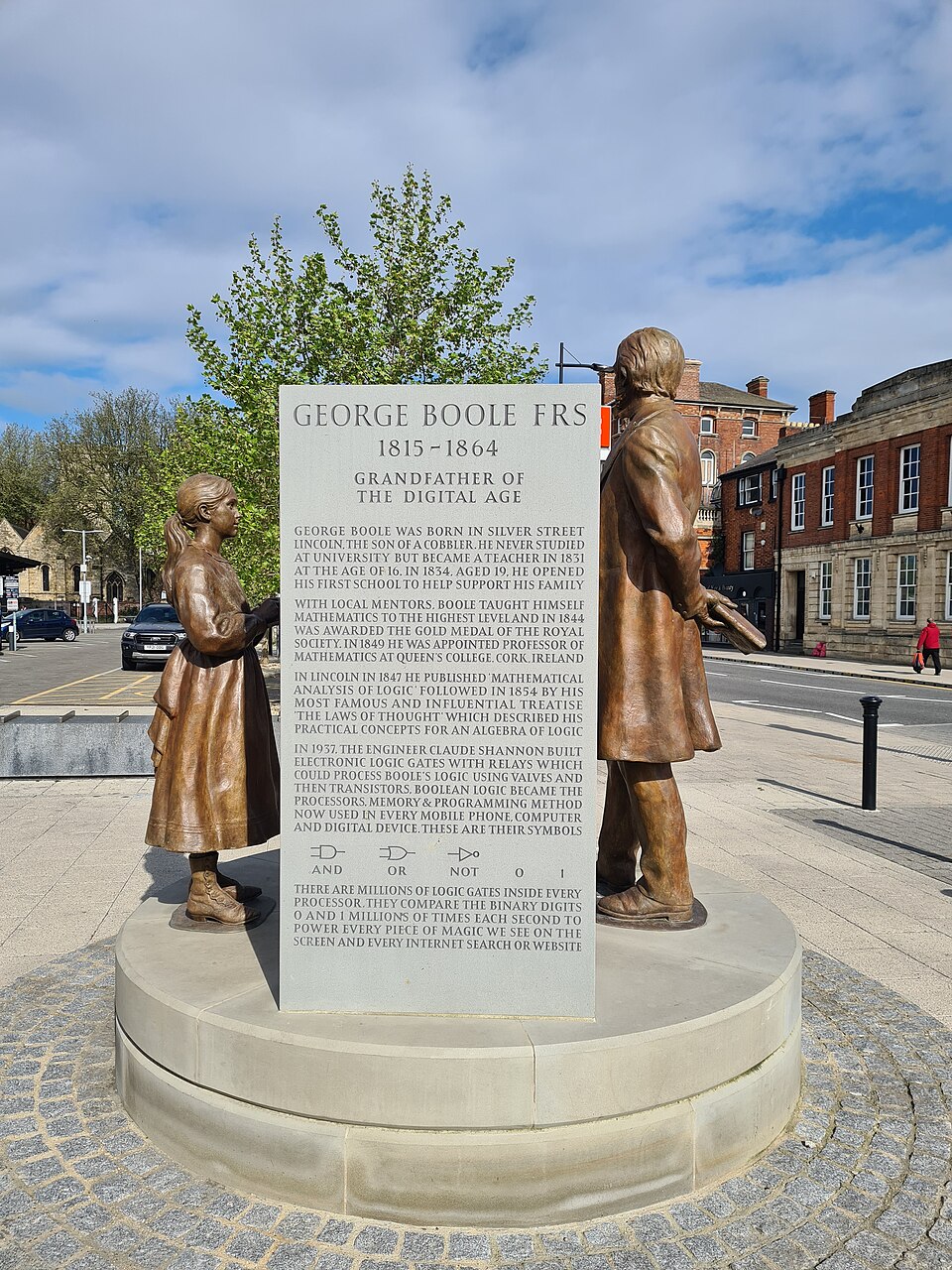
That is a mental game I readily indulge, without guaranteeing anything. My algebra knows only two states: a thing is, or is not; true or false, one or zero, no middle. Now any mechanism that can only answer yes or no—an open or closed door, a current that passes or does not—would obey, I suppose, the same laws as my symbols. If some future engineer built a machine made of such switches, perhaps he would rediscover my calculus of propositions, without even knowing my name. I am only imagining; I will see none of it. But the idea that a law of thought might one day be embodied in an assembly of iron and wire does not displease me.
A thing is, or is not; true or false, one or zero, no middle.
—Your days in Cork followed a regular rhythm. Can you describe them?
I rise early, in our house in Ballintemple. After a frugal breakfast—some porridge, tea—I walk to the college for my lectures, which I prepare carefully, for clarity is a courtesy owed to students. I then cover my slate with demonstrations. The afternoon is my own: it is the time for research, pages of calculation, letters to my correspondents. In the evening, I join my wife Mary and our five daughters; I read, mathematics, philosophy, sometimes the classics I loved as a child. I sometimes stay up late over a manuscript, by oil lamp. It is a life without splendor, regular as an equation, and it is precisely in this regularity that I find the freedom to think.
A life without splendor, regular as an equation.
—You seem tired today. Does the Cork rain not spare you?
You have noticed. The Irish sky does not stint its downpours, and this month I have taken the bad habit of doing without an umbrella. The other day, I walked all the way to Queen's College in a driving rain, and I gave my lecture in soaked clothes, without taking time to change. Since then, a tightness in my chest troubles me more than I like. Mary, who has faith in the virtues of water, wants to treat me with wet cloths and wraps—her conviction is sincere, even if I doubt one can cure a chill with cold. Let us not dwell on it: a man who has spent his life on the laws of thought is not going to worry about an autumn cold.
I doubt one can cure a chill with cold.
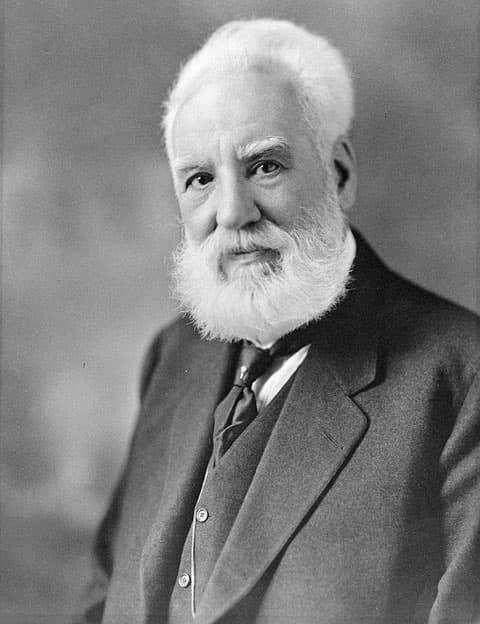
This imaginary interview was generated by artificial intelligence from sources documented in George Boole's profile. It dramatises what the figure might have said based on what we know about them, but does not constitute attested historical testimony. For primary sources and factual documentation, refer to the full profile.