Imaginary dialogue between Gustave Flaubert and George Sand
by Charactorium · George Sand (1804 — 1876) · Literature · 5 min read
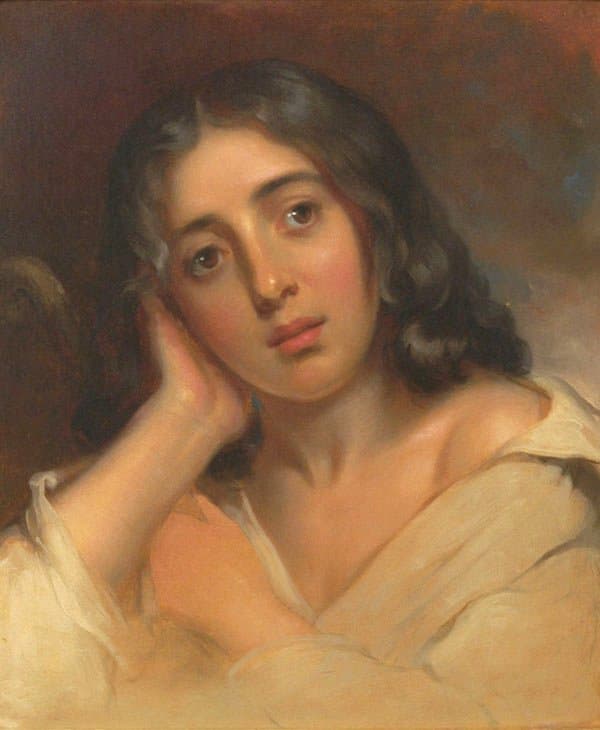
It is at Nohant, in the large drawing-room where the smell of cold coffee and extinguished pipe still lingers, that I find my friend again this autumn of 1875. The lamp lights her manuscripts on blue paper, and outside the Berry countryside falls asleep. We have been writing to each other for years; she calls me her troubadour and I call her dear master; this evening, weary of my letters, I have come to hear her in person, to finally grasp the woman behind the work.
—Dear master, you know how I struggle over every sentence. You, in 1832, first changed your name: why become George Sand?
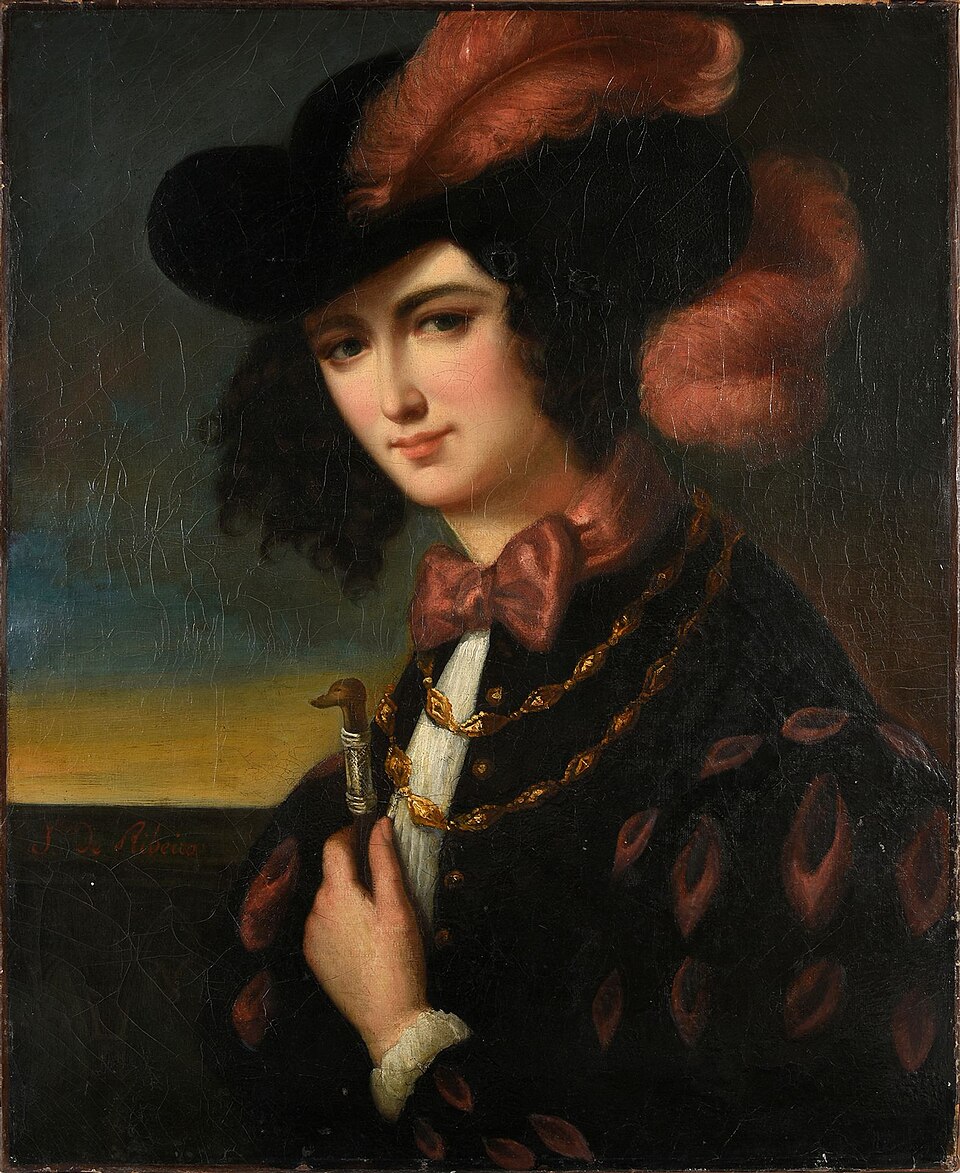
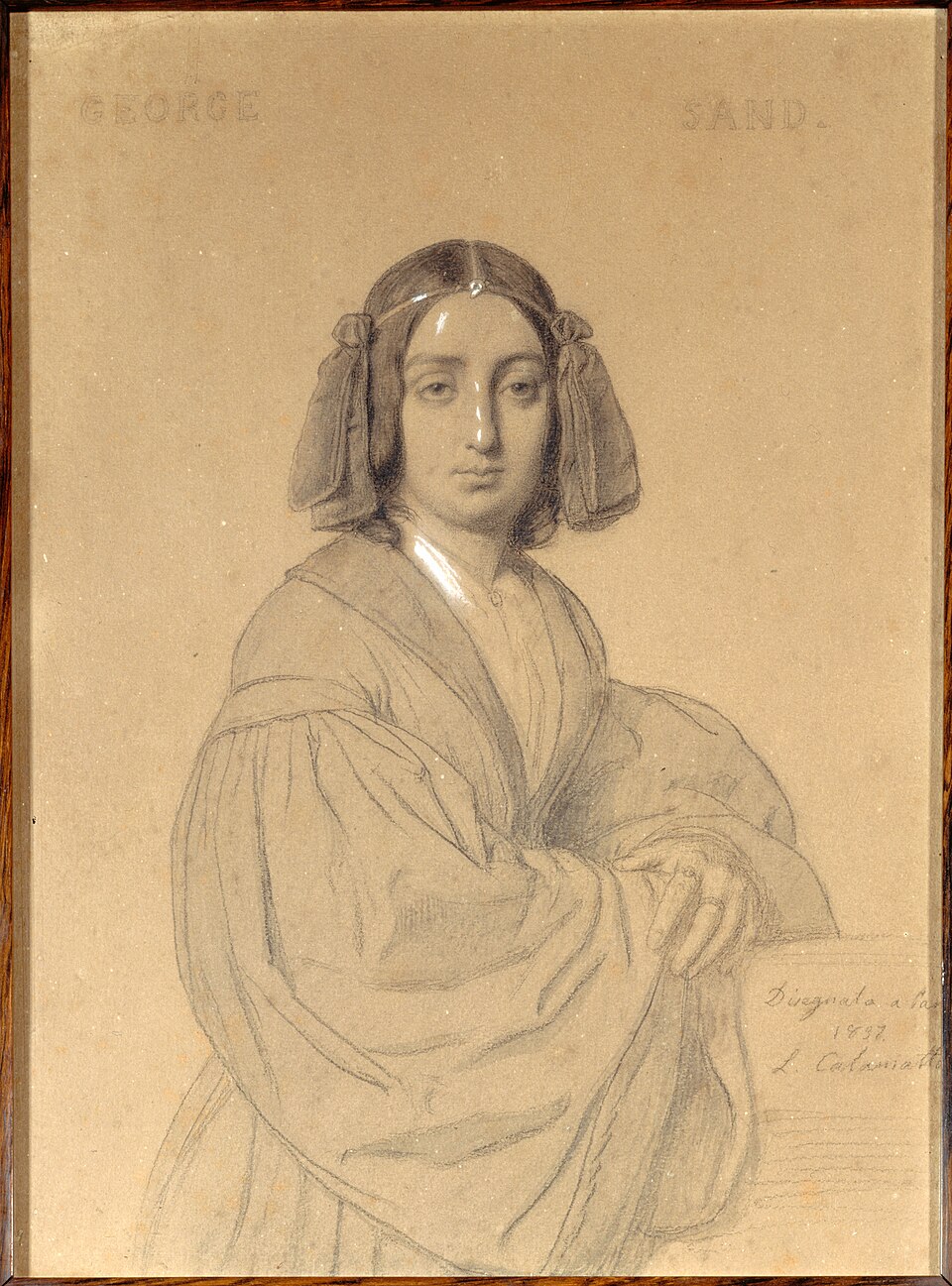
My dear Gustave, you who know what a page costs, imagine what it costs a woman to dare a signature. I was born Amantine Aurore Lucile Dupin, and that name did not open any bookseller's door. By taking George Sand, I did not lie: I gave myself the right to enter. And then I took trousers, a frock coat, sturdy boots that allowed me to go to the pit of theaters, where my sisters were not admitted. I was called a bluestocking, they sneered. But in men's clothing, I moved freely through Paris, at less expense, and I worked. All the rest, you see, was merely costume.
By taking George Sand, I did not lie: I gave myself the right to enter.
—They reproached you for the pipe, the cigar, those mannish ways. Did that wound you, or did you play along, dear master?
Neither, my troubadour. I smoked my clay pipe because it pleased me and helped me think, just as you use up your inkwell until dawn. That gentlemen took offense—that amused me for a long time, then wearied me. They wanted to make me a walking scandal; I was only a woman claiming the comfort that is thoughtlessly granted to any boy. The corset, the crinolines, I refused all that. I was not trying to provoke: I was trying to breathe. Cross-dressing was never my cause—it was merely the crude tool that a narrow-minded era forced me to use.
I was not trying to provoke: I was trying to breathe.
—Your rustic novels, La Mare au Diable, François le Champi, are born of this land I see through the window. How did this Berry come to your pen?
It did not come to me, Gustave: it made me. I grew up here, near La Châtre, in the patois of plowmen and spinners. A champi, in our region, is a foundling—the word existed before my book, I only listened to it. When I write peasant life, I am not inventing a drawing-room Arcadia: I am recreating evening gatherings, sowings, songs I have heard a thousand times. You, who weigh every word of Normandy, understand me. La Mare au Diable came from a plowing seen one autumn morning. My Berrichons are not shepherds from a clock: they are my neighbors.
My Berrichons are not shepherds from a clock: they are my neighbors.
—Yet you idealize these peasants, they say. To me, who tracks human stupidity, confess: do you embellish the world on purpose?
I own the silver lining, and I defend it to you, my dear pessimist. You see foolishness everywhere, and you are often right; I choose to also show the dignity of a miller's wife who takes in an abandoned child. That is not lying, it is illuminating another side. In La Petite Fadette, my wild girl emancipates herself through intelligence and courage, not by chance. I wanted the reader, even a bourgeois one, to feel the value of a humble life. They think me naive; I am merely obstinate in believing that humanity marches, even stumbling. You paint the fall; I insist on painting the next step.
You paint the fall; I insist on painting the next step.
—When I came here, I saw your study lit in the dead of night. How do you work, dear master, to produce so many pages?
You have caught my true face, my friend. I rise late, around noon, because I write when the house sleeps. The day belongs to others: walks, herbarium, visitors, granddaughters in the garden. But around midnight, I withdraw, take my quill, my blue paper, and cover twenty pages before dawn, sustained by coffee. It is not inspiration, it is a worker's discipline. You, who spend a week on a sentence, scold me for going so fast. But each has his night work: yours chisels, mine irrigates. The essential thing is never to let the lamp go out.
It is not inspiration, it is a worker's discipline.
—And that little puppet theater where you made me laugh one evening—what does this play mean to you?
You remember it, then! That evening, Delacroix laughed like a child, and Dumas fils applauded our puppets. My son Maurice carves the heads, I sew the costumes, and we put on entire shows in our little theater. They think it is frivolous entertainment; for me, it is the workshop of fiction with bare hands. Giving a voice, a gesture, a destiny to a piece of wood—is that not exactly what we do on paper? Nohant is not only my home, it is my creative hearth, where friendship and work merge. You, my friends, are its living material. Without you all, the ink would dry.
Giving a voice, a gesture, a destiny to a piece of wood—is that not what we do on paper?
—You rarely speak of Majorca. That winter, in 1838, with Chopin at the Carthusian monastery—what were you seeking there, dear master?
Sun for a sick man, Gustave, and silence for two artists. We left full of hope for the Charterhouse of Valldemossa. Frédéric composed some of his most beautiful preludes there, while I wrote my Un hiver à Majorque. The nature was of a grand and serene beauty. But the rain, the villagers' mistrust of this unblessed couple, the cough that worsened—all wore down our dream. I learned there what it is to watch over a fragile being in a hostile land. Nearly nine years bound us afterwards; that winter was its radiant dawn and already its first shadow.
That winter was its radiant dawn and already its first shadow.
—Watching over a man of genius, caring for him, listening to him compose—did you not sacrifice your work to his, dear master?
I have often been told so, and that is to know me poorly. I never stopped writing, even at Frédéric's bedside; my pen and his advanced under the same roof, each in its own night. To love a creator is not to efface oneself, it is to make room without losing oneself. I kept Nohant, raised my children, published novel after novel during those years. Sacrifice, my troubadour, would have been to renounce my own voice out of devotion; that I never did. I gave much, yes, as one gives to those one loves. But the woman speaking to you tonight has never laid down her pen at anyone's feet.
To love a creator is not to efface oneself, it is to make room without losing oneself.
—In 1848, you wrote bulletins for the government. I, politics disgusts me. What did you really hope for from that Republic?
I hoped for everything, my dear skeptic, and I knew the fever of great mornings. After the fall of Louis-Philippe, I believed we were finally building a more just society, where the people would no longer be a crowd but an actor. I wrote, advised, mingled with the Fourierists and their dreams of phalanstery. Then came the coup d'état of 1851, and Louis-Napoleon extinguished the lamp. I withdrew to Nohant, less out of discouragement than disgust at the betrayals. You mock my enthusiasms, but I prefer to have been mistaken in believing in man than to have been right in not believing in him. That is my faith, and I do not wish to be cured of it.
I prefer to have been mistaken in believing in man than to have been right in not believing in him.
—Our letters always come back to this: you the optimist, I the disillusioned. Deep down, dear master, where does this obstinate hope come from?
It comes from life itself, Gustave, from everything I have seen born and reborn. I have lived through a coronation, three revolutions, a war, and France is still standing, battered but alive. You write me your anger at the world's stupidity; I answer you with my confidence, and this disagreement is the sweetest bond between us. I hold that humanity marches, even stumbling, toward a better future. It is not blindness: it is a decision. To despair would be easier, I know, and perhaps more distinguished. But what is the use of writing if one does not believe that a reader, somewhere, will become better for it?
What is the use of writing if one does not believe that a reader, somewhere, will become better for it?
This imaginary interview was generated by artificial intelligence from sources documented in George Sand's profile. It dramatises what the figure might have said based on what we know about them, but does not constitute attested historical testimony. For primary sources and factual documentation, refer to the full profile.