Imaginary interview with George Sand
by Charactorium · George Sand (1804 — 1876) · Literature · 6 min read
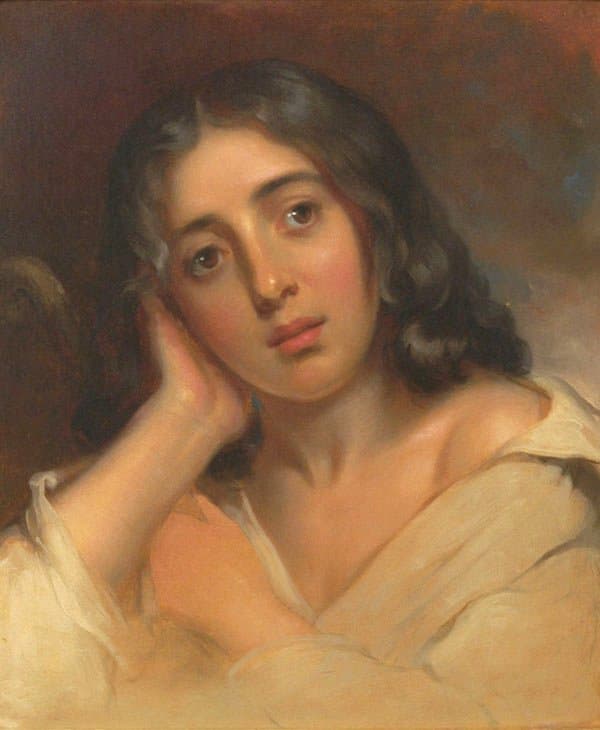
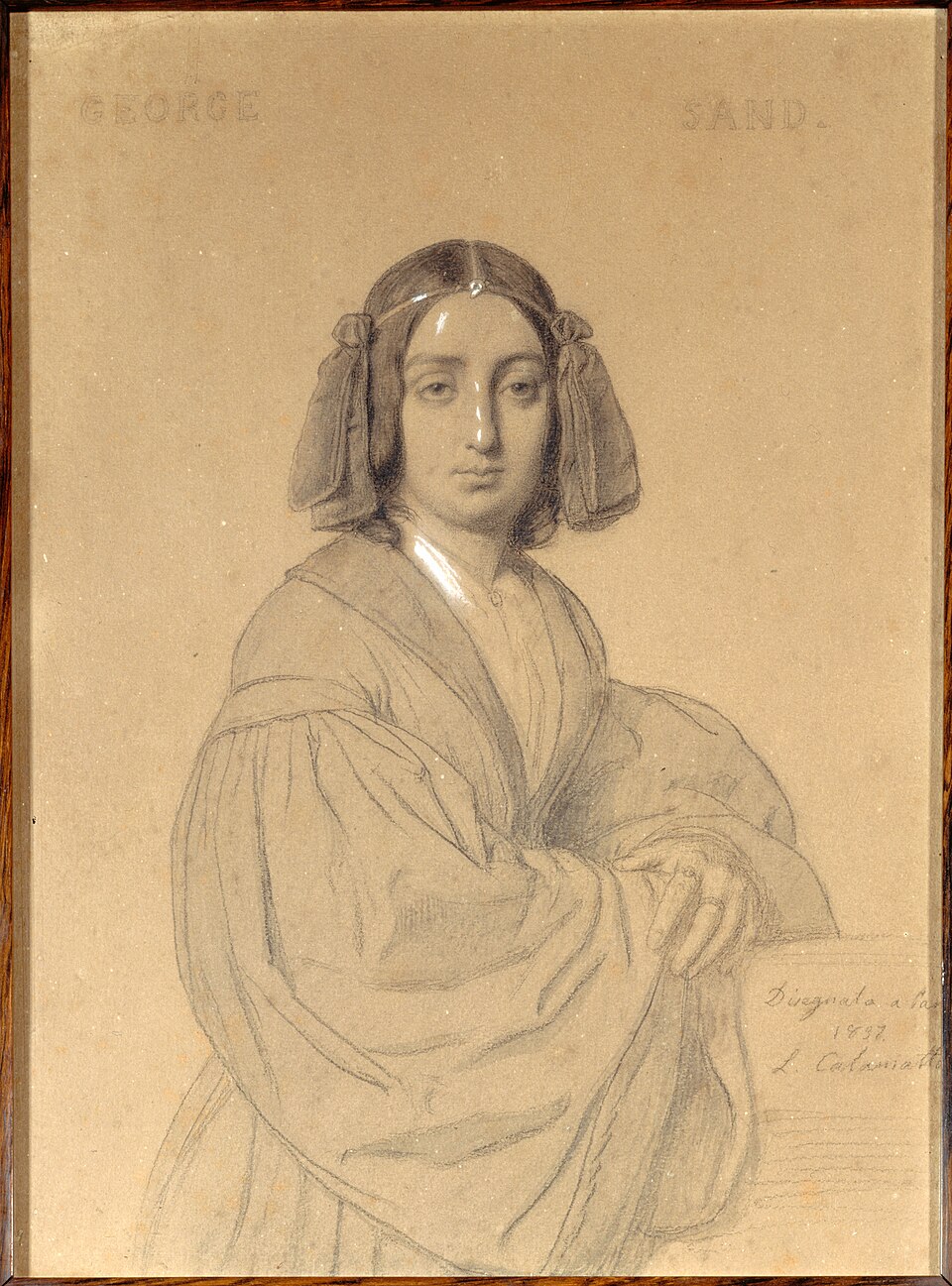
Nohant, an autumn evening in 1873. The lady of the house receives us in her study cluttered with herbariums and blue sheets, an extinguished pipe resting near the inkwell. Outside, the Berry park drifts to sleep; upstairs, the little puppet theater awaits the children. George Sand speaks softly, in the grave voice of a storyteller who fears neither men nor words.
—How did you become George Sand, you who were born Amantine Aurore Lucile Dupin?
They did not publish me; they tolerated me. In 1832, when Indiana came out, I understood that a man's name opened doors that were shut in the face of a Dupin de Francueil. The gentlemen of the reviews laughed at the bluestockings, those women who dared to hold a pen as if holding a stolen scepter. So I took this short, hard name, without lace: George, without an s, so it would be mistaken for nothing. Indiana, my heroine imprisoned in her marriage, I had written her inside me before writing her on paper — you know, she suffered in silence, and that silence itself made her stronger against pain. That name was not a mask. It was a key.
A man's name opened doors that were shut in the face of a Dupin de Francueil.
—Did you expect the scandal that followed your first books?
The scandal, you see, is never in the book: it is in the eye that reads it. After Indiana came Lélia, in 1833, and then they cried fire. Because a woman spoke of desire, of spiritual quest, of what burns in the depths of souls without asking permission from the Church or the husband. I was called many names. But I do not write to please the salons that swoon behind their fans; I write because ink flows from my fingers like blood from a happy wound. When you left your husband in 1831 to live by your pen in Paris, you already learned that respectability costs more than freedom, and that it yields less.
The scandal is never in the book: it is in the eye that reads it.
—Why did you choose to wear trousers and a frock coat on the streets of Paris?
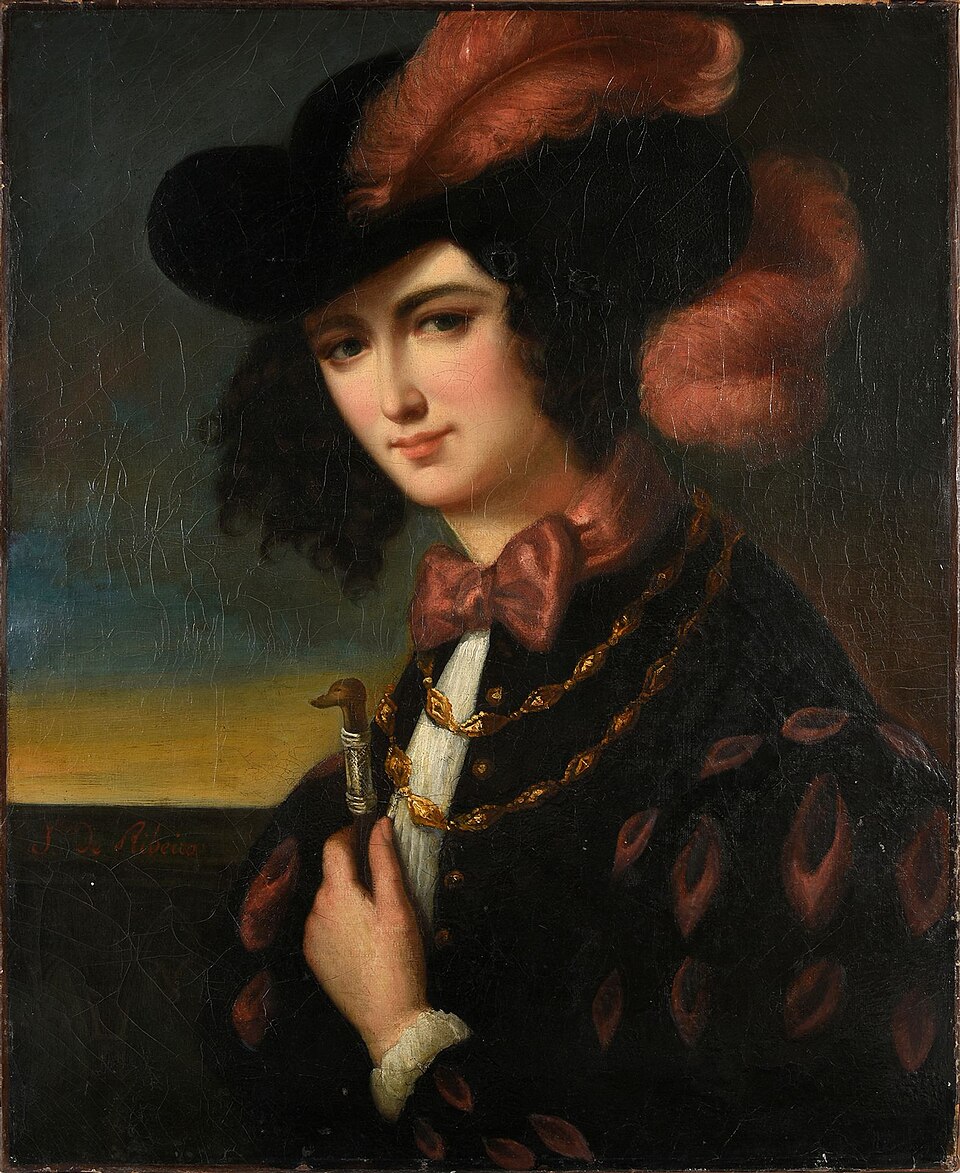
Out of reason above all, believe me. In Paris, a skirt drags in the mud, a boot wears out in eight days, and the theater pit is forbidden to you if you wear crinoline. So I requested the prefectural authorization — for one was needed, at that time, for a woman to dress as a man — and I put on the frock coat, the waistcoat, the sturdy boots. Suddenly I walked fast, I went everywhere, I saw plays from the pit like any student. The cross-dressing was for me neither provocation nor ball costume: it was a pair of boots that lasted the winter and a freedom that cost almost nothing. People cried scandal; I calculated what I saved on fabric.
Cross-dressing was a pair of boots that lasted the winter.
—You were much criticized for your pipe and cigars. What did you answer to those critics?
That smoke does not distinguish the sex of the one who inhales it. I have smoked the clay pipe and the cigar for a long time, openly, and that seems more monstrous to my contemporaries than many crimes. They accept that a lady faints; they do not accept that she takes a puff while thinking. Yet it is there, in that little ember, that I find the pause between two pages. At Nohant I work at night, and the pipe keeps the inkwell company better than any confidant. What society calls impropriety, I simply call my habits — and I have never understood why my pleasure should beg forgiveness from the eyes of others.
—What remains of that winter spent in Majorca with Frédéric Chopin?
The cold, first. One imagines Majorca as a warm Eden; we found the Charterhouse of Valldemossa icy, beaten by rains, and Frédéric coughed there heartbreakingly. And yet. While he composed at his piano that arrived by boat — some of his most beautiful preludes were born within those damp walls — I wrote what would become A Winter in Majorca. The nature around us was of a beauty that made one doubt evil: so beautiful, so grandiose, so serene, that it seemed impossible that the wickedness of men could find a place there. We shared nearly nine years, from 1838 to 1847. They ask me if it was happiness; I answer that it was life, which is rarer and harder.
They ask me if it was happiness; I answer that it was life.
—How did you experience writing alongside a musician as demanding as Chopin?
Like two craftsmen in the same workshop, each bent over their material. He would search for a note for hours, rework it, almost weep over it; I advanced by whole pages, without crossing out, at my table. Our rhythms did not always match — a novelist produces, a musician purifies. At Nohant, where he came in summer, I left him at his piano in the silence I imposed on the entire household, and in the evening we would meet again, he exhausted from a measure, I from a chapter. I watched over his fragile health like that of a child of genius. Those years taught me that loving an artist means also protecting the work he carries, sometimes against himself.
—Tell us about your nights. They say you wrote until dawn.
The day belongs to the world; the night belongs to me. I rise late, around noon, because my real day begins when others blow out their candle. Then I settle in my study, I dip the goose quill into the inkwell, and I cover my blue paper with about twenty pages before the sky pales. This colored paper, I kept it all my life; my manuscripts are blue as others are white. That discipline has nothing to do with capricious inspiration: it is a trade, a regularity of a peasant woman who gets up to milk. My life is yours, all of you who read me — that is what I wrote in my Story of My Life, and every night I believe it more.
The day belongs to the world; the night belongs to me.
—Where does this regularity of writing come from?
From necessity, which is the best of muses. When you have left a husband and intend to feed your children with your pen alone, you do not wait for genius to deign to descend: you sit down and write. Twenty pages a night, sometimes more, coffee within reach to sustain the hollow hours. I was blamed for producing too much, as if fertility were a vice in a woman. But Consuelo, my vast novel of a singer, The Devil's Pool, my other books — none of that would have been born from a lazy pen. I have always thought that talent without labor is a promise never kept. My inkwell knows more about me than my lovers.
Talent without labor is a promise never kept.
—Your Berry returns constantly in your work. Why this attachment?
Because that is where I was placed as a child, at Nohant, after my father's death, and that land raised me better than any tutor. The Berri peasants taught me a language, a patois where a foundling in the fields is called a champi — hence the title François le Champi. I wanted to paint this rural life not as a picturesque misery, but as a dignity. The Devil's Pool, Little Fadette: these are my rustic novels, where a marginal young girl emancipates herself through intelligence. They are read in schools today, it seems. I am prouder of that than of many scandals: bringing my Berry plowmen into the memory of children, that is a sweet revenge.
I wanted to paint rural life not as a picturesque misery, but as a dignity.
—And those famous puppet shows at Nohant, what place did they hold in your life?
A serious place, do not laugh. In the little theater I had built, my son Maurice carved the articulated puppets and I sewed their costumes, stitch by stitch, like a mother dressing her wooden children. My friends came to attend these performances — Delacroix, good Flaubert, Dumas fils — and we improvised comedies that would put many Parisian stages to shame. It was at night, after dinner, in that big house always full of artists and laughter. They think I was only an austere pen; they forget that I spent entire evenings giving voice to dolls for the pleasure of seeing my guests laugh. Gravity never prevented joy from holding court at my home.
—At the time of taking stock, what faith remains in you after so many years of writing and struggle?
A stubborn faith, almost peasant-like. I saw Charles X fall in 1830, the Second Republic born and die, I saw the Empire and war — enough falls to discourage any hope. And yet I persist. I wrote it to my dear Flaubert, who is gloomier than I: I prefer to believe that humanity marches, even stumbling, toward a better future. That is my faith, and I do not want to be cured of it. At Nohant, watching my vegetable garden grow and my granddaughters grow up, I tell myself that peoples are like seasons: they freeze, they seem dead, and then one morning everything turns green again. No one will take that certainty from me. It has kept me standing more surely than all my novels.
Peoples are like seasons: they freeze, they seem dead, and then everything turns green again.
This imaginary interview was generated by artificial intelligence from sources documented in George Sand's profile. It dramatises what the figure might have said based on what we know about them, but does not constitute attested historical testimony. For primary sources and factual documentation, refer to the full profile.