Kids interview George Sand
by Charactorium · George Sand (1804 — 1876) · Literature · 5 min read
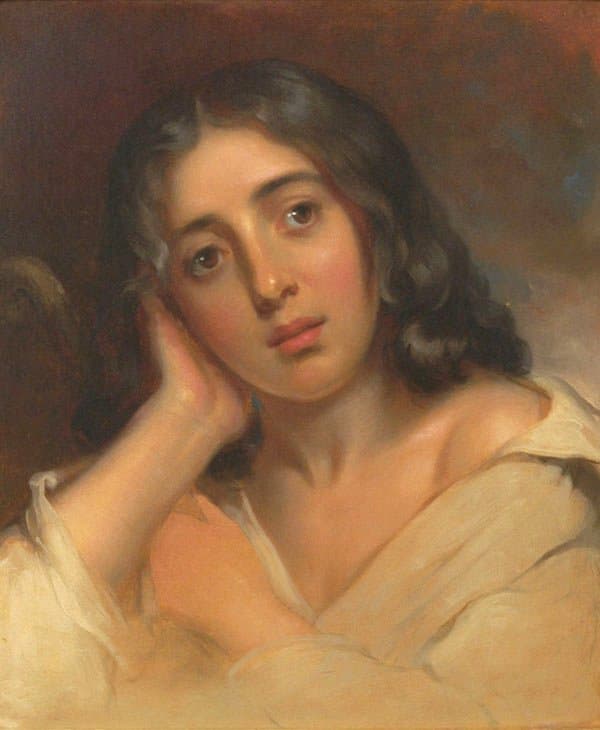
Two young visitors, on a field trip, pushed open the gate of the Nohant estate. An old lady in a work smock was waiting for them under the trees, a pipe in her hand. She smiled at them: "Come closer, my dears, and ask me all your questions."
—Is it true that George Sand isn't your real name?
You're right, my child. My real name was Amantine Aurore Lucile Dupin. Long, isn't it? But imagine: in my day, when a woman wrote a book, people made fun of her. They found it ridiculous. So in 1832, for my first novel Indiana, I chose a man's name: George Sand. That way, people read my book without knowing who I was. And you know what? It worked right away. People liked the story before judging the lady who wrote it. That was my little trick.
People read my book before judging the lady who wrote it.
—And what did people call you, those who made fun?
Ah, they had a very nasty word: bluestocking. It was an insult. It meant 'a woman who meddles in writing and thinking, when it's not her place.' Can you imagine? They thought it was almost shameful for a girl to hold a pen. It hurt me, but it didn't stop me. I told myself: if my stories touch people's hearts, then the insult doesn't matter. Indiana was precisely the story of a woman trapped in a sad marriage, dreaming of freedom. I wrote for all those whom they wanted to silence.
They insulted me, but my stories still touched hearts.
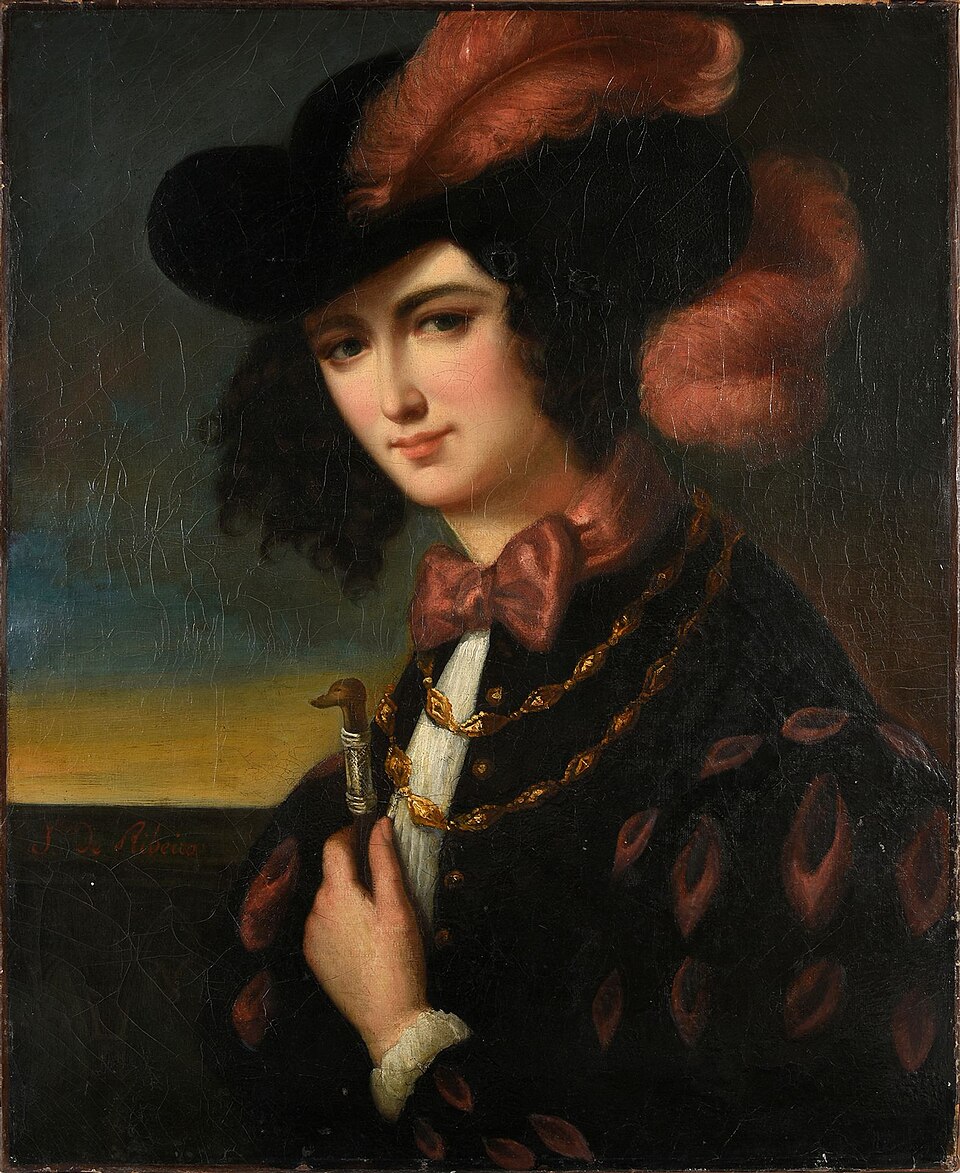
—They say you dressed like a man. Why did you do that?
It's true, and it caused quite a scandal! In Paris, in the 1830s, I wore trousers, a frock coat, and a big hat. Want to know why? First, men's clothes were sturdier and cheaper — and I wasn't rich. But above all, in trousers, I could walk anywhere, even in the mud, even to the theater. Imagine: the best seats in the theater, the pit, were forbidden to women! In men's clothing, I got in without any problem. I even needed official permission to dress that way. Strange times, weren't they?
In trousers, I could walk anywhere, even where women weren't allowed.
—And is it also true that you smoked a pipe? A woman!
Yes, my dear, I smoked a pipe and sometimes even a cigar! And I can tell you, people were shocked. For a lady in my time, it was considered very improper, almost vulgar. A woman was supposed to be demure, discreet, perfumed. But me, you see, I didn't like being told what I should be. I smoked my clay pipe calmly, chatted with my friends, and never mind the stares. I believe one is only truly free the day one stops fearing what people will say.
One is only truly free the day one stops fearing what people will say.
—Here at Nohant, what was it like? Did you live alone?
Oh no, never alone! Nohant was my grandmother's house, in the Berry, and I spent almost my whole life there. Imagine a big house always full of people: painter friends, musicians, writers who would stay for weeks. The great Eugène Delacroix painted, Frédéric Chopin played the piano in the drawing room. We talked, we laughed, we walked in the park. In the evening, we all dined together at a generous long table, with good goat cheeses and local stews. It was a nest of artists, and I was its happy hostess.
Nohant was a nest of artists, always full of laughter and music.
—I heard about a puppet theater. Was it for children?
For children, yes, but for grown-ups too! I had a small theater built at Nohant, and we put on puppet shows. Do you know who made them? My son Maurice carved the little wooden heads, and I sewed all their costumes by hand. We invented funny stories, imitated voices. And my guests — famous writers like Flaubert or Dumas fils — would sit quietly to watch, like kids! Believe me, a very serious gentleman laughing at puppets is the loveliest sight there is.
A serious gentleman laughing at puppets is the loveliest sight there is.
—One winter you went far away with a musician. Who was it?
Ah, you mean Frédéric Chopin, the pianist. We loved each other for almost nine years. And yes, in the winter of 1838, we went far away, to an island called Majorca, to an old Valldemossa Charterhouse — a former monastery. It was beautiful but freezing, and Frédéric, who was often ill, coughed a lot. Yet, you know what? It was there, in that cold, that he composed some of his most beautiful piano pieces. While he played, I wrote a book about that journey, A Winter in Majorca. The piano on one side, my pen on the other.
The piano on one side, my pen on the other: that was our winter in Majorca.
—Was it hard to take care of someone sick far from home?
Yes, my child, it was tiring and sometimes I was afraid. Imagine: we were on an island, far from everything, in a large stone building with no real heating. The wind came under the doors. Frédéric was fragile, and I watched over him like a mother, while writing at night. But I regret nothing. When you love someone, you learn patience. The nature there was so beautiful, so calm, that we almost forgot the hardships. Taking care of those we love is also a way of loving life. I learned that on that island.
Taking care of those we love is also a way of loving life.
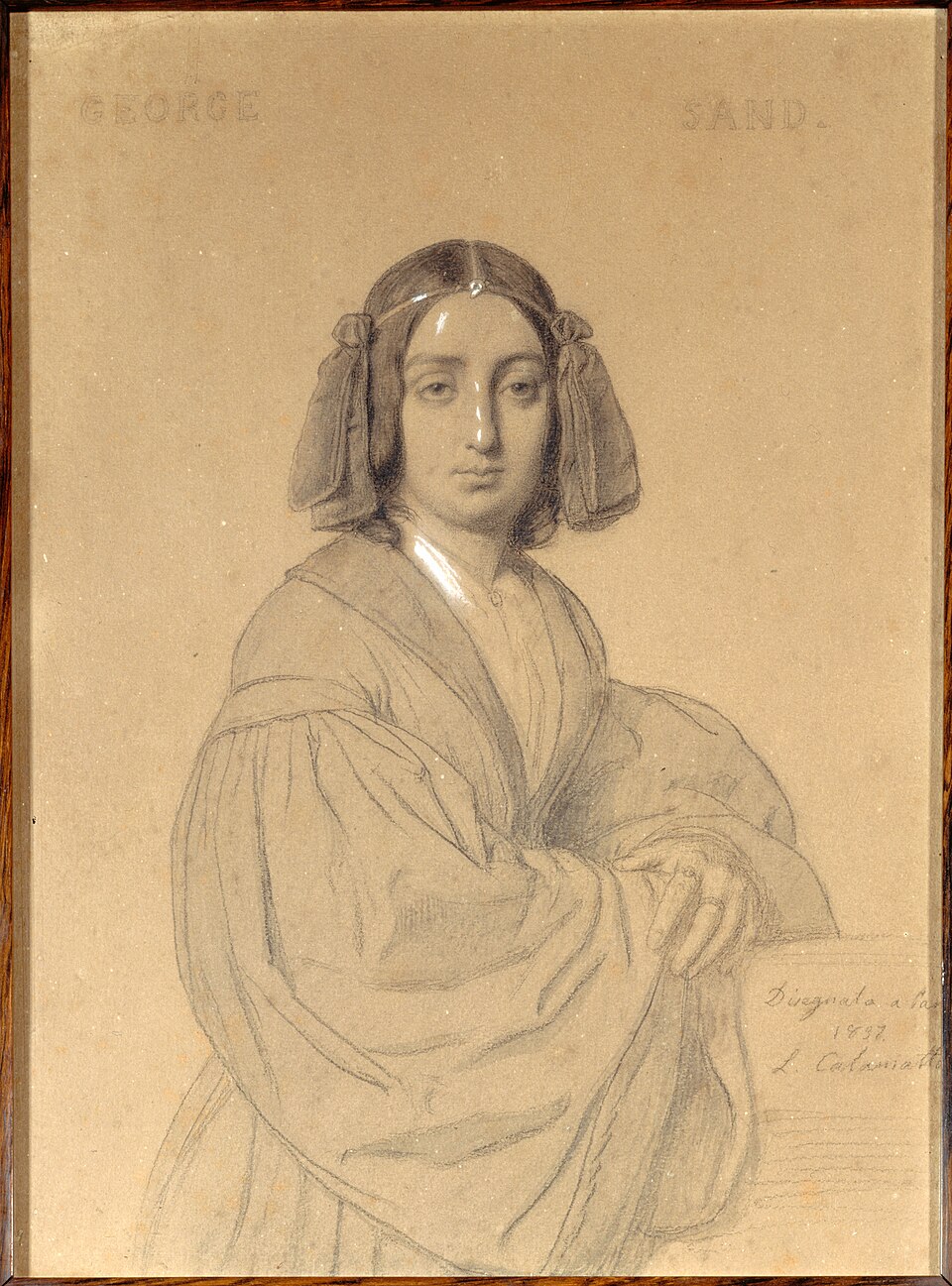
—What are your books about? The countryside?
A lot, yes! I loved my Berry so much, this region around Nohant. So I wrote novels called 'rustic,' meaning they tell the story of peasants, fields, mills. My favorite, perhaps, is The Devil's Pool — they still study it in school today. And then Little Fadette, the story of a girl they thought was odd but who was brave and smart. I wanted to show that simple country people had beauty and dignity, as much as the fine gentlemen of the city. For me, a shepherd was worth as much as a baron.
For me, a shepherd was worth as much as a baron.
—There's a strange word in one of your titles: 'Champi'. What does it mean?
Good question! You have a keen ear. Champi is a word from my local dialect, Berrichon — the way people speak in the Berry. It means 'a foundling,' a little one taken in because they had no parents. My novel François the Foundling tells the story of just such a child, raised by a good miller's wife. I liked keeping these old country words in my books, so they wouldn't be lost. When I walked in the fields with my herbarium, collecting flowers, I also listened to the peasants talk. Their words were a treasure.
The old words of the countryside were a treasure I wanted to save in my books.
—If people remember you today, what would you like them to keep in mind?
What a lovely question to end with. You know, I wrote my whole life, sometimes twenty pages in a single night, on my blue paper, by candlelight. But what I'd like you to remember is not the number of my books. It's this: never let anyone tell you what you have the right to be because of your birth, your sex, or your village. I was told a hundred times 'a woman cannot.' And I wrote, traveled, loved, smoked my pipe anyway. Believe in your freedom, my child. It is stronger than all the mockery.
Never let anyone decide what you have the right to be.
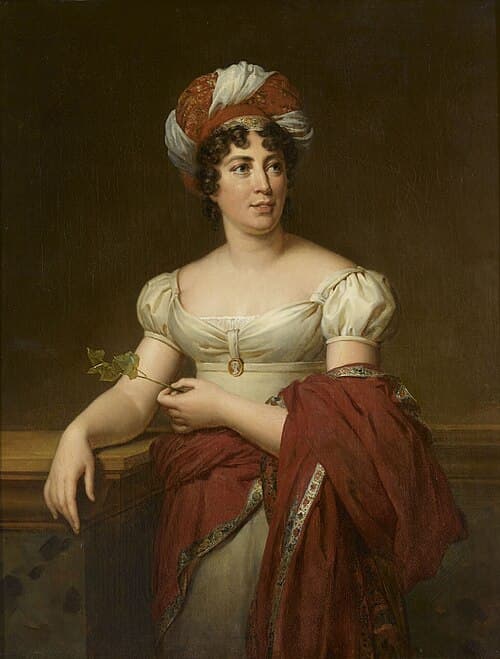
This imaginary interview was generated by artificial intelligence from sources documented in George Sand's profile. It dramatises what the figure might have said based on what we know about them, but does not constitute attested historical testimony. For primary sources and factual documentation, refer to the full profile.