Kids interview Giuseppe Verdi
by Charactorium · Giuseppe Verdi (1813 — 1901) · Music · 4 min read
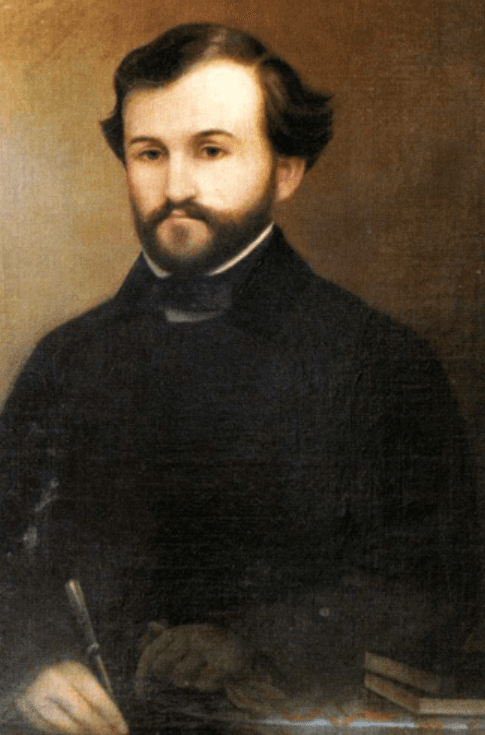
Two young visitors of twelve push open the door of a large villa surrounded by fields. An old gentleman with a white beard awaits them, seated by his piano. He smiles: the children's questions amuse him more than those of journalists.
—What was your home like when you were little?
You know, my child, I was born in a tiny village, Le Roncole, in 1813. Imagine a handful of houses in the middle of the countryside, not a city. My father kept an inn, and I used to play on the church organ. All my life, I remained a peasant at heart. I love the earth, the smell of the fields at dawn. Later, I bought a large farm at Sant'Agata, and I would inspect my stables at daybreak before sitting at the piano. You can be famous all over the world and still be a man of the land, you see.
You can be famous all over the world and still be a man of the land.
—How old were you when you were rejected from music school?
I was nineteen, in 1832. I applied to the Milan Conservatory, my heart pounding. And there, the examiners said no. Too old, supposedly. And my way of playing the piano lacked technique. Imagine your disappointment: the door to the career you dream of is closed in your face. I could have given up entirely. But no. I took private lessons in the city, and I worked, and worked some more. Much later, I became one of the most performed musicians in the world. I never forgot that closed door.
A closed door is not a closed life.
—Is it true you almost gave up music forever?
Yes, and it was the hardest thing in my life. Between 1838 and 1840, I lost my little daughter, then my little son, then my wife Margherita. In less than two years, my entire family. Imagine the silence in the house. I no longer wanted to write a single note. Nothing made sense anymore. And then a friend, the impresario Merelli, slipped a libretto into my hands, the story of Nabucco. At first I threw it on the table. But one evening, a page opened onto a chorus of slaves. The music came on its own. It saved me.
Music came to fetch me when I no longer wanted to live.
—How did you feel on the night of your first great success?
Ah, the night of Nabucco, at La Scala in Milan, in 1842! Imagine a hall packed to the rafters. In my opera, there is a chorus of slaves dreaming of their lost homeland: Va, pensiero. When it rose, the audience began to cry. And they wanted to hear it a second time, right then and there! Can you imagine: me, the boy who had been rejected ten years earlier, they were carrying me to the heavens. That night, I understood that a melody could touch thousands of hearts at once. It was overwhelming.
A single melody can touch thousands of hearts at once.
—Why did people shout your name in the street?
Ah, that's a funny story! In my time, Italy was not a unified country: it was divided, and part of it was dominated by the Austrians. People dreamed of a single free kingdom. Now my name, V-E-R-D-I, came in handy. Patriots shouted “Viva VERDI!”. For them, those letters meant Vittorio Emanuele Re D'Italia — long live the King of Italy! Austrian soldiers just heard “long live the composer,” so they couldn't stop people. My name had become a secret password. A whole nation sang my tunes.
My name had become a secret password to dream of a free country.
—Did the authorities want to ban your operas?
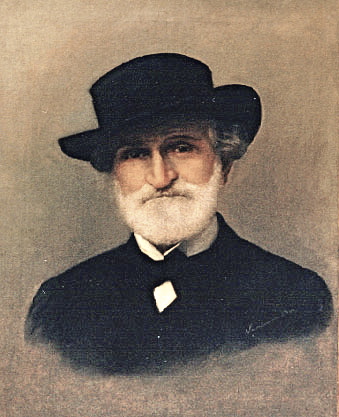
Yes! The Austrian censorship watched everything. For Rigoletto, in 1851, they found the story too dangerous, because it showed a cruel and lying prince. Imagine being told: “your show is banned, change everything.” So we would negotiate, move the action, change the characters' names, just to be able to perform. And the opera ended up triumphing in Venice, with an aria that everyone still hums, La donna è mobile. Music, you see, goes where soldiers cannot follow. You can censor a word, but never a melody that gets stuck in people's heads.
You can censor a word, never a melody that gets stuck in people's heads.
—What did you eat, and what did you do during your days at home?
At home, in Sant'Agata, nothing fancy! Pasta, risotto, cheese, the wine and oil from my own lands. I hated grand, pretentious banquets. I got up very early, a peasant habit, and I would go see my fields and my animals before anyone else. Then a few intense hours at the piano. In the afternoon, I answered mountains of letters. In the evening, I read — Shakespeare, especially — by the fire with my wife Giuseppina, a former singer of great talent. I fled the elegant salons of Milan. The silence of the countryside was worth all the applause.
The silence of my countryside was worth all the applause in the world.
—Why did you still write operas at almost 80?
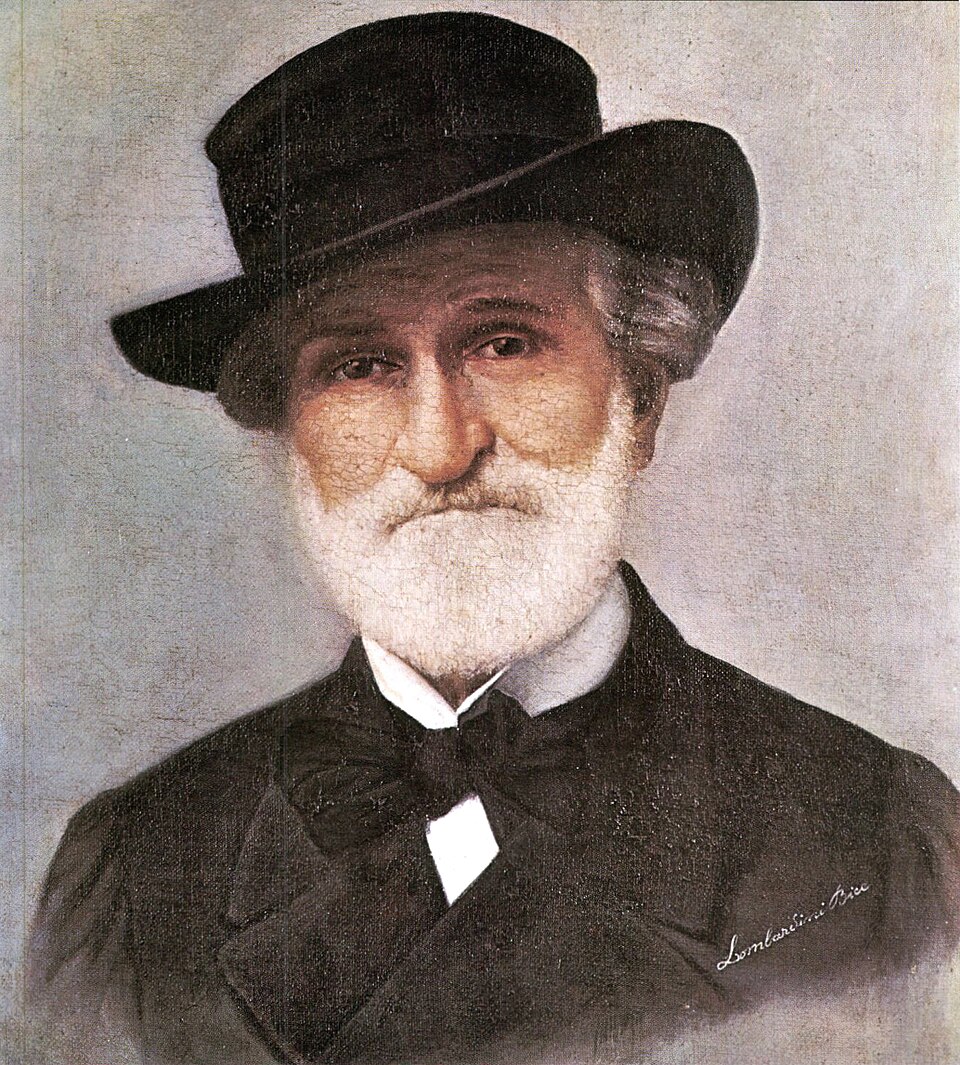
Many people thought I was finished, too old to create. Well, at 74, I wrote Otello, then Falstaff at 79! For that, I had a wonderful friend, the poet Boito, who wrote magnificent texts for me drawn from Shakespeare. My publisher Ricordi said I laughed while composing, that I had become young again. And it was true! Imagine an old gentleman with a white beard having fun like a child at his piano. Music gave me back the age of twelve. As long as you create, my child, you never truly grow old.
As long as you create, you never truly grow old.
—What is the most important thing for a beautiful story in music?
Truth, my child, always truth. For Aïda, I wrote to my publisher that I wanted splendid sets, but above all I wanted truth in the characters' feelings. You see, you can copy reality exactly, but it is even more powerful to invent it. My Falstaff never really existed, and yet he seems more alive than many people you meet. When a character weeps or laughs on stage, the audience must weep and laugh with them. If you feel nothing, then the music has lied.
Inventing truth is more powerful than copying reality.
—What did you want to leave to musicians after you?
Many musicians end their lives alone and poor, with no one to help them. I had known a closed door when I was young. So I wanted to open a big one. With my money, I built a rest home in Milan for elderly musicians in need: the Casa di Riposo per Musicisti. That is where I rest today. You know what I used to say? That it was my most beautiful work, even more beautiful than my operas. Because an opera moves a hall for one evening. But a roof for those who are forgotten warms entire lives.
An opera moves a hall for one evening; a roof for the forgotten warms entire lives.
This imaginary interview was generated by artificial intelligence from sources documented in Giuseppe Verdi's profile. It dramatises what the figure might have said based on what we know about them, but does not constitute attested historical testimony. For primary sources and factual documentation, refer to the full profile.