Imaginary dialogue between Giulio Ricordi and Giuseppe Verdi
by Charactorium · Giuseppe Verdi (1813 — 1901) · Music · 5 min read
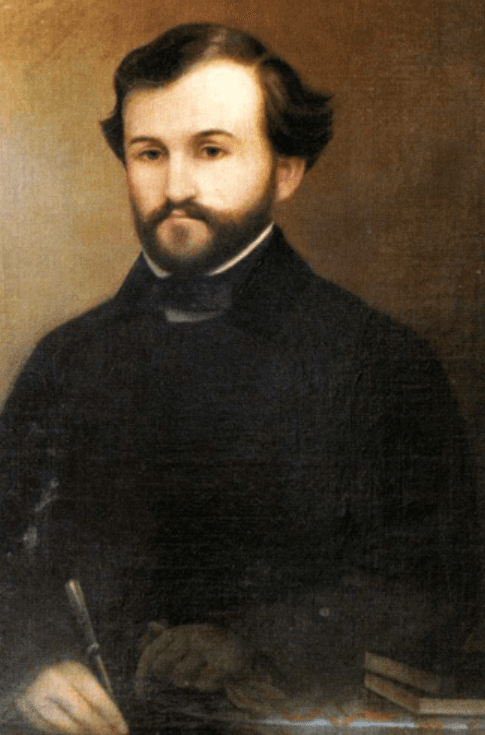
It is in the grand salon of the Villa Verdi in Sant'Agata, on an autumn afternoon in 1893, that Giulio Ricordi meets the maestro again. The English garden rustles beyond the windows, and on the piano lie a few scribbled sheets of Falstaff, premiered that spring. They have known each other for decades — the publisher has accompanied every triumph, every silence, every telegram — and Ricordi has come that day to seek the man behind the national composer, at the hour when the latter believes his work is done.
—Maestro, you and I have corresponded so much, but we never spoke of 1840. How did you survive the loss of Margherita and your two children?
You touch there, Giulio, the place I have never shown anyone. In less than two years I buried my little girl, my son, then my Margherita Barezzi. I was twenty-six and I thought God himself was against me. I wanted to burn everything, flee music, never write another note. It was your predecessor, the impresario Merelli, who forcibly slipped the libretto of Nabucco into my hands one evening when I no longer wanted to hear anything. I reopened those pages out of spite, and the verse of the slaves seized me by the throat. Music took hold of me again despite myself. They say Nabucco made me a composer; the truth is, it kept me from dying.
They say Nabucco made me a composer; the truth is, it kept me from dying.
—Before that grief, there was the humiliation of 1832: the Milan Conservatory rejected you. Did you bear a grudge?
Too old, they said, and piano playing without technique. Imagine, Giulio: they sent home a boy from Le Roncole who knew only one thing, composing. At the moment, pride bleeds. But I stayed in Milan, studied privately, worked like a peasant tilling his land, without noise and without respite. In hindsight, I believe that rejection saved me from a certain academicism. I was taught none of the rules to be broken; I broke them out of happy ignorance. Closed doors, you see, forced me to carve my own path. I no longer hold it against anyone — I may owe them my freedom.
Closed doors forced me to carve my own path.
—Do you remember the evenings at La Scala when the audience would repeat Va, pensiero like a watchword? Did you intend that?
Intended, no. Foreseen, perhaps. In 1842, I wrote the song of an exiled people weeping for their lost homeland; the Milanese heard their own, under the Austrian boot. The chorus was encored, men wept in the hall. I had not calculated that, Giulio, but I did not disown it. When they shouted Viva VERDI in the streets, I understood that my name was being used to shout something else: Vittorio Emanuele Re d'Italia. The Austrians could not censor enthusiasm for a musician without making themselves ridiculous. My music became a cry they could not silence. I did not make Italy; but Italy sometimes sang with my voice.
I did not make Italy; but Italy sometimes sang with my voice.
—Austrian censorship hounded Rigoletto. You, my friend, who publish my scores, do you know what those struggles cost me?
You know better than anyone, since your presses printed the versions that had to be negotiated. For Rigoletto, in 1851, the Venetian censors refused to show a debauched king — that of Victor Hugo. We had to scheme, move the court, change names, save the essential: the curse, the hunchback, the sold daughter. I fought line by line as one defends a trench. What does it cost? Sleepless nights, rage, the feeling that an ignorant official holds your pen. But I never gave in on the heart of the work. La donna è mobile, I hid it until the last rehearsal so that it wouldn't be whistled in the streets before the premiere. Cunning, sometimes, is the sister of art.
An ignorant official holds your pen, and you defend each line like a trench.
—You once wrote to me, for Aida, wanting “truth in the characters.” What do you mean by this truth you pursue?
That, Giulio, is the only word that matters to me. For Aida, in 1871, the Khedive wanted gold, elephants, magnificence — and I gave it to him, I don't sneer at splendor. But I kept telling him I wanted above all the truth of situations and hearts. What good is a painted palace if the woman suffering in it does not truly suffer? I want people to forget the cardboard Egypt and believe in that slave torn between her father and her lover. Splendor without truth is just a fairground decoration. It is truth of character that makes a man weep a thousand miles from the Nile.
Splendor without truth is just a fairground decoration.
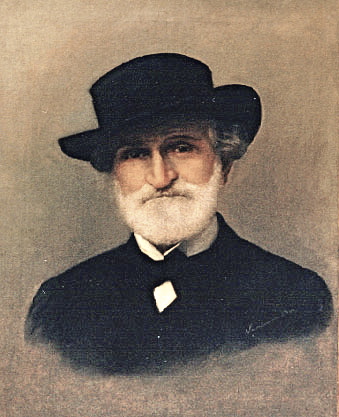
—You once confided to me, regarding Falstaff, that “inventing reality” was better than copying it. Isn't that a troubling paradox?
The paradox is only apparent, my dear. Copying reality is the work of a clerk; inventing reality is the work of a creator. That fat knight of Shakespeare's, that Falstaff, never existed — and yet he is truer than most living people I meet. That is the mystery of theater: an invented character can carry more human truth than a faithful portrait. That is why I hound my librettists, Piave yesterday, Boito today, to make a line ring true. One false word in the libretto, and the whole edifice lies. Music clothes the text, but it is the true character that makes it breathe. I invent men to better speak of men.
Falstaff never existed, and yet he is truer than most living people.
—When you received me here at Sant'Agata, I found you in boots, returning from the fields. Where does this peasant stubbornness come from?
From my birth, Giulio, and I am not ashamed of it. I wrote to you once about Clara Maffei: I am a peasant, raised in the countryside, and I have never been able to shed certain rough edges that shock society people. Here, I rise before dawn, inspect my stables, my crops, my workers. This land I bought in 1848, I designed it myself, its ponds, its plane-tree avenues. They think me a maestro; I feel as much a landowner as a musician. The fields give back what the theaters take from me. Glory is a capricious diva; a well-drawn furrow, on the other hand, never lies.
Glory is a capricious diva; a well-drawn furrow, on the other hand, never lies.
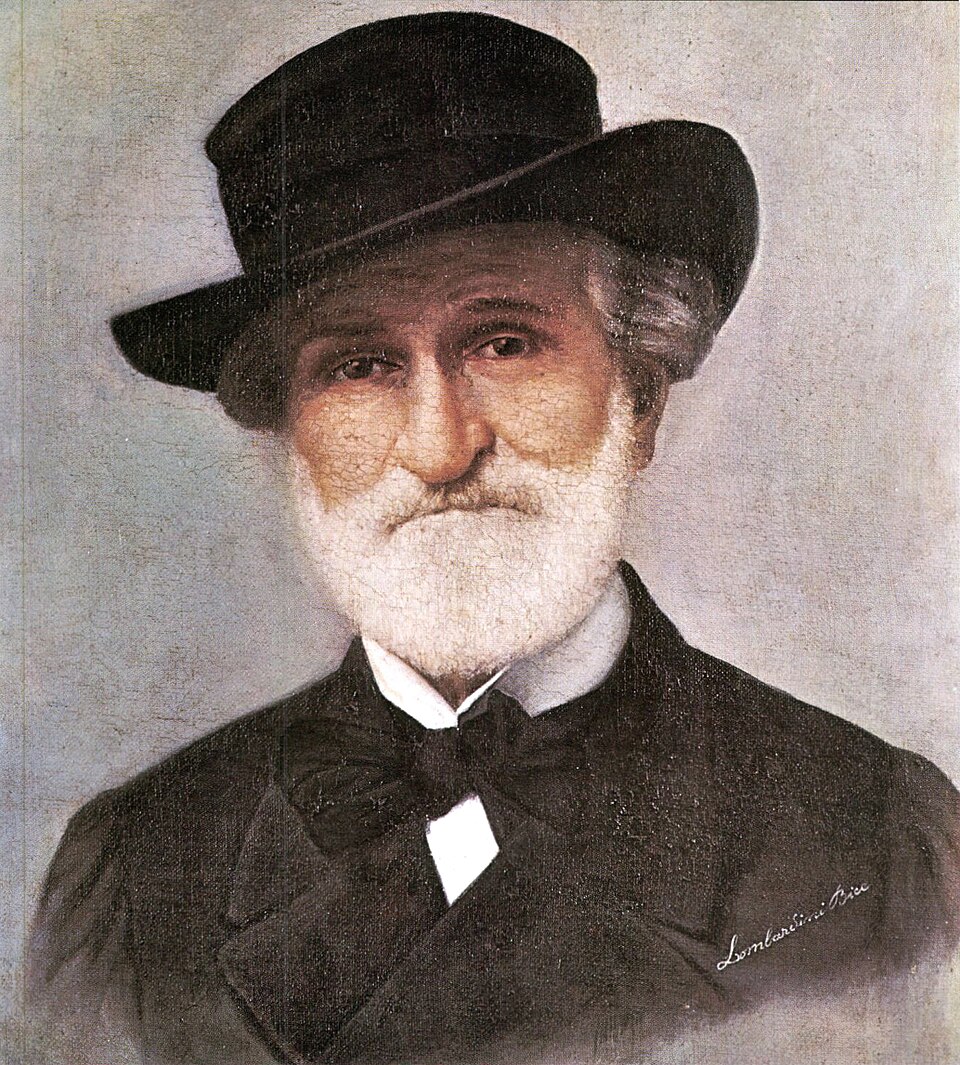
—The salons of Milan constantly invite you, and you decline. Why flee a world that only wants to celebrate you?
Because that world tires me, simply. There is much talk and nothing is said; one is admired and not known. I prefer my frugal table, my pasta, the wine from my own vines, the conversation of my Giuseppina. In the evening, I reread Shakespeare or Schiller rather than listen to the flattery of a countess. You know me: I decline your invitations as I do others, and you don't hold it against me, because you know that in the fields and at the piano I am most myself. Worldliness wears down the soul without nourishing it. I prefer my plane trees to the chandeliers of La Scala — except on opening nights, of course.
One is admired and not known.
—After Aida, you fell silent for sixteen years. What brought you back to the work table for Otello in 1887?
I thought I was finished, Giulio, and I had accepted it. Old, retired, laden with honors — why take up the pen again? It was Boito who tempted me, with that libretto of Otello so beautiful it burned my fingers. You played the matchmaker with a diplomat's patience, I haven't forgotten. I resisted, I played the bear, then I gave in: the jealousy of that Moor, his downfall, reminded me that I had not said everything. At over seventy, I rediscovered a fever I thought extinct. One does not leave the theater by decision; one leaves it when it leaves you. And it had not yet left me.
One does not leave the theater by decision; one leaves it when it leaves you.
—You saw me compose Falstaff this spring, my friend. You who watched me every morning, tell me: what did you glimpse in this old man of 79?
You said it better than I could, Giulio — you found me working each morning with a joy you had never seen in me, laughing as I composed, become young again. It's true. All my life I wrote dramas, blood, tears; and now at the end I allowed myself laughter. That fat Falstaff, that boastful, ridiculous lover, it is I finally mocking life and myself. I composed as one plays, with nothing left to prove, freer than ever. Tutto nel mondo è burla — everything in this world is a joke. What finer last word for a man who has wept so much in music? I ended where one should begin: laughing.
I ended where one should begin: laughing.
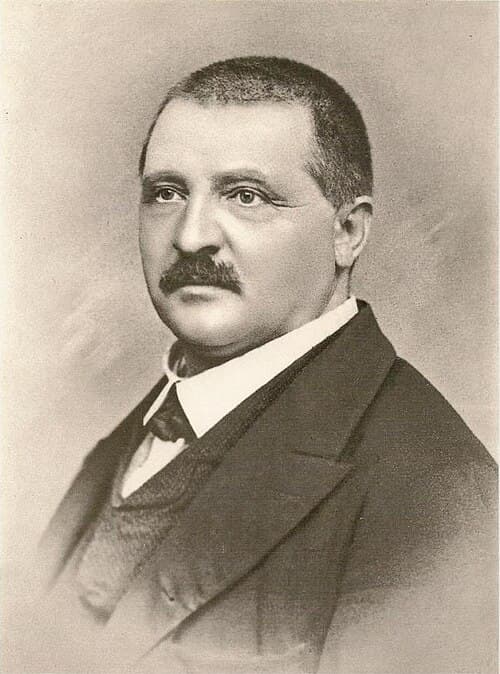
This imaginary interview was generated by artificial intelligence from sources documented in Giuseppe Verdi's profile. It dramatises what the figure might have said based on what we know about them, but does not constitute attested historical testimony. For primary sources and factual documentation, refer to the full profile.