Imaginary interview with Giuseppe Verdi
by Charactorium · Giuseppe Verdi (1813 — 1901) · Music · 6 min read
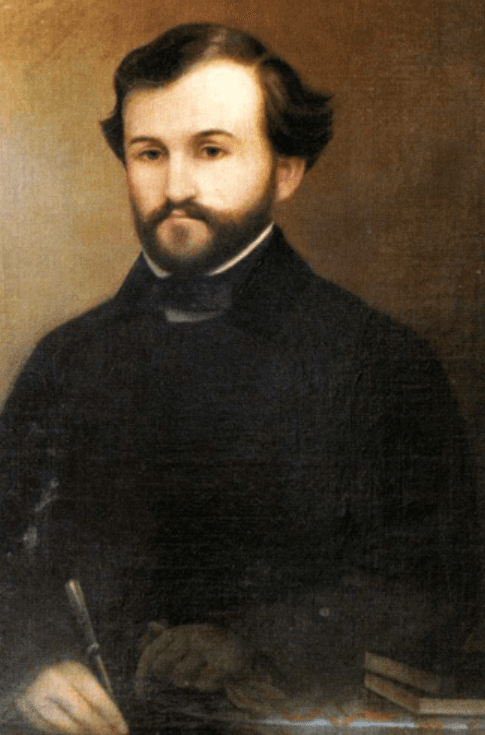
October, at the Villa Verdi in Sant'Agata. The master returns from the stables, his boots still heavy with the soil of Piacenza, and settles near a piano where a scored-over score lies. Outside, the plane trees he planted himself rustle; he agrees to talk, on condition that he is not taken for anything other than a peasant who writes music.
—How did you come to want to abandon music entirely?
Between 1838 and 1840, death entered my home three times. First my little Virginia, then my Icilio, then my Margherita Barezzi, my wife, my childhood companion — taken in less than two years. I had signed a comic contract, Un giorno di regno, and I had to write jokes while my loved ones were being buried: the opera failed, and I with it. I swore never to touch a staff again. It was impresario Merelli who forced my hand, one winter evening, by slipping a libretto into my pocket. Back home, I threw it on the table: it opened by itself to a page. Va, pensiero, sull'ali dorate. The song of exiled slaves. I had not wanted to read, and yet I had already begun to hear.
I had sworn never to touch a staff again — and already I heard the song of the slaves.
—What happened on the opening night of Nabucco at La Scala?
It was at La Scala, in 1842, and I was trembling more than ever. When the chorus attacked Va, pensiero, that lament of the Hebrews weeping for their lost homeland, I saw something I had never seen in a theater: men weeping without shame. They demanded an encore — something then almost forbidden by the Austrian police, who feared encores like riots. But how could one refuse a people who recognize themselves in the pain of another people? That evening, I did not immediately understand that my life had just turned. I thought I had written an opera; the Milanese, however, had heard a prayer that belonged to them. The land of Lombardy was under foreign boot, and my slaves sang for it.
—It is said that your very name became a political rallying cry. Do you remember that?
Ah, the famous Viva VERDI. The patriots wrote it on walls, shouted it at theater exits, and the Austrians saw it as enthusiasm for a composer — they could not decently forbid it. But each letter hid another name: Vittorio Emanuele Re D'Italia. They hailed a king while pretending to hail a musician. I did not invent this game, I endured it, half flattered, half worried. For I am not a tribune; I am a man who arranges notes. Yet when the Kingdom of Italy was elected in 1861, and Cavour asked me to sit in the first Parliament, I did not dare refuse. Music sometimes carries you where you never thought to walk.
They hailed a king while pretending to hail a musician.
—Composing under Austro-Hungarian censorship, what did that concretely require of you?
Take Rigoletto, in 1851, in Venice. I had taken Victor Hugo's drama, Le Roi s'amuse — a debauched king, a deformed jester, a curse. The censorship at La Fenice cried out: one does not show a sovereign as a libertine on stage! I had to transform the king of France into a vague Duke of Mantua, rename, relocate, trick. But on the essentials I never yielded: the jester remained deformed, the hump, the father's curse, the sack in which his daughter lies. I defended that step by step, letter after letter. A libretto is not a decoration to be planed down to please officials; it is the framework of the drama. Cut out a beam, and the whole edifice lies. La donna è mobile was sung in Venice even before the premiere: the street, for its part, does not censor itself.
—You insist on being seen first as a peasant. Why do you hold so strongly to that?
Because it is true. I once wrote to my friend Clara Maffei: "I am a peasant... I was raised in the countryside and I have never been able to rid myself of certain rustic habits, a certain roughness of manners that perhaps shocks society people." Here, at Sant'Agata, I rise before dawn, as at Le Roncole where I was born. I go to see my fields, my animals, I give orders to the workers before sitting at the keyboard. The salons of Milan bore me to death; their flattery rings false, and I prefer the smell of rain on my plane trees. This park, these ponds, these avenues, I designed them myself. People think I am a grand lord of music: I am only a man who needs to feel the earth under his soles to hear a melody.
I need to feel the earth under my soles to hear a melody.
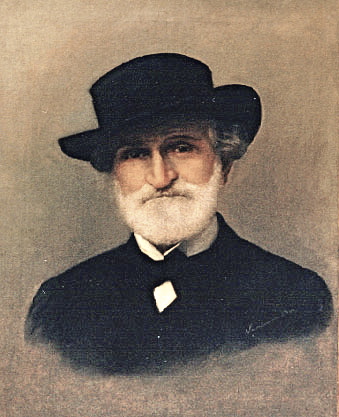
—What does this double life bring you, between the soil in the morning and the score in the afternoon?
Balance, and distrust of my own glory. In the morning, the earth does not lie: a poorly pruned vine gives bad wine, period. That teaches me patience and humility that theaters would make me lose. In the afternoon, I answer mountains of letters — my publisher Ricordi in Milan harasses me with telegrams, theaters demand, singers negotiate. In the evening, I read: Shakespeare, Schiller, Hugo, my true masters, and I discuss with my Giuseppina Strepponi, who was a singer and judges better than anyone the worth of a phrase. Cultivating one's vegetables and correcting a cabaletta, deep down, is the same gesture: you pull out the weeds so that the essential can grow. The magnificence of the stage is worth nothing without that landowner's discipline.
—With Aida in 1871, you reached the grandest spectacle imaginable. How did you reconcile splendor and truth?
Aida, the Khedive had commissioned it for his opera house in Cairo, in that great Orientalist movement that then fascinated all Europe. They expected from me trumpets, elephants, processions — grand opéra in all its pomp, in the French manner of Meyerbeer. Well, I wrote to my publisher what I still believe: "I want the opera to be grand, splendid; I want magnificence in the sets and costumes, but above all I want truth in the situations and in the characters." There is my entire art in one sentence. Splendor without truth is only a painted set that flakes. Aida the slave, torn between her father and her lover, is worth a thousand triumphal marches. Pomp is the garment; the bleeding human heart beneath, that is opera.
Splendor without truth is only a painted set that flakes.
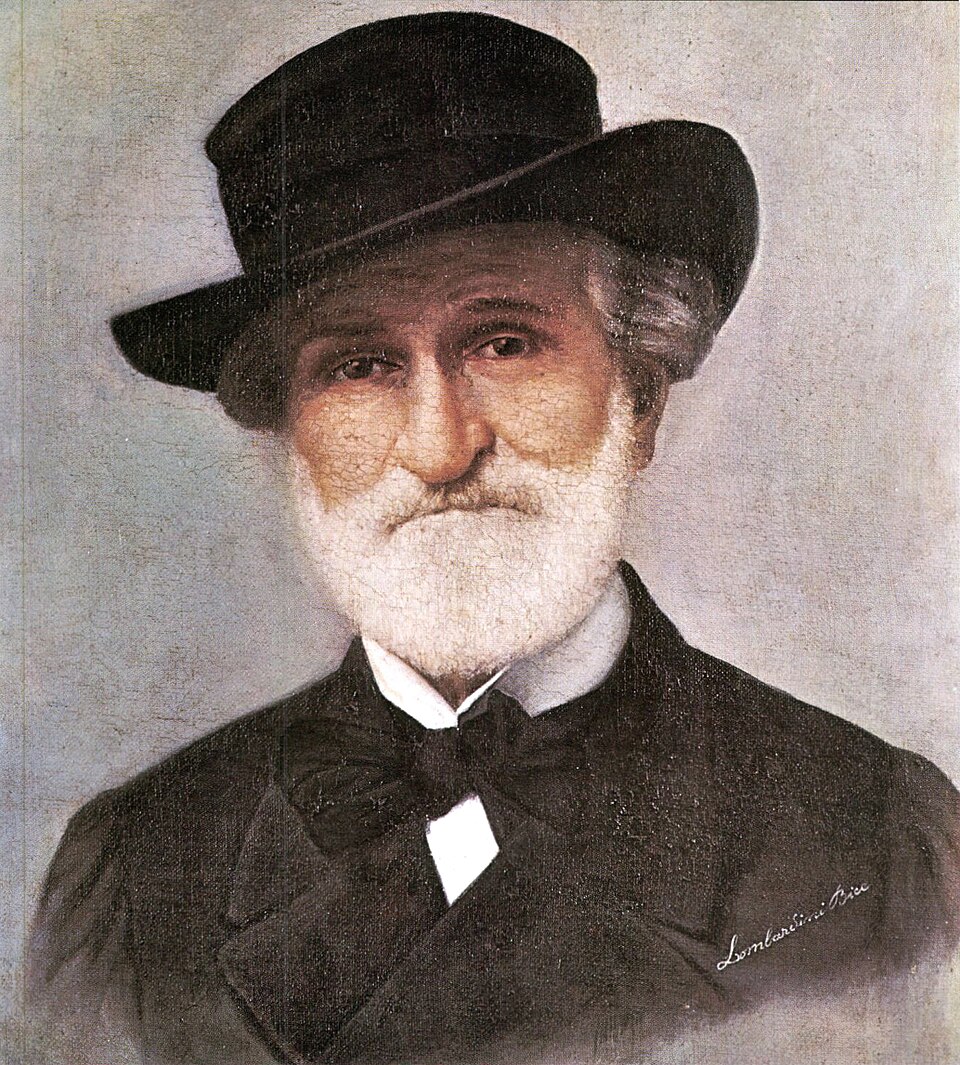
—After sixteen years of silence, what brought you back to opera with Otello in 1887?
Shakespeare, always him, and the obstinacy of one man: Arrigo Boito, my librettist. I thought myself retired, an aging landowner busy with his harvests, and gradually a libretto of Otello of such rare beauty was slipped to me that my hand took up the pen again despite myself. Jealousy, that poison that turns a hero into a beast — that is a subject for an old man who has seen everything. When the work premiered at La Scala in 1887, people spoke of a new Verdi, freer, darker, freed from the old formulas of my youth. That is because I had stopped trying to please to seek only the true. At my age you no longer cheat: you no longer have time. I no longer wrote for posterity or for glory, only for that dramatic truth I have pursued since Nabucco.
—How could a man of nearly eighty compose a comedy as youthful as Falstaff?
I do not know myself, and that is all the better. At 79, I wrote my only comic opera, Falstaff, after that fat lying knight of Shakespeare. My old Ricordi claims that I laughed to myself while composing, in the morning, become young again. Perhaps. I must say that this Falstaff never existed and yet he is truer than truth: inventing reality, you see, is far better than copying it. All my life I set tears to music; at the end, I wanted to laugh, and to make laugh. Tutto nel mondo è burla — everything is a joke. The whole world ends with a great pirouette, and an old peasant from Sant'Agata closes his theater with a burst of laughter rather than a sob.
All my life I set tears to music; at the end, I wanted to laugh.
—At the end of it all, what has music finally been for you?
Before the Senate of the Kingdom, I once said that music is a universal language, that it speaks to the heart of all men, without distinction of nation or rank. I believe that more than ever. My Va, pensiero made Lombards weep who had never read a line of Hebrew; my Requiem, written for the great Manzoni, moved unbelievers. Music goes where speeches fail. If I think of what will remain of me — an old man has the right to think of it — I do not ask that my name be remembered, but that they continue to sing. I also had built in Milan a rest home for musicians who have grown old and poor: that is, I believe, my finest work, one that no censorship can ever correct.
Music goes where speeches fail.
This imaginary interview was generated by artificial intelligence from sources documented in Giuseppe Verdi's profile. It dramatises what the figure might have said based on what we know about them, but does not constitute attested historical testimony. For primary sources and factual documentation, refer to the full profile.