Kids interview Golda Meir
by Charactorium · Golda Meir (1898 — 1978) · Politics · 5 min read
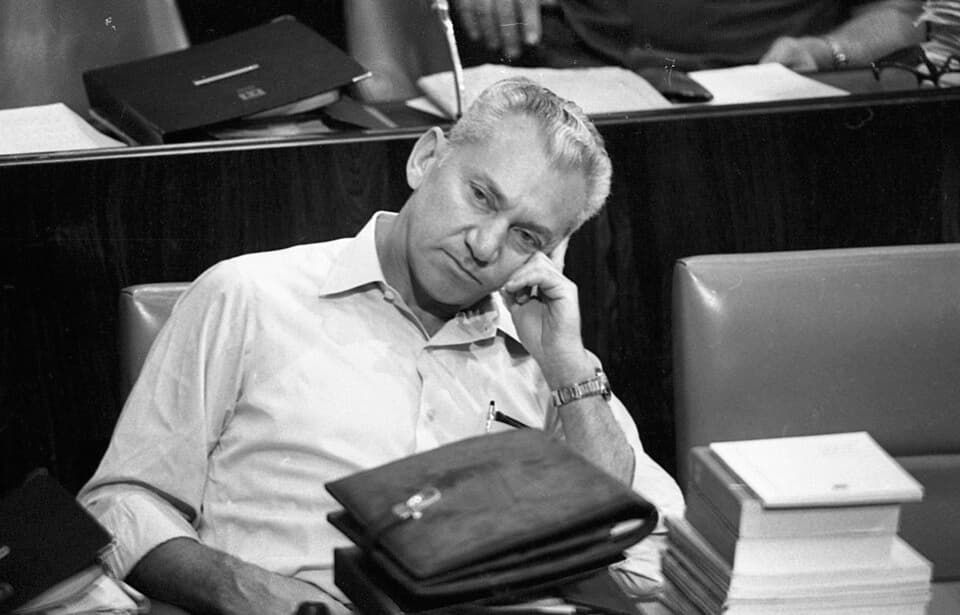
Two twelve-year-old students, visiting with their school field trip, sit across from a tired old lady who smiles. She puts her black handbag on the table, lights a cigarette, and tells them to come closer. "Ask me your questions, children. I've never been able to resist curiosity."
—Where were you born? What was it like when you were little?
I was born in Kiev, in 1898, into a very poor Jewish family. You know what still comes back to me today? The fear. My father would nail planks in front of the door. Imagine a street where men come to break, hit, burn Jewish houses, just because we were Jews. We called it a pogrom. I was your age, and I hid in silence. That fear never left me. It taught me one thing: a people without a home of its own can be driven out anytime. That is why, all my life, I wanted a country for my people.
A people without a home of its own can be driven out anytime.
—And then you went far away? What did you do for money?
Yes, my child. At eight years old, my family crossed the ocean to Milwaukee, in America. Can you imagine? A little girl who doesn't speak a word of English, in a brand new city. We had almost nothing. So with my sister, we sold ice cream in my mother's shop to earn a few coins. I wanted to study, to become a teacher, and that cost a lot. I remember the cold in winter, my hands frozen. But I loved school like one loves breathing. That's where I started dreaming out loud: to return to the land of my ancestors and cultivate it.
I loved school like one loves breathing.
—Is it true that before your country existed, you had to find money?
That is absolutely true. It was 1948, a few weeks before the birth of Israel. We wanted a state, but a state without weapons is a house without walls. So they sent me to America. I left with a small dress and my bag, no luggage. I spoke before Jewish families, city after city. I told them the truth: if you don't help us, we will die. And you know what? In a few weeks, I raised fifty million dollars. A huge sum. That money bought the guns that defended my people. I still tremble thinking about it.
A state without weapons is a house without walls.
—I heard you once disguised yourself. Is that a joke?
No, it's not a joke! Listen carefully. Before the war, I wanted to avoid it breaking out at all costs. So I dressed as an Arab woman, a long dark veil over my face, to cross the border in secret. Imagine: a night, a car, and me hidden under those fabrics, my heart beating very fast. I went to speak to King Abdullah of Jordan, in Amman. I begged him not to attack. But he replied that he could no longer back down. The war broke out anyway, on May 14, 1948. I cried. I had tried everything.
I had tried everything to avoid the war.
—If someone saw you on the street, what would they notice first?
My black handbag, probably. I never left it! And then my cigarette, which I lit even during important meetings. You know, I always dressed the same: a dark suit, flat shoes, my hair pulled back in a strict bun. Nothing pretty, nothing luxurious. Some found me stern. But it was a choice. I had lived on a kibbutz, a farm where everyone shared everything, where no one was richer than their neighbor. I kept that all my life. A leader covered in jewels forgets where she comes from. I wanted to remain an ordinary woman.
A leader covered in jewels forgets where she comes from.
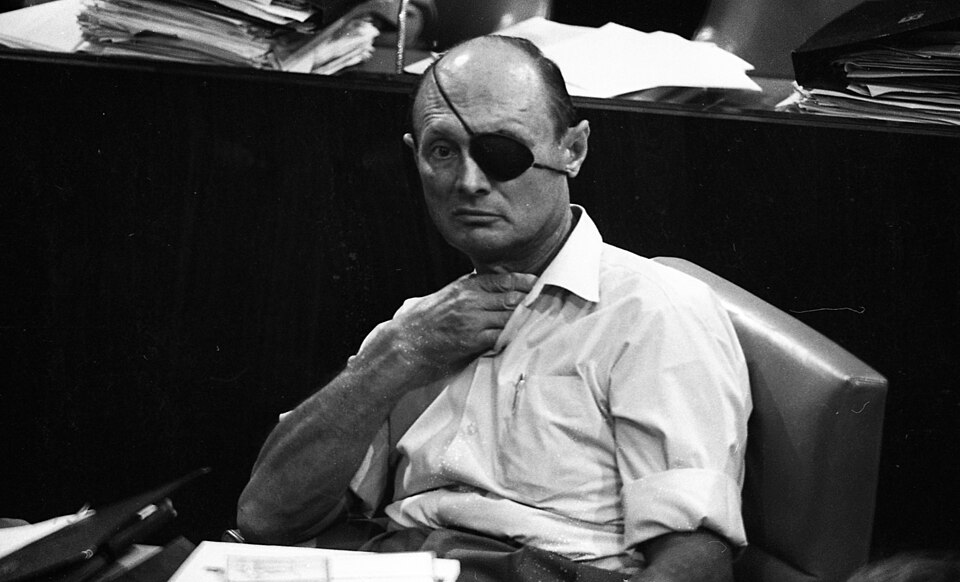
—Did you live in a big palace, like a queen?
Oh no, my child, not at all! I always lived in modest homes. When I became head of government, I did have an official residence in Jerusalem, but I still loved my own little apartment. Before, when I arrived in Palestine, I lived on the kibbutz, in a very simple room shared with other pioneers. At night, we heard jackals and the wind. It was hard, the ground was dry and arid. But I felt at home for the first time. I never missed luxury. What mattered was building, not possessing.
What mattered was building, not possessing.
—Is it true you made important decisions in your kitchen?
Yes indeed! Makes you laugh, huh? When I became head of government at 71, they called me "the grandmother of Israel." And I liked to gather my ministers not in a big cold office, but in my kitchen. I made the coffee myself, brought out the cakes, and served everyone. Imagine those serious men, around a small table, cup in hand, while we decided the fate of the country. I thought we talked more truly that way. No speeches, no stiff ties. Just people thinking together, like a family.
Around a coffee, serious men finally talk truthfully.
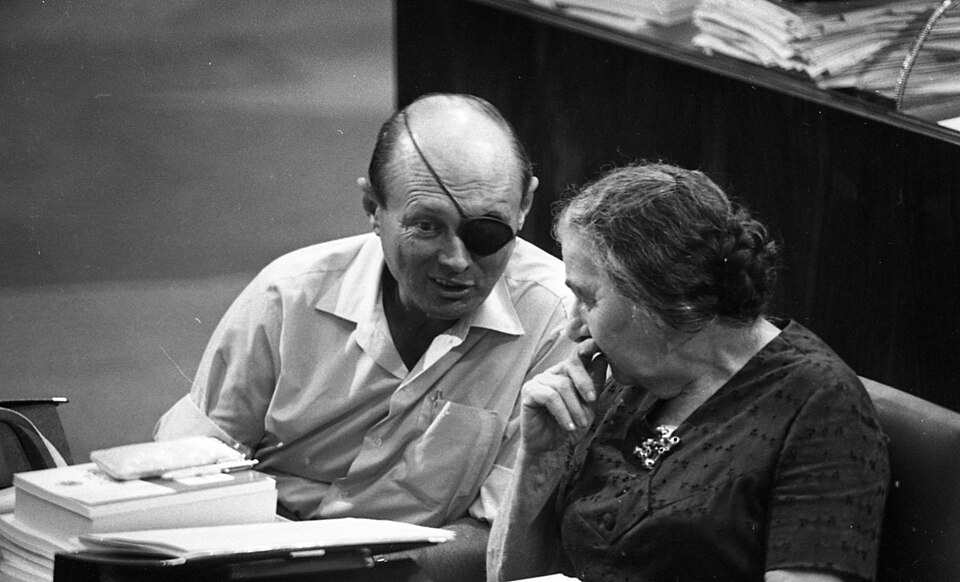
—You served the coffee yourself? But you were the leader, right?
Exactly, my child! Just because you're in charge doesn't mean you should think you're above others. Serving coffee to my ministers was my way of saying: here, we are all equal before the work. I got up very early, around 5:30 AM, read my newspapers and reports with my first cigarette. Then came the meetings, sometimes until late in the evening, in my kitchen. I cut short speeches that were too long—they annoyed me! I preferred a truth said in two words to a beautiful speech that says nothing. Power, you see, doesn't make you more important than others.
Being in charge doesn't make you more important than others.
—You experienced a war. What was the hardest moment?
The night of Yom Kippur, in October 1973. Yom Kippur is the holiest day for Jews, a great day of fasting. At 2 AM, I was woken up: Egypt and Syria were going to attack us by surprise. My generals wanted to strike first. But I hesitated. Imagine the weight on my shoulders: if I strike first, the whole world will say Israel is the aggressor. So I said no. We would wait for the first blow. It was terrible. Soldiers died because of that waiting. That decision, I carried it every day, until my death.
That decision, I carried it every day, until my death.
—Did you feel guilty? Did you stop working afterwards?
Yes, my child. A commission of inquiry examined our mistakes after the war. And even though it didn't really condemn me, in my heart, I felt responsible. I had written that I would carry that weight until my death. In 1974, I resigned. I no longer had the strength. You know, when you lead a country, you make decisions where there is no good answer, only less bad ones. That is the true burden of power. It is not glory, it is sleepless nights. But I do not regret having served my people. Never.
Leading is not glory, it is sleepless nights.
This imaginary interview was generated by artificial intelligence from sources documented in Golda Meir's profile. It dramatises what the figure might have said based on what we know about them, but does not constitute attested historical testimony. For primary sources and factual documentation, refer to the full profile.