Imaginary dialogue between Oriana Fallaci and Golda Meir
by Charactorium · Golda Meir (1898 — 1978) · Politics · 5 min read
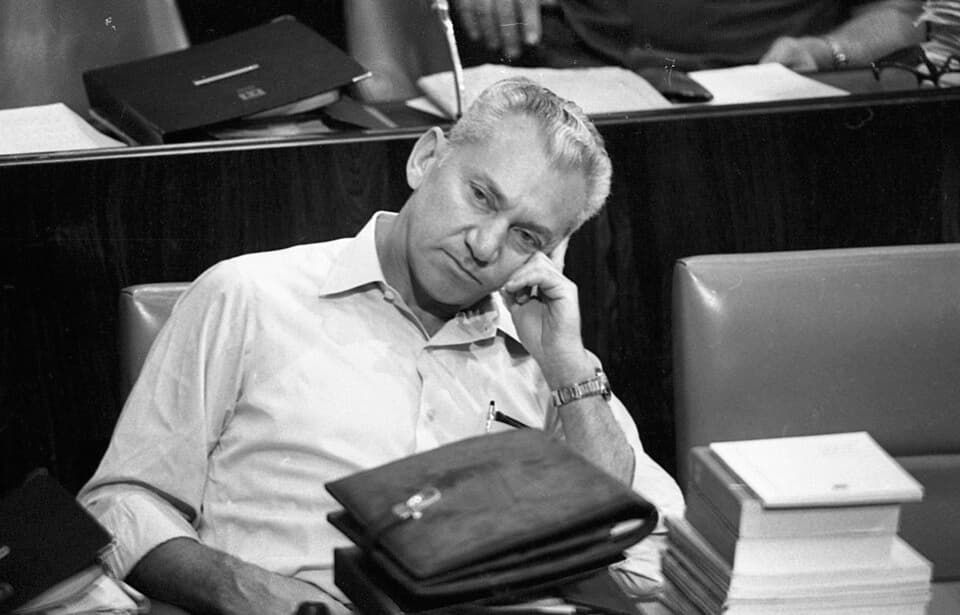
It is in the cramped little office in Jerusalem, at the end of 1973, that Oriana Fallaci meets Golda Meir, a few weeks after the ceasefire of the Yom Kippur War. The air is gray with cigarette smoke, a coffee pot cools on a corner of the table. The Italian journalist, who had already interviewed her earlier that year, knows the old lady's bluntness and has not come looking for diplomatic formulas. She wants the weight of the nights, the price of decisions, and the woman behind the grandmother of Israel.
—Madame Meir, when I interviewed you earlier this year, you spoke to me about your childhood. Where does that conviction that a state was needed come from?
It comes from a doorstep, Oriana, in Kiev, when I must have been five or six years old. My father was nailing planks to barricade our house, because rumors of a pogrom were running through the neighborhood. I remember the sound of the hammer, and that feeling of being hunted without having done anything except being born Jewish. That fear never left me. All my life, I knew that a people without a land is a people at the mercy of others' hammers. Zionism, for me, was never a salon theory: it was the answer of a child who never wanted to hear a door being nailed shut again.
A people without a land is a people at the mercy of others' hammers.
—You came from a poor family in Milwaukee. How did that girl who sold ice cream manage to bring back fifty million dollars in 1948?
By telling them the truth, quite simply. At the beginning of 1948, I was sent to the United States because the coffers were empty and war was about to fall upon us. I stood before whole rooms of American Jews and told them: you don't have to decide whether we will fight—we will decide that ourselves; you only have to decide whether we will win. They emptied their pockets, their accounts, their jewelry. I came back with fifty million dollars. Ben-Gurion once told me that when history is written, it will be said that a Jewish woman raised the money that made the State possible.
You only have to decide whether we will win.
—It is said that you disguised yourself as an Arab woman to cross the border. Why take such a risk on the eve of war?
Because as long as there is a chance to avoid war, you take it, even dressed as a peasant woman. It was in May 1948, I crossed the border wearing an Arab dress and veil to secretly meet King Abdullah of Jordan in Amman. I begged him not to join the attack, to leave a door open. He told me not to rush things, not to proclaim the State. I told him we had been waiting for this for two thousand years, and that was hardly rushing. The mission failed, and on May 14 the war broke out. But I never regretted trying.
We had been waiting for this for two thousand years: that was hardly rushing.
—You and I talked about the conflict in 1973. Now let's talk about that October night when you were woken at two in the morning.
That night, Oriana, I didn't sleep, and I think I have never really slept since. I was warned that Egypt and Syria would attack at dusk, on Yom Kippur. The military pressed me to strike first. I said no. If we fired the first shot, the whole world would point to us as the aggressors, and we would be alone, without a single crate of ammunition from anywhere else. I chose to take the first blow to keep the world on our side. Boys died in the first hours because of that choice. I know it. And that weight, I will carry until my death.
I chose to take the first blow to keep the world on our side.
—You have just written to the Agranat Commission. Do you feel guilty about what happened on the front?
The commission will examine the generals, the intelligence, the maps. But I don't need a commission to judge myself. Every night of that war, I studied the front maps with my officers, following with my finger the lines where our children were dying. Responsibility is not shared like a cake: in the end, it falls on the shoulders of the one who decides. I could have listened to other opinions, doubted more, asked one more question at three in the morning. It is those unasked questions that haunt me, Oriana, not the judgments of others.
Responsibility is not shared like a cake.
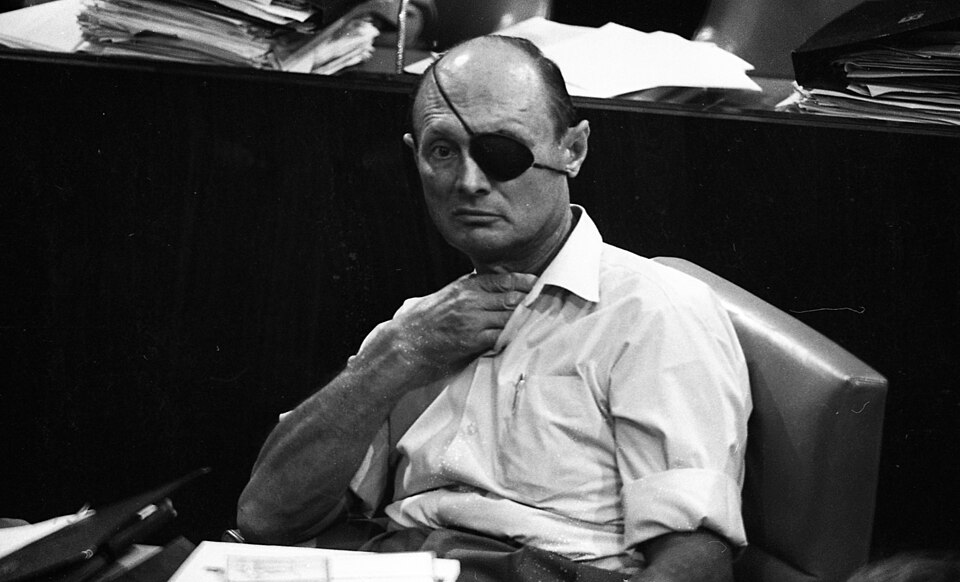
—You received me in your home, in your kitchen, over coffee. Why govern from a kitchen table rather than a council chamber?
Because people speak the truth more willingly with a cup in hand than with a microphone in front of them. You remember that kitchen, Oriana: the coffee pot heating, the cakes I take out of the oven myself, my ministers taking off their jackets. There, no one makes speeches for posterity. We look at each other, we contradict each other, we decide. They call me the grandmother of Israel, and some think they are mocking me. I take it as an honor: a grandmother does not pay with words, she feeds her own and makes sure the house stands. My black bag and my cigarettes followed me from that kitchen to the front.
People speak the truth more willingly with a cup in hand than with a microphone in front of them.
—You have always been seen in the same dark suit, the same black bag. Is this austerity a calculation or a nature?
Neither: it is a faithfulness. When I arrived at the kibbutz of Merhavia in 1921, we shared everything, even work clothes, and we were ashamed of excess. I never managed to shake that off. A woman who has seen pioneers drain swamps with pickaxes is not going to gush over a designer dress. My gray suit, my flat shoes, my bun: that is my uniform, and it suits me. I leave elegance to the ambassadors. I have a state to keep standing, and that is not done in high heels.
I leave elegance to the ambassadors; I have a state to keep standing.
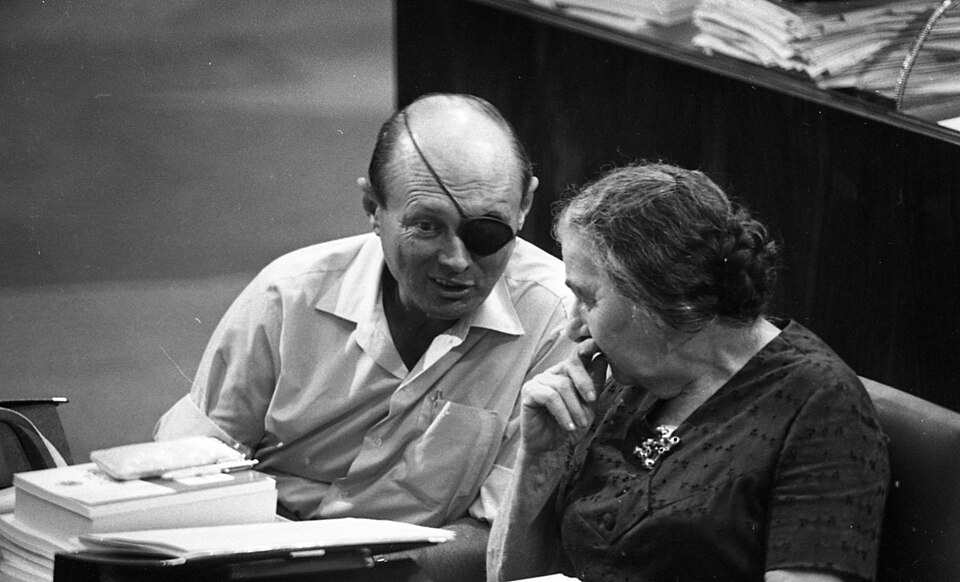
—Before becoming a minister, you traveled across America and New York. What does the State of Israel owe to that diaspora you know so well?
It owes its very existence, quite simply. I traveled the Jewish diaspora from Milwaukee to New York, and I learned one thing: a Jew from Brooklyn weeps when you speak to him of Jerusalem, even if he will never set foot there. It is that loyalty that I mobilized, dollar after dollar, in 1948 and later. But I always told them the same thing: your money helps us, your prayer touches us, but it is we, here, who carry the guns and bury our dead. The State is not built by proxy. It is built by those who make aliyah and stay.
Your money helps us, but the State is not built by proxy.
—You experienced the pogroms, then the Shoah from afar. How do these wounds weigh on your decisions as head of government?
They weigh at every moment, like a voice whispering: never again defenseless. I grew up with the fear of pogroms, and as an adult I saw Europe let six million of our people go up in smoke while the world's doors remained closed. No one came. That is the lesson I do not forget when I sit in the Knesset: a Jew without a state is a Jew no one will come to save. That is why I do not apologize to anyone for wanting an army, borders, a flag. They reproach us for being hard; but it is the softness of others toward our executioners that taught us hardness.
A Jew without a state is a Jew no one will come to save.
—You confided in me, during our interview, your fear for the children. Do you still believe peace is possible with your neighbors?
I must believe it, otherwise what is all this bloodshed for? I told you, Oriana, and I repeat it: we can forgive the Arabs for killing our sons, but we will never forgive them for forcing us to kill theirs. Peace will come the day they love their children more than they hate us. I may not see that day. But a tired old woman like me keeps reaching out her hand, even when it is pushed away. War, I made because it was forced on me; peace, I want because it is the only victory that is not paid for in coffins.
Peace will come the day they love their children more than they hate us.
This imaginary interview was generated by artificial intelligence from sources documented in Golda Meir's profile. It dramatises what the figure might have said based on what we know about them, but does not constitute attested historical testimony. For primary sources and factual documentation, refer to the full profile.