Imaginary dialogue between Ronald Reagan and Gorbachev
by Charactorium · Gorbachev (1931 — 2022) · Politics · 5 min read
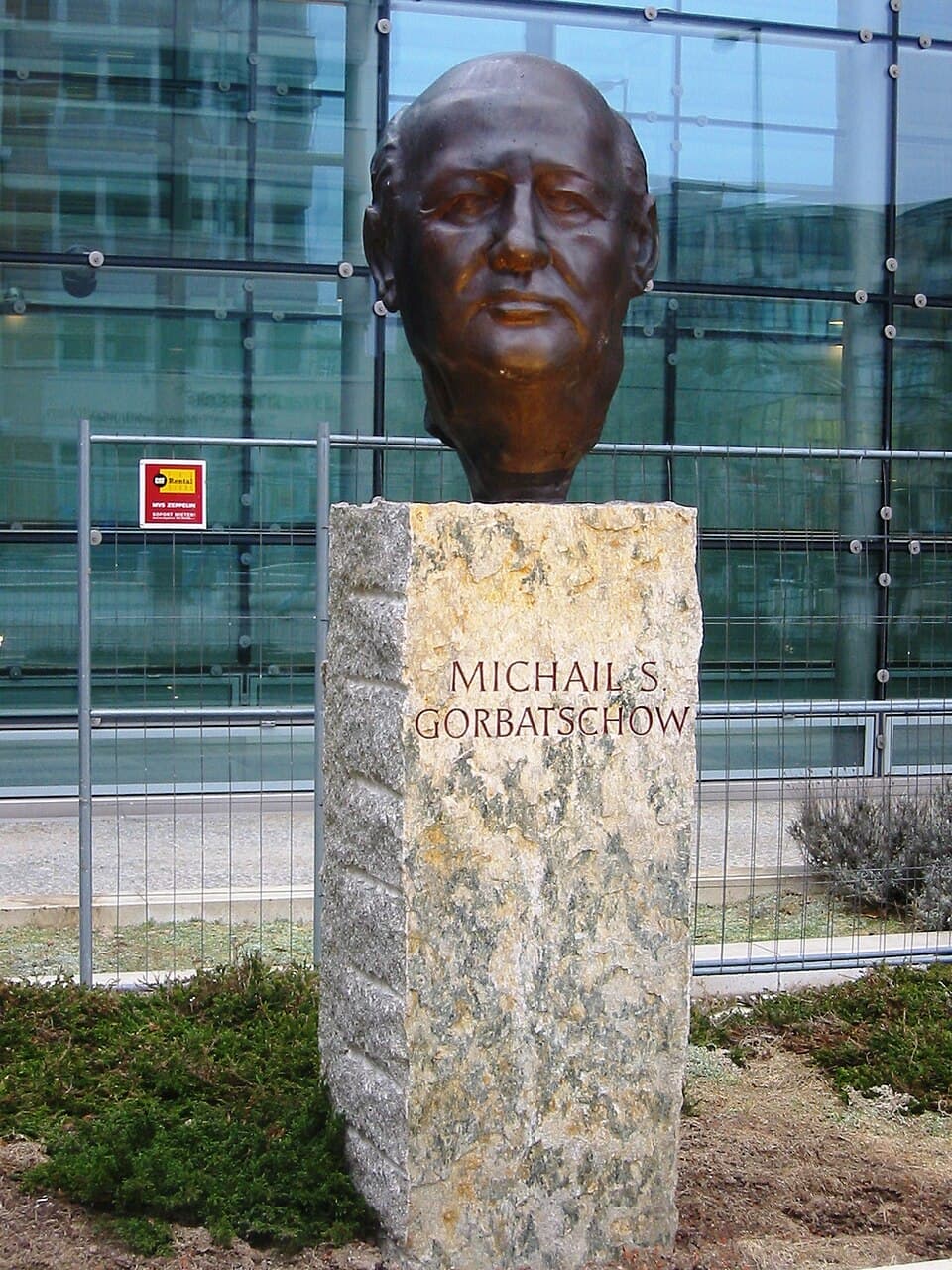
In the plush sitting room of a state residence, somewhere between two summits, Ronald Reagan meets Mikhail Gorbachev in this fading winter. A samovar steams on the low table, and the pale light of Moscow glides over the open Politburo files. The two men have known each other since Geneva and Reykjavik; they have learned to talk across the ideological chasm. Reagan, with a wry smile, has come not to negotiate but to understand the man behind the reforms.
—Mikhail, at Reykjavik in 1986, we were so close to abolishing everything. My Strategic Defense Initiative blocked it all. Do you still hold it against me?
Hold it against you, Ronald? No. But I remember our faces that evening, in that little house swept by the Icelandic wind. We held the world at the tip of our pens, and your space shield made it all collapse. I left with death in my soul. Yet you, who were across from me, know that we gained something: proof that an American and a Soviet could envision a world without those missiles. The following year, in Washington, we signed the INF Treaty — an entire category of weapons erased from the earth. Reykjavik did not fail. Reykjavik opened the door.
Reykjavik did not fail. Reykjavik opened the door.
—I was told about Chernobyl in April 1986. Your services first kept silent. What did that night change in you?
Everything, Ronald. Absolutely everything. For days, my own services lied to me, or lied to themselves. A reactor was burning, a cloud was poisoning Europe, and the bureaucratic machine produced silence as it had always done. That week I understood that secrecy was not a strength of the Soviet state, but its deadly illness. Glasnost was no longer a reformer's idea: it was a matter of survival. Without transparency, we would have poisoned ourselves to the bone. Chernobyl convinced me that a country that lies to its people ends up dying by its own lies.
Secrecy was not a strength of the Soviet state, but its deadly illness.
—You speak of transparency. But opening the press, allowing criticism of the regime — in our country it's natural, in yours it was an earthquake. Weren't you afraid?
Afraid? Of course. But look, Ronald: for seventy years, in our country, the banned writer copied his texts by hand and passed them under the table — we called it samizdat. An entire people knew how to think in whispers. When I let Pravda publish critical articles, real investigations, people couldn't believe their eyes. Democracy, I said before the Party Congress, we need it like the air we breathe. Without it, Perestroika was doomed. You can't reform a house by keeping all the windows nailed shut. I opened the windows, and the air that came in was sometimes icy.
An entire people knew how to think in whispers.
—Mikhail, I was born in a small town in Illinois. You were born in Privolnoye, a peasant village. What remains of that child in you today?
More than you think, Ronald. In Privolnoye, in the Stavropol region, I saw the land, the wheat, and also hunger. I drove combines before reading Marx. That is not forgotten. When I hold Gosplan reports in my hands, I see again the peasants waiting for decisions from above, a thousand miles from their fields. That is why I remained a simple man: a bowl of borscht, some pirozhki, little alcohol — I even campaigned against vodka in 1985, which did not make me popular! In the evening, I still discuss politics and philosophy with Raisa, like two students. The peasant's son never left the Kremlin.
I drove combines before reading Marx. That is not forgotten.
—You mention Raisa. Nancy liked her very much. In our country, a First Lady is visible; in yours, it was unprecedented. What is she to you?
She is my life, Ronald, and I say it without hesitation — you who know what a wife who shares everything means. Before me, the wives of Soviet leaders remained in the shadows, almost hidden. Raisa, she accompanies me, she thinks, she speaks, she has her own judgment. That shocked many apparatchiks of the old system, those who found it indecent that a General Secretary visibly loved his wife. In the evening, when the Politburo files crush me, it is with her that I untangle my doubts. She tells me the truth when the entire apparatus around me prefers to flatter me. A man of power surrounded by courtiers needs a voice that does not lie.
A man of power surrounded by courtiers needs a voice that does not lie.
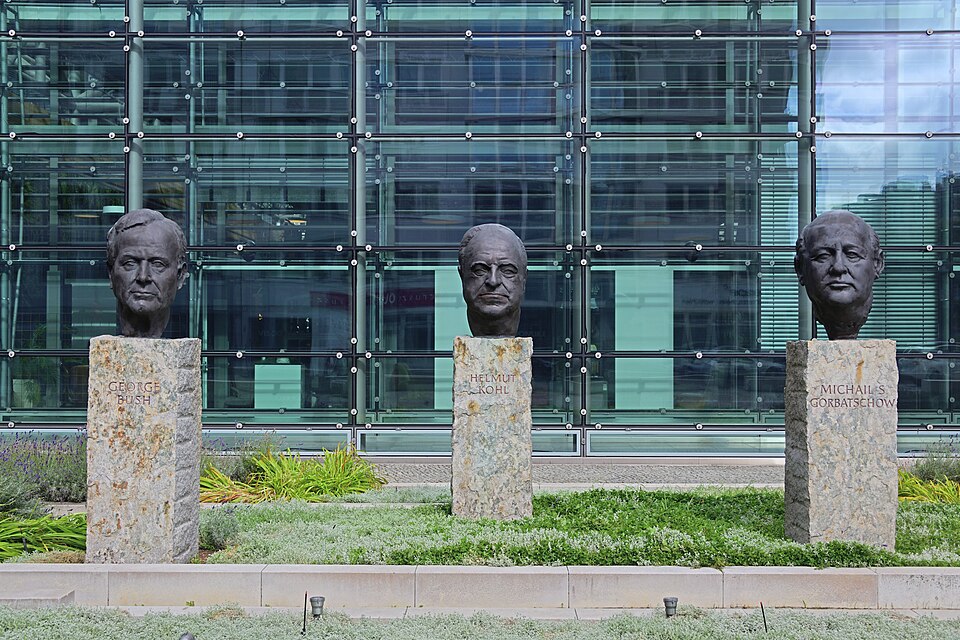
—At the UN in 1988, you renounced force as an instrument of policy. My advisers didn't believe it. Did you really mean it?
Every word, Ronald. I told the Assembly that the use of force could no longer be an instrument of foreign policy, that freedom of choice was a principle without exception. Many, on both sides, thought it was a maneuver. But look at what I did: I withdrew our troops from Afghanistan, after nine years of a war that bled our youth for nothing. And when Eastern Europe began to move, I did not send the tanks. My predecessors would have done so without flinching. I let the peoples choose. You cannot hold an empire with bayonets forever — history always presents the bill in the end.
You cannot hold an empire with bayonets forever.
—And Germany? Accepting its reunification within NATO, my camp — that was huge. How did you convince your generals?
I never really convinced them, Ronald. Many in the Politburo, in the army, saw it as a betrayal of everything our fathers died for in 1945. The map of the Warsaw Pact that I had before me shrank month by month, and each withdrawal cost me politically. But how could I refuse a people what I had just granted to all others? I would have been a liar. I accepted reunification in 1990, in exchange for security guarantees. I was told I was selling out the Soviet victory. I believe rather that I spared Europe a new bloodbath. History will judge which of us was right.
How could I refuse a people what I had just granted to all others?
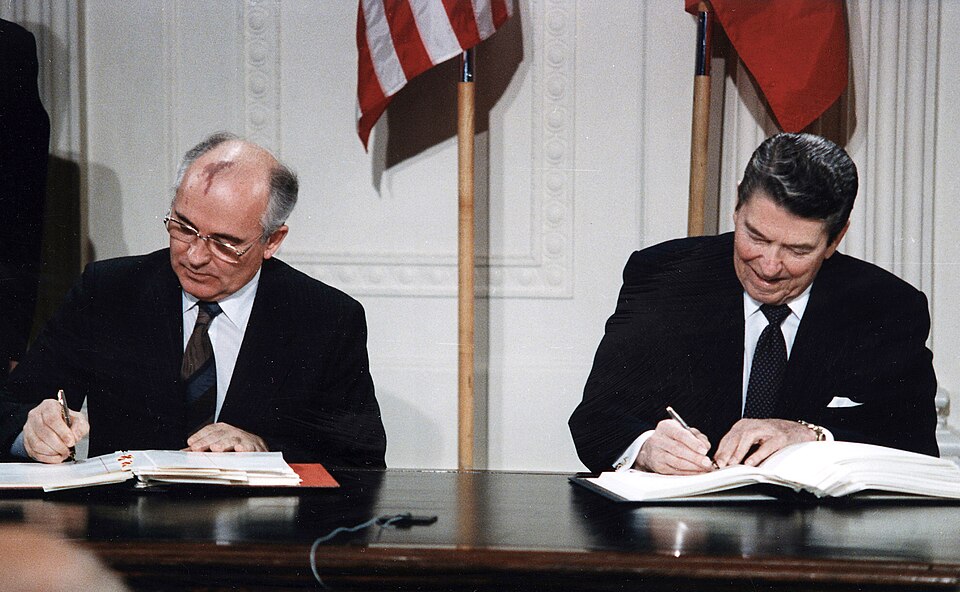
—You were awarded the Nobel Peace Prize in 1990. Abroad they cheer you, at home they blame you for everything. How do you live with this paradox?
It is the cruel irony of my situation, Ronald. In Oslo, they crown me for ending the Cold War; in Moscow, in the queues in front of empty shops, they curse me for economic collapse and lost power. Both are true. I gave the world peace and my people disorder — at least that is how they feel it. The nomenklatura, those privileged ones whom my reforms threatened, stoke discontent. A prophet is never welcome in his own country, they say. I wear this medal as a bitter consolation: recognized everywhere, except in the only country whose fate obsesses me every night.
I gave the world peace and my people disorder.
—Mikhail, the conservatives hate you. Imagine that one day they try to overthrow you, to lock you up. What would you do, isolated, without your lines?
You ask a chilling question, Ronald, because I feel it coming. The apparatchiks of the old system, those who cling to their dachas and privileges, hate you more than you ever fought me, my loyal adversary. If they locked me up, say in my dacha at Foros, in Crimea, cut off from everything, without even my hotline… I believe I would not give in. They can cut my lines, but they will not cut my signature. I will never put my name to a return to the past. A man who has seen his people breathe freely can no longer, in good conscience, close the lid.
They can cut my lines, but they will not cut my signature.
—And if one evening you had to leave everything — lower that red flag from the Kremlin yourself — what words would you choose, my friend?
Sober words, Ronald. No tears, no grand gestures. I would simply say that I am ending my duties, that fate willed it that at the moment I assumed the highest responsibilities, it was already clear that the country was in trouble. Twelve minutes, no more. Then I would watch, through the window, the red flag slowly descend from the dome for the last time, replaced by the tricolor. Seventy years of an immense, terrible, and grand history, folding up in the December cold. I will deny nothing: I wanted to reform, not destroy. Let others judge. I, at least, will have given speech back to my people and taken away their fear.
I wanted to reform, not destroy. Let others judge.
This imaginary interview was generated by artificial intelligence from sources documented in Gorbachev's profile. It dramatises what the figure might have said based on what we know about them, but does not constitute attested historical testimony. For primary sources and factual documentation, refer to the full profile.