Imaginary interview with Gorbachev
by Charactorium · Gorbachev (1931 — 2022) · Politics · 6 min read
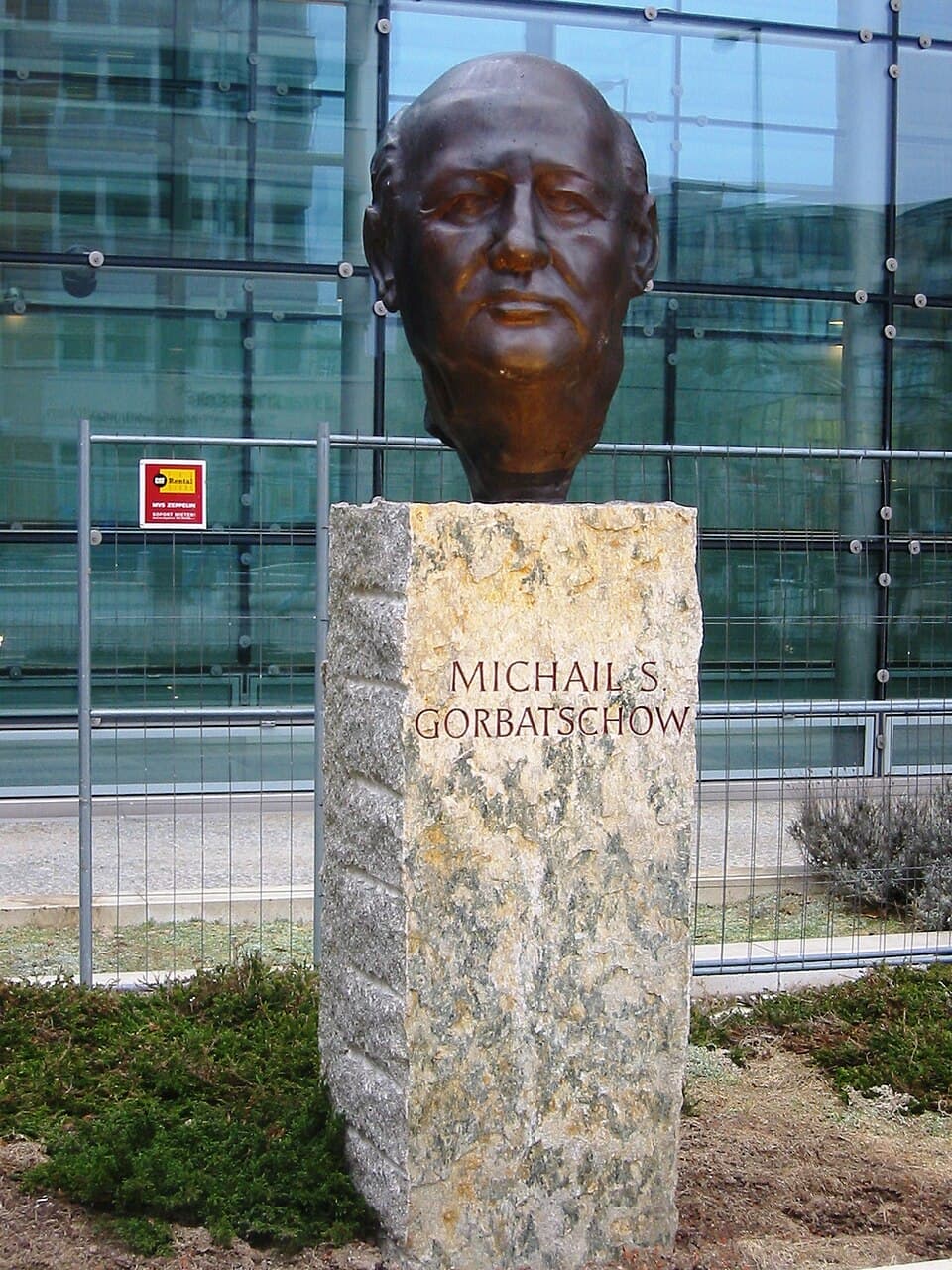
December 2021. In a quiet apartment near Moscow, a ninety-year-old man receives us, his voice calm, his gaze still sharp beneath the famous birthmark. Thirty years after lowering the red flag, Mikhail Gorbachev agrees to revisit the hopes and fractures of an empire he tried to save by transforming it.
—What happened inside you after the Chernobyl disaster in spring 1986?
On April 26, 1986, the reactor exploded, and our own services remained silent for days. When the truth reached me, I understood that state lies were not just another weakness: they were the very disease of the system. I was rightly criticized for that silence. But that invisible cloud taught me something no Politburo report could have: a country that hides its own reality ends up poisoning itself. It was in that anguish that Glasnost ceased to be a speech word and became a necessity for survival. I wanted one day for Pravda to dare print what no one dared say aloud.
A country that hides its own reality ends up poisoning itself.
—Why did you see transparency as inseparable from economic reforms?
Because you cannot restructure a house with the shutters closed. Perestroika without Glasnost meant asking people to repair a wall without letting them see the cracks. I told the Congress in February 1986 that we needed democracy like we need air, and without it our policy would be doomed. Many apparatchiks turned pale hearing that. But how can a worker work better if he cannot say that Gosplan's plan is absurd? Transparency was not an intellectual luxury; it was the oxygen without which any reform suffocates in three months.
You cannot restructure a house with the shutters closed.
—Do you remember that Reykjavik summit in October 1986, where everything nearly tipped?
Reykjavik, that small town battered by Atlantic winds. Reagan and I sat face to face, and we approached something unprecedented: the total elimination of nuclear weapons. Can you imagine? Two men, in a freezing house in Iceland, a step away from erasing the fear that had weighed on humanity for forty years. And it all shattered on his dream of a space shield, that Strategic Defense Initiative he clung to like a child. We left empty-handed, our faces grim. Yet I already knew nothing would be the same: we had dared to think the unthinkable, and that door left ajar would lead, the following year, to the INF treaty.
We had dared to think the unthinkable, and that door left ajar would never close again.
—How did you manage, in 1987, to sign a treaty everyone thought impossible?
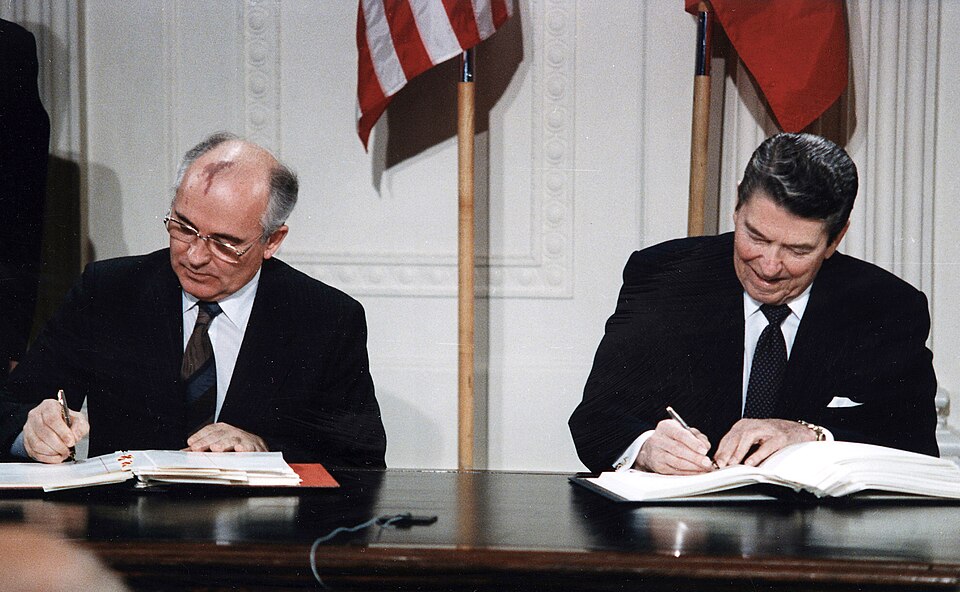
On December 8, 1987, in Washington, I took that pen and signed with Reagan the elimination of an entire class of missiles—those with a range of five hundred to five thousand five hundred kilometers—to be destroyed within three years. It was the first time in history that we did not cap an arsenal: we abolished it. The hotline between Moscow and Washington had long served to manage terror; we now used it to defuse tensions rather than monitor them. Margaret Thatcher had said of me that I was a man one could do business with. Well, that pen was proof: one can be an adversary and still seek together to push back the abyss.
For the first time, we did not cap an arsenal: we abolished it.
—You are called a son of the soil. What did you keep from your native village of Privolnoye?
In Privolnoye, in the Stavropol region, I grew up among peasants, my hands in the harvest, and that does not fade. I kept a certain sobriety: I never liked the drunkenness of Kremlin banquets, and from 1985 I led an anti-alcohol campaign that earned me much mockery. At table, borscht and pirozhki were enough for me. When you have seen, as a child, what a bad harvest costs, you understand in your bones why a system that lies about its own numbers condemns its people. That childhood on the steppe taught me to distrust leaders who no longer know the price of bread.
When you have seen, as a child, what a bad harvest costs, you distrust those who ignore the price of bread.
—What place did your wife Raisa hold in this solitary life of power?
Raisa was my opposite of solitude. In the evening, when the doors of the Kremlin closed and the diplomatic dispatches fell silent, we talked politics, philosophy, history, sometimes late into the night. This scandalized some: a Soviet leader did not show his wife, did not listen to her, did not walk arm in arm with her. For me, I could not conceive of deciding alone. I read for hours, philosophy books, and she was the first to whom I shared my doubts. In a world of gray, closed men, this shared tenderness was almost a political act: proof that a leader could remain a human being.
In a world of gray men, this shared tenderness was almost a political act.
—How did you experience the paradox of being celebrated with the Nobel Prize in 1990, yet rejected at home?
In 1990, I was awarded the Nobel Peace Prize for helping end the Cold War. The world applauded. And at the same time, on my own streets, I was blamed for the collapse of stores, the loss of empire, the humiliation of a great power. The reformer is a lonely man: too fast for the conservatives of the nomenklatura, too slow for the impatient. I had opened the windows, and the wind that came in also knocked over the furniture. Receiving this honor abroad while being booed at home meant feeling in my own life the rift of an entire people, torn between newfound freedom and fear of tomorrow.
I had opened the windows, and the wind that came in also knocked over the furniture.
—What remains of those three days in August 1991, held prisoner in your dacha at Foros?
In August 1991, my own ministers tried to overthrow me and placed me under house arrest at the dacha in Foros, Crimea. Three days cut off from the world, lines disconnected, not knowing if I would leave that cape battered by the Black Sea alive. The conspirators wanted to stop Perestroika, turn back, put the lid back on the pot. They failed in three days, but they also killed me politically: when I returned to Moscow, the country was no longer mine. That failed coup was the death blow to the Union; those who wanted to save it by force hastened its grave.
Those who wanted to save the Union by force hastened its grave.
—On December 25, 1991, you announced your resignation on television. What did you feel that evening?
Twelve minutes. My speech lasted twelve minutes, before a camera, in a Kremlin office I was leaving forever. I said I was ending my functions as President of the USSR due to the situation created by the formation of the Commonwealth of Independent States. Fate had it that when I acceded to the highest office, it was already clear the country was in trouble. That same evening, the red flag was lowered over the Kremlin, and the Russian tricolor took its place in the winter sky. I watched in silence. A seventy-year-old empire extinguished without a drop of blood, and that was perhaps, despite everything, my strangest victory.
A seventy-year-old empire extinguished without a drop of blood.
—Did you want this dissolution of the Union, or did you suffer it?
I never wanted to destroy the Union. I wanted to save it by transforming it, to give it the most modern forms of organization, as I wrote in my book on Perestroika. But history is a galloping horse: you think you guide it, and it carries you away. Once fear fell, once Glasnost entered people's minds, the republics wanted their freedom, and the Warsaw Pact faded from the map like ink in the rain. The official dissolution, on December 26, 1991, I experienced as a personal failure and a gain for humanity. Both at once. That is the fate of those who open doors they can no longer close.
History is a galloping horse: you think you guide it, and it carries you away.
—You proclaimed before the UN in 1988 the end of force as a political instrument. Did you really believe it?
On December 7, 1988, at the UN podium, I declared that the use or threat of force could no longer be instruments of foreign policy, and that the principle of free choice was mandatory. These were not fine words: it was the announcement that we would no longer hold Eastern Europe by tanks. I had already decided on the withdrawal from Afghanistan, after nine years of a costly war that bled our youth. When you renounce imposing your order through fear, you must see it through: that is why, the following year, I did not send a single soldier to prevent the fall of the Berlin Wall.
We would no longer hold Eastern Europe by tanks.
This imaginary interview was generated by artificial intelligence from sources documented in Gorbachev's profile. It dramatises what the figure might have said based on what we know about them, but does not constitute attested historical testimony. For primary sources and factual documentation, refer to the full profile.