Kids interview Gorbachev
by Charactorium · Gorbachev (1931 — 2022) · Politics · 5 min read
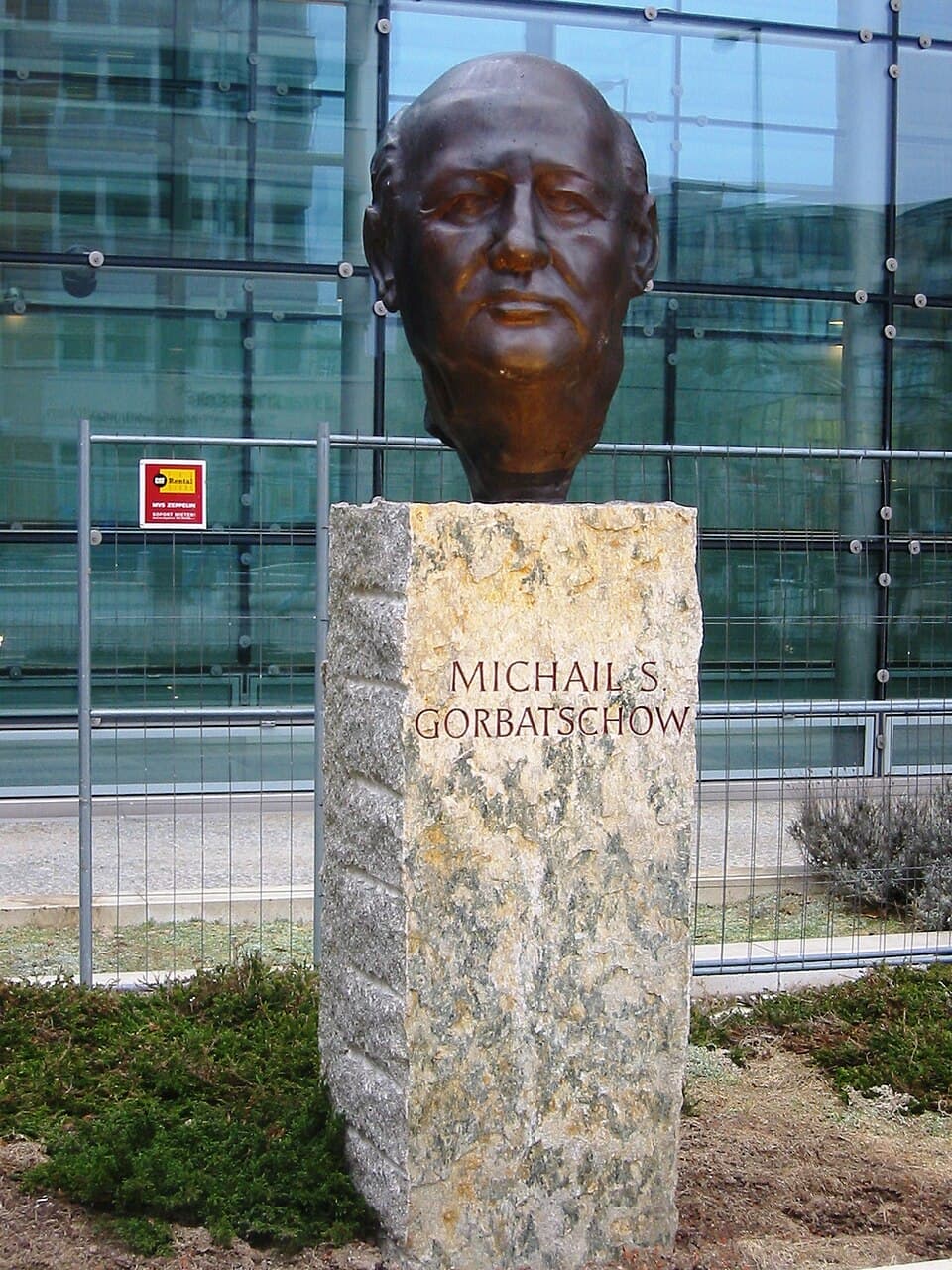
Two twelve-year-old students on a school trip push open the door to a large office. Facing them is a smiling old man with a birthmark on his forehead. The last master of the Kremlin is about to talk to them like grandchildren.
—Where were you born? What was your home like when you were little?
You know, I was born in 1931 in a small village called Privolnoe, way down in southern Russia. Imagine endless fields, dirt, peasants bent over from morning till night. My family worked the land. We ate simply: borscht, that red beet soup, and little pies called pirozhki. Believe me, we wasted nothing. Later, when I became the leader of a whole country, I never forgot that. When you've known hunger as a child, you never look down on people. My peasant roots taught me one thing: a leader must know where his people come from.
When you've known hunger as a child, you never look down on people.
—They say you loved your wife very much. Was that rare for a leader?
Yes, my child, it was very rare! My wife's name was Raissa. In the evenings, when the meetings were over, I would join her and we would talk about everything: politics, books, the future of the country. The leaders before me hid their wives, as if a wife should remain invisible. I walked beside her, I listened to her. And you know what? I even led an anti-alcohol campaign in 1985, because too many men drank and forgot their families. They found me strange, too sober, too gentle. But I believe that a man who respects his wife respects his people better.
A man who respects his wife respects his people better.
—What is Perestroika? The word sounds a bit scary.
Don't be afraid of the word! Perestroika in Russian simply means “reconstruction.” Imagine an old house with cracked walls: you don't throw it away, you repair it room by room. My country, the USSR, was that tired house. The economy was run by an office, the Gosplan, which decided everything from Moscow — how many shoes, how much bread. It no longer worked. I wanted to let in some air, some freedom. But in the Politburo documents, the leaders' office, many old comrades hated my ideas. Repairing a house where half the people want it to collapse is the hardest job of all.
To rebuild is not to throw everything away: it is to repair wall after wall.
—And what was Glasnost? Could people finally speak?
Exactly! Glasnost means “transparency.” Before me, in the USSR, you couldn't say what you thought. Newspapers like Pravda only repeated what the Party wanted to hear. Imagine a classroom where no one is allowed to raise their hand to say “I disagree.” That was my country. I decided to open the windows. Suddenly, newspapers dared to criticize, to tell the truth. At the 27th Congress in 1986, I said we needed democracy as we needed air. Some got dizzy from this new freedom. But fresh air, even if it stings a little, is better than a closed room.
We needed freedom as we need air.
—Why did you insist so much on telling the truth?
Because of a terrible night, my child. In April 1986, a nuclear power plant exploded at Chernobyl. That's a place where electricity is made using dangerous, invisible energy that can make you very sick. And there, my own services first kept silent. A few days of silence! Meanwhile, the danger was spreading. I was ashamed. I understood that hiding the truth is putting your people in danger. That catastrophe convinced me that Glasnost, transparency, was not a luxury but an absolute necessity. A country that lies to its children ends up hurting them for real.
A country that lies to its children ends up hurting them for real.
—Did you really almost get rid of all atomic bombs? How?
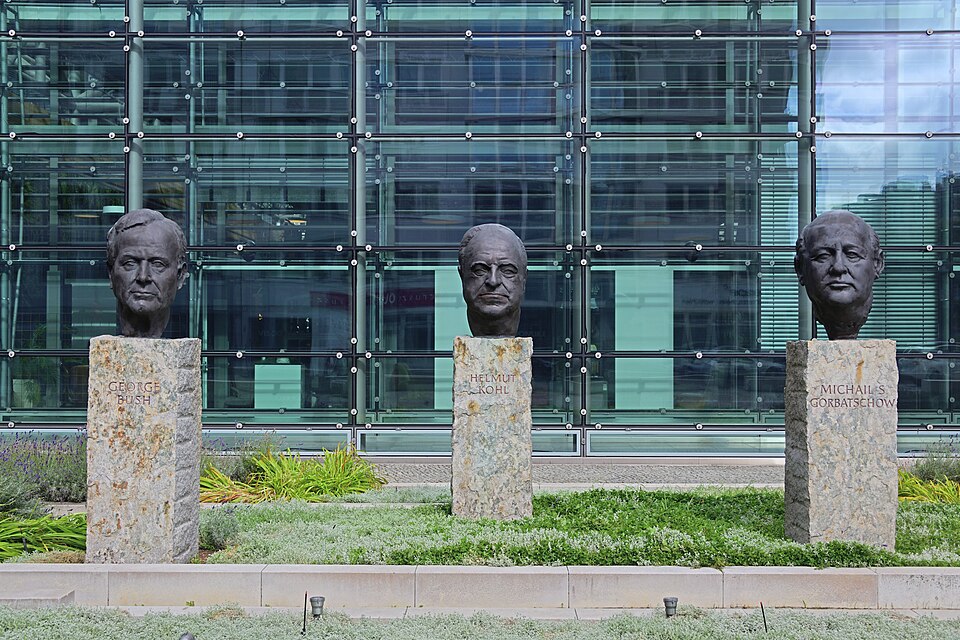
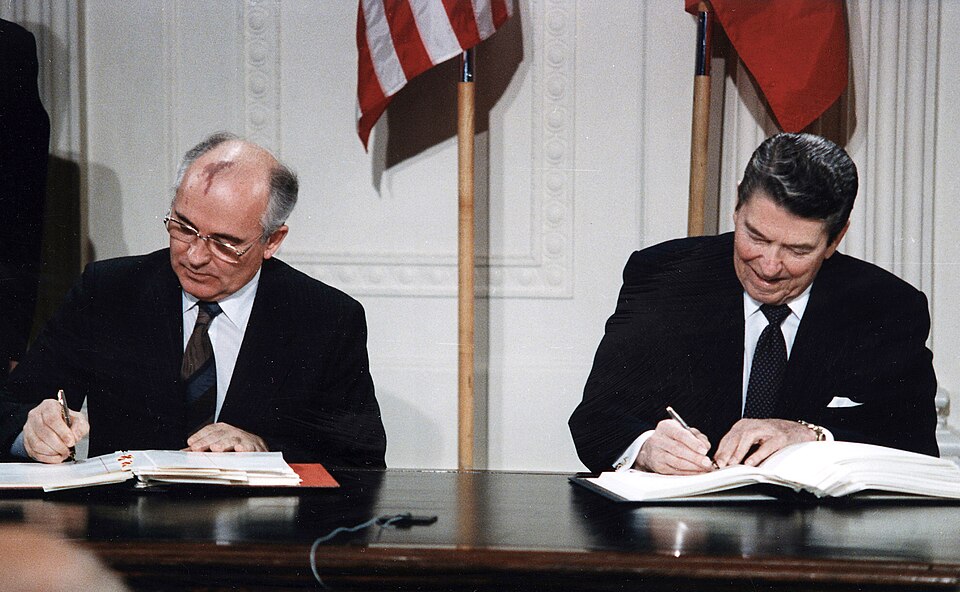
Almost! In October 1986, I met American President Reagan in a small town in Iceland, Reykjavik. You know, at that time, our two countries were baring their teeth with thousands of missiles, ready to destroy everything. We sat face to face, two men, and we dared to imagine a world without nuclear weapons. We were so close! But it failed because of an American space weapons project. We left disappointed. And yet, that courage paved the way. The following year, in 1987, I took my pen and signed the INF treaty with Reagan: we actually destroyed an entire category of missiles. A failure can prepare a victory.
We sat face to face, and we dared to imagine a world without bombs.
—What did it feel like to shake hands with your worst enemy?
Strange feeling, I must say. All my life, I had been taught that Americans were the enemy. And there I was, reaching out to their leader! But you know, a very stern English lady, Margaret Thatcher, had said of me: “He is a man we can do business with.” That touched me. I understood that by talking to each other, you discover that the other is not a monster. At the UN in 1988, I said that the threat of force could no longer be an instrument of policy. Shaking an adversary's hand is not betraying: it is braver than shaking your fist.
Reaching out to your enemy is braver than shaking your fist.
—What was the Cold War really like? Why “cold”?
Good question! They call it “cold” because the two sides never shot at each other directly. Imagine two angry kids in a schoolyard, staring each other down, puffing up their muscles, but not daring to hit each other for fear everything would explode. On one side, my country and its allies, united in what was called the Warsaw Pact; on the other, America and Western Europe. An invisible border cut the world in two: it was called the Iron Curtain. For forty years, fear reigned. My dream was to warm it all up, to melt that curtain. And little by little, between 1989 and 1991, it really fell.
Two giants staring at each other without daring to fight: that is the Cold War.
—And the Berlin Wall, could you have sent the army to defend it?
Yes, my child, and that is the whole point. Before me, when a country wanted to move away from Moscow, we sent in the tanks. I said no. When the Berlin Wall fell, on November 9, 1989, Soviet soldiers stayed in their barracks. I could have given the order to shoot at the crowd. I did not. I believed that every people has the right to choose its path — I had said so at the UN. So the Germans embraced on the ruins of the wall. Some blamed me for having “lost” those countries. But you don't keep a people by threatening them with a gun.
You don't keep a people by threatening them with a gun.
—The night your country disappeared, what did you feel?
Ah... December 25, 1991. I will never forget. That evening, I spoke on television for only twelve minutes. I announced that I was resigning as President of the USSR. I said, with a heavy heart, that fate had willed me to come to power when the country was already in trouble. Then I went outside, and up there on the Kremlin, they lowered the red flag for the last time. In its place rose the Russian tricolor. A vast country, seventy years old, was fading into silence. I was sad, yes. But no blood had been shed. That was my greatest pride in my greatest sorrow.
An empire was fading, but no blood had been shed.
—You were given a great prize, but people criticized you at home? Isn't that unfair?
You've seen it well, and yes, it was hard. In 1990, I was awarded the Nobel Peace Prize, there in Norway, for helping end the Cold War. The whole world applauded me. But in my own country, at the same time, many hated me. The shops were empty, money was worthless, and people feared the future. They blamed me for weakening the great country they loved. You know, that's the fate of one who changes things: admired from afar, scolded up close. I learned that a leader does not work for applause, but for what he believes is right.
Admired from afar, scolded up close.
This imaginary interview was generated by artificial intelligence from sources documented in Gorbachev's profile. It dramatises what the figure might have said based on what we know about them, but does not constitute attested historical testimony. For primary sources and factual documentation, refer to the full profile.