Kids interview Gregor Mendel
by Charactorium · Gregor Mendel (1822 — 1884) · Sciences · 5 min read
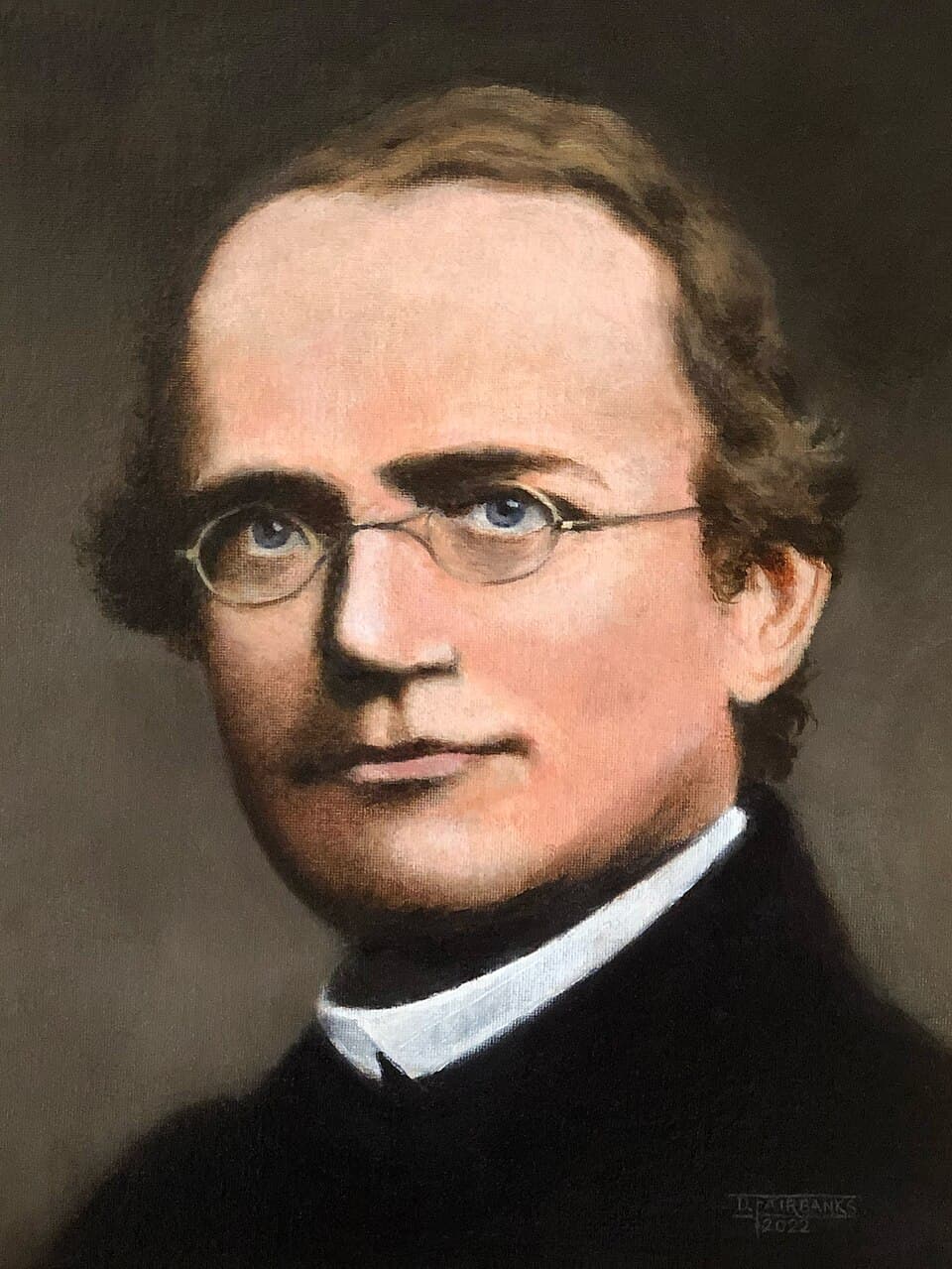
Two twelve-year-old students push open the door of an old Moravian monastery. In the garden, a monk in a black habit is counting pea seeds, a magnifying glass in hand. He looks up, surprised and touched that someone is interested in him.
—Is it true that you failed your exam to become a teacher?
You know, my child, it's quite true, and twice at that! I failed the exam to teach natural sciences in botany and zoology. Imagine the shame: plants and animals were exactly what I loved most in the world. Yet I had studied physics and mathematics in Vienna, and I knew how to count, measure, and reason. The drama of my life is that these subjects I failed are the very ones where, later, I discovered something immense. So if someday you fail something, don't hang your head. A failure has never stopped anyone from seeking the truth.
A failure has never stopped anyone from seeking the truth.
—Why did you choose peas and not another plant?
Good question! The pea, you see, is a very obedient little plant. It has very clear traits: smooth or wrinkled seeds, white or purple flowers, tall or short stems. No half-measures. For a curious person who wants to understand how children resemble their parents, it's a gift from heaven. And then, in my childhood in Heinzendorf, my family grew fruit trees; I learned early to watch things grow. In the monastery garden in Brno, I planted my peas row by row. Seven different traits, carefully chosen. Each seed spoke to me, provided I knew how to listen.
—Did you really count thirty thousand peas by hand?
Twenty-nine thousand, to be exact, and yes, one by one! For eight long years, from 1856 to 1863, I spent my days bent over my plants. Imagine: no machine, just my eyes, my magnifying glass, and a small brush. With that brush, I myself deposited pollen from one flower onto another, like a very diligent bee. Then I noted everything in my notebooks: how many smooth seeds, how many wrinkled, generation after generation. That's when I saw a magical number appear: three plants of one type for one of the other. Always that 3 to 1. Nature, my child, knows how to count better than we do.
Nature knows how to count better than we do.
—What was a normal day like in your monastery?
In the morning, I rose before the sun for prayer with my brothers. After a breakfast together in the refectory, I put on my gardening clothes over my black habit and hurried to see my peas before the heat. In the afternoon, I counted, noted, labeled; I also taught classes at the high school in Brno, where I taught physics to young people. In the evening, after the meal, I withdrew to my cell, simple: a bed, a desk, books. There, I did my calculations by lamplight. A quiet life, regular as clockwork — and it was in that calm that the great idea germinated.
—When you presented your discovery, did people applaud?
Ah... no, my child. Not a single clap. In 1865, I presented my work before the Brno Natural History Society, scholars from the region gathered in a hall. I explained my peas, my numbers, my laws. And when I finished... silence. No one asked a single question. Imagine telling the most beautiful secret in the world, and the room staring at you without a word. It was a bit like that. I think they didn't understand that these little seeds held the rules of life itself. I returned to my cell, disappointed but not broken. Time, I thought, would eventually speak for me.
These little seeds held the rules of life itself.
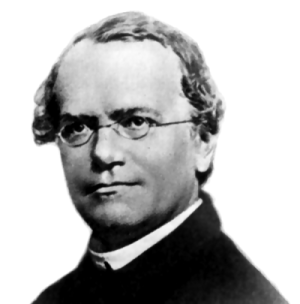
—And afterward, did no one read what you had written?
Almost no one. My article, Versuche über Pflanzenhybriden, was printed in 1866 in the proceedings of the Society. But it lay asleep on the shelves, forgotten for thirty-five years. That's a very long time, you know, for an idea that waits. I did not see any reward in my lifetime. And yet — listen to what follows, for it is beautiful — in 1900, sixteen years after my death, three scientists rediscovered my laws, each on their own. They thought they were inventing something new, and they found my old pea! A true idea never really dies. It simply waits, patiently, for someone to come back for it.
A true idea never really dies; it waits to be rediscovered.
—Did you try with plants other than peas?
Yes, and there I tasted bitterness! After my peas, I wanted to verify my laws on another flower, the hawkweed, what's called Hieracium. I told myself: if my rules are true, they will work everywhere. Well, no. Those flowers reproduce in a strange way, almost without crossing, and my beautiful results did not hold. My numbers became muddled. I published that in 1869, but my heart was no longer in it. It's hard, you see, to doubt what you spent eight years building. Nature had given me a key with the peas, then seemed to take it back with the hawkweeds. I did not yet know that the peas were right.
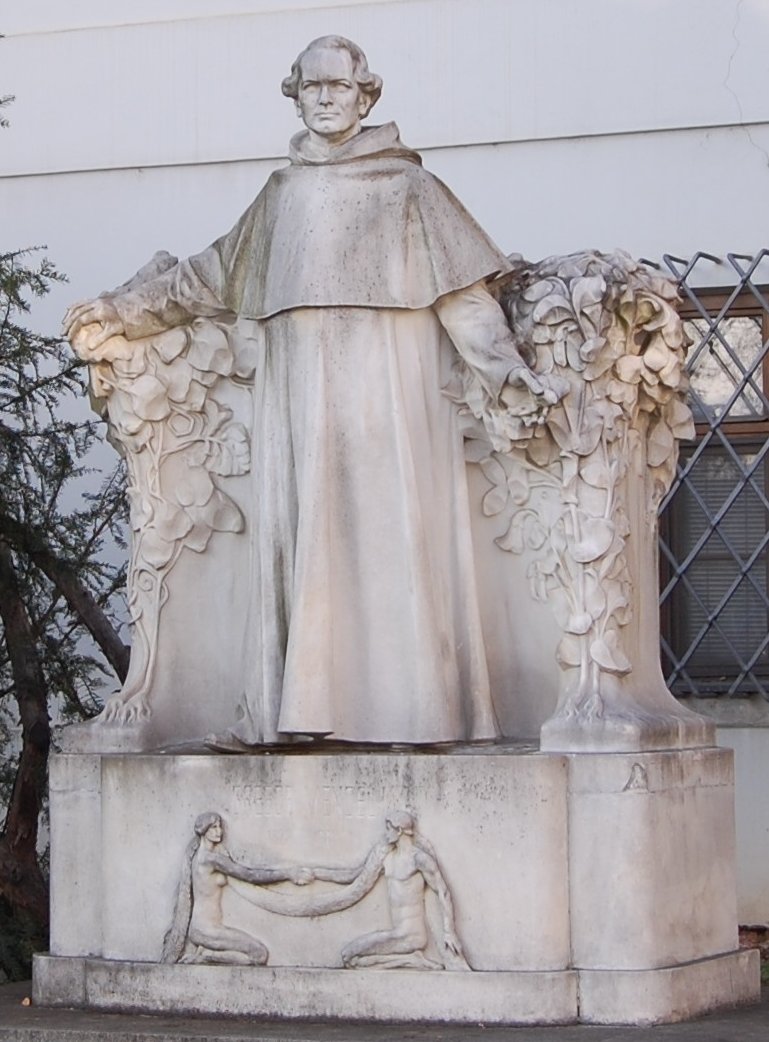
—Did you write to anyone to talk about all this?
Yes, to a great Swiss botanist, Carl von Nägeli. For years, from 1866 to 1873, I sent him letter after letter to defend my ideas. He was my only real scientific correspondent, and I so hoped he would understand me. But he pushed me toward those hawkweeds that confused me so much! In one of my letters, I wrote to him that I knew my work was hard to accept, but that it was only a matter of time before it would be recognized. You see, even discouraged, I kept a little flame. Writing to someone who doubts you is tiring. But keeping completely silent was worse.
—Why did you stop your research in the end?
Because in 1868, my brothers elected me abbot, the head of the monastery. What an honor, and what a trap! Overnight, my days filled with papers, accounts, meetings. I spent my time fighting against the taxes they wanted to impose on our religious house — a quarrel I hated. My pea notebooks gathered dust, my garden cried out for hands that were no longer free. I tried to study heredity in my bees, in their hives, but without much success. Science demands time and freedom; I had been deprived of both. The scientist in me gradually fell asleep.
—If you saw what we know today, would you be happy?
Oh, my child, I think I would weep for joy. I, the monk who failed his exam, the scientist listened to in silence... to know that my humble peas opened an immense door! I only spoke of dominant and recessive traits, those that show themselves and those that hide to reappear later. But that is where it all started. So listen well: it is not noise that makes truth, but patience. I counted seeds for eight years in a little garden in Brno, and that little garden still speaks. Keep searching, you too.
It is not noise that makes truth, but patience.
This imaginary interview was generated by artificial intelligence from sources documented in Gregor Mendel's profile. It dramatises what the figure might have said based on what we know about them, but does not constitute attested historical testimony. For primary sources and factual documentation, refer to the full profile.