Imaginary interview with Gregor Mendel
by Charactorium · Gregor Mendel (1822 — 1884) · Sciences · 6 min read
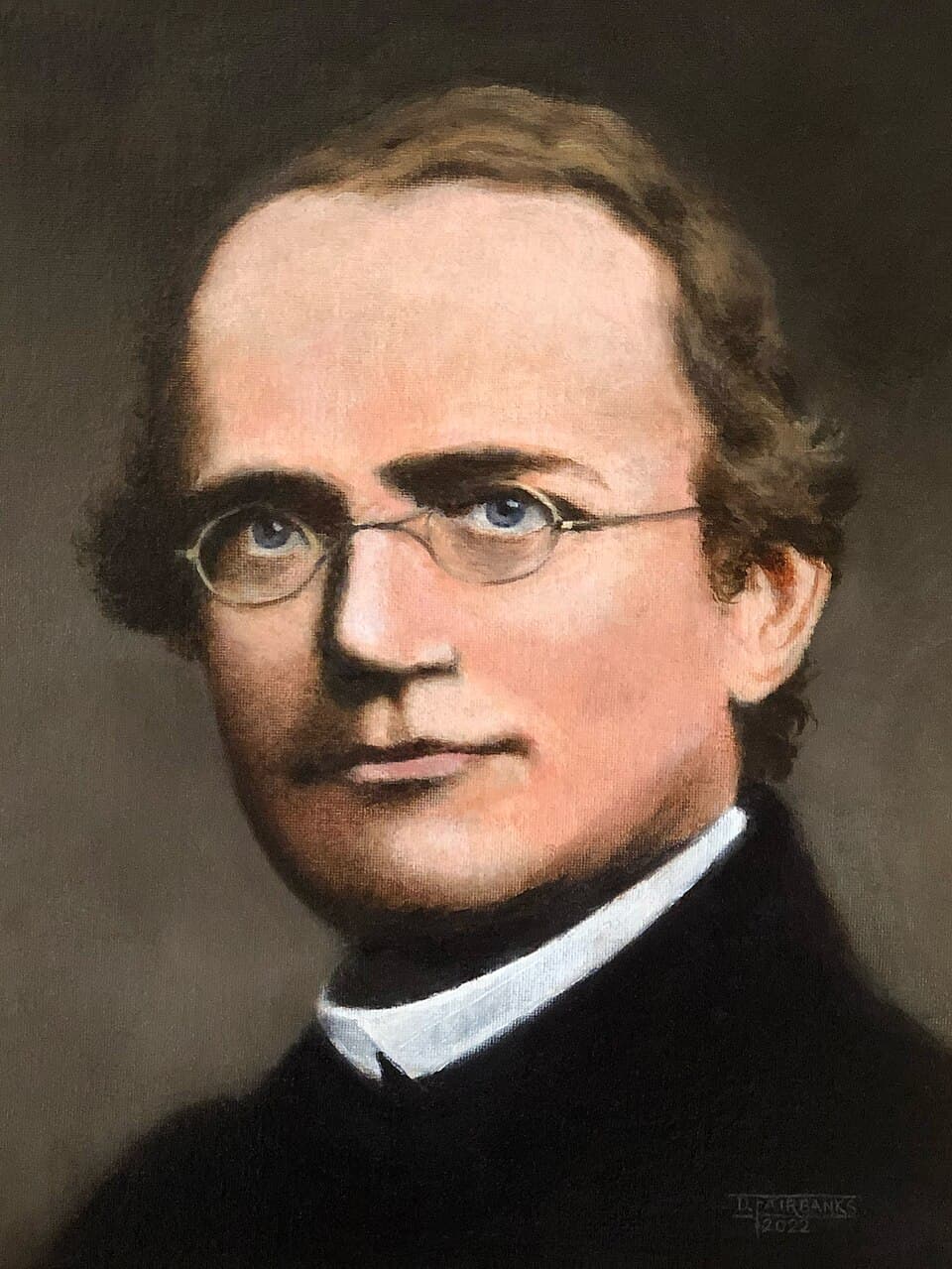
Brno, autumn 1883. In the already withered garden of St. Thomas's Monastery, a stout man in an Augustinian habit lingers near the last rows of peas. Now abbot, burdened with paperwork, he nevertheless agrees to talk about those eight years when he counted, plant after plant, the hidden laws of heredity.
—How did a man twice rejected from the natural science teaching exam come to revolutionize that very discipline?
People think I am a scholar: I am above all a boy from Heinzendorf who failed. Before the commission in Vienna, in botany and zoology, I went blank, twice, my throat tight, unable to classify as required. When I entered the monastery in 1843 and took the name Gregor, I never imagined my habit would serve as a gardener's smock. But you see, the exam required reciting families, orders, Latin names; but I had never been able to memorize what others had decreed. What I could do, however, was count, and count again, until the numbers spoke for themselves. Failure sent me back to the Klostergarten. It was there, not in an exam hall, that nature deigned to teach me.
My habit would serve as a gardener's smock.
—Why did you choose the humble pea, rather than some nobler plant, for your experiments?
The Pisum sativum has a virtue that hasty minds despise: it is stubborn. Its flowers fertilize in isolation, which guaranteed me pure varieties, lines that, generation after generation, never betray their character. I had identified seven pairs of well-defined traits — round or wrinkled seed, purple or white flower, tall or short stem — so many questions to which the plant answered yes or no, without misleading nuance. With my brush, I opened the flower, removed the stamens, deposited the chosen pollen, then tied a little bag to keep out unwanted visitors. A noble lily would have led me astray with its whims; the pea, on the other hand, keeps its accounts as rigorously as I do.
The pea keeps its accounts as rigorously as I do.
—What do those 29,000 plants you cultivated from 1856 to 1863 actually represent?
Eight years, sir. Eight springs to sow, eight summers to watch, eight autumns to shell the pods one by one over my notation notebook. Twenty-nine thousand plants: I know people are frightened by this number as if it were a mountain, but a mountain is climbed stone by stone. Every morning, before the Moravian heat weighed on the garden, I walked between the rows, my magnifying glass in hand, noting who was tall, who was dwarf. In the afternoon, I counted the seeds, I classified, I lined up columns. Many saw this as a clerk's task; I saw it as a prayer of a different kind. For at the end of this tedious counting, a ratio appeared, always the same, stubborn: three to one.
A mountain is climbed stone by stone.
—How did you realize that a mathematical law lay hidden behind your counting?
I did not guess anything; I let the numbers dictate. By crossing a round-seeded variety with a wrinkled-seeded one, the first generation gave me all similar plants — the dominant character crushed the other, which I called recessive. I could have stopped there, concluded that one had devoured the other. But the next generation gave everything back: the vanished trait reappeared, and the count fell to that ratio of three to one. Behind it, I saw a 1:2:1 pattern, as if each plant carried two factors and transmitted only one, drawn at random. In Vienna, I had learned physics and probability calculus: what others took for fuzzy botany, I read as a combination of tokens. Nature was playing, and she played fair.
Nature was playing, and she played fair.
—Do you remember that evening in 1865 when you presented your results to the Natural History Society?
February 1865, then March. Two sessions, in the hall of the Brno Natural History Society, before men I knew, doctors, pharmacists, professors. I had rehearsed my talk, lined up my tables, my ratios. And when I fell silent, there was nothing. Not a question, not an objection, not even one of those courtesies one grants a colleague. Silence, sir, that polite silence which is worse than an argument, because an argument at least assumes you have been heard. They had come to hear about plants; I spoke to them of numbers, laws, invisible factors. I think they filed it away in the drawer of a meticulous monk's curiosities. I returned to my cell without bitterness — or very little.
That polite silence which is worse than an argument.
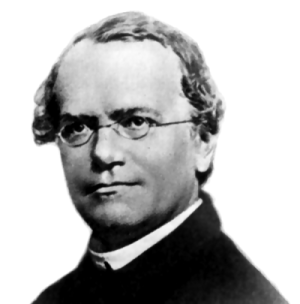
—Your 1866 paper remained almost ignored. How do you experience this indifference?
My memoir, Versuche über Pflanzenhybriden, appeared in 1866 in the Proceedings of our society. I believed it solid; I still do. But a paper sleeps in a provincial volume like a seed in too cold soil: it awaits a season that does not come. Barely cited, almost never discussed. I sent offprints to men I respected, hoping a hand would open them. You see, I do not claim glory — the Augustinian rule cured me of that. But eight years of work deserve at least to be contradicted. To be ignored is to be buried alive. I console myself by thinking that truth, like the recessive character, can disappear for a generation before reappearing. We simply have to wait for others to recount.
Truth, like the recessive character, can disappear for a generation before reappearing.
—What were you seeking in that long correspondence with the botanist Carl von Nägeli?
An interlocutor, quite simply. Nägeli, in Munich, was one of the highest authorities in botany, and I wrote to him as early as 1866, hoping that a mind of that rank would grasp what my neighbors in Brno had dropped. I explained my peas, my ratios, my conviction. In one of those letters, I confided to him that my result would not be easily accepted, but that it was only a matter of time before it was seen as a work of considerable importance. He replied, certainly — with courtesy, but without faith. He pushed me toward his dear hawkweeds, convinced that I was mistaken. Our exchange lasted years, deferential and frustrating at once: two men talking to each other over a wall without ever seeing each other.
Two men talking to each other over a wall without ever seeing each other.
—Why did the hawkweeds, those flowers Nägeli directed you to, almost ruin your confidence?
On Nägeli's advice, I tackled the Hieracium, those hawkweeds he had made his specialty. I started over: crossings, brush fertilizations, counting. But the hybrids behaved like rebels. Where the pea had offered me its faithful ratios, the hawkweed muddled everything, produced descendants that obeyed none of my laws. I published the results in 1869, but my heart was no longer in it. I did not know then that this plant reproduces in a peculiar way, almost without true fertilization — a trap nature had set for me. For a moment I believed my peas had lied to me, that my beautiful architecture was collapsing. How many hours spent doubting eight years of certainty, because of a yellow flower too clever for me.
A yellow flower too clever for me.
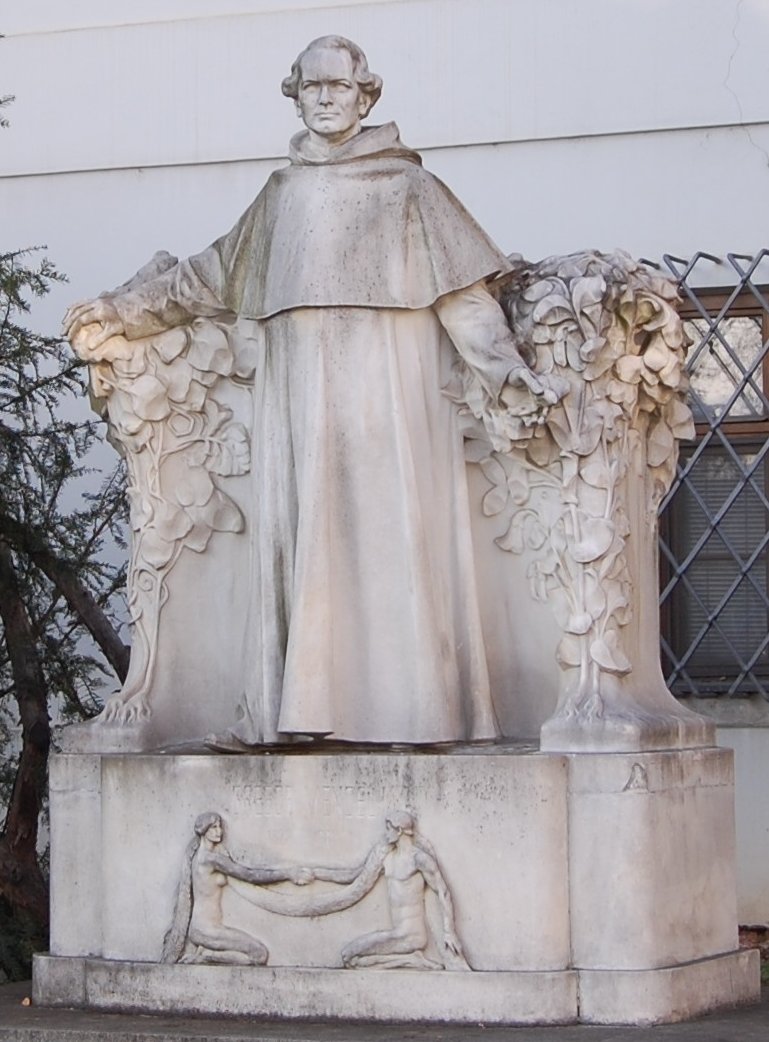
—Did your election as abbot in 1868 mark the end of your research?
In 1868, my brothers elected me abbot of St. Thomas's Monastery. It is an honor, and it is a shroud thrown over the scientist. Overnight, my cell filled with registers that had nothing botanical about them: accounts, dues, letters to authorities. For a time, I wanted to continue differently, to study heredity in my bees — I had set up hives in the garden — but those creatures keep their secrets far better than peas, and I got nothing clear. The burden gradually devoured the naturalist. My notebooks closed, my brush dried up. Today people see me as a respectable abbot; they do not know that inside weeps a gardener deprived of his garden.
Inside weeps a gardener deprived of his garden.
—Your final years seem occupied by a battle against taxes. How did you come to that?
The state decided to tax religious institutions, and I refused to bow. This fiscal quarrel, believe me, cost me more nights than my twenty-nine thousand peas combined. Day after day, I draft protests, I contest, I persist against an administration that will not yield. My friends urge me to compromise; I cannot. There is, I feel, the same stubbornness that made me recount my seeds ten times rather than once: when I believe I am right, I hold firm. But what a waste. The man who should have ended his days bent over flowers ends them bent over tax stamps. If I am to leave a trace, I hope it will not be that of a quarrelsome abbot, but of a patient pea counter.
This quarrel cost me more nights than my twenty-nine thousand peas combined.
—If you could imagine being read in a century, what would you dare to hope?
You ask me to dream, and a monk must be wary of dreams. Yet tonight I will allow myself this folly. I imagine that one day, men I will not know will reopen that forgotten volume of the Proceedings of Brno, recount my peas, and find the same numbers, the same three to one. For a true law depends neither on me nor on my era: it waits, patient, for someone willing to see it. Perhaps those readers will be able to name those factors I sense without fully understanding them, those units that pass from parent to child. I will no longer be there, my hives will be silent, my garden returned to weeds. But if the numbers hold, then I will have, in my stubborn clerk's way, said something true.
A true law only waits for someone willing to see it.
This imaginary interview was generated by artificial intelligence from sources documented in Gregor Mendel's profile. It dramatises what the figure might have said based on what we know about them, but does not constitute attested historical testimony. For primary sources and factual documentation, refer to the full profile.