Imaginary interview with William Tell
by Charactorium · William Tell · Mythology · 5 min read
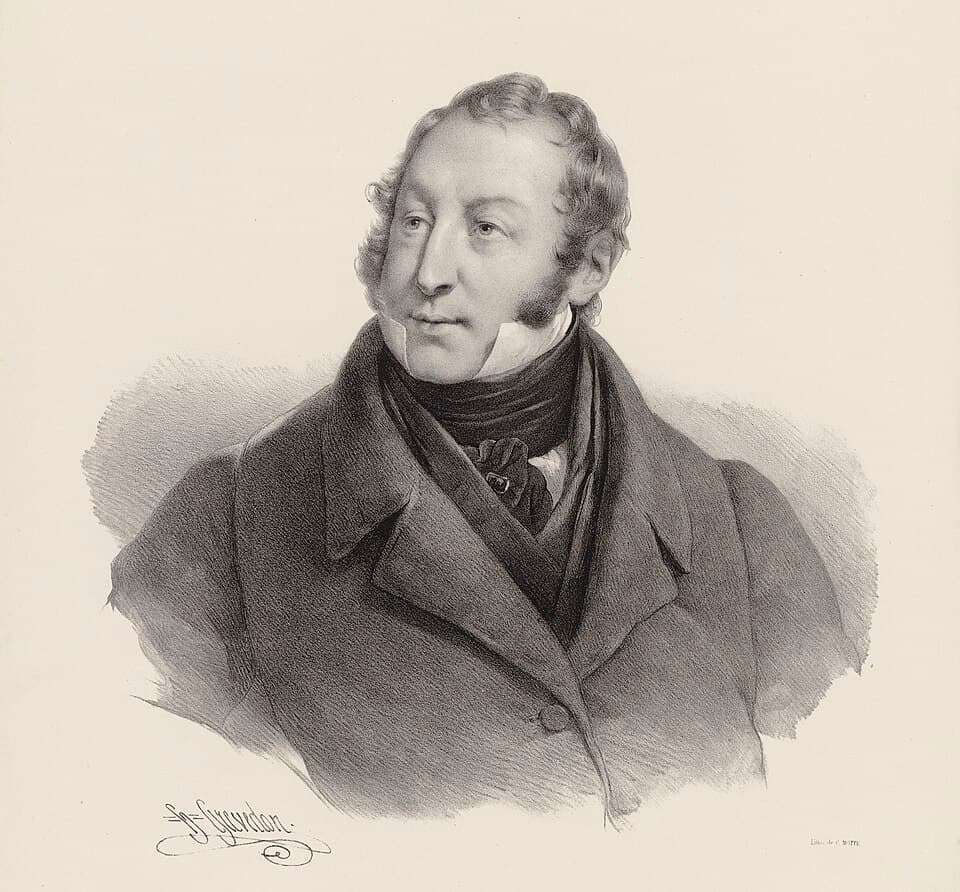
It was in a wooden inn in Altdorf, at the foot of the Alps of Uri, that we met the archer whose name spans the centuries. Outside, Lake Lucerne beats against the rocks; inside, the man sets his crossbow against the bench and agrees to tell, in the first person, the legend he has become.
—What happened that morning, in the square where you were forced to aim at an apple?
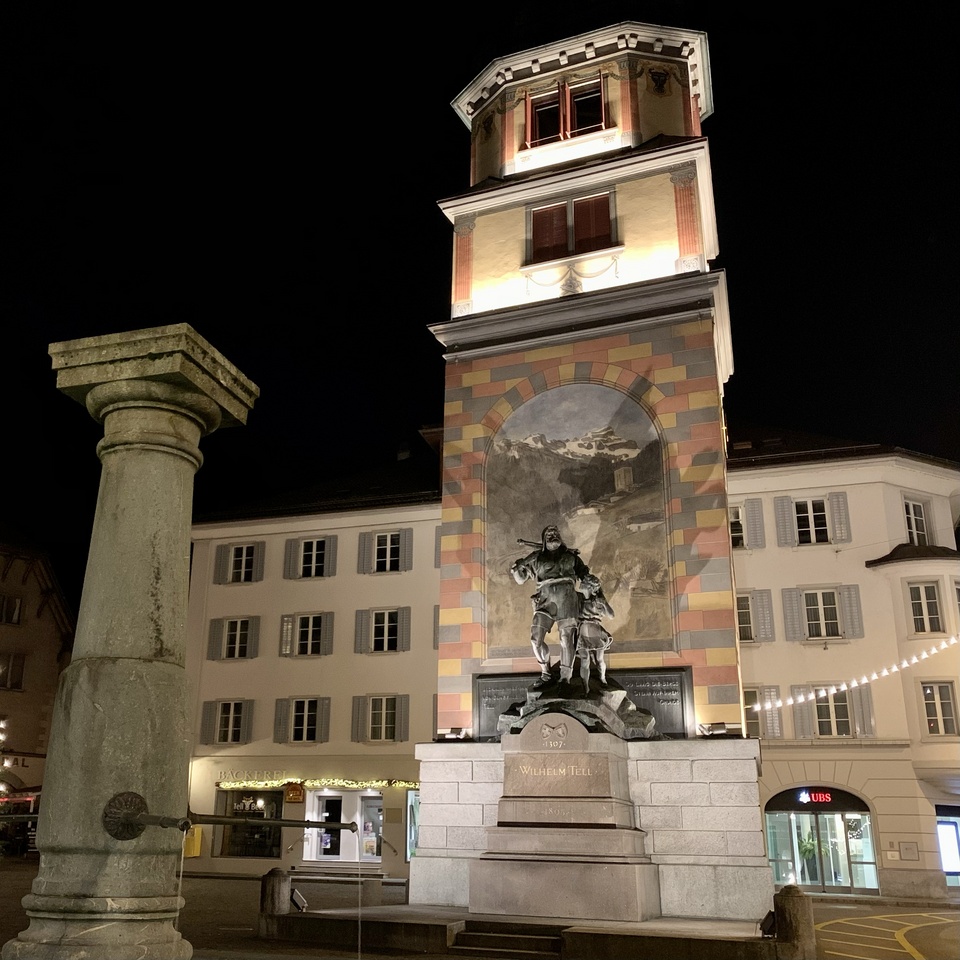
That morning, on the square of Altdorf, the bailiff had a pole planted, and on the pole, his hat, as one sets up a wooden god to be bowed to. When I refused to salute that felt hat, Gessler gave an evil smile and placed an apple on my boy's head. My bow, I know it like my own hand: I strung it without trembling, I chose my arrow, and I released. The apple split, the child did not move a hair. They spoke of a remarkable skill; I felt only a father's cold sweat. And the second arrow, the one I had slipped into my quiver, I kept it for the bailiff if he had touched my son.
The apple split, the child did not move a hair.
—How did you learn to handle the bow with such certainty?
In our parts, in the valleys of Uri, a boy holds a crossbow before he knows how to read. We practice shooting as a duty of a citizen as much as a hunter: that's how we bring back the chamois and defend the hamlet. I spent my afternoons in the high forests, watching for deer, correcting my hand in the wind of the peaks. The mountain teaches patience: the arrow flies when the breath stops, never before. When the bailiff forced me to aim at the apple, I merely repeated the gesture of a thousand mornings — except that the target, this time, was breathing before my eyes.
—Why did that hat on a pole make you so angry?
A bailiff of the Habsburgs thinks he is the arm of a distant lord; he dispenses justice, raises taxes, and wants you to bow your back. But demanding that we salute an empty hat was demanding that we worship the emptiness of his power. I am a free man of the mountains: I bow before God and before the elders of my canton, not before a felt hat on a stick. That oppression no longer even had the courage to show a face — only an object placed high. By passing by without bowing my head, I did not start a revolt: I only refused to lie with my body.
I did not start a revolt: I only refused to lie with my body.
—What happened next between the bailiff and you?
Gessler had seen the second arrow. He asked me why I had drawn it from the quiver; I told him the truth: if I had killed my child, the next was for him. Instead of freeing me, he had me loaded with chains to drag me to his dungeon, that fortress called the Gesslersburg. But what followed was not his to control. On a narrow path, I waited for him, and my arrow found the tyrant as it had found the apple. The chroniclers will say that I caused his death and that tyranny died that day. I only know that a free man had kept his word.
—Do you remember the oath sworn in the Rütli meadow?
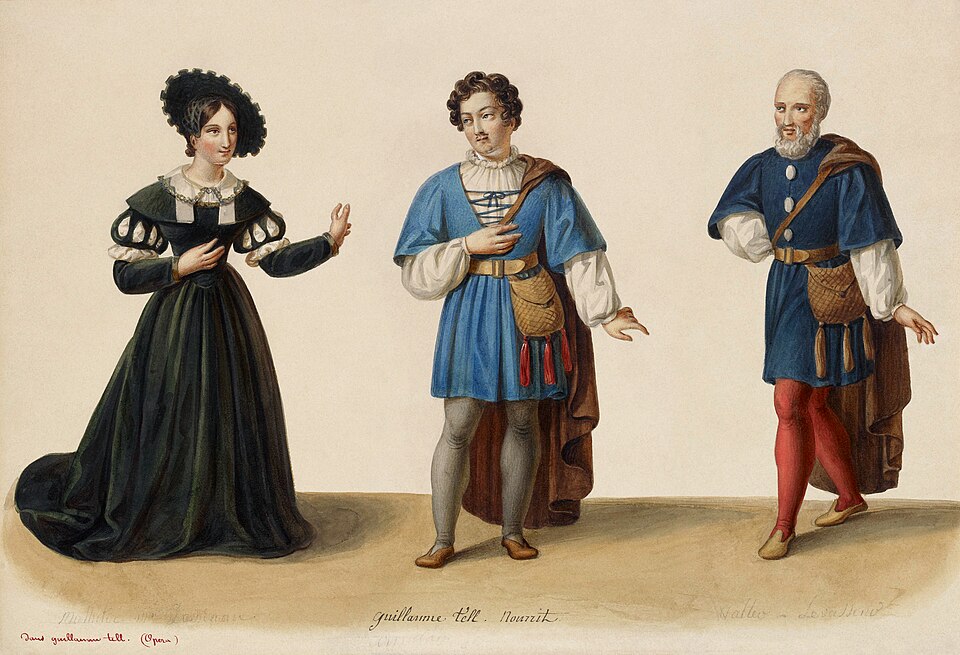
At night, on the meadow of the Rütli, by the lake, the men of the three valleys — Uri, Schwyz, and Unterwald — gathered in the low light. We swore to stand by each other as brothers, to keep peace and justice among us, and to defend ourselves against all tyrannical violence. Each kept his canton, his customs, his elders: we were not founding a new master, but a confederation of equals. It was the year 1291. No lord had given us this alliance; we made it with our mouths and raised hands, and that is why it has lasted longer than the bailiffs' castles.
—How could such different valleys hold together?
We never sought to fuse our valleys into one body. Each man remains cantonal: he obeys the elders of his place, votes in his assembly, keeps his common pastures. The strength of our Confederation is not in a throne, but in the renewed oath — the alliance of free cantons that lend each other a hand as soon as one is threatened. In the evening, after the hunt, the men of the village still gather to discuss common affairs, especially when a bailiff of the Habsburgs becomes too heavy. It is in these circles, more than in battles, that Helvetic liberty was made: a word given, listened to, kept, from hearth to hearth and valley to valley.
—How did you escape the bailiff on the lake?
I was being led in chains across the waters of Lake Lucerne when the storm rose, as it knows how to do between the rock walls. The rowers lost their heads; the bailiff himself, who thought me finished, ordered my hands freed to hold the tiller, for no one knows these waters better than a man from Uri. I steered the boat against a slab of stone, leaped ashore in one bound, and pushed the boat back with my foot into the fury of the waves. The chroniclers say that, once escaped, I immediately took up arms against him. The truth is simpler: a man who has tasted the shore does not willingly go back into the cage.
A man who has tasted the shore does not willingly go back into the cage.
—What did your crossbow represent in those hours of flight and combat?
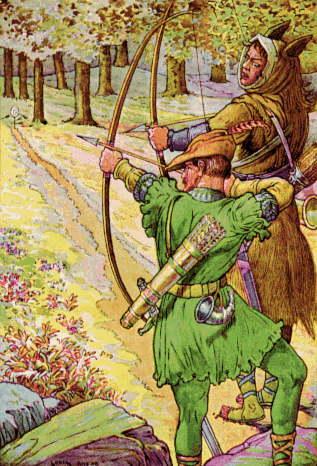
My crossbow is not just a weapon: it is the mark of a free man. In our mountains, it pierces a rider's armor like the skin of a chamois; a mountaineer on foot, well positioned in a defile, is worth ten Habsburg knights tangled in the slope. When I escaped from the lake, it was the crossbow I wanted to find first, more than bread. I maintained it every morning before eating, checking the string, the wood, the bolt. They say liberty resides in oaths; I believe it also resides in a hand that knows how to aim and in a terrain one knows better than the enemy.
—It is said today that you may never have existed. What does this idea inspire in you?
They tell me that the first written traces of me appear only long after my life, in a white chronicle copied by clerks, and that no scribe of my time wrote my name. That does not offend me. Before ink, there was the mouth: shepherds told my shot in the evening, from hearth to hearth, and each winter the arrow flew a little straighter. Perhaps I was born of that word as much as of a mother. But the revolt of the cantons against the Habsburgs did happen; it needed a face to carry it, and the valleys chose me. So what if I am a man or the sum of all free men who refused to salute the hat.
—If you could imagine how you will be read in several centuries, what would you wish?
If I could imagine being read in five centuries, I would hope that they remember less the apple than the reason for the arrow. They may make of me a theatrical character, declaimed on distant stages by poets I will never know; they will turn me into a symbol of independence, an emblem painted on banners. So be it. But let them not forget that it all began with a very simple refusal, on a square in Altdorf: a father who would not bow before a hat. If my name still serves someone who stands up against injustice, then I will have lived — even if I never lived.
If my name still serves someone who stands up against injustice, then I will have lived.
Read further
This imaginary interview was generated by artificial intelligence from sources documented in William Tell's profile. It dramatises what the figure might have said based on what we know about them, but does not constitute attested historical testimony. For primary sources and factual documentation, refer to the full profile.