Kids interview William Tell
by Charactorium · William Tell · Mythology · 5 min read
Two twelve-year-old students, on a school trip in the mountains of Uri, climbed a path up to an old wooden chalet. A man with a crossbow is waiting for them at the door. It's William Tell. He sets down his weapon, smiles, and invites them to sit by the hearth.
—Where exactly did you live? What was your village like?
Welcome to my home, little ones. I come from Bürglen, a village in the canton of Uri, nestled high up where the mountains touch the sky. Imagine a valley with no engine noise, just the wind, cowbells, and rushing water. My house is simple: wood, stone, a big hearth in the middle for cooking and warmth. We sleep there, eat there, sometimes the animals share the roof in winter. I am a free man of the mountains, you know. Not rich, but no one above me to tell me how to live. And that, my child, is worth all the gold in the world.
Not rich, but no one above me: and that is worth all the gold in the world.
—What did you eat in the morning before leaving?
Oh, nothing fancy! I get up before dawn, like all the peasants here. A piece of dark bread, that dense dark bread, with still-warm milk and a chunk of hard cheese. That's my morning meal. Then, even before going out, I check my crossbow and my bolts. Always. Where I come from, knowing how to shoot is not a game, it's a duty: every man must be able to defend his valley. Imagine learning to shoot like you learn to read and count. In the evening, we neighbors gather by the fire and talk about village matters. A rough life, but upright.
—Why did you refuse to salute a simple hat on a pole?
Ah, that hat! You think it's silly, don't you? You're right. Bailiff Gessler — a bailiff is a man sent by a lord to command and judge in his place — had planted his hat on a pole in the square of Altdorf. And he ordered everyone to bow before that empty hat! To bow before an object, as if it were the master himself. I passed by without bending my back. Not out of pride, my child. But because a free man does not salute a piece of felt placed there to humiliate him. That's what oppression is: forcing you to bow before nothing, just to remind you that you obey.
A free man does not salute a piece of felt placed there to humiliate him.
—Is it true that you aimed at an apple placed on your son's head?
Yes... and even today, I shudder at it. Gessler was furious at my refusal. To punish me, he devised a cruel test: place an apple on my little boy's head and order me to pierce it with an arrow. At that distance! One wrong move, and I would strike my child. Imagine your hand having to stay steady while your heart trembles. I took my bow, breathed, aimed. The arrow pierced the apple — and my son remained safe and sound. They say my hand did not tremble. That's false. It trembled. But love holds the bow straighter than fear.
Love holds the bow straighter than fear.
—You kept a second arrow in your cloak, didn't you? What for?
You have sharp eyes! Yes. Before shooting, I had slipped a second bolt into my belt, near my quiver — the case where you keep the shafts. When the ordeal was over, Gessler asked me why. I told him the truth: if my first arrow had wounded my child, the second would have been for him. For him alone. That drove him into a rage. You see, my little one, I was not a soldier with a great armor and a shining sword. Just a mountaineer with his crossbow. But a father defending his son is more dangerous than any knight. Gessler understood that too late.
—And after that, what happened to Bailiff Gessler?
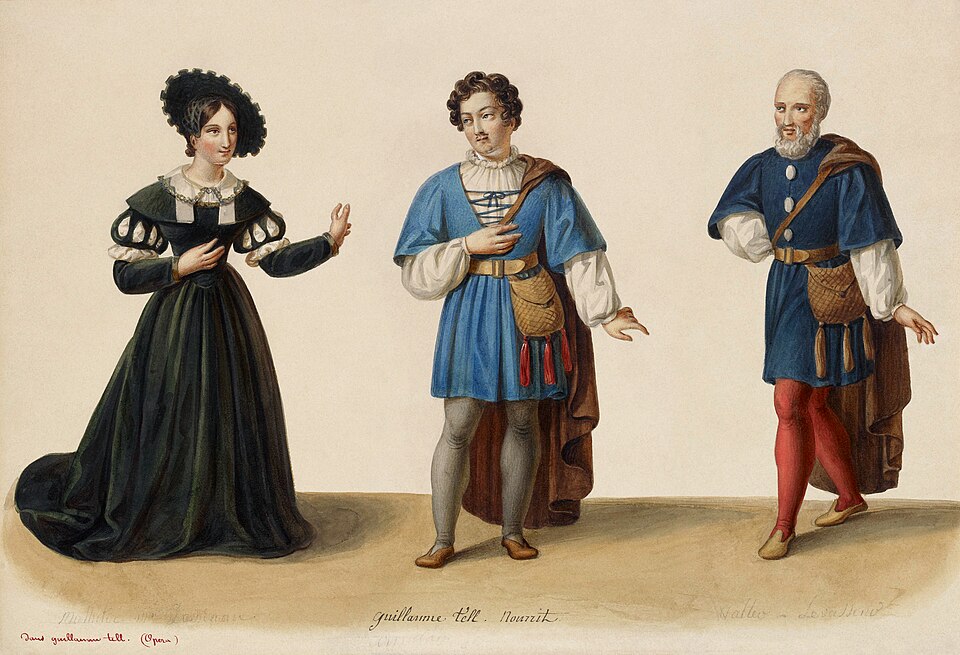
Gessler had me chained to throw me into his dungeon. I was taken onto a boat across Lake Lucerne. But a terrible storm arose, and the waves shook the boat like a shell. I was the only one strong enough to hold the oar! They untied me. As we neared the shore, I leaped onto a rock and escaped. Later, I waited for Gessler on his path, and it was he who fell to my arrow. It was not a vengeful pride, my child. It was the end of a tyrant. When a man treats you like a beast, one day the beast rises up.
—You weren't alone in rebelling, I imagine?
Oh no, never alone! That's the most beautiful part of the story. On a hidden meadow by the lake, the Rütli, men from the three valleys met in secret at night. Uri, Schwyz, and Unterwalden — three small mountain lands. There, they swore together to help each other and never again bow their heads before the Habsburgs, that great family of Austrian lords who wanted to rule over us. That's called the Rütli Oath. Imagine three hands clasping in the dark, deciding to be free together. One man alone, they break him. Three valleys united, they cannot bend them.
One man alone, they break him. Three valleys united, they cannot bend them.
—So that's where Switzerland was born?
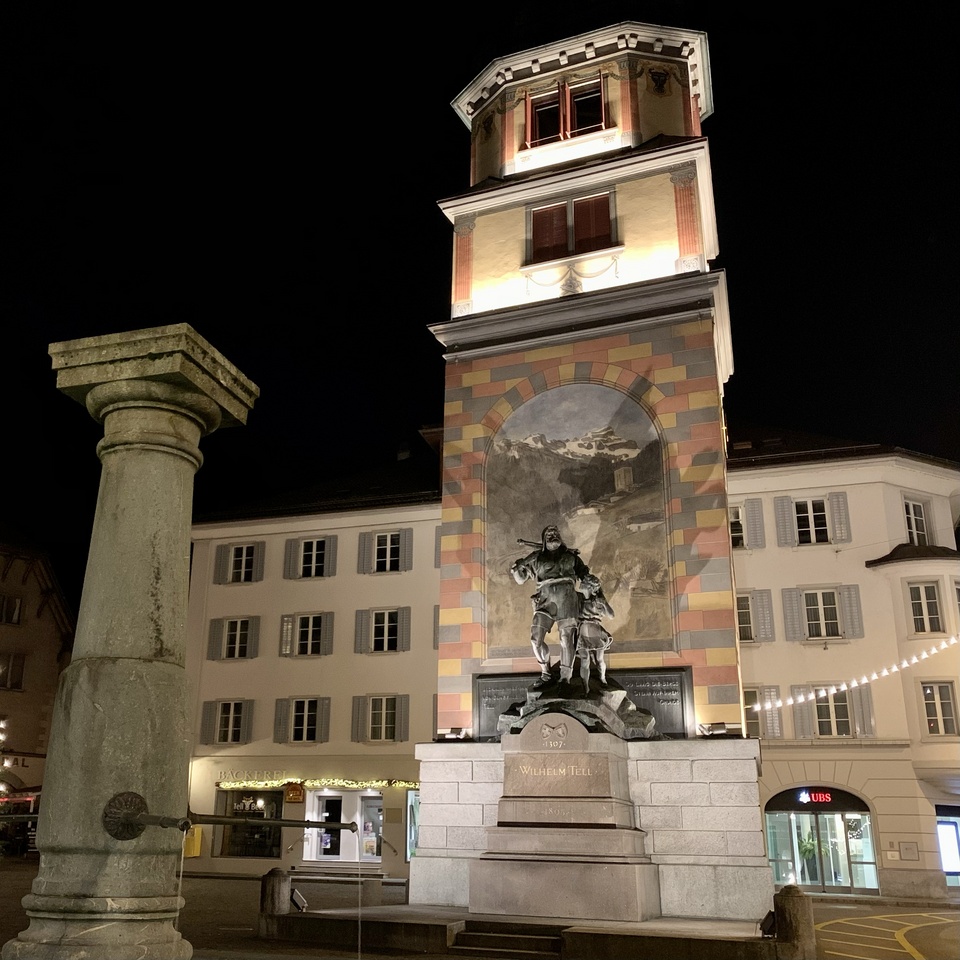
That's indeed where it all begins, yes. From that oath was born what is called a Confederation — a big word for an alliance. Several cantons, several valleys, each remaining master of its own home, but promising to defend each other if the enemy returns. A canton is a small region that governs itself, you understand? Over the years, other valleys joined us, and the Confederation grew. We had no king, no single master on a throne. Free men shaking hands, that's all. A handshake is a small thing. But sometimes, it gives birth to an entire country.
—How is it that people still talk about you, centuries later?
Ah, that moves me that you ask! You know, my story was not written down right away. For a long time, it traveled from mouth to ear, from grandfather to grandson, by the fireside in winter. Much later, chroniclers finally put it on paper, in old books like the Weisse Buch, what they call the White Book. And my story grew every time it was told. That's what a legend is, my child: an ember passed from hand to hand so it never goes out. As long as a child wants to listen, the fire stays alive.
A legend is an ember passed from hand to hand.
—If you came back today, what would you want people to remember about you?
Not my bow, nor my skill in shooting. Those things are forgotten. Much later, a great poet, Friedrich Schiller, wrote a play about me, performed before crowds. He didn't talk about my aiming ability. He talked about a man who refuses to bend. That's what I'd like you to keep, my child. Not the apple, not the arrow — but the quiet courage to say no when they want to crush you. You don't need a crossbow for that. You have your voice, your upright head, and friends by your side. Be free, and make allies. That's my whole secret.
You don't need a crossbow to say no: you have your voice and your upright head.
Read further
This imaginary interview was generated by artificial intelligence from sources documented in William Tell's profile. It dramatises what the figure might have said based on what we know about them, but does not constitute attested historical testimony. For primary sources and factual documentation, refer to the full profile.