Imaginary dialogue between Édouard Manet and Gustave Courbet
by Charactorium · Gustave Courbet (1819 — 1877) · Visual Arts · 6 min read
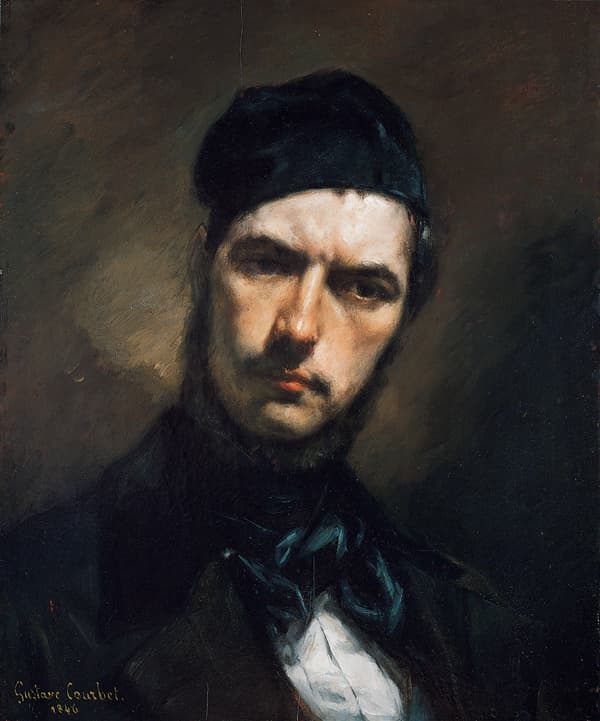
It is on the shores of Lake Geneva, in the house at La Tour-de-Peilz where Courbet lives in exile, that Édouard Manet meets his elder in the summer of 1875. The smell of turpentine still hangs in the room, and three unfinished seascapes dry against the wall, facing the gray water. The two men have known each other since the Parisian brasseries, where their names clashed together like twin scandals. Manet comes as a colleague, with that slightly piquant curiosity of one who, too, has made juries grind their teeth.
—Gustave, here you are far from Ornans and the Doubs. Is this Franche-Comté pride what has always made you so unmanageable?
You put your finger on it, my dear Manet. I was born in Ornans, in the Doubs, to a family of well-off landowners, and I never consented to wash it off like a stain. Those Salon people wanted a polished painter in a frock coat; I kept my smock, my peasant hands, the smell of the Loue where I grew up. I carried hunting, game, Jura cheese as others wear a decoration. They called me a boor, a savage — I took the word and made it a banner. Everything I painted that was true, I owed to that land. A man without soil under his feet paints only clouds.
They called me a savage — I took the word and made it a banner.
—Remember the 1850 Salon: your Burial at Ornans, six meters of peasants in mourning. Why such a format for ordinary people?
Because that was precisely the outrage needed. A Burial at Ornans measures over six meters — 3.15 by 6.68 — and until then such dimensions were only given to gods, kings, battles. I put the villagers around a grave, the beadle, the gravediggers, the weeping women, without elevating anyone or belittling anyone. Critics howled: you don't bury a peasant in epic scale! And that's exactly what I was telling them: these people are worth an epic. You know that fury, when they judge the subject before the painting. That day I understood that realism would not be a style but a fight.
Such dimensions were only given to gods and kings; I put peasants in them.
—In 1855, rejected by the jury of the Universal Exposition, you built your own pavilion. Where did you get such audacity?
From anger, and a bit of pride, I admit. The jury of the Universal Exposition rejected my master canvases, including The Painter's Studio, that great allegory where I placed myself at the center of my world. Rather than crawl, I had built at my own expense, right next to the official one, a shack I named the Pavilion of Realism. I hung about forty of my paintings and a text stating what I wanted to do. Imagine: a lone painter setting up his own exhibition against the entire state! They thought I was mad. But I had grasped a simple thing — if they close the big door, I'll break through a wall next to it.
If they close the big door, I'll break through a wall next to it.
—This word realist that is constantly stuck to you, did you ever choose it yourself, or was it imposed?
Imposed, my friend, like a label pinned on my back. I wrote it in the pavilion text in 1855: 'The title of realist has been imposed on me as the title of romantic was imposed on the men of 1830.' Titles never say things well; if they sufficed, works would be useless. I did not want to found a school — I hate teaching art like a catechism. I only wanted to paint what my eyes saw, without idealizing, without flattering. If you insist on naming me, call me what you will; I will continue to look at a stone as a stone and a man as a man. The rest is a matter of word merchants.
Titles never say things well; if they sufficed, works would be useless.
—Let's talk craft. That thick paste, that knife you load the canvas with — why abandon the polished touch of the schools?
Because a cliff is not smooth, and a wave is not painted with a lady's feather. I attack the canvas with a palette knife, I load the material in thick layers — impasto, as the studios call it — so that the paint has weight, flesh, almost geology. When I make a rock, I want you to feel the rock under your thumb; when I make foam, I want it to have relief. The polished drawing of the academies caresses the eye and touches nothing. You, who set your values in broad planes, know what it means to refuse a neat finish. The truth of a thing often lies in its thickness, not its outline.
When I make a rock, I want you to feel it under your thumb.
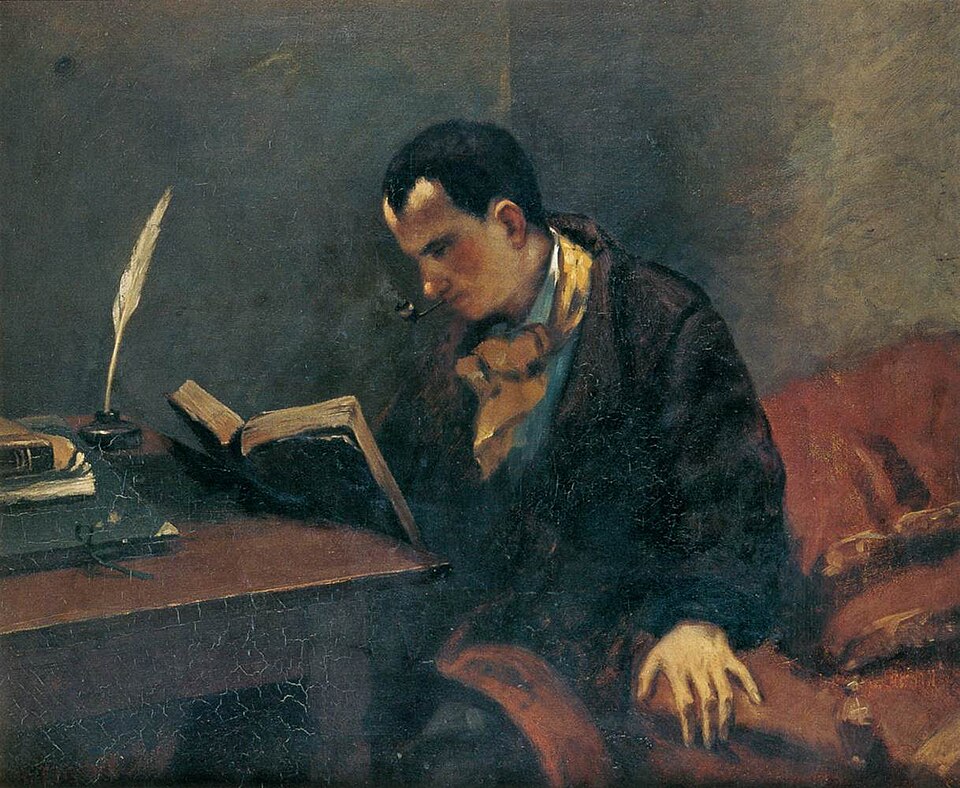
—You painted so many Norman coasts, those seascapes of Étretat, The Wave. What were you seeking facing the sea, easel planted in the wind?
I was seeking a force greater than myself, one that mocks juries. On the Norman coasts, at Étretat, I planted my field easel before the sea and painted The Wave, those seascapes where water rises like a wall. Those tin tubes that were invented — paint you carry in your pocket — allowed me to work outdoors, facing the motif, sometimes in the storm. There, no model posing, no critic sneering: the wave rises, falls, and you must be faster than it. Before those cliffs, I understood that landscape was not a backdrop but a character. You younger ones will go further than me in this plein air light — I'd bet my hand on it.
The wave rises, falls, and you must be faster than it.
—Back in the days of the Brasserie Andler, with Proudhon and Baudelaire, I remember your remark about my Olympia — a queen of spades stepping out of her bath. Did you really mean it?
Ah, you take me back to the Brasserie Andler, rue Hautefeuille, that temple of realism where we remade the world in smoke and beer! Proudhon discoursed, Baudelaire shot his barbs, and I thundered louder than all. Yes, I said that about your Olympia — a queen of spades stepping out of her bath — and I don't entirely take it back. But hear me: I said it among ourselves, as one ribs a brother-in-arms, not as one stabs an enemy. We wanted the same thing at bottom, to break that academicism that repaints the world in sugar. That I mock your manner does not prevent me from recognizing you as one of us. We only squabble like that among fellow fighters.
I was ribbing you like a brother-in-arms, not stabbing an enemy.
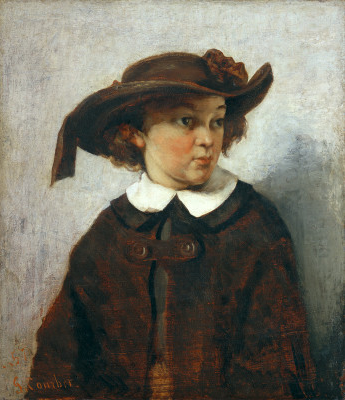
—Now comes the heavy question. In 1871, under the Commune, you presided over the Federation of Artists. How did you get mixed up in the fall of the Vendôme Column?
First out of conviction, then by bad luck. When the Commune rose in 1871, I was elected to the Council and placed at the head of the Federation of Artists — I wanted painters to finally govern museums, not bureaucrats. The Vendôme Column, that bronze cast from the cannons of the Empire, I considered a monument to war and conquest; I wished it to be unbolted and moved elsewhere, not destroyed in the street. But they blamed me for everything. The loser always pays for the crowd's anger. I wanted to serve the people, as I once wrote to my parents; when the people are beaten, it's their friends who are judged.
The loser always pays for the crowd's anger.
—And here you are, on this lake, condemned to repay a colossal sum. How does one live when France bills you for a monument?
One lives like a tree that has been uprooted, Édouard: it still stands, but it knows it is drying out. I was condemned to pay for the reconstruction of the column — three hundred twenty-three thousand francs, a mountain that ten painter's lifetimes could not pay off. I had to flee to Switzerland, to La Tour-de-Peilz, on the shore of this lake you see, ruined, my name tarnished. I still paint, trout, landscapes, the water of Lake Geneva in the morning — I must sell to eat and pay. But exile eats a man more surely than debt. You will return to Paris; I look at France from the other shore, like looking at a house whose lock has been changed.
One lives like a tree that has been uprooted: it still stands, but it dries out.
—One last thing, as a colleague: I too set up my pavilion in 1867, next to yours. Do you think a painter can really do without the Salon?
You did well, and I watched you with a slightly jealous joy, I admit. In 1867, each of us had our shack near the Universal Exposition — two stubborn men showing their canvases outside official walls. Can one do without the Salon? Let's say one can disobey it, and disobeying costs dearly. Without the jury, no medal, no easy commissions, but also no master to flatter. You must then find your own public, take it by the hand before the canvas. It's tough, sometimes ruinous — look where I am. But a painter who waits for permission to exist is no longer fully a painter. The pavilion, you see, is less a place than a declaration of freedom.
A painter who waits for permission to exist is no longer a painter.
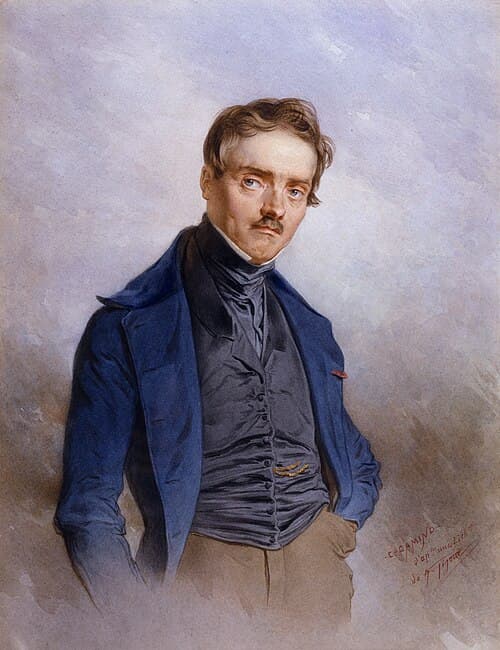
This imaginary interview was generated by artificial intelligence from sources documented in Gustave Courbet's profile. It dramatises what the figure might have said based on what we know about them, but does not constitute attested historical testimony. For primary sources and factual documentation, refer to the full profile.