Kids interview Gustave Courbet
by Charactorium · Gustave Courbet (1819 — 1877) · Visual Arts · 4 min read
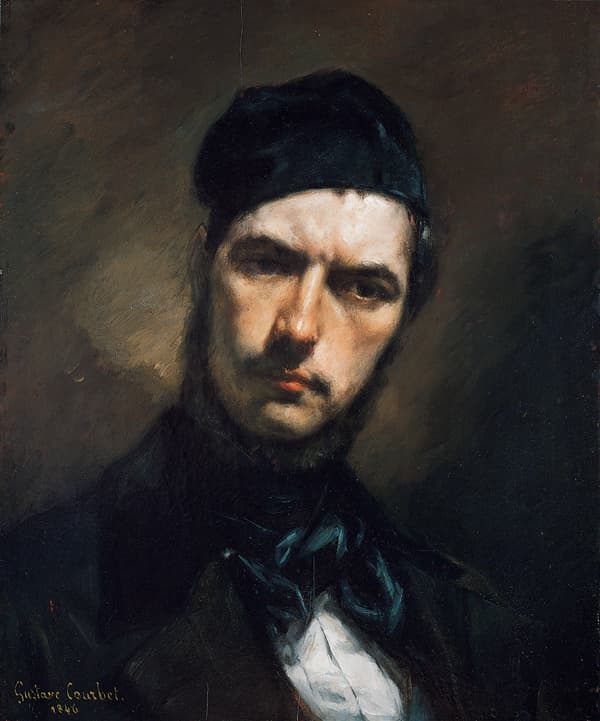
That morning, two twelve-year-old visitors pushed open the door of a large studio smelling of turpentine. Amid the enormous canvases, a man with a thick black beard put down his palette knife. Gustave Courbet smiled at them: he was delighted that children had come to listen to him.
—Is it true you caused a scandal with a simple funeral?
Yes, my child, and I'm quite proud of it! I had painted A Burial at Ornans, my hometown in the Doubs. Imagine a gigantic canvas: six metres long, taller than your teacher! Usually, such large formats were reserved for kings or saints. I put simple peasants in it, with their big shoes and ordinary faces, around a hole in the ground. At the Salon of 1850, the critics were furious. They thought those people didn't deserve so much space. But you know, a peasant weeping for his dead is worth as much as a battle hero.
A peasant weeping for his dead is worth as much as a battle hero.
—Why were you so determined to paint poor people?
Because that was my life, my dear. I wrote to my parents: my sympathy is with the people. Look at The Stone Breakers: two workers by the roadside, breaking stones all day. An old man and a boy almost your age. No one wanted to see them. I painted them large, with their torn clothes and worn hands. I wasn't trying to make them pretty. I wanted people to really look at them, not to forget they existed. Painting the truth, even when it's harsh—that's what I called realism.
I wanted people to truly see those whom no one wanted to look at.
—What's this story about a pavilion you built all by yourself?
Ah, that was quite a move! In 1855, there was a huge exhibition in Paris, and the jury rejected some of my paintings. The jury were the serious gentlemen who decided what was good art. Well, I didn't take it lying down. I paid out of my own pocket to build my own cabin right next door, and I called it the Pavilion of Realism. I hung forty of my canvases there. Imagine: a painter alone daring to defy the entire official organization. No one had done that before me.
If they reject my paintings, I'll build my own house to show them.
—Did you paint yourself in the middle of a large painting?
Yes, in The Painter's Studio! It's an immense canvas, and I placed myself right in the center, painting. All around, I put people: friends, the poor, the rich, like a summary of my whole society. You know, I liked to depict myself. In another painting, The Desperate Man, I'm there, eyes wide, hands in my hair, as if I'd seen a ghost! A bit theatrical, I admit. But a painter is also someone who dares to show himself, without hiding behind neat, well-behaved subjects.
—How did you manage to put so much texture on your canvases?
Touch this canvas, gently: can you feel the bumps? That's my secret. Instead of a fine brush, I mostly used a palette knife, a small flat blade. I applied the paint in thick layers, like spreading butter on your bread. It's called impasto. It gives relief, real substance. For painting the rocks of the Jura or the sea foam, it was perfect. The stone seemed hard, the wave seemed to spray. Hold the knife differently than a brush, and your paint stops being smooth: it becomes alive.
I applied the paint like you spread butter on your bread.
—Did you paint outdoors, in front of the sea?
Yes! And that was new in my time. Many painters stayed warm in their studios. I took my field easel to the Normandy coast, to Étretat. They had just invented paint in small metal tubes; before, it was too complicated to carry. So I could set up facing the great white cliffs and paint The Wave while really watching the sea pound. The wind, the salt, the passing storm... Imagine painting with sea spray on your face! Painting outdoors, in front of the thing itself—that was my real school.
—Is it true you brought down a great column in Paris?
Well, careful, it's more complicated than that! In 1871, in Paris, there was the Commune, a great uprising after the lost war against Prussia. The people had risen up, and I was elected to take care of the artists. During those weeks, the Vendôme Column was torn down, a monument that Napoleon had erected to celebrate his wars. Many saw it as a symbol of imperial pride. Was I accused of being responsible? Yes. Did I topple it with my own hands? No. But I paid dearly for that accusation, as you'll see.
—Did you have to go far away because of it? Were you sad?
Very sad, yes. I was sentenced to repay the reconstruction of the column: 323,000 francs! An enormous sum, impossible for one man to pay. I would have ended my life in prison or ruined. So, in 1873, I fled to Switzerland, to La Tour-de-Peilz, on Lake Geneva. Imagine leaving your country, your friends, your home in Ornans, never to return. There, I still painted, but my heart wasn't in it. I died there, far from home, in 1877. Sometimes you pay a very high price for having chosen your side.
Sometimes you pay a very high price for having chosen your side.
—What did your evenings with friends smell like?
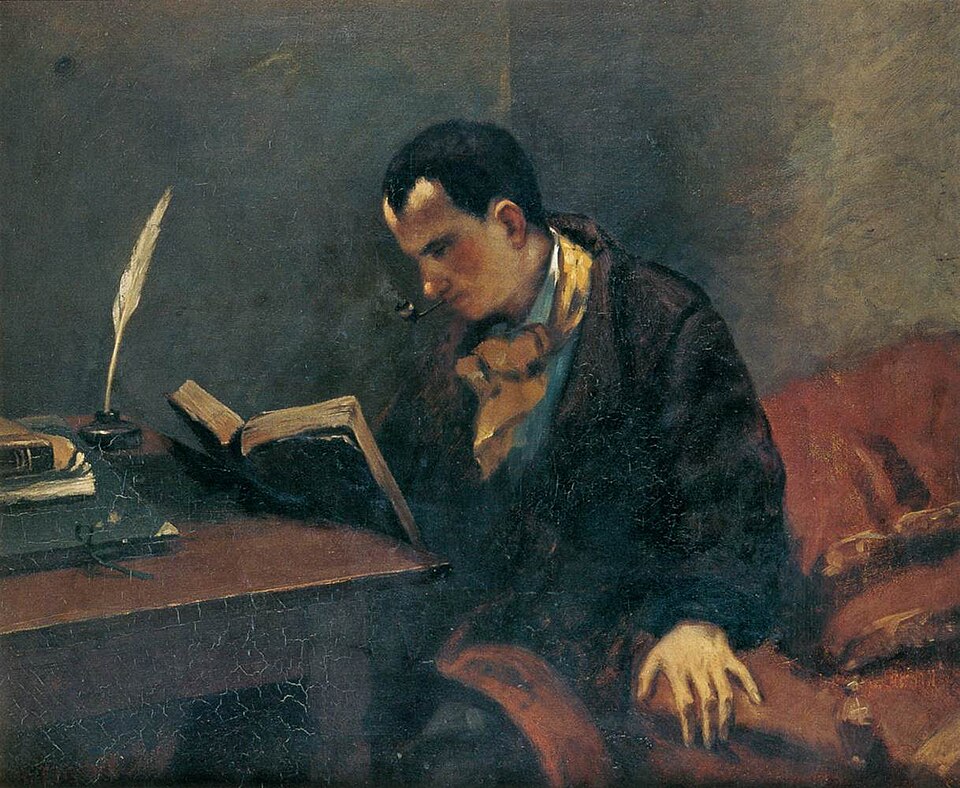
Ah, they smelled of beer and pipe smoke! In the evening, I'd head to the Brasserie Andler, near my Paris studio. They called it the "temple of realism." Imagine a loud room, clinking mugs, and brilliant minds around the table: writers, philosophers like my friend Proudhon, the poet Baudelaire. We remade the world! We shouted, discussed art and politics for hours. Me, a son of Franche-Comté peasants, I had a hearty appetite and a loud voice. I think I spoke the loudest of all.
—Did you argue with other painters? Manet, for example?
Let's say we teased each other! Édouard Manet was a bit of a rival, but a rival I liked. We both wanted the same thing: to end the overly tame, overly polished painting of the academies. One day, looking at his painting Olympia, I said she looked like a queen of spades coming out of the bath! A joke, you see. Deep down, we respected each other. You know, two artists who squabble are often seeking the same truth by different paths. And that creates solid friendships.
This imaginary interview was generated by artificial intelligence from sources documented in Gustave Courbet's profile. It dramatises what the figure might have said based on what we know about them, but does not constitute attested historical testimony. For primary sources and factual documentation, refer to the full profile.