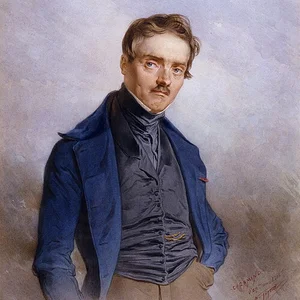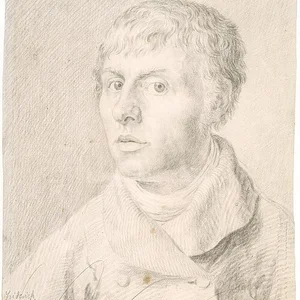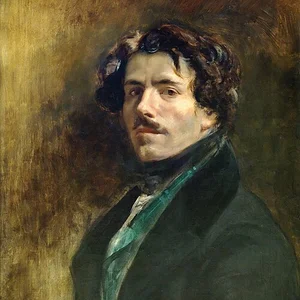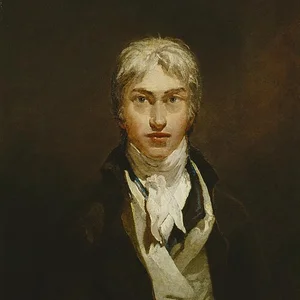

19th-century French painter and founder of the Realist movement. Courbet revolutionized painting by depicting everyday reality and landscapes in an innovative style, rejecting the academic conventions of his time.
Gustave Courbet(1819 — 1877)
Gustave Courbet
France
8 min read
Frequently asked questions
Famous Quotes
« I am my own master and I intend to remain master of my actions»
« Beauty is in nature, and it is encountered there in the most diverse forms»
Key Facts
- 1850: Exhibits 'A Burial at Ornans' at the Salon, a manifesto of Realism
- 1855: Creates the 'Pavilion of Realism' on the sidelines of the Universal Exhibition
- 1866: Paints 'The Origin of the World', a controversial and radical work
- 1871: Takes part in the Paris Commune, exiled to Switzerland afterward
- 1877: Dies in exile in La Tour-de-Peilz, Switzerland
Works & Achievements
A vast canvas measuring 3.15 m by 6.68 m depicting the funeral of a resident of Ornans. This founding work of Realism caused a scandal by granting a monumental format to a scene from ordinary life.
A painting depicting two workers breaking stones by the side of a road, a symbol of social poverty. The original work was destroyed during the bombing of Dresden in 1945.
This canvas depicting two women with realistic, full-bodied figures caused a scandal at the Salon. Napoleon III reportedly struck the painting with his riding crop, shocked by the supposed vulgarity of the scene.
A self-portrait showing Courbet on the road to Montpellier, being greeted by his patron Alfred Bruyas. The painter depicts himself proudly, head held high, as a free and independent artist.
A vast allegorical canvas in which Courbet depicts himself at the center of his studio, surrounded by figures symbolizing the society of his time. It is the central work of the Pavillon du Réalisme.
Two young women lying languidly on the banks of the Seine. The painting caused shock with its raw realism, the figures deemed vulgar by critics.
A series of seascapes painted on the Norman coast, capturing the power of the sea using a palette knife impasto technique. These marine landscapes rank among his most celebrated works.
A seascape depicting the famous Norman cliffs in dramatic post-storm light. This work is testament to Courbet's mastery of landscape painting.
Anecdotes
At the 1850 Salon, Courbet caused a scandal by exhibiting 'A Burial at Ornans', a canvas over six meters long depicting peasants at a funeral. Critics were outraged that he gave ordinary people the monumental format usually reserved for heroic or religious scenes.
In 1855, having been partially rejected by the jury of the Paris Universal Exhibition, Courbet had a pavilion built at his own expense, which he named the 'Pavilion of Realism', right next to the official exhibition. There he presented forty of his paintings, accompanied by a manifesto defining realism in painting. It was one of the first solo exhibitions in the history of art.
Courbet was a robust man, proud of his origins in the Franche-Comté region, and enjoyed depicting himself in his own paintings. His famous self-portrait 'The Desperate Man' shows him wide-eyed, hands in his hair, in a dramatic staging that reflects his taste for provocation and theatricality.
During the Paris Commune in 1871, Courbet was elected to the Commune Council and appointed president of the Federation of Artists. Accused of participating in the destruction of the Vendôme Column, a symbol of imperial power, he was sentenced to pay the cost of its reconstruction — a colossal sum of 323,000 francs. He went into exile in Switzerland to escape the debt.
Courbet maintained a friendly rivalry with Édouard Manet. When asked what he thought of Manet's 'Olympia', he replied that she looked like a 'queen of spades stepping out of the bath'. The two painters nevertheless shared a common desire to break with academicism.
Primary Sources
The title of realist was imposed on me just as the title of romantic was imposed on the men of 1830. Titles have never given a fair idea of things; if it were otherwise, works would be superfluous.
In civilized society, I must lead the life of a savage, I must free myself even from governments. My sympathy is with the people, and I must address myself to them directly.
I have studied, outside of any systematic approach and without prejudice, the art of the ancients and the art of the moderns. I have no more wished to imitate the former than to copy the latter. To know in order to be able — such was my thought.
I cannot teach my art, nor the art of any school, since I deny the teaching of art, or rather I maintain, in other words, that art is entirely individual and is, for each artist, nothing but the talent resulting from his own inspiration.
Key Places
Courbet's hometown in the Jura region, which he depicted in numerous paintings. The Musée Courbet is housed in his family home there.
Courbet settled in Paris as early as 1839 and built his career there. He exhibited at the Salons, frequented literary cafés and the Brasserie Andler, the realists' headquarters.
The city of his patron Alfred Bruyas, who commissioned several works from him. "The Meeting" or "Bonjour Monsieur Courbet" depicts their encounter on the road to Montpellier.
Courbet stayed several times on the Norman coast, where he painted celebrated seascapes and the cliffs of Étretat, helping to bring this site to wider attention.
Courbet's place of exile after the Commune, on the shores of Lake Geneva. He spent his final years there and died in 1877. A commemorative monument is dedicated to him.
A spectacular natural site in the Jura that Courbet painted on several occasions. These landscapes from his native region are among his most admired works.
Typical Objects

Courbet made extensive use of the palette knife to apply paint in thick layers directly onto the canvas, creating textures and reliefs characteristic of his style.

Courbet was a regular pipe smoker, an accessory he depicted himself with in several self-portraits, most notably "Man with a Pipe" from 1848–1849.

Courbet often painted outdoors in the Franche-Comté countryside or along the Normandy coast, carrying his portable easel to work directly from the motif.

An avid hunter in the forests of the Jura, Courbet painted numerous hunting scenes inspired by this passion, such as "The Quarry" and "The Kill".

Courbet readily presented himself in working attire rather than bourgeois dress, asserting his identity as a craftsman and his working-class roots.

The recent invention of tin paint tubes allowed Courbet to easily transport his colours for outdoor painting, a practice he helped popularise.
School Curriculum
Vocabulary & Tags
Key Vocabulary
Tags
Mouvement
Daily Life
Morning
Courbet often woke up late, especially in Paris where evenings at the brasserie would run long. He ate a hearty provincial breakfast before heading to his studio. When painting en plein air in the Jura, he would leave early in the morning with his equipment to make the most of the light.
Afternoon
The afternoon was devoted to painting, often for several hours at a stretch. Courbet worked with great energy, applying paint with a palette knife in broad strokes. He also received visitors in his studio — artists, journalists, or patrons — with whom he discussed his theories on Realism.
Evening
In the evenings, Courbet was a regular at the Brasserie Andler, near his Parisian studio, where writers, philosophers, and artists such as Baudelaire and Proudhon would gather. He enjoyed heated debates on art and politics, and was fond of drinking beer in generous quantities.
Food
Courbet had a hearty appetite, true to his Franche-Comté roots. He appreciated rustic, regional cuisine: Jura cheeses, cured meats, and game from the hunts he took part in. In Paris, he frequented brasseries and consumed large amounts of beer, a habit that contributed to the decline of his health.
Clothing
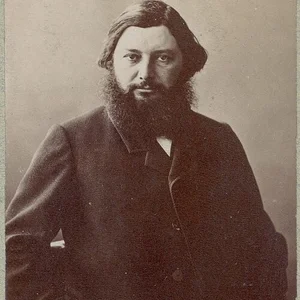
Courbet often wore a craftsman's smock to work, along with a wide leather belt. In society, he dressed in the bourgeois fashion of the time — frock coat and hat — but cultivated a robust, slightly rustic appearance. His thick black beard was his most distinctive feature.
Housing
In Paris, Courbet occupied studios in the Saint-Germain-des-Prés neighborhood, then on the rue Hautefeuille. In Ornans, he lived in the family home, a large house on the banks of the Loue river. In exile, he settled in a boarding house in La Tour-de-Peilz, on the shores of Lake Geneva.
Historical Timeline
Period Vocabulary
Visual Style
Un style visuel réaliste aux tons terreux et sombres, avec des empâtements épais et une lumière dramatique, entre paysages jurassiens et scènes de la vie quotidienne traitées avec une grandeur monumentale.
Sound Ambience
L'univers sonore de Courbet oscille entre l'effervescence des cafés parisiens où l'on débat d'art et de politique, et la nature sauvage du Jura franc-comtois qui a nourri son inspiration.
Liens externes & ressources
Références
Œuvres
La Rencontre ou Bonjour Monsieur Courbet
1854
L'Atelier du peintre, allégorie réelle
1855
La Vague
1869-1870